
Recoating a tired epoxy floor before it starts to fail
Dull lanes, fine scratches and faded color near the door mean an epoxy floor is aging. If it is still bonded, a fresh topcoat brings the gloss back for far less work than starting over, which is why Danny taps for hollow spots first.
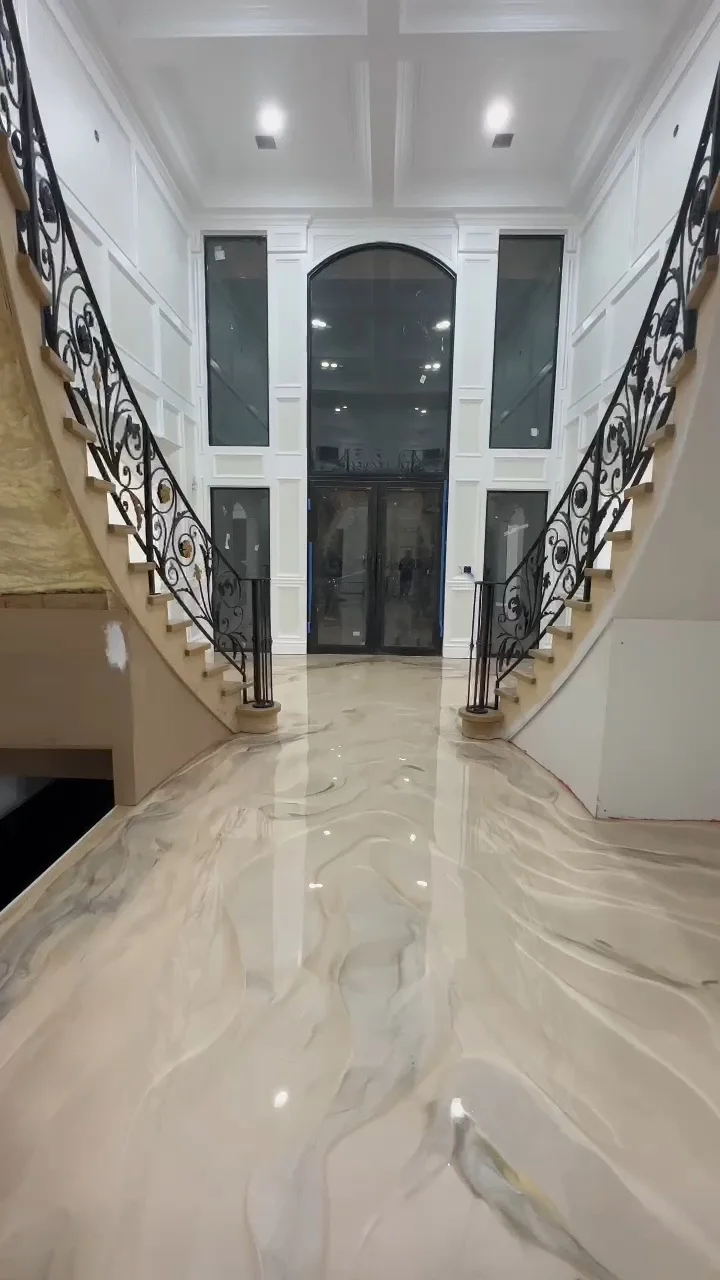

What existing epoxy floor recoating really involves
Recoating adds a fresh topcoat over an existing, well-bonded coating. The old surface is cleaned of grease and residue, then mechanically abraded so the new coat has a texture to grip. Minor chips are filled. A new clear or tinted topcoat goes on, sometimes a different and tougher resin than the original. The color, flake or metallic underneath stays, and the gloss comes back. It is the floor coating version of refinishing a hardwood floor without sanding to bare wood.
The color, flake or metallic underneath stays, and the gloss comes back.
A recoat only works if the existing coating is truly bonded. If it is peeling, lifting at the edges, bubbling or sounding hollow when tapped, a new topcoat just traps the problem and fails with it. Floors coated with paint or a thin kit usually fall in that group. Recoating also cannot fix deep gouges or worn-through areas, which need repairs first. Danny checks adhesion on the walk and tells you plainly whether a recoat is enough. Some floors need a mix of both.
Danny looks closely at the existing coating, taps for hollow spots, and checks edges, joints and the area by the door where failure starts. He also asks how the floor was cleaned over the years, since some products leave a film. If it passes, the floor is deep cleaned to get grease and silicone residue off. Then the surface is abraded evenly. Small chips and scratches are filled and blended. The new topcoat goes on across the whole floor so the finish matches edge to edge. He keeps traffic off until it cures and walks the floor with you. Material comes from Bulletproof Resins, which Danny partners with, and the color gets mixed on site in small batches.
Recoat while the floor is still holding. Wait until it peels and it becomes a new floor.
How Danny does the job
Every floor goes through the same five stages. What changes is how much each one takes, and that gets settled at the walkthrough.


Walk the space
Danny comes out, looks at the slab, the cracks and the moisture, and asks how the room gets used.

Prep the concrete
A grinder and a vacuum take the slab down to fresh concrete so nothing sits between the floor and the coating.

Fix what is underneath
Damage in the slab gets repaired now, so it does not show through the finished floor later.

Lay it down
The system goes down in the order it needs, mixed in small batches and worked while it is still wet.

Cure and the final walk
After it cures, you and Danny walk the finished floor before anyone calls it done.
More of Danny’s floors
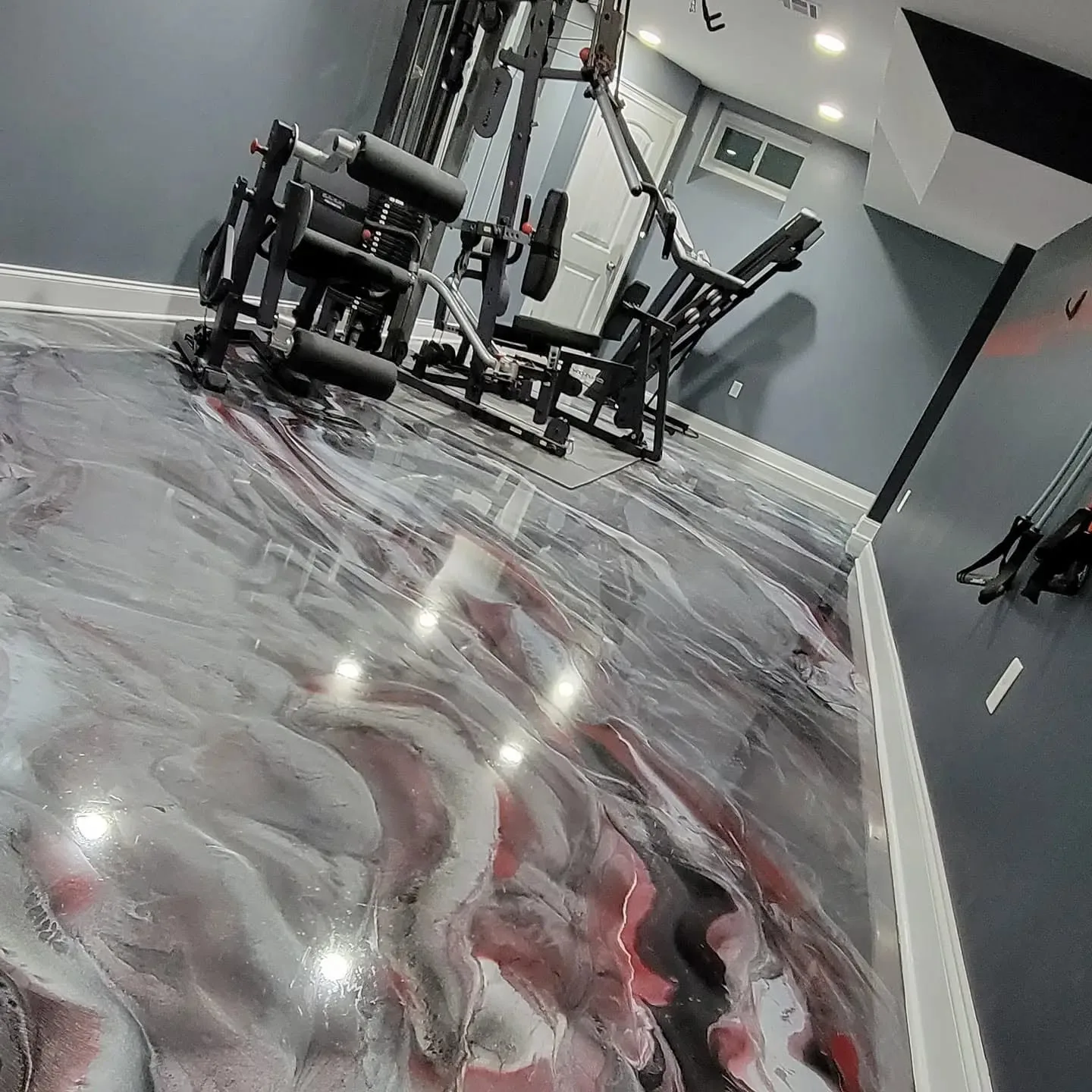
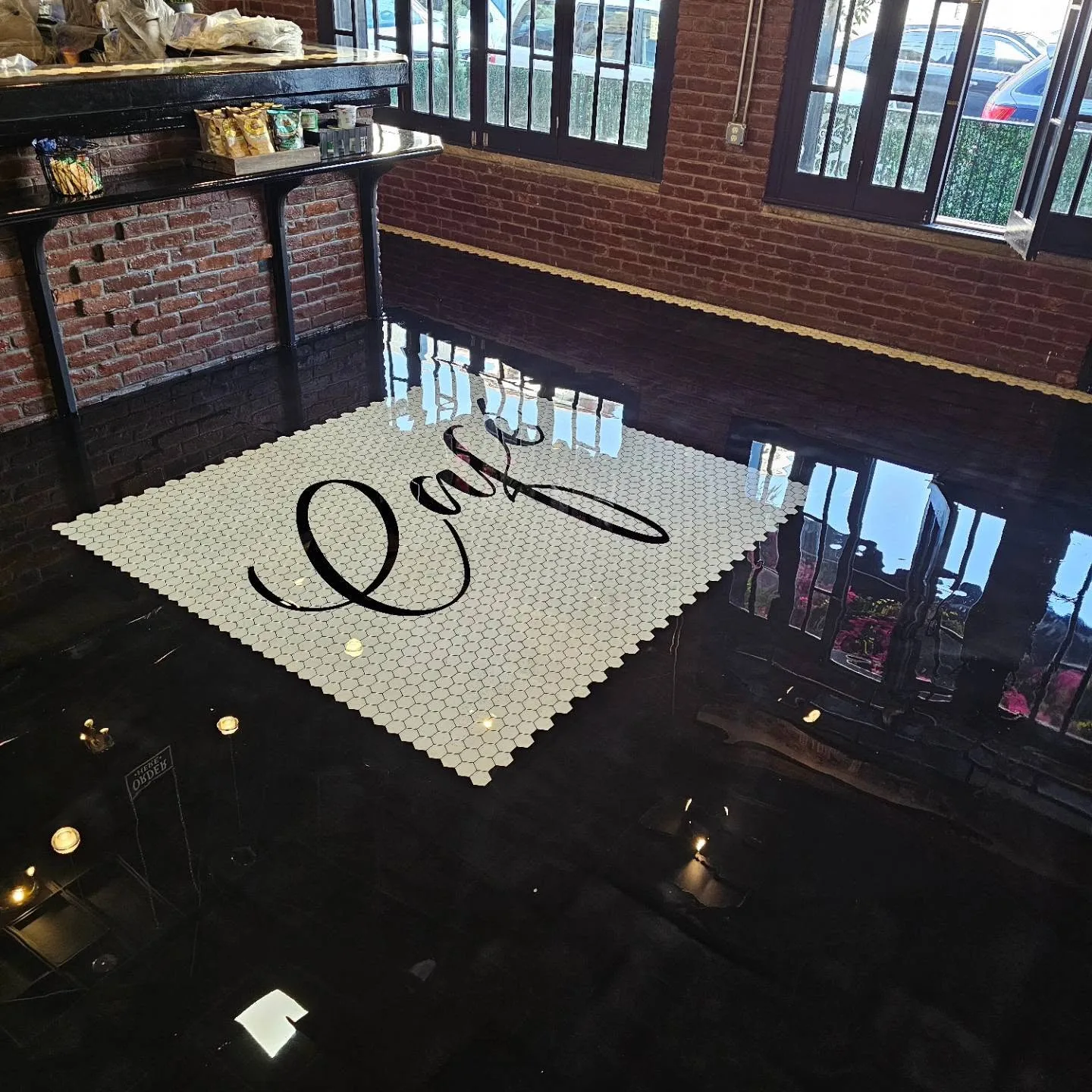
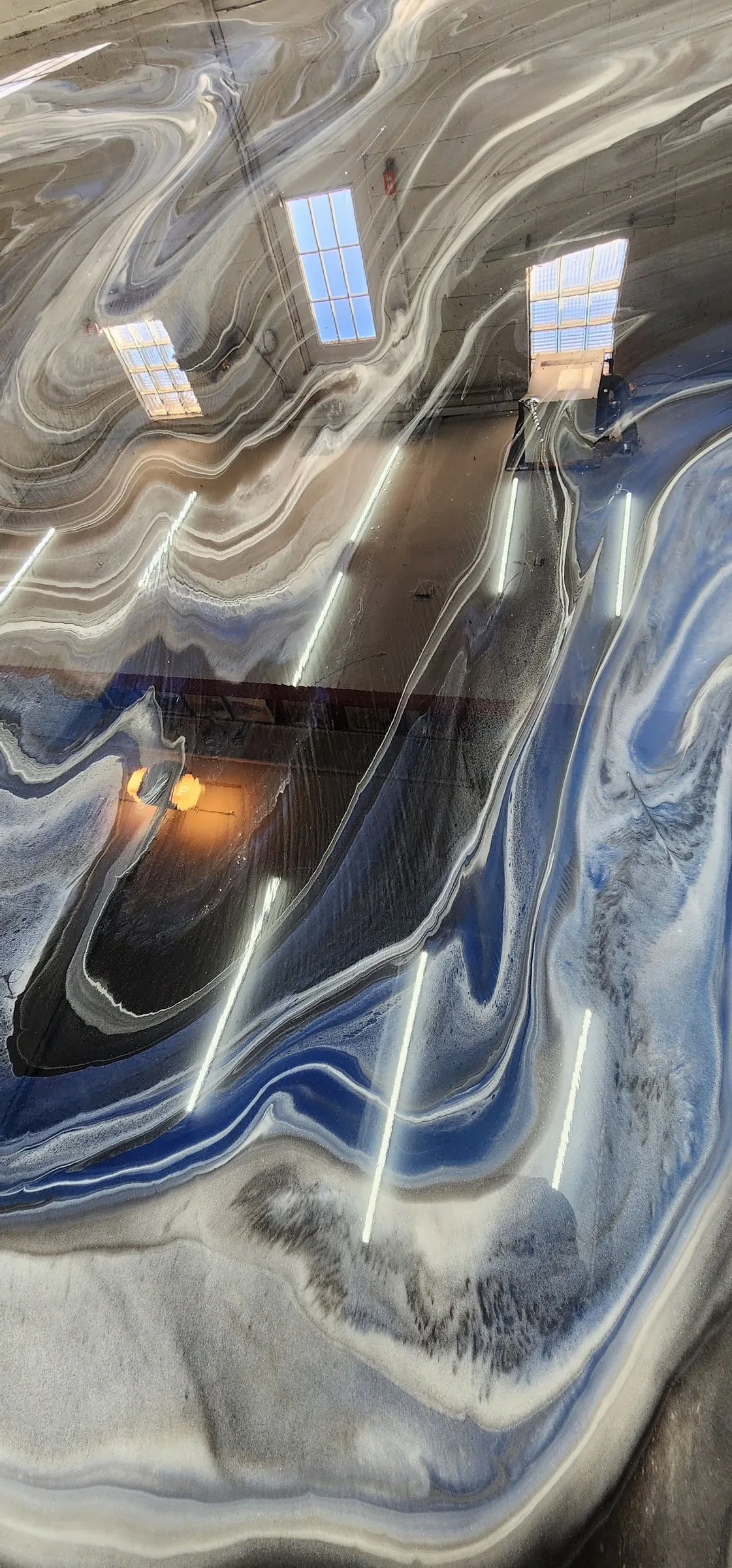
Other jobs from the file, not all of them this service. See the gallery


Questions about existing epoxy floor recoating
How do I know if my floor can be recoated?
If the coating is firmly stuck everywhere and the wear is on the surface, it is a good candidate. Peeling, bubbles, soft spots and edges lifting near the door point the other way. Danny tests adhesion during the walk-through and tells you which you have, so you do not end up with a recoat that fails with the old floor.
Can a recoat change my floor’s color?
A clear topcoat keeps the existing look. A tinted topcoat can shift it a little, but it will not turn a gray flake floor into a black metallic. For a real change in color or style, Danny would grind the old system and build a new one, which is a resurfacing or replacement job.
How often should an epoxy floor be recoated?
It depends on traffic, cleaning and sun exposure, so there is no single schedule. A quiet basement may go a long time between recoats, while a busy shop or storefront may want one much sooner. Danny looks at how the floor is wearing and gives you a sense of timing for your space.
Can I pick the color and the finish?
Yes. Danny brings samples and photos of past floors, and you settle on the color, the finish and how much movement or texture you want at the walkthrough.
Do you work on commercial spaces?
Yes. Salons, barbershops, showrooms, shops and offices, scheduled around your hours where the job allows it.
Do you come out and look before anything gets decided?
Yes. Danny walks the space, checks the concrete and talks through what you want before anything is ordered or scheduled. Call (908) 577-7104 or send the form and he will set a time.
Other epoxy work
The core systems: residential, commercial and industrial epoxy, on new slabs and old ones, inside and out.
- Industrial Epoxy FlooringEpoxy for warehouse, plant and shop floors, laid out in sections around your shifts, with striping built into the coating if you want it.
- Garage Epoxy FlooringGarage epoxy built for hot tires, road salt and dripped oil, ground and coated in layers so it stays bonded under the cars.
- Concrete Epoxy Floor CoatingsEpoxy coatings that start with the slab: moisture checked, old products ground off and cracks repaired so the coating bonds to sound concrete.
- Decorative Epoxy FlooringHand-poured metallic, flake, solid color and glitter epoxy floors, designed around the look you have in mind and the light in your room.
- High-Performance Epoxy Floor SystemsLayered epoxy floor systems with the primer, body coat and topcoat chosen together for traffic, cleaning and sunlight in the room.
Every county Danny covers, and every town in them, has its own page. See every areaSee the gallery
Danz Handz
Danny Carrero, epoxy specialist
dhepoxy@gmail.com
Cranford, NJ. Mon to Sat, 8 to 6. Hablamos español.
Schedule a look at your floor
Tell Danny about the space. He calls you back, comes out, looks at the concrete and talks it through before anything gets decided.