
Coated floors for rooms where chemicals hit the concrete
Chemical rooms come with paperwork before they come with a color. Danny asks the facility for its list of what gets used and spilled, how strong it is and how long it sits, then walks the room to see where it lands and how far the concrete has already etched.
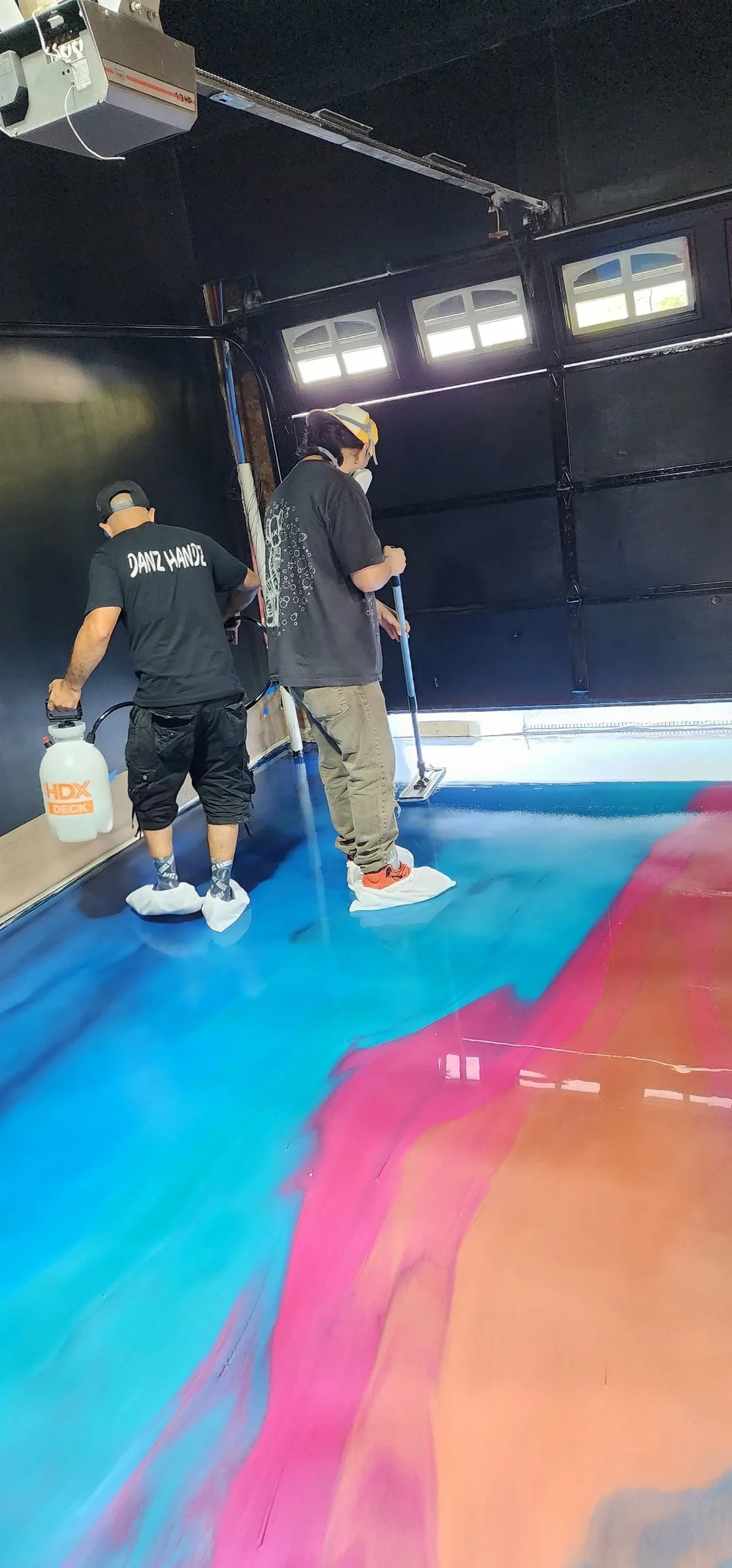
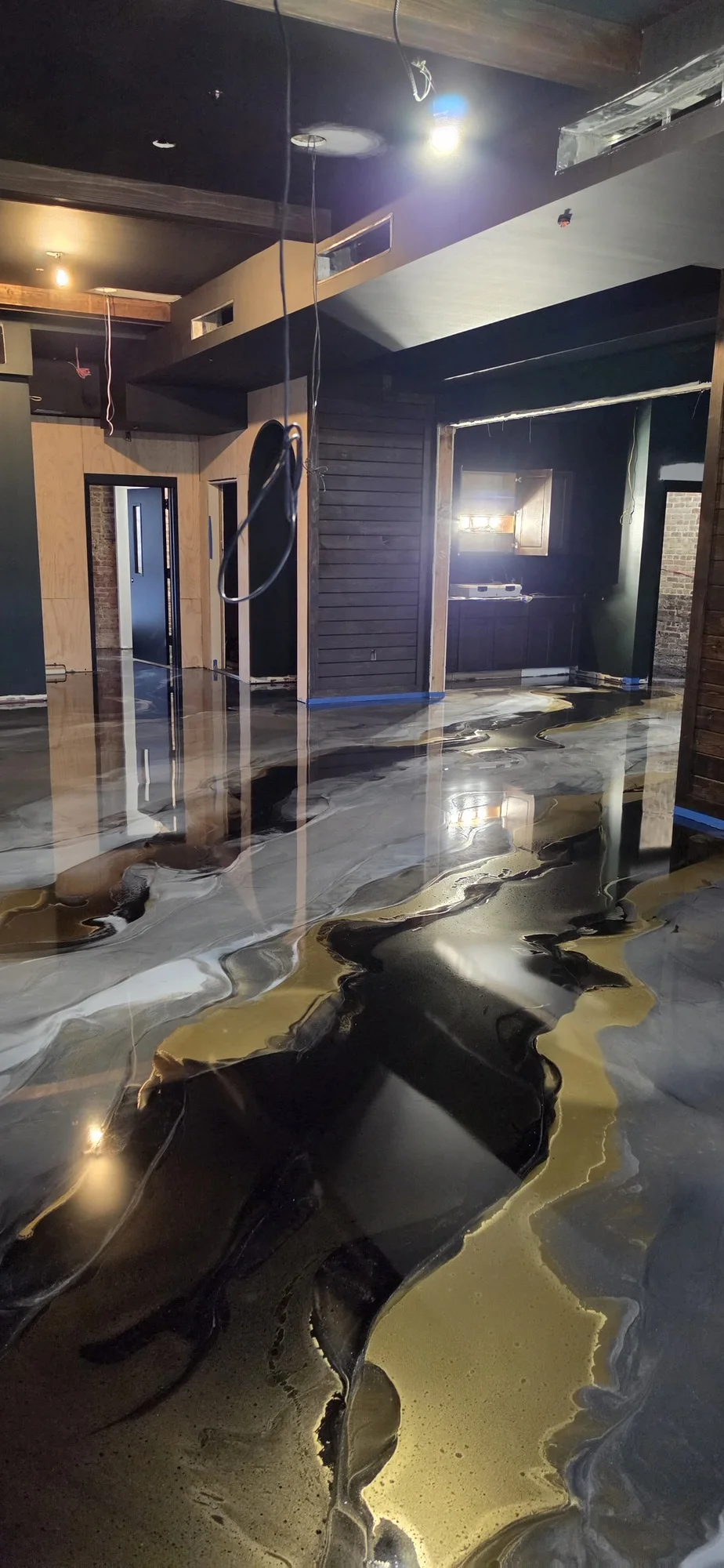
Chemical-Resistant Epoxy Flooring, from Danny’s side of the job
A chemical-resistant epoxy floor is a resin system picked for the specific chemicals in a room. Every resin has limits. Each resin and topcoat has product data showing what it handles, for how long and at what strength. Danny’s job is to match that data to the facility’s own list of what gets used and spilled, then prep the slab so the system bonds properly. A coating that handles one chemical well can fail quickly against another. That is why the list comes first.
Danny looks at the room, its traffic and what gets spilled there before he recommends anything, and he will say when a job is outside what he does.
It fits floors where spills happen and get cleaned up, such as mixing rooms, maintenance shops, wash areas and storage rooms. It is a weaker fit for floors under constant immersion or pooling chemicals, which may need a different kind of system altogether. Danny looks at the room, its traffic and what gets spilled there before he recommends anything, and he will say when a job is outside what he does. Any chemical handling rules are the facility’s to follow.
The first step is paperwork from the facility: a list of chemicals, how strong they are, how often they spill and how long they usually sit before cleanup. Danny walks the room with that list and looks at where spills land, how the floor drains and what damage the concrete already shows. Etched and contaminated concrete gets diamond ground back to clean material and repaired. The system goes down in coats with a topcoat chosen from the product data. The room stays closed through the cure, and the final walk covers spill response and cleaning.
No floor coating resists everything, so the chemical list comes before the color.
The order the work goes in
The chemical list leads this job from start to finish. Danny studies the room, its traffic and where each chemical lands before a single product is picked.

Pairing each chemical with its spot
With the facility’s list in hand, Danny walks the room and marks where each chemical is poured, mixed, stored or carried. A strong product used in one corner and a mild cleaner used everywhere lead to different choices for different areas.

Clearing containers and shelving
The facility moves stored containers out of the room following its own handling rules, and shelving comes away from the walls. Ventilation is set up, and the floor is cleaned of residue before any grinding starts.

Grinding past stained concrete
Concrete that is stained, soft or etched from past spills is ground until clean, hard material shows. Damaged areas are rebuilt, and joints near mixing stations are repaired so spills do not run into open gaps in the slab.

Topcoat set by the harshest item
The system goes down in coats, and the topcoat is picked from the product data for the toughest chemical on the list. Where one area sees far stronger exposure, it can get a heavier build than the rest of the room.
Restocking after the full cure
Containers and shelving come back only once the cure is complete. Danny walks the room with the facility contact and points out the stations where spills should be watched most closely in the months ahead.
More of Danny’s floors
Other jobs from the file, not all of them this service. See the gallery







Questions about chemical-resistant epoxy flooring
Which chemicals will the floor resist?
That depends entirely on the system, and Danny does not make blanket promises. The facility gives him its list, and he matches it against the product data for each resin and topcoat. Some chemicals rule out certain systems. If a room’s chemicals need something beyond what he installs, he will tell the facility that.
Can you coat over an existing chemical-resistant floor?
Sometimes. If the old coating is well bonded and compatible with the new system, a prep and recoat may work. If chemicals have softened it or gotten underneath it, it comes up and the concrete gets ground clean. Danny checks the condition and the old product, if anyone knows what it was.
Does this meet our safety program?
The facility’s safety program and any rules it follows belong to the facility. Danny works from the written requirements the facility provides and the product data for the system. Signing off on compliance stays with the facility. Bring the requirements to the walk so the system is chosen with them in hand from the start.
Does a chemical floor need a different topcoat than a garage floor?
Usually it does. A garage topcoat is picked for tires, oil and salt, and many industrial chemicals are harsher than anything a car drips. The topcoat for a chemical room comes from the product data for that facility’s list. Sometimes the base coats change too. Danny explains the difference on the walk.
What happens if a chemical not on the list gets spilled?
Clean it up quickly and check the floor afterward. A coating picked for one list may handle other chemicals well or poorly, and the product data is the only way to know. If a new chemical becomes part of daily work, tell Danny so he can check whether the floor suits it.
Can a small mixing room be done without closing the whole facility?
Often yes. A mixing or storage room can be closed off on its own while the rest of the building keeps working. Ventilation and access are planned so odors and dust stay out of occupied areas. Danny looks at doors and airflow on the walk and lays out how the room gets isolated.
Close to this one
Slip, chemical, impact, heat and static control. Danny looks at the space first and says what fits before anyone orders material.
- Oil-Resistant Floor CoatingsFloor coatings that keep motor oil, hydraulic fluid and cutting oils on the surface, with extra prep for oil already in the slab.
- High-Abrasion-Resistant FlooringResin floors chosen for wear in busy lanes, where carts, pallet jacks and tracked-in grit grind down ordinary coatings over time.
- Impact-Resistant Industrial FlooringHeavier resin floor builds for shops where tools, castings and steel get dropped, with repairs to the concrete underneath first.
- Static-Control Epoxy FlooringStatic-control epoxy floors for rooms with shocks, dust or equipment trouble, chosen to the room’s needs and grounded by the facility’s electrician.
- Electrostatic Dissipative (ESD) FlooringElectrostatic dissipative floors installed to a facility’s written spec, with grounding by its electrician and testing by its own third party.
Based in Cranford, NJ. Danny takes work across New Jersey, the five boroughs, Long Island, Westchester and Rockland, Fairfield County and Bucks County. See every areaSee the gallery
Danz Handz
Danny Carrero, epoxy specialist
dhepoxy@gmail.com
Cranford, NJ. Mon to Sat, 8 to 6. Hablamos español.
Tell Danny about the floor
Describe the floor and what you have in mind. Danny calls back and comes out to look at it.