
Coated barn floors that take boots, hooves and tractors
Hay and manure grind into a bare barn aisle every day, and once the concrete cracks, the dust never settles. A coated aisle sweeps clean, and Danny can add texture so hooves and wet boots have grip. The equipment bay and the workshop end of the barn can get a different finish from where the horses walk.
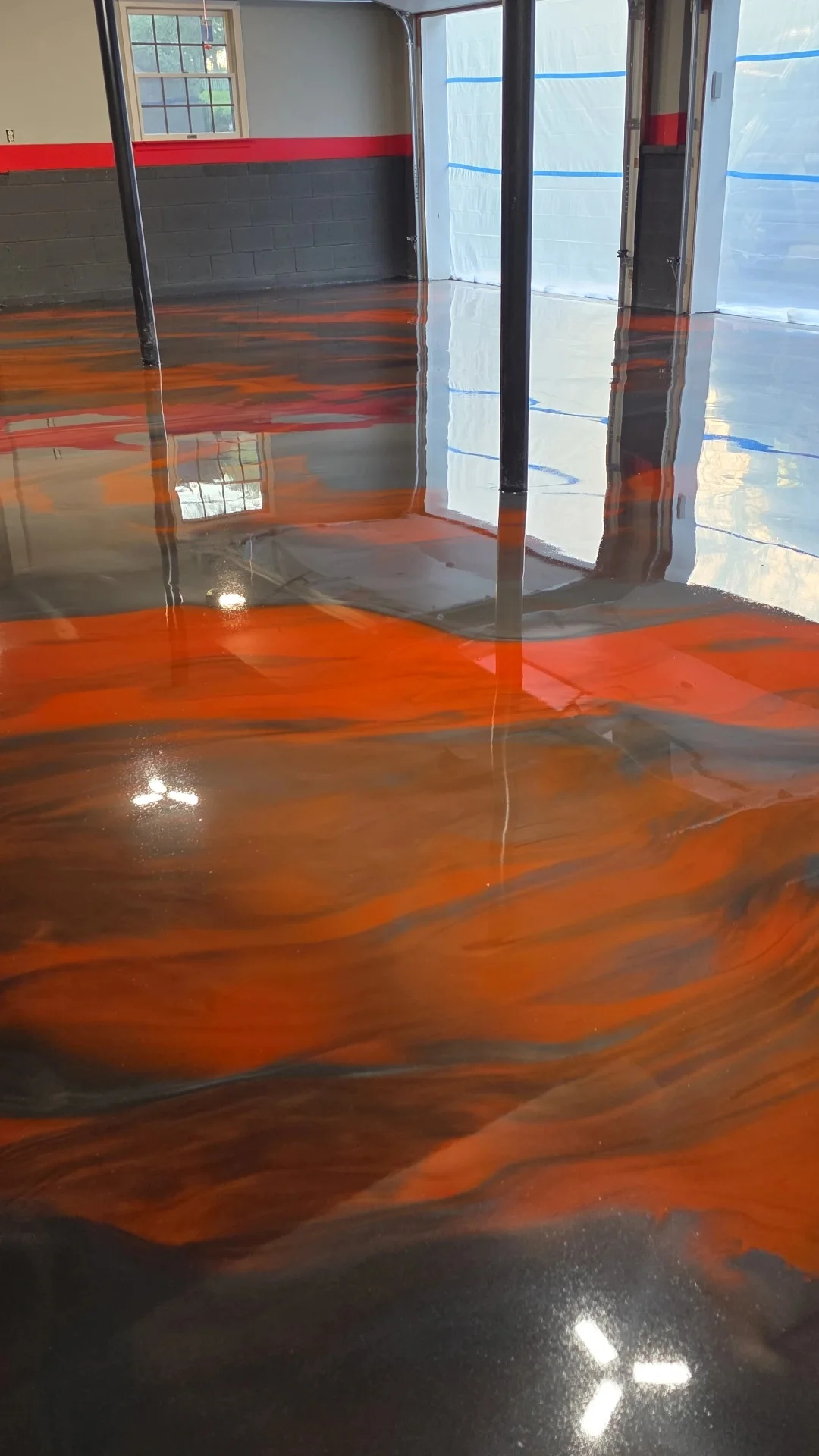
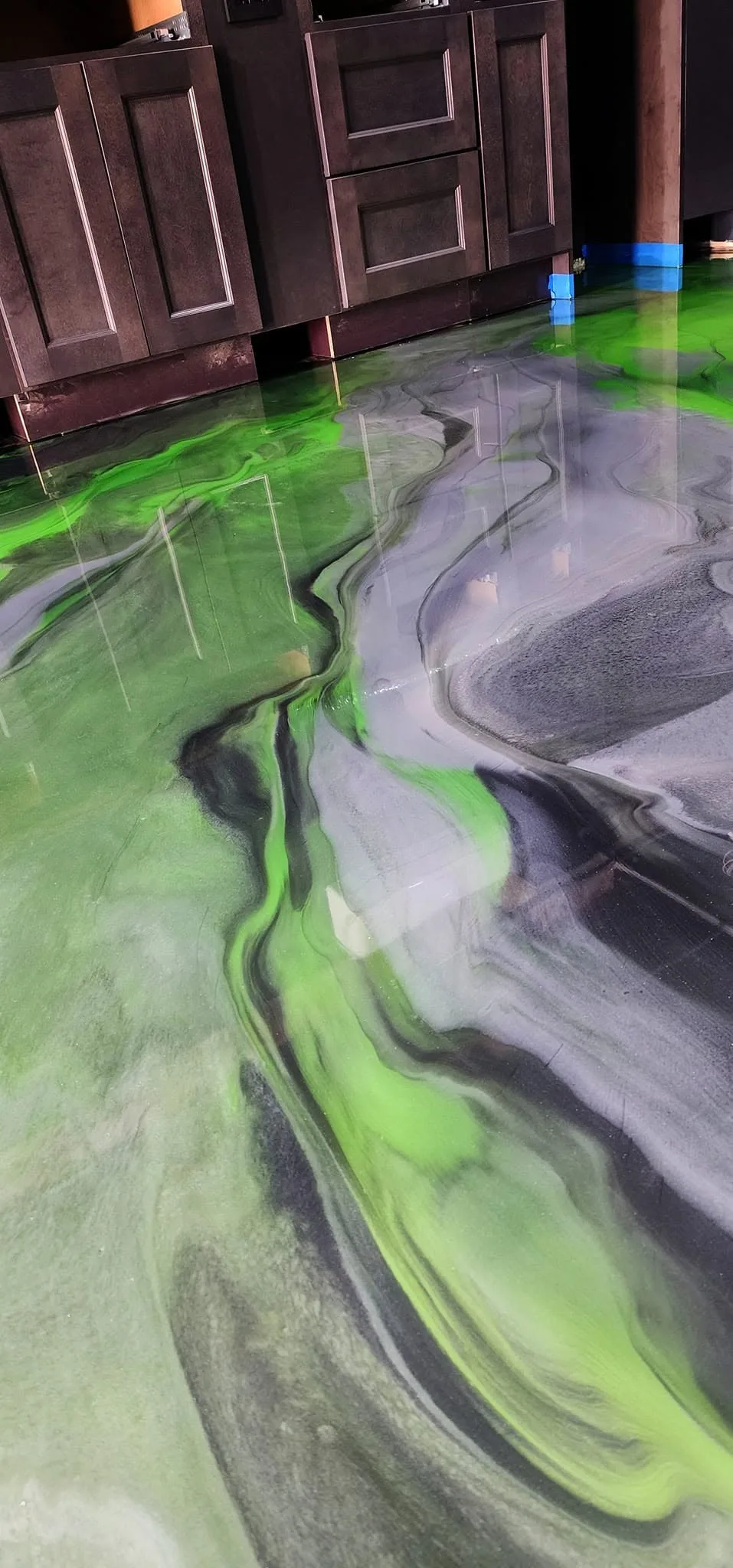
How Danny approaches barn floor coatings
A barn floor coating is a resin system laid over ground concrete, built with texture for footing on a floor that gets wet, muddy and dusty. In horse barns it usually covers the center aisle, wash stall, tack room and feed room. In equipment barns it covers the tractor and implement bays and a workshop corner. Sealing the concrete makes mud and manure easier to scrape and hose off. Danny chooses the system to the job’s requirements and the product data, based on how the barn is used.
Danny walks the barn with the owner and looks at how animals, people and machines move through it, from the doors to the stalls to the equipment bays.
Barns are hard on floors in their own way. Steel-shod hooves, tractor buckets and dragged implements can scratch and chip a coating, and a smooth glossy finish is the wrong choice where animals walk. Stalls with bedding usually stay uncoated or get rubber mats, since urine and bedding sitting on any floor is rough on it. Unheated barns also limit when a coating can go down, so timing depends on the season.
Danny walks the barn with the owner and looks at how animals, people and machines move through it, from the doors to the stalls to the equipment bays. He looks at the space, the traffic and what gets spilled on it before recommending a system. He checks the slab for cracks and low spots where water sits. The barn is cleared section by section, the concrete is diamond ground, and cracks and broken edges are repaired. Texture is built into the topcoat for footing, and the floor cures before animals or equipment come back in. The final walk follows the aisle with the owner.
Barn floors need grip first and shine last.
How Danny does the job
A barn floor is shared by livestock and machines, which rarely happens anywhere else. These steps go from watching the morning chores to leading the first horse back down the aisle.
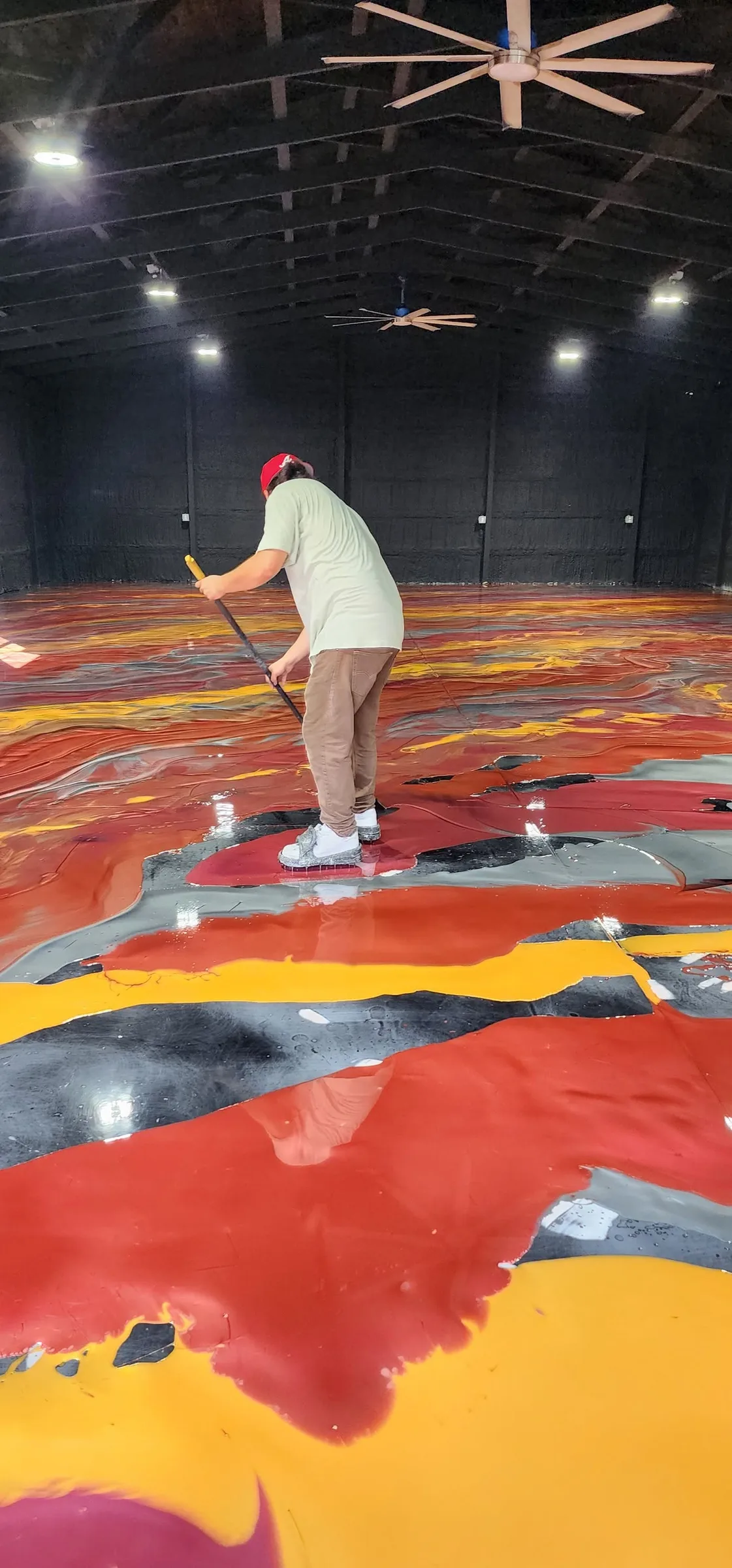

Watching the morning chores
Danny visits while stalls are mucked out and feed goes around, since that routine shows where wheelbarrows run, where water spills from buckets and where hooves stand and turn. Those routes set where the floor needs the most grip.

Finding where water sits
After hosing, low spots in the aisle and wash stall hold water the longest. They are marked so repairs can bring them up, and any drain is checked to make sure water still has somewhere to go once the floor is coated.

Scraping out years of bedding
Packed bedding, manure and hay are scraped and pressure washed out of joints and cracks, then the concrete is ground clean. Areas soaked with urine near stall doors get extra passes, since residue there keeps a coating from bonding.

Broadcasting grit for hooves
The body coat goes down with aggregate broadcast into it, and the topcoat locks that grit in place. The wash stall and aisle get the coarser texture, while the tack and feed rooms can take a finer finish that sweeps easily.
Leading the first horse back
When the floor has cured, the owner leads a calm horse down the aisle while Danny watches how the hooves land and turn. Mats go back into the stalls and wash stall, and the owner gets a cleaning routine that keeps grit off the surface.
More of Danny’s floors
Other jobs from the file, not all of them this service. See the gallery








Questions about barn floor coatings
Is a coated barn floor safe for horses?
Footing is the main concern, and Danny builds texture into the topcoat for barn floors where animals walk. Many owners also add rubber mats in wash stalls and high-traffic spots. Talk with your vet or farrier about footing for your animals, and Danny will match the finish to what the barn needs.
Can you coat a barn with equipment bays too?
Yes. Barns with tractor and implement bays can have those areas coated with a heavier build for machine traffic, and the animal areas finished with more texture. Danny walks the whole barn and plans each area based on what moves through it, so one barn can have two finishes.
Can you work in an unheated barn?
It depends on the season. Coatings need the right conditions to go down and cure properly, and a cold barn can make that hard. Danny checks the barn on the walk and sets the job for a time of year when the conditions work, or talks through temporary heat if timing matters.
Can the coating go into the stalls under the mats?
It can, but many owners leave stall floors as they are. Urine and wet bedding work under mats and sit against whatever is below for long stretches, which is hard on any coating. Where stalls are coated, mats need to be lifted and the floor rinsed regularly. Danny talks through how your stalls are bedded before recommending it.
Will the floor hold up to a skid steer or tractor bucket?
Rubber tires roll fine on a properly built floor. A steel bucket edge scraped along the surface will gouge any coating, so keeping the bucket raised or fitting a rubber cutting edge for barn work protects it. Danny can add build in the equipment bay, but scraping habits matter more than thickness here.
How do we clean manure off a coated aisle?
Scrape it with a rubber or plastic-edged tool, then hose the aisle toward the drain or door. A mild cleaner handles what is left, and harsh products are rarely needed on a sealed surface. Letting manure dry onto the floor makes it harder to lift, so cleaning during chores is easiest.
Other industries work
Auto, aviation, food, labs, schools, fitness, retail, parking and storage, matched to what actually hits the floor.
- Laboratory Epoxy FlooringResin lab floors coved and finished tight to benches, sinks and hoods, replacing lifting tile in research, testing and teaching labs.
- Chemical-Resistant Lab FloorsResin lab floors chosen by comparing your chemical inventory and safety data sheets against the product data for each system.
- School Floor CoatingsResin floors for school corridors, cafeterias, locker rooms and shop classrooms, planned around summer break and poured in sections.
- University Laboratory FlooringPoured lab floors with cove bases for campus teaching and research labs, chosen against each room’s chemical list and planned around renovations.
- Gym Epoxy FlooringCoated concrete for training gyms, with the slab sealed against chalk and sweat and rubber kept where the weights drop.
Cranford is home base. Danny covers 33 counties in New Jersey, New York, Pennsylvania and Connecticut. See every areaSee the gallery
Danz Handz
Danny Carrero, epoxy specialist
dhepoxy@gmail.com
Cranford, NJ. Mon to Sat, 8 to 6. Hablamos español.
Schedule a look at your floor
Tell Danny about the space. He calls you back, comes out, looks at the concrete and talks it through before anything gets decided.