
Fixing the broken joints forklifts bang across
That clunk a forklift makes at every joint is the edge breaking off a little more each time. The load shifts on the bump, and the gap keeps getting wider. Danny cuts the broken edges back and rebuilds them flush, so the wheels roll across with nothing to hit.


What industrial concrete joint repair really involves
Concrete slabs are cut into sections with joints so the concrete can move and crack along a straight line instead of randomly. Over time, hard forklift wheels hit those joint edges thousands of times and break them down, leaving a ragged channel. Joint repair means cleaning out the old filler and broken concrete, rebuilding the damaged edges with a repair material, and filling the joint again so wheels roll across smoothly. Danny chooses the filler and repair material to the job’s requirements and the product data.
Danny chooses the filler and repair material to the job’s requirements and the product data.
Repairing joints helps when the slab sections themselves are solid. If the sections rock under a load, or one side of the joint sits noticeably higher than the other, the problem is under the slab, and filling the top will not fix it. Joints in a freezer or in a building where the slab still moves a lot need a different approach. Danny looks for these signs on the walk and tells the client when a joint needs more than surface work.
Danny walks the aisles and pays attention to sound as much as sight, because a joint that clunks under a forklift is often worse than it looks. He looks at the space, the traffic and what gets spilled on it before recommending a system. Worn joints get marked, and he checks whether the slab rocks on either side. The old filler is cut out, broken edges are saw-cut back to sound concrete and cleaned, and the edges are rebuilt. The joint is filled and dressed flush with the floor. Repairs cure with the aisle closed, and the final walk runs each repaired joint with the client.
A joint that clunks under a forklift is usually worse than it looks.
Five stages, every time
Joint repair is done one line at a time along the aisles. These steps go from finding the bad joints by ear to driving a loaded truck across the finished ones.

Riding the lanes with a driver
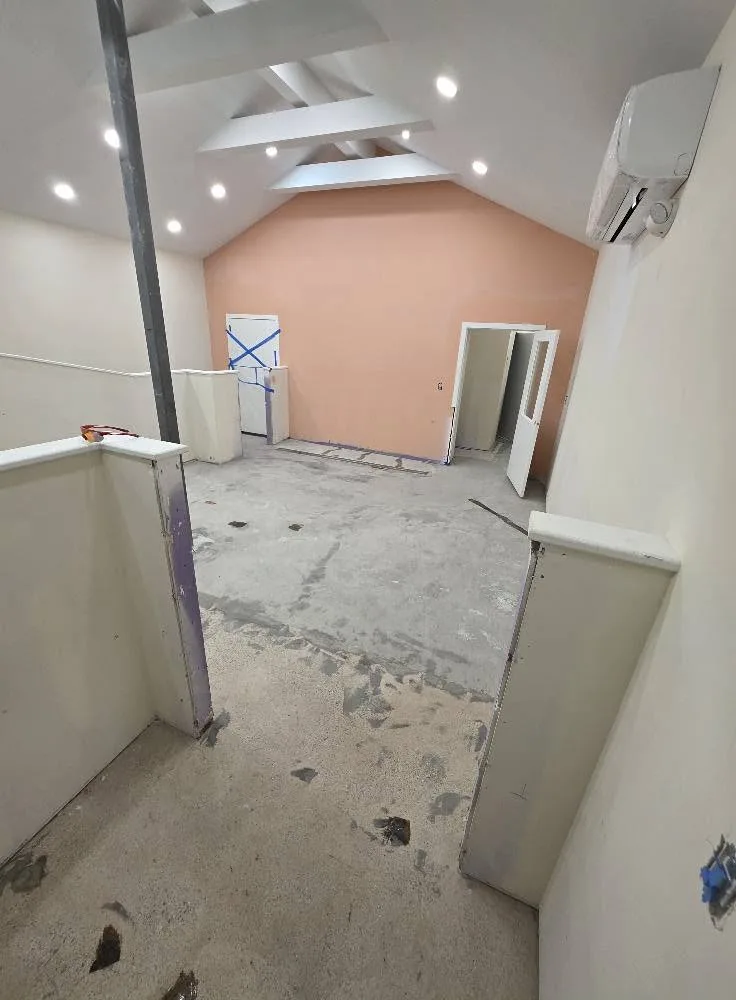
Danny walks or rides beside a forklift on its normal route and notes each joint where the truck jolts or the load shifts. Drivers usually know the worst ones by heart, and their list goes onto the map alongside his.

Watching slab edges under load
At each marked joint, he watches both slab edges as a loaded truck crosses. If one side dips or rocks, the cause sits beneath the slab, and that joint is set aside for a different repair instead of a fix at the surface.

Sawing back broken shoulders
Old filler is cut out, and the broken edges on both sides of the joint, often called shoulders, are saw-cut back to solid concrete. The opening is then cleaned of dust and loose material so the repair bonds to sound faces.

Rebuilding edges, then refilling
The shoulders are rebuilt with a repair material chosen for wheel impact, and the joint itself is filled with a material suited to how much the slab still moves. Both are dressed flush so a hard wheel rolls across without a lip.

A loaded truck crosses each joint
Once the materials cure, a loaded forklift is driven over each repaired joint while Danny and the manager listen and watch. A joint that still knocks is marked and looked at again before the aisle goes back to full traffic.
More of Danny’s floors
Other jobs from the file, not all of them this service. See the gallery





Questions about industrial concrete joint repair
Why do our joints keep breaking?
Hard forklift wheels hit the edges of each joint over and over, and an empty or worn-out joint leaves those edges unsupported. Small chips turn into wider breaks, and the bump gets worse. Rebuilding the edges and filling the joint gives wheels a smooth path across. If the slab itself moves, Danny will point that out, since filler alone will not hold.
Can joint repair be done while the warehouse is open?
Usually, yes. Danny works aisle by aisle or joint by joint, closing only the area being repaired. Each repair needs time to cure before wheels go back over it, so traffic is routed around the work. He plans the order with you so the busiest lanes are down for the shortest stretch.
Should joints be repaired before coating the floor?
Yes. A new coating laid over broken joints will crack and chip along those same lines, usually quickly. Repairing and filling the joints first gives the coating a solid, flush surface at every joint. Danny includes joint repair in the prep whenever he walks a floor that is getting coated and sees damaged joints.
Is joint filler the same thing as caulk?
No. Soft caulks and sealants suit joints that see little traffic, but under hard forklift wheels they let the edges break down. Joints in busy aisles get a firmer filler that supports the shoulders while still allowing a little movement. Danny chooses the filler from the product data based on the traffic and how much the slab moves.
Should joints in a newer building be filled right away?
A newer slab is still shrinking, and joints filled too early can pull away from the edges as the gap opens. Sometimes the right move is a temporary fill now and a final fill once the slab has settled down. Danny looks at the age of the slab and the joint widths before recommending the timing.
Will the repaired joints still show on a coated floor?
Yes, and they should. Joints exist so the slab can move, so a coating is cut or carried over them in a way that keeps that movement. You will still see a line at each joint, just a clean, flush one. Danny can tint the filler close to the floor color so the lines read quietly.
Related floors
Warehouses, plants, loading docks and machine shops, with safety striping and aisle marking when the space needs it.
- Machine Shop Floor CoatingsResin floors for shops running lathes and mills, laid around the machines so chips sweep clean and coolant stays on top.
- Maintenance Bay FlooringResin floors for in-house maintenance shops where a facility repairs its own forklifts and equipment, built light so drips and parts show.
- Industrial Workshop Floor CoatingsResin floors for shared workshops where assembly, fabrication and woodworking happen in one room, sealed against dust and easy to sweep.
- Manufacturing Floor RestorationOld plant floors ground back to sound concrete, repaired and recoated in phases, so production keeps running while the floor is restored.
- Industrial Floor Moisture MitigationSlab moisture testing and vapor-control coats laid under the floor system, so rising moisture does not push a new coating off the concrete.
Based in Cranford, NJ. Danny takes work across New Jersey, the five boroughs, Long Island, Westchester and Rockland, Fairfield County and Bucks County. See every areaSee the gallery
Danz Handz
Danny Carrero, epoxy specialist
dhepoxy@gmail.com
Cranford, NJ. Mon to Sat, 8 to 6. Hablamos español.
Tell Danny about the floor
Tell Danny what you are working with. He will call, then come look before anyone talks numbers.