
Fixing yellowed, stained or faded epoxy floors
Color can change after a floor goes down. Sun near an open garage door turns white epoxy amber, hot tires print dark marks, and some spills leave a shadow that cleaning will not lift. Danny works out whether the change sits in the topcoat or goes deeper, because that decides what the fix is.

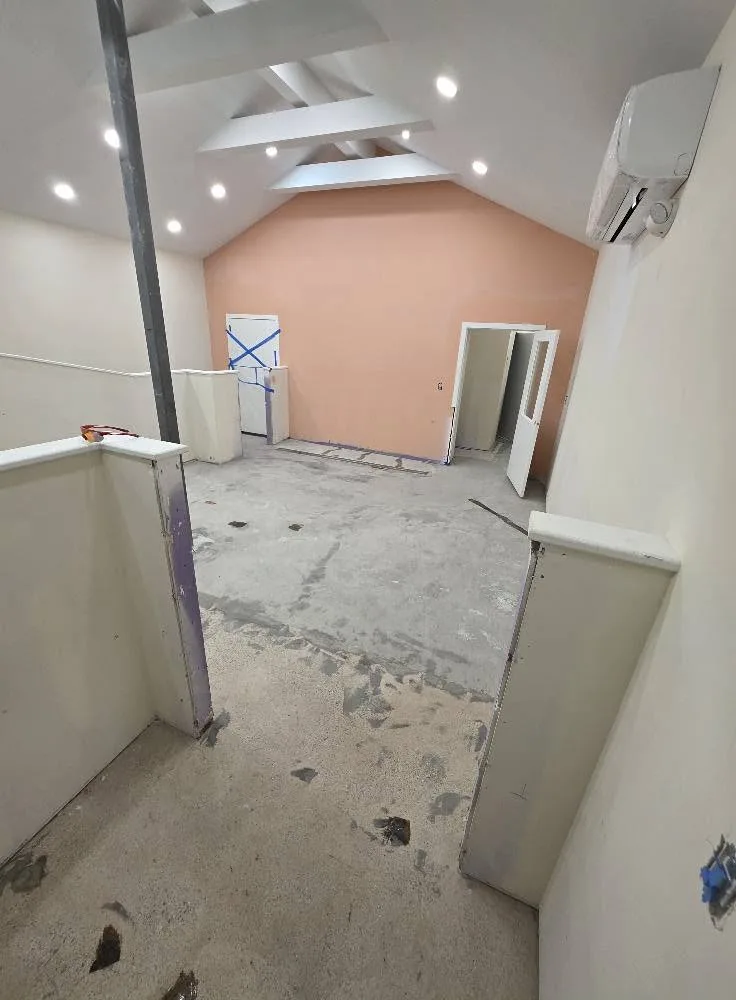
How Danny approaches discolored epoxy floor repair
Discoloration on an epoxy floor has a few sources. Sunlight through a garage door or a window can yellow some epoxies over time, especially light colors. Hot tires can leave brown prints that work their way down into the coating. Chemicals, rust from a leaking water heater and harsh cleaners can stain or dull the surface. The repair depends on how deep the color change goes: some stains are only in the clear topcoat, and others reach the color layer underneath.
The repair depends on how deep the color change goes: some stains are only in the clear topcoat, and others reach the color layer underneath.
When the change is in the topcoat, sanding it off and pouring a fresh clear coat brings the true color back. When the base color itself has shifted, the floor gets a new color coat before the topcoat. Danny chooses the new topcoat with the room’s sun exposure in mind and goes by the product data for that, without promising a floor will never change. A floor that is stained and also peeling or soft is a delamination job first, and the color comes after the bond is fixed.
Danny walks the floor and starts by cleaning a test patch in the worst spot, because a surprising number of discolored floors are just dirty or coated in cleaner residue. If the stain stays, he sands a small area to see whether the color comes back once the topcoat is off. That tells him which repair the floor needs. The room is then emptied and closed, the surface is sanded evenly, and either a new clear coat or a new color and clear coat is poured. After the cure, he walks the floor with you in daylight, the same light that showed the problem.
A floor that yellowed near the garage door was usually reacting to the sun.
How the work runs
Fixing a color problem starts with finding which layer changed, so the stages below work from the surface down before any sanding begins.


Mapping the color change
Danny notes where the color shifted and how sharply it fades. A gradient from the garage door inward points to sunlight. Brown rectangles where the tires park point to tire marks. A ring around a water heater points to rust. The shape of a stain is the first clue to its cause.

Solvent and sanding tests
In an out-of-the-way spot, a little solvent on a rag shows whether a stain is sitting on the surface, and a few passes of fine abrasive show whether the color returns once the top skin is gone. These two small tests decide between a clean, a clear recoat and a new color coat.

Stopping the source
A rusting water heater base, a hot-tire parking spot with no mat or a leaking chemical jug will stain the new finish the same way. Danny points out the source to the owner, and the leak or the habit gets fixed before the room is booked for the recoat.
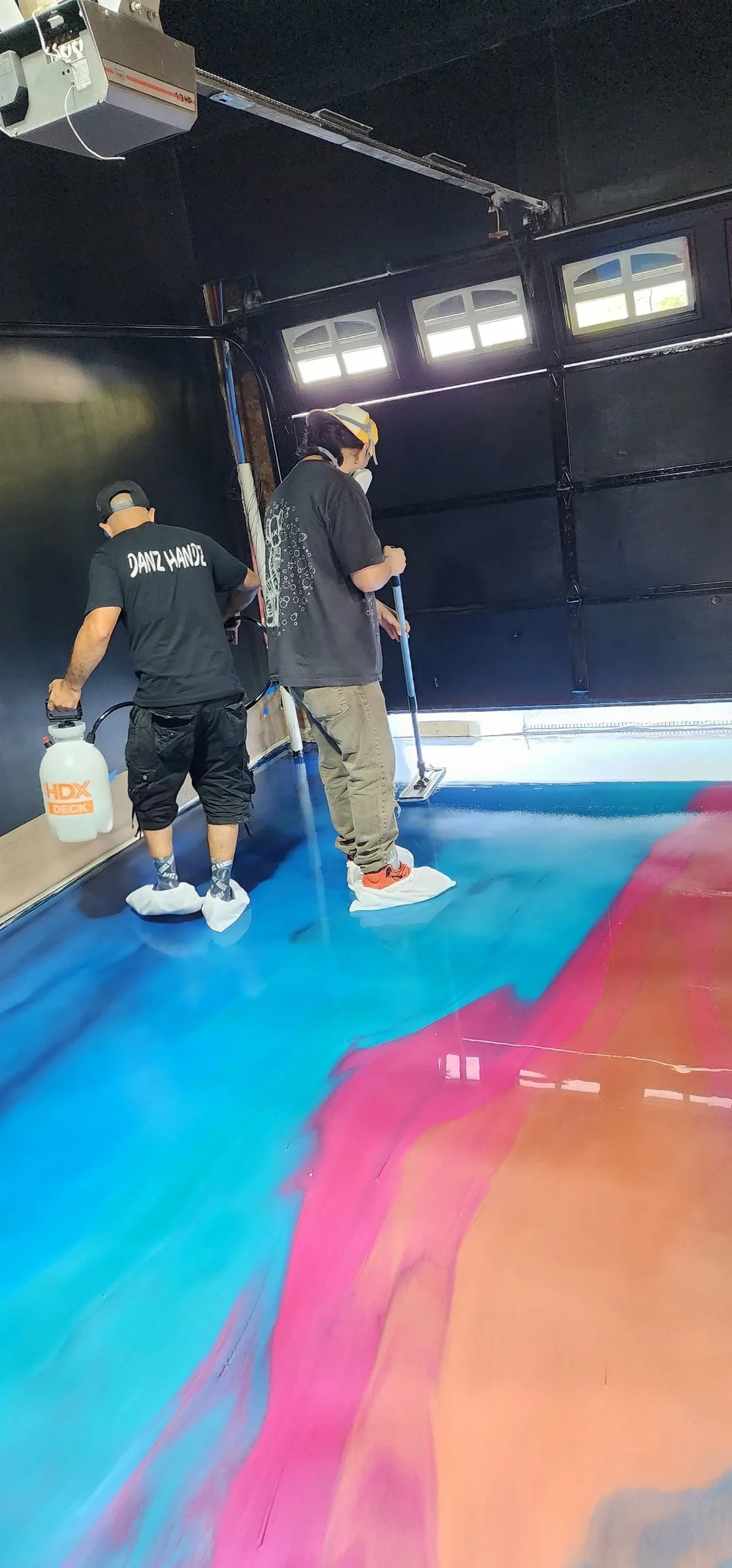
Recoloring under a fresh clear
When the base color has shifted, the sanded floor gets a new color coat matched to the original or changed to something new, followed by a clear layer picked for the room’s sun exposure from the product data. When only the topcoat changed, the clear alone goes back on.

Daylight check by the door
After the cure, Danny and the owner look at the floor with the garage door open or the blinds up, the same conditions that caused the yellowing. He points out the area that gets the most sun, so the owner knows where any future change would show first.
More of Danny’s floors
Other jobs from the file, not all of them this service. See the gallery




Questions about discolored epoxy floor repair
Why did my epoxy floor turn yellow?
Many epoxies amber when they get regular sunlight, and light colors show it most. It tends to start near garage doors and windows and fade toward the back of the room. Danny looks at where the color changed and how the room is lit before choosing a topcoat suited to that exposure, based on the product’s data.
Can tire marks be removed from an epoxy floor?
Surface marks usually come off with the right cleaner. Brown prints that have worked into the coating do not, because the color has moved into the topcoat itself. Those are fixed by sanding the topcoat in that area, or across the floor if they are widespread, and pouring a new clear coat over a clean surface.
Do I need a whole new floor to fix the color?
Rarely. If the floor is still bonded and the color change sits in the top layers, sanding and recoating brings it back without grinding to concrete. A full replacement only comes up when the coating is also failing or when you want a different system altogether, and Danny will tell you which situation you are in.
Can bleach or a strong cleaner take out a stain in epoxy?
Harsh cleaners usually make things worse. Bleach and some degreasers can dull or etch a topcoat and leave a pale spot that is harder to blend than the original stain. A neutral cleaner and a soft brush are the safe first try. If that does nothing, the stain is in the coating, and sanding is the real fix.
Will a new color hide an old stain that sits deep in the coating?
Usually. Once the stained topcoat is sanded, an opaque color coat covers whatever discoloration remains in the layers below, as long as the floor is still bonded. Very dark rust can bleed slightly through a light color, so Danny may suggest a slightly deeper shade or an extra base coat where the stain was heaviest.
Does the discoloration mean the floor is breaking down?
Not by itself. Yellowing and staining are color changes, and many discolored floors are still tightly bonded and wearing normally. Danny checks for softness, chalkiness and lifting at the same visit, since a coating that is both stained and powdery has a different problem than one that only changed color.
Next to this on the list
Peeling, bubbling, chipped or faded coatings, patched or recoated, plus upkeep plans for floors that work hard.
- Floor Coating Inspection ServicesA hands-on walk of an existing coated floor, with a plain read on what is sound, what is failing and what each part needs.
- Protective Topcoat RenewalA fresh clear wear layer poured over a sound coated floor before traffic reaches the color, with the option to change the sheen.
- Scheduled Commercial Floor MaintenanceFloor maintenance visits set on the business calendar, with small fixes handled on the spot and bigger work booked for planned closures.
- Epoxy Floor Replacement and ReinstallationFailed epoxy floors ground off to bare concrete and replaced from the base up, with the chance to switch to flake or a high-end metallic.
- Epoxy Floor RepairRepair for chipped, peeling, cracked and worn epoxy floors, starting with why the floor failed before deciding to patch, recoat or redo.
From Union County out to the Lehigh Valley, Long Island and Fairfield County, the work is all within about 60 miles of Cranford. See every areaSee the gallery
Danz Handz
Danny Carrero, epoxy specialist
dhepoxy@gmail.com
Cranford, NJ. Mon to Sat, 8 to 6. Hablamos español.
Start with a visit
A short note about the space is enough. Danny calls back and books a walkthrough.