
Dining room and bar floors with some personality
A restaurant’s dining room and bar take spilled drinks, dragged chairs and a mop every night, and they set the mood the moment someone walks in. Front of house is where a metallic or flake floor earns its keep, and Danny fits the install into the days you are closed.

Restaurant Epoxy Flooring, start to finish
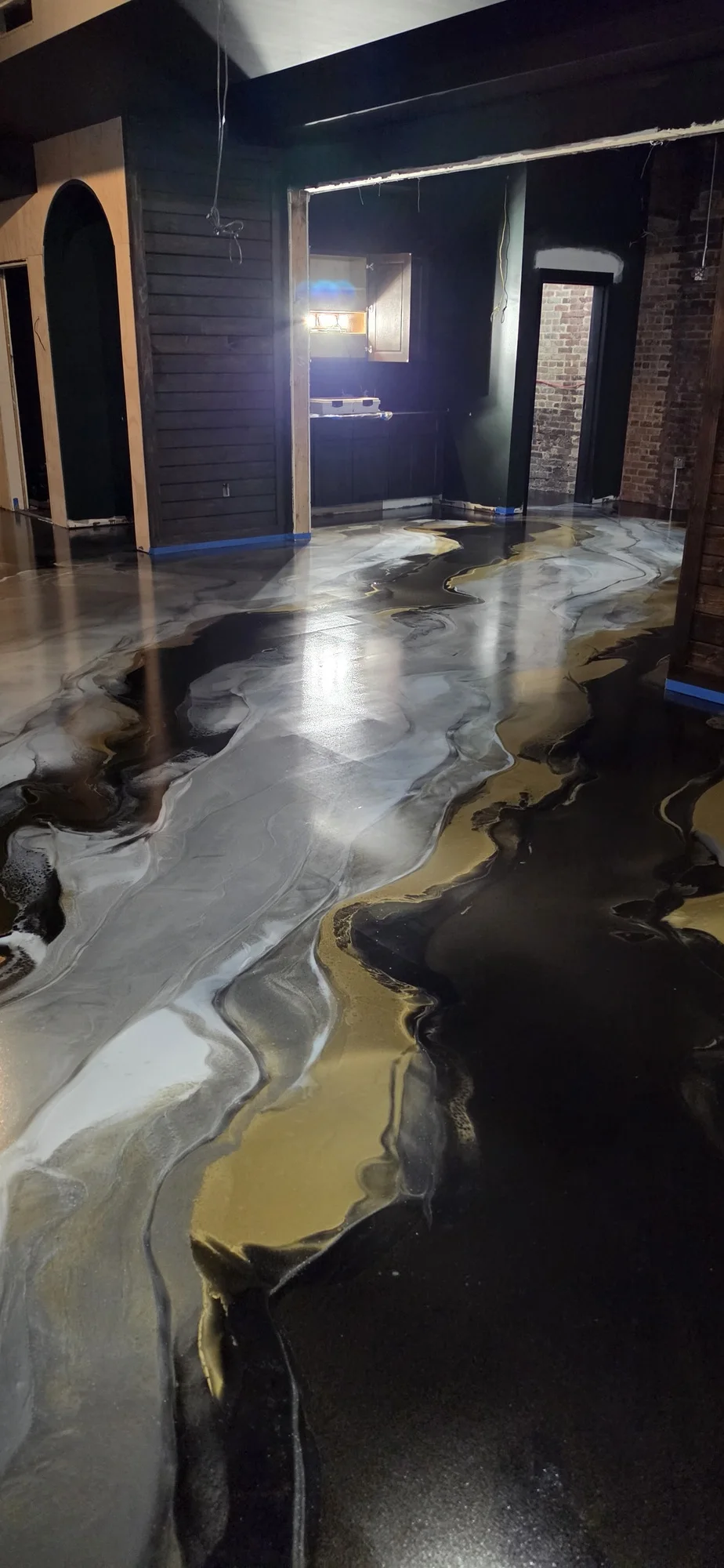
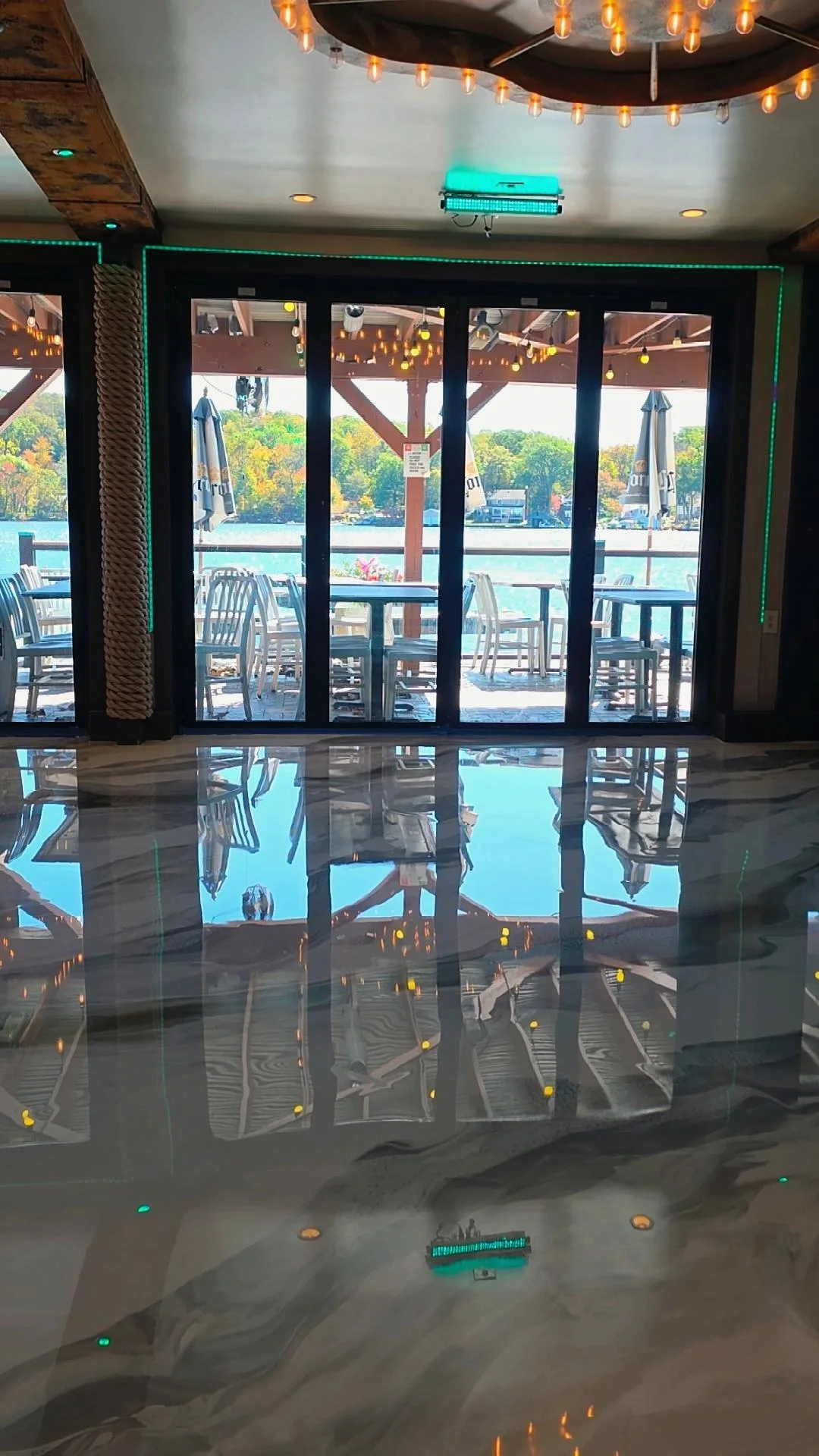
Front-of-house floors are where Danny’s decorative work fits a business best. A metallic floor behind a bar or across a dining room reads as a design piece, and a solid or flake floor gives a cleaner, quieter look. Either way, the system is ground, repaired, primed, poured and topcoated, with a top chosen for chair traffic and nightly mopping. Satin and matte tops hide scuffs better than full gloss. Texture can be added at the bar, the service stations and near the entrance, where spills and rain make the floor wet.
A metallic floor behind a bar or across a dining room reads as a design piece, and a solid or flake floor gives a cleaner, quieter look.
Dining rooms, bars, brewery taprooms, cafes, coffee shops and counter-service restaurants are the usual spots. The kitchen is a different story. Hot water, grease and steam on a cook line are hard on decorative epoxy, and those back-of-house floors usually call for a cement-based urethane or another system made for kitchens. Smooth glossy floors can also be slippery when a drink hits them, which is why texture near the bar matters. And the restaurant has to close for the work, so the schedule gets built around the nights the dining room is dark.
Danny sees the room the way guests do, from the door and from the seats, and asks the owner about the concept, the lighting and the tables and chairs going in. He walks the slab, often under old tile or carpet, and notes the bar line, service stations and where staff carry trays. Work happens on the days the restaurant is closed. Tables and chairs come out, the floor is ground and repaired, then primed and poured, with the metallic work planned around where tables will sit, so the boldest movement stays in the walkways. Texture goes in at the wet zones. The final walk happens with the dining room lights set for service.
A dining room floor gets judged by guests at the door and by staff at closing.
What happens on the job
A restaurant floor is planned around service, so the steps follow the dining room’s layout, the closed days and the first night guests sit down again.

Seats, stations and tray paths
Danny maps where tables sit, where servers walk with trays, where the bar and service stations are and where guests wait. That map shows which areas need texture, which need the toughest top and where the design should show.

Sampling under dinner lighting
Color and sheen samples are viewed with the dining room lights set the way they are during service, since a floor that looks right at noon can read differently under dim, warm evening light.

Clearing and protecting the room
Tables, chairs and bar stools come out, and fixed booths and the bar front are protected with film and tape. Kitchen doors are sealed so grinding dust does not reach food or storage areas.

Pouring toward the exit
After grinding, repairs and primer, the pour starts at the farthest corner and works toward the exit. The bar footing, service stations and entrance receive texture in the topcoat while the dining area keeps its smooth finish.

Chair glides before reopening
Before tables return, glides go on every chair and stool leg. Danny walks the room with the owner, checks the textured areas underfoot and confirms when the floor can take a full night of service.
More of Danny’s floors
Other jobs from the file, not all of them this service. See the gallery








Questions about restaurant epoxy flooring
Can a metallic floor work in a busy restaurant?
Yes, with the right topcoat and some planning. A tough top takes chair traffic and nightly mopping, and a satin sheen hides scuffs. The boldest metallic work goes in walkways and open floor, and texture goes where drinks spill. A bar floor that sees heavy late-night traffic may get a calmer pattern than a quiet dining room.
Should the kitchen get the same floor?
Usually not. Kitchens see hot water, steam, grease and heavy cleaning chemicals that wear decorative epoxy fast. A cement-based urethane or another system made for kitchens holds up better there. Many restaurants pair a decorative front of house with a heavy-duty kitchen floor and a clean transition at the doorway.
How long will we be closed?
It depends on the size of the room, what has to come up first and the system. Old tile removal and slab repairs add time. A simple solid or flake floor can often fit a short closure, and a metallic dining room takes longer. Danny gives you the schedule after the walk-through, before you book anything.
Can the floor match our bar or counter surfaces?
It can often coordinate with them. Danny also pours epoxy countertops, so a metallic floor and a counter or bar surface can share colors and pigments for a connected look. Matching exactly is harder across different surfaces and lighting, so he shows samples of both side by side before anything is poured.
How does a dining room floor handle spilled red wine and sauces?
A sealed topcoat keeps spills on the surface, so wiping them up during or after service usually leaves no mark. Strong pigments left overnight can tint light colors, which is why many restaurants choose mid-tones or a pattern that hides the occasional mark. Danny talks through color with the menu and the bar program in mind.
Can outdoor patio seating get a matching floor?
A patio can get a coating in a coordinating color, though outdoor slabs need a color-stable top for sun and texture for rain. A metallic pour is usually kept indoors. Danny looks at the patio slab, its drainage and its exposure, and suggests a system that ties visually to the dining room while handling the weather.
Also in commercial
Salons, barbershops, showrooms, restaurants, offices, gyms and clinics, worked around your hours.
- Property Management Floor Coating ServicesFloor coating for property managers, with one contact walking every building and consistent colors across laundry rooms, storage and lobbies.
- Tenant Improvement FlooringCoated concrete floors for tenant build-outs, timed into the construction schedule between the messy trades and move-in day.
- Commercial Renovation Floor CoatingsCoated floors for commercial renovations, starting with removing the old flooring and adhesive and repairing whatever the slab reveals.
- Retail Store Epoxy FlooringMetallic, solid and flake epoxy floors for boutiques and shops, matched to the brand and scheduled around store hours.
- Shopping Center Concrete Floor CoatingsPhased coating plans for shopping center corridors, service halls, restrooms and vacant units, kept consistent and scheduled around shoppers and tenants.
He drives out from Cranford about 60 miles in every direction for floors like this one. See every areaSee the gallery
Danz Handz
Danny Carrero, epoxy specialist
dhepoxy@gmail.com
Cranford, NJ. Mon to Sat, 8 to 6. Hablamos español.
Book a walkthrough
Start with the room and the idea. Danny follows up by phone and comes to see the slab.