
Polyaspartic coatings and where they earn their place
Polyaspartic is a resin related to polyurea that cures quickly and holds its color in sunlight. The speed that gets a garage or shop floor back in use sooner also leaves less time to work it, and Danny explains where that tradeoff matters before suggesting it over epoxy.


The short version of polyaspartic floor coatings
Chemically, it is an aliphatic polyurea, a coating that stays clear and resists turning yellow under UV light, which plain epoxy does over time. It goes on thin, cures fast and finishes hard and glossy. It is most often used as a topcoat over flake or quartz, and some systems use it top to bottom. Products vary a lot between makers, in how fast they set, how thick they go on and what they are rated to handle, so the specific product is chosen from its product data and the job.
Base, broadcast and topcoat go on in sequence, and the final walk happens once the floor is ready to use.
Garages with the door open to afternoon sun suit it, as do floors that need to be back in service soon and flake systems that want a clear, tough top. Its short working time is the tradeoff. It does not suit metallic art floors, where the pigment needs time to move, and it leaves less room for error on a large pour. Fast cure also means humidity and temperature on install day matter more. Danny looks at the room, the traffic and what gets dropped or spilled on it before he recommends polyaspartic for the job.
The walk comes first: how much sun hits the floor, what parks or rolls on it, what gets spilled and how soon the owner needs it back. If polyaspartic fits, the slab is diamond ground, cracks and spalls are repaired and the floor is vacuumed clean. Because the material sets fast, Danny mixes it in batches sized to what he can spread before it starts to stiffen, and he plans the pour so the coating lands in a wet edge without lap marks. Base, broadcast and topcoat go on in sequence, and the final walk happens once the floor is ready to use. Most of what goes down comes from Bulletproof Resins, his material partner, picked to suit the room and how it gets used.
Polyaspartic buys speed, and it gives up working time to get it.
Five stages, every time
Every floor goes through the same five stages. What changes is how much each one takes, and that gets settled at the walkthrough.


Walk the space
He walks the floor with you, checks the condition of the concrete and notes anything that needs fixing first.

Prep the concrete
The surface gets diamond ground so the coating can bite, with a vacuum on the grinder pulling the dust.

Fix what is underneath
Low spots, holes and broken edges get dealt with while the slab is still bare.

Lay it down
Base coat, color or broadcast, then the topcoat, laid down by hand in the order the system calls for.

Cure and the final walk
The room stays closed for the cure time Danny gives you up front, then you walk the floor together.
More of Danny’s floors
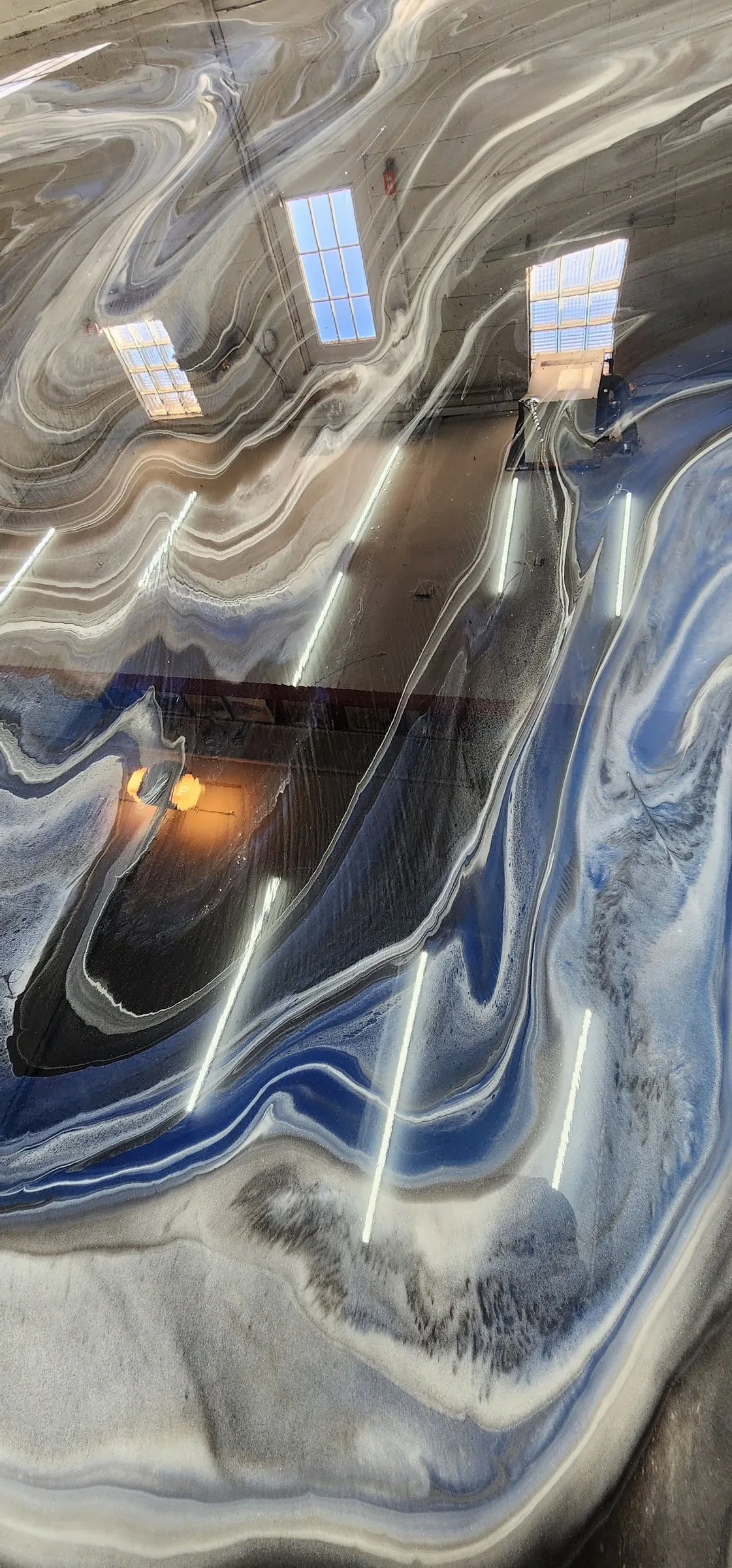
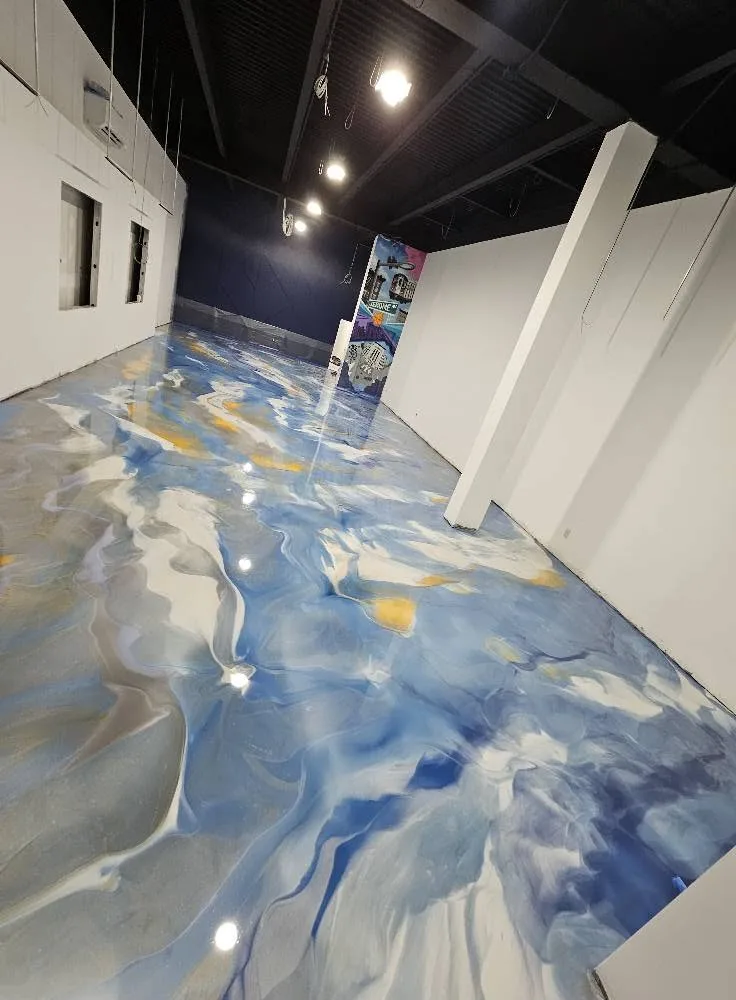
Other jobs from the file, not all of them this service. See the gallery






Questions about polyaspartic floor coatings
Is polyaspartic better than epoxy?
Each has a job. Polyaspartic holds its color in sun and cures faster, which makes it a strong topcoat. Epoxy gives more working time, builds thicker and bonds well to prepared concrete, which is why many systems use epoxy below and polyaspartic on top. Danny recommends one based on the room, how it gets used and what the floor has to look like.
Can polyaspartic go on in one day?
Some systems are installed and topcoated in a single day, depending on the product, the prep and the conditions. Prep time does not shrink because the coating is fast, and a slab that needs crack and spall work still needs it. Danny gives you the real schedule after he has seen the slab and picked the product.
Why not use polyaspartic for a metallic floor?
Metallic floors depend on the pigment moving in the wet resin while Danny works it, and polyaspartic sets too quickly for that. The metallic layer is poured in epoxy, which stays open long enough to shape. A polyaspartic topcoat can go over the finished metallic when the room gets sun, so the art below keeps its color.
Who actually does the work?
Danny does. He walks the space, plans the floor with you and runs the pour, so the person you talk to on the phone is the one on your job.
How far do you travel?
About 60 miles out from Cranford: North and Central Jersey, New York City and Long Island, Westchester, Rockland and Orange, Fairfield County in Connecticut, and Bucks, Montgomery, the Lehigh Valley and the Poconos.
How long before I can use the floor?
It depends on the system and the temperature. Danny gives you the times for your floor before the job starts so you can plan around them.
Related floors
Polyaspartic, polyurea, urethane cement, self-leveling and fast-cure systems, picked to fit the room and the schedule.
- Cementitious Urethane FlooringA thick, cement-filled urethane floor for kitchens, breweries and wash areas that see hot water, steam and daily cleaning.
- Self-Leveling Epoxy FlooringEpoxy poured and spread so it flows into a smooth, solid-color surface without roller marks, over a slab leveled and primed first.
- Self-Leveling Resin FlooringPoured resin floors in epoxy, urethane or both, chosen by the room’s light and use for a smooth surface with no grout lines.
- High-Build Epoxy Floor SystemsThick-coat epoxy systems for warehouses and shops, built heavier where carts and forklifts wear floors down, with work phased around operations.
- Fast-Curing Concrete CoatingsResin systems picked for a quick return to service, so restaurants, stores and offices can coat a floor inside a short closing window.
Cranford is home base. Danny covers 33 counties in New Jersey, New York, Pennsylvania and Connecticut. See every areaSee the gallery
Danz Handz
Danny Carrero, epoxy specialist
dhepoxy@gmail.com
Cranford, NJ. Mon to Sat, 8 to 6. Hablamos español.
Start with a visit
Tell Danny what you are working with. He will call, then come look before anyone talks numbers.