
Coating a backyard patio that lives under open sky
Out back, a patio slab takes rain and snow with nothing over it and then bakes all summer, so it goes gray and stained. Danny looks at where water runs off it and whether the surface has started to scale before recommending a system, and most homeowners want it finished before the outdoor season starts.
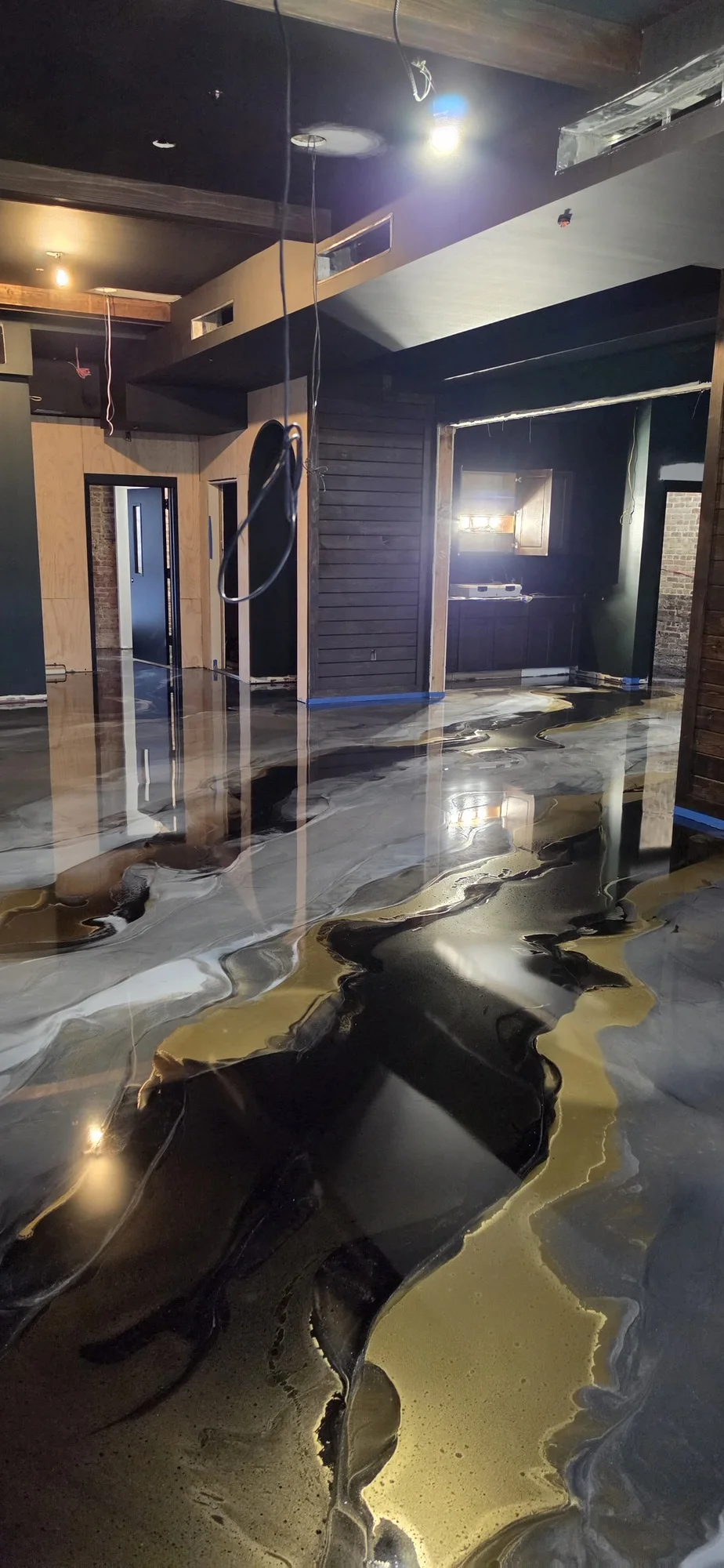

How Danny approaches residential patio coating
An outdoor patio coating is a resin system put together for weather. The slab is ground, repaired and primed, then given a base coat, often with flake or quartz broadcast into it for texture and color. The top layer is chosen for sun exposure and the way an open slab heats and cools. The result is a finish that sheds spills and rinses clean with a hose. Color choices lean toward tones that stay comfortable in direct sun, since dark floors get hot.
The result is a finish that sheds spills and rinses clean with a hose.
It works on a patio that is still structurally sound, even if it looks rough. Heaved sections and slabs that pond water after every storm need concrete work first, and a coating will not fix them. Drainage matters most: the patio should pitch away from the house, and the coating follows that pitch. Pavers and flagstone are usually not candidates for this kind of system. Danny will tell you on the first visit which side of that line your slab is on.
On a patio, Danny looks at the weather before he looks at the colors. He walks the slab and checks where water runs after a rain, noting every crack and chipped edge along the way. Prep happens on a dry stretch: grinding, patching, then cleaning every bit of dust and organic debris out of the joints. The coating goes on when the forecast gives the slab time to cure without rain or dew sitting on it. If the weather turns, the pour moves. Afterward he hoses down the finished patio with you so you can see how it sheds water.
On an open slab, the forecast decides the pour date.
Five stages, every time
An open patio takes the weather straight from the sky, so this process is planned around rain, puddles and the run of dry days a cure needs before anyone sets out chairs.

Watch where the rain goes
Danny asks what the patio does after a storm and looks for the stained rings where water sits. Any spot that ponds against the house or along a step gets noted, since a coating follows the slope it is given and will not move water on its own.

Strip off years of weather
Grinding takes off the gray, chalky top layer along with old sealer and the green film that grows in shady corners. Joints are raked out and blown clean, because dirt and roots left in them keep the coating from bonding at the edges.

Rebuild scaled and broken edges
Freeze and thaw pops the surface off patios, most often at the slab edge beside the lawn. Danny fills the scaled spots, rebuilds chipped edges and grinds everything flat. Cracks that have clearly moved lead to a talk about concrete work before any coating.

Broadcast grip into the base
On a dry forecast, the primer and base go down and flake or quartz is thrown into the wet base so bare feet and wet sandals have something to hold. The top layer is then picked for strong sun and the hot and cold swings of an open slab.
Keep the patio clear through the cure
The patio is roped off until the coating has cured, and the pour moves if rain or heavy dew is coming. When it is ready, Danny runs a hose across it with the owner so they can both watch where the water goes.
More of Danny’s floors
Other jobs from the file, not all of them this service. See the gallery








Questions about residential patio coating
Can you coat a patio that already has cracks?
Hairline and surface cracks get ground out and filled before coating. Cracks that are wide or still moving usually come back through any coating, because the concrete under it is still shifting. Danny will point out which cracks he can repair and which ones are a sign the slab needs concrete work before a coating makes sense.
Will a coated patio be too hot to walk on barefoot?
Color matters more than anything here. Darker floors in full sun get hot, the same way dark pavement does. Lighter flake blends and lighter base colors stay more comfortable underfoot. If the patio gets strong afternoon sun and the kids walk across it barefoot, Danny will steer you toward a lighter palette from the start.
How do you clean a coated patio?
A broom and a garden hose handle most of it. For grease or tree sap, a mild cleaner and a soft brush work without hurting the topcoat. Skip pressure washers held close to the surface, and skip harsh solvents. Wet leaves left sitting for weeks can stain any outdoor surface, so sweep them off in the fall.
Can the patio be coated in the fall before winter sets in?
Sometimes, as long as the days and nights stay warm enough for the product to cure and the slab is dry. Cold, damp weeks slow everything down, so late-season jobs leave less room for weather delays. Danny reads the forecast and the product data together and will push a fall job to spring if the window is too tight.
Will patio furniture scratch the coating?
Metal chair legs dragged across any outdoor coating will wear it in time, and grit underneath makes it worse. Plastic or rubber caps on the feet help a lot, and so does lifting heavy pieces instead of pulling them. A flake or quartz finish hides light wear better than a solid color would on an open patio.
What happens where the patio meets the house?
That joint gets cleaned out and sealed before the coating goes down, so water runs away from the foundation instead of into the gap. Danny keeps the coating off siding and door sills and finishes it in a clean line. If the patio pitches toward the house, that has to be corrected first or water will keep collecting there.
Related floors
Garages, basements, laundry rooms, mudrooms, home gyms and porches, each floor laid out for how the room gets used.
- Pool Deck Coating SystemsTextured coatings for concrete pool decks, with grip set for bare feet and a topcoat chosen for sun and splashing pool water.
- Outdoor Entertainment Area CoatingsOutdoor coatings for grilling, bar and seating areas, with zones laid out by use and grease ground out before the pour.
- Residential Driveway CoatingsTextured coatings for concrete driveways, with crack repair, a topcoat chosen for weather, and honest advice when a slab needs concrete work first.
- Concrete Walkway CoatingsTextured coatings for front walks and garden paths, with rebuilt edges and colors that can match a coated porch or driveway.
- Residential Epoxy Floor RestorationRestoring older epoxy floors that still bond to the slab, with chip repair, a fresh topcoat and the option to change color.
Danny works out of Cranford, NJ and covers about 60 miles: North and Central Jersey, the city and Long Island, the Hudson Valley counties, Fairfield County and eastern Pennsylvania. See every areaSee the gallery
Danz Handz
Danny Carrero, epoxy specialist
dhepoxy@gmail.com
Cranford, NJ. Mon to Sat, 8 to 6. Hablamos español.
Start with a visit
Tell Danny what you are working with. He will call, then come look before anyone talks numbers.