
Coated floors for mechanical and equipment rooms
In a boiler or pump room, a sealed floor is how you spot a new leak. On bare, stained concrete a drip soaks in and disappears, while on a light coating it sits there as a puddle somebody will notice. Danny works around the equipment that cannot be moved.
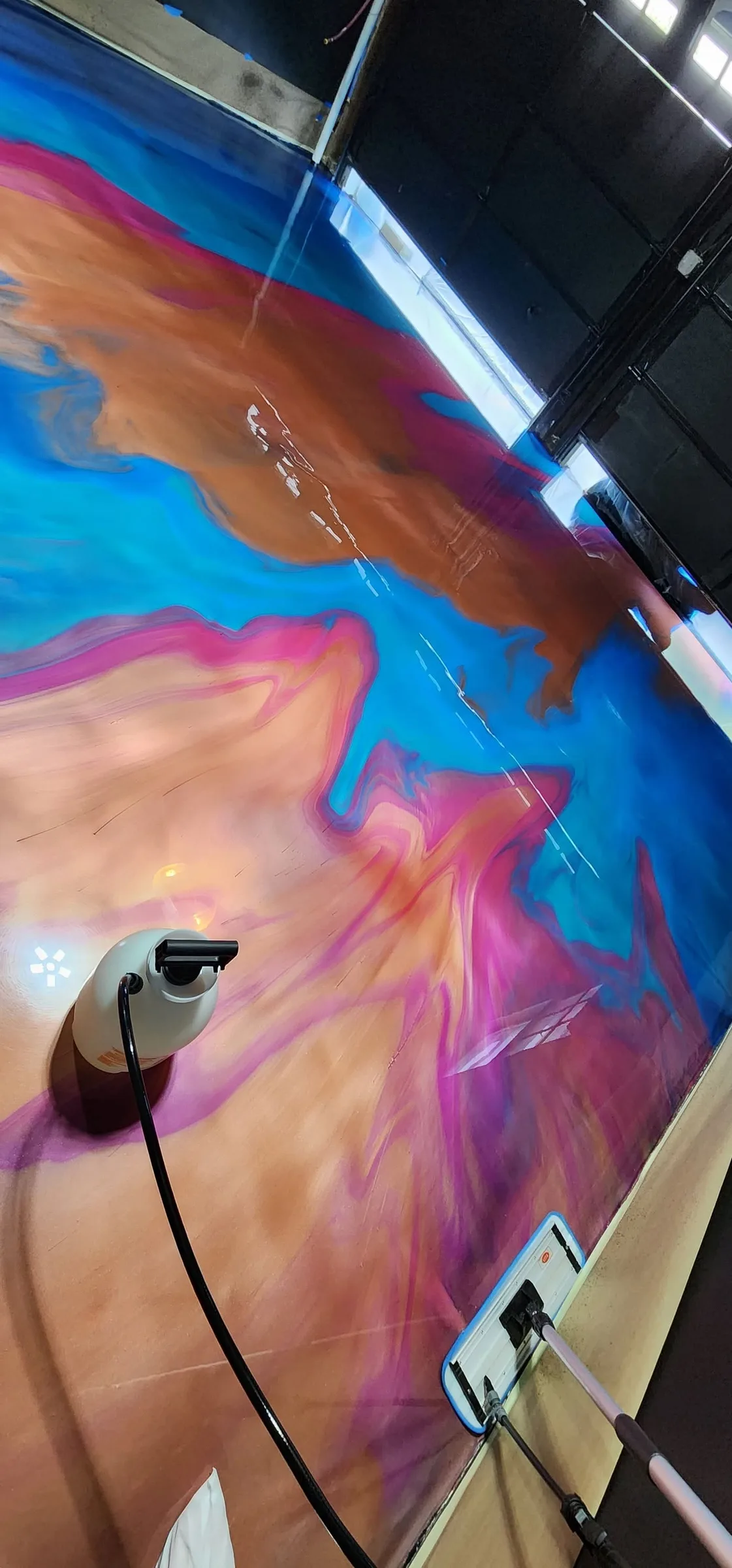
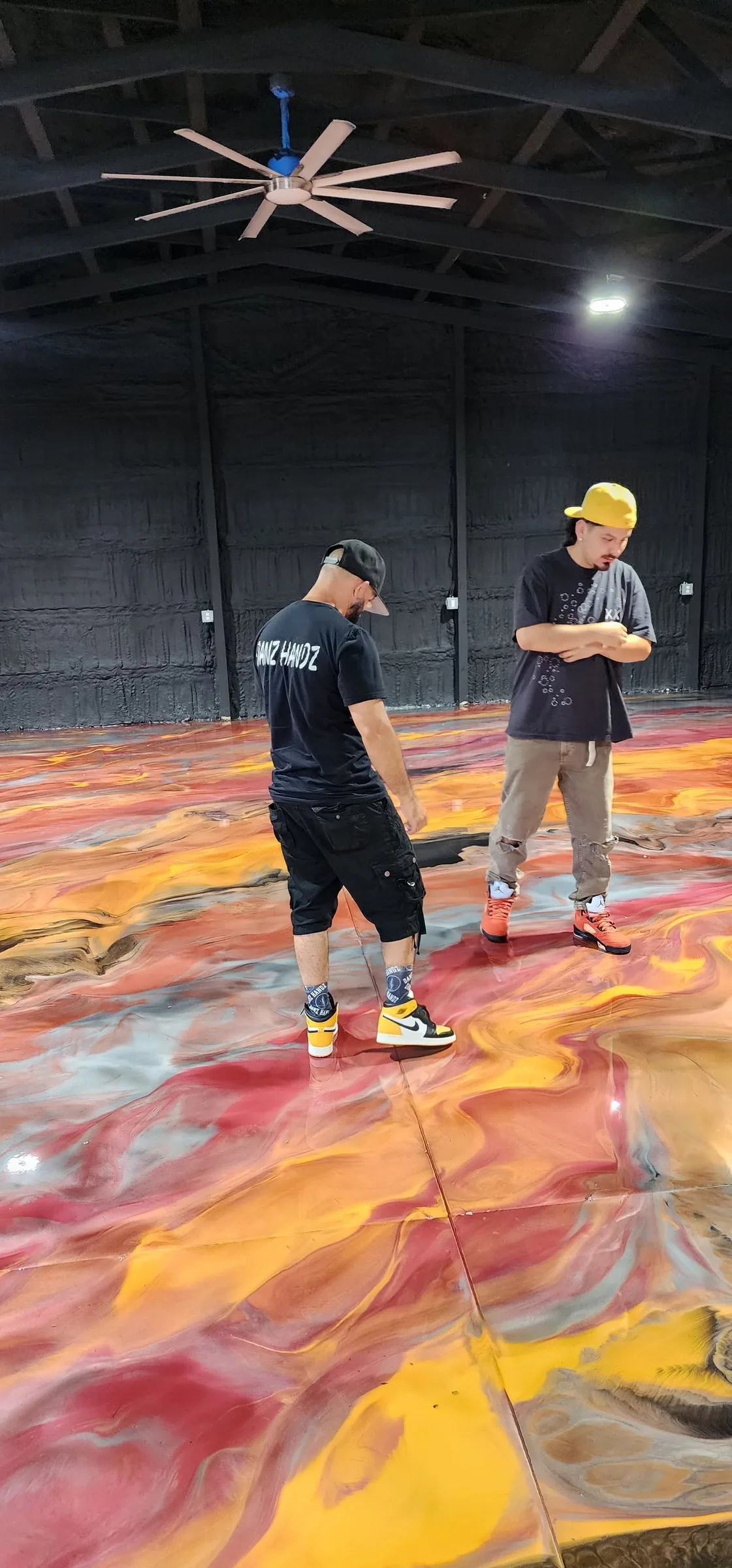
What goes into equipment room floor coatings
An equipment room coating is a resin floor system put down around and under the machinery that runs a building. It seals the concrete so leaks sit on the surface where they can be seen and wiped up, and it gives the room a light, even floor that makes a new drip easy to spot. Coatings can run up onto the housekeeping pads under equipment and around floor drains. Danny chooses the system to the room’s requirements and the product data, based on the fluids and heat around the equipment.
Danny chooses the system to the room’s requirements and the product data, based on the fluids and heat around the equipment.
These rooms are rarely empty, which shapes the job. A coating can be worked around fixed equipment, but every pipe stand, pad and anchor bolt adds hand work, and what cannot be reached stays uncoated. Rooms with active leaks need those leaks fixed first, because a coating will not bond to a wet slab. And where water rises up through the floor from below, the moisture has to be dealt with before any coating goes down.
Danny walks the room with whoever maintains the equipment, and he looks for the stains first, since they show where leaks have run for years. He looks at the space, the traffic and what gets spilled on it before recommending a system. He confirms which machines can be shut down and for how long. The floor is diamond ground, working by hand around pads and pipe supports, and oil-soaked areas get cleaned and treated. Cracks and broken pad edges are repaired. The coating is poured in sections around the equipment, then cured with the room closed. The final walk covers each corner with the client. The resin is from Bulletproof Resins, a partner of Danz Handz. Glitter, when a client wants it, is his own Glitter ELEMENTZ.
A light floor in a mechanical room makes tomorrow’s leak easy to find.
How the work runs
Every floor goes through the same five stages. What changes is how much each one takes, and that gets settled at the walkthrough.


Walk the space
The job starts with a walkthrough: the slab, the edges, the drains and doors, and what you want it to look like.

Prep the concrete
Prep is grinding and cleaning, done until the concrete is ready to take a coating, not before.

Fix what is underneath
Repairs come before color. A crack left alone tends to come back through the floor.

Lay it down
Mix, spread, finish. Each coat goes on clean, in the order the system needs.

Cure and the final walk
The floor gets left alone to cure, then the two of you look it over from corner to corner.
More of Danny’s floors
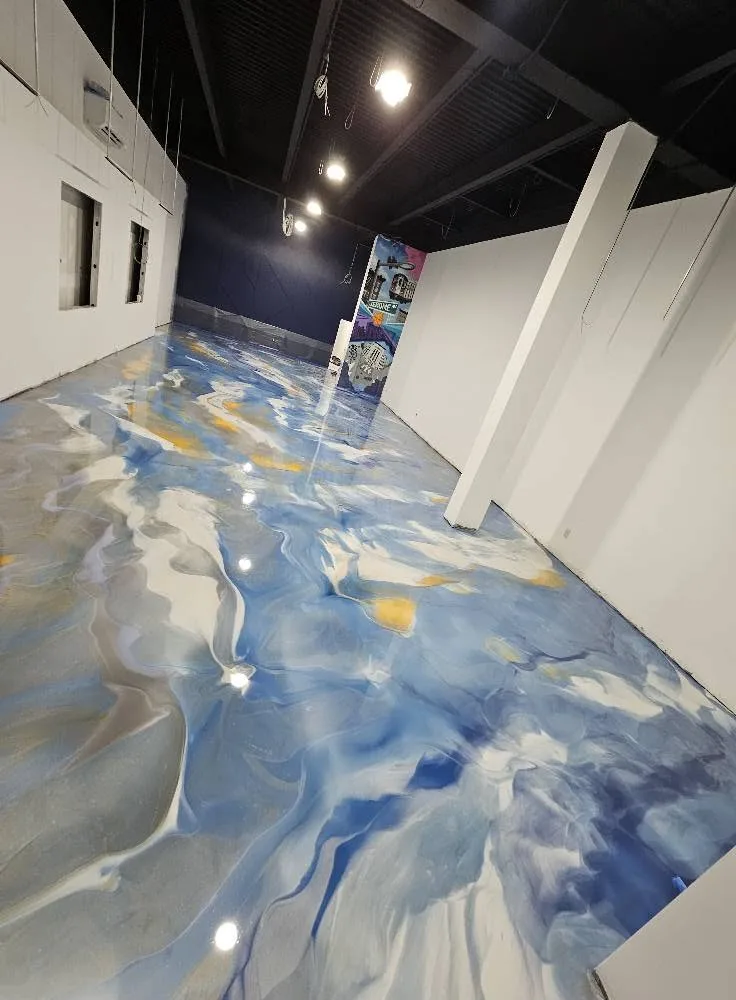
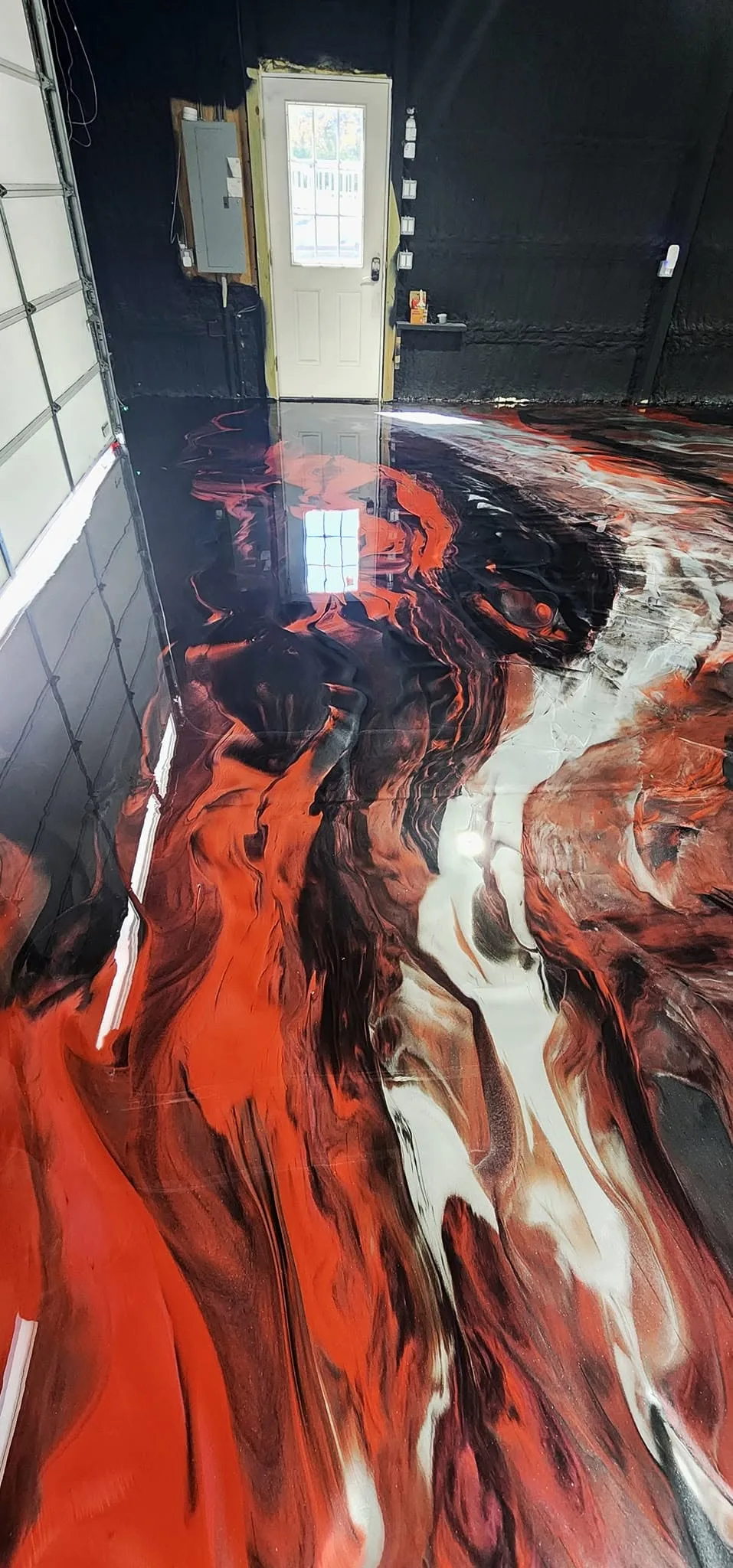
Other jobs from the file, not all of them this service. See the gallery
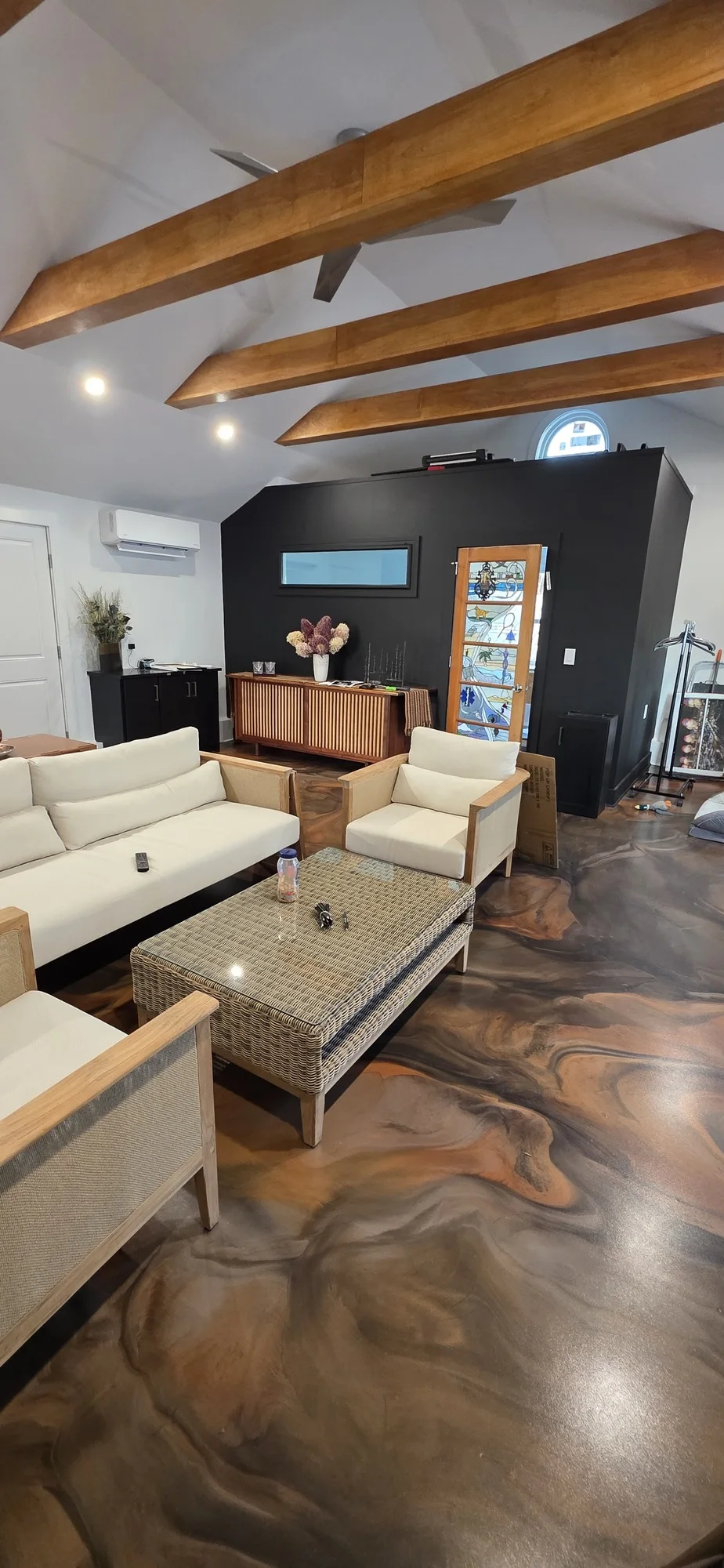





Questions about equipment room floor coatings
Can you coat around equipment without moving it?
In most rooms, yes. Danny grinds and coats up to pads, pipe stands and machine bases by hand where a grinder cannot reach. Equipment that sits low to the floor or on legs may leave spots underneath that cannot be reached. He points those out on the first walk so you know what will be coated and what will not.
What about the floor drains?
The coating can be brought up to and into the edge of a floor drain so water runs off the surface instead of under the coating. Drains that are cracked or set too high get looked at during repairs. Danny checks how the floor slopes toward each drain before the pour so water still finds its way there afterward.
Our mechanical room floor stays damp. Can it still be coated?
Maybe, once Danny finds out why. Dampness from a leak, condensate or poor ventilation needs to be stopped first. Dampness coming up through the slab is a different problem and usually needs a moisture system under the coating. He checks the slab during the first walk and tells you which situation you have before recommending anything.
Can I pick the color and the finish?
Yes. Danny brings samples and photos of past floors, and you settle on the color, the finish and how much movement or texture you want at the walkthrough.
Do you work on commercial spaces?
Yes. Salons, barbershops, showrooms, shops and offices, scheduled around your hours where the job allows it.
Who actually does the work?
Danny does. He walks the space, plans the floor with you and runs the pour, so the person you talk to on the phone is the one on your job.
Next to this on the list
Warehouses, plants, loading docks and machine shops, with safety striping and aisle marking when the space needs it.
- Industrial Floor RepairIndustrial concrete repair for spalled joints, potholes, failed patches and cracks, done on its own or ahead of a new coating.
- Chemical-Resistant Industrial FlooringIndustrial flooring systems selected against your actual chemical list and the product data, with honest answers about what each system handles.
- Abrasion-Resistant Warehouse CoatingsAbrasion-resistant warehouse coatings with aggregate and tougher topcoats where pallets slide, skids drag and grit grinds the floor.
- Heavy-Duty Industrial Resin FlooringHeavier, layered resin floors for industrial areas where standard coatings keep failing under impact, heavy equipment and wet processes.
- Industrial Floor MarkingLanes, walkways, storage spots and keep-clear areas laid into the floor in a coating, planned around how people and forklifts actually move.
Jobs run about 60 miles out from the Cranford shop, from the Jersey shore and the Poconos to Long Island and Fairfield County. See every areaSee the gallery
Danz Handz
Danny Carrero, epoxy specialist
dhepoxy@gmail.com
Cranford, NJ. Mon to Sat, 8 to 6. Hablamos español.
Book a walkthrough
A short note about the space is enough. Danny calls back and books a walkthrough.