
A coated floor for a shop you just built
Before the benches and tools move in, a new workshop has one clean slab. Coating it first gives sawdust, oil and dropped hardware something better than bare concrete to land on, and woodworkers, mechanics and fabricators each get a finish picked for their own kind of mess.

Floor Coating for New Workshops, from Danny’s side of the job
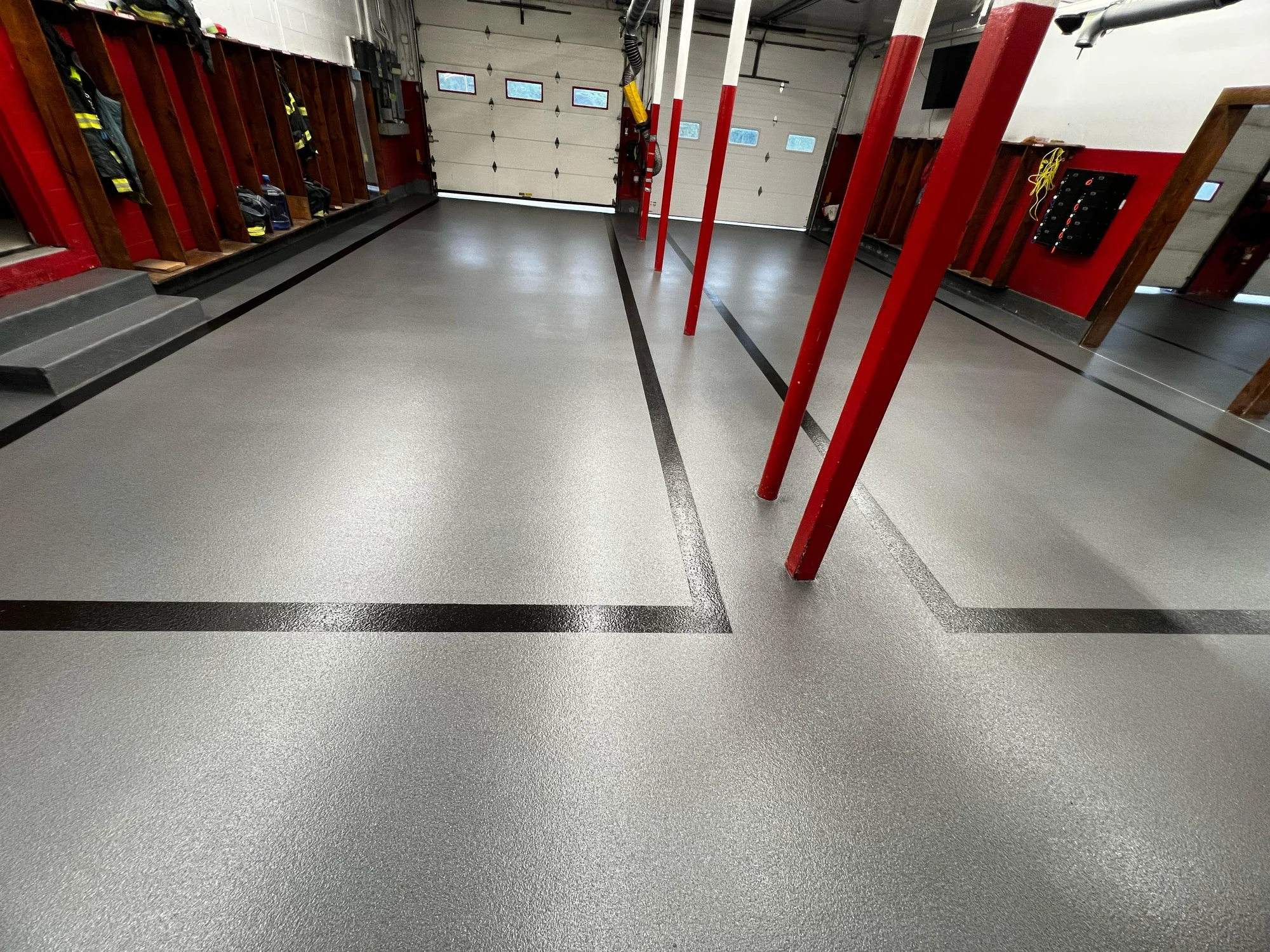
A workshop floor coating is an epoxy system laid on the new slab of a detached shop, barn or outbuilding before it is set up. Danny grinds the fresh concrete, repairs any rough spots from the pour and lays down the coating in coats with a topcoat. A light solid color is popular in shops because it reflects light up onto the bench and makes a dropped screw easy to find. Flake hides more dirt for people who would rather sweep less often. Sawdust and grease come off a sealed floor far more easily than off bare concrete.
A light solid color is popular in shops because it reflects light up onto the bench and makes a dropped screw easy to find.
It fits shops where the slab has cured and the building is closed in, with doors and power done. It has limits worth knowing. Welding spatter and grinding sparks can burn marks into most coatings, so metal shops often keep a mat or steel plate where hot work happens. Heavy machines like a lathe or a mill sit fine on a coated floor, but anchoring them is the owner’s job. New slabs have to be ready, and the owner arranges moisture testing if there is any doubt.
Danny walks the new shop and asks what the owner will be doing in it: woodworking, engine work, fabrication or a mix. That decides the color and the topcoat. He looks at the slab finish and the joints, then diamond grinds the whole floor, edges and corners included. Pinholes and pour defects get repaired and leveled. The coating goes down in coats, and the shop stays empty through the cure. At the final walk he talks through where to put mats for hot work and how to keep the finish clean as the shop fills up with tools and projects.
A shop floor that is easy to sweep gets swept.
The order the work goes in
A new shop floor gets planned around what the owner will actually do in it. These stages start from that sketch and end with the machines rolled into place.


Sketching the shop by trade
Danny asks the owner to sketch where the bench, the big machines, the welding corner and the vehicle door will go. That rough plan shows where the floor will take oil, sparks, sawdust or tires, and the finish can shift from one area to the next.

Cleaning up after the builders
A freshly built shop often has a hard troweled slab with sawdust, caulk and framing debris pressed into it. The whole floor is diamond ground, pinholes from the pour are filled, and the edges at the walls and posts get the hand tools.

Marking the hot-work corner
The welding area gets marked out before the coating so its edge falls where a steel plate or mat will sit. Sparks and spatter land there, and planning the line now keeps the finished edge from getting scorched later.

Light floor, gripping topcoat
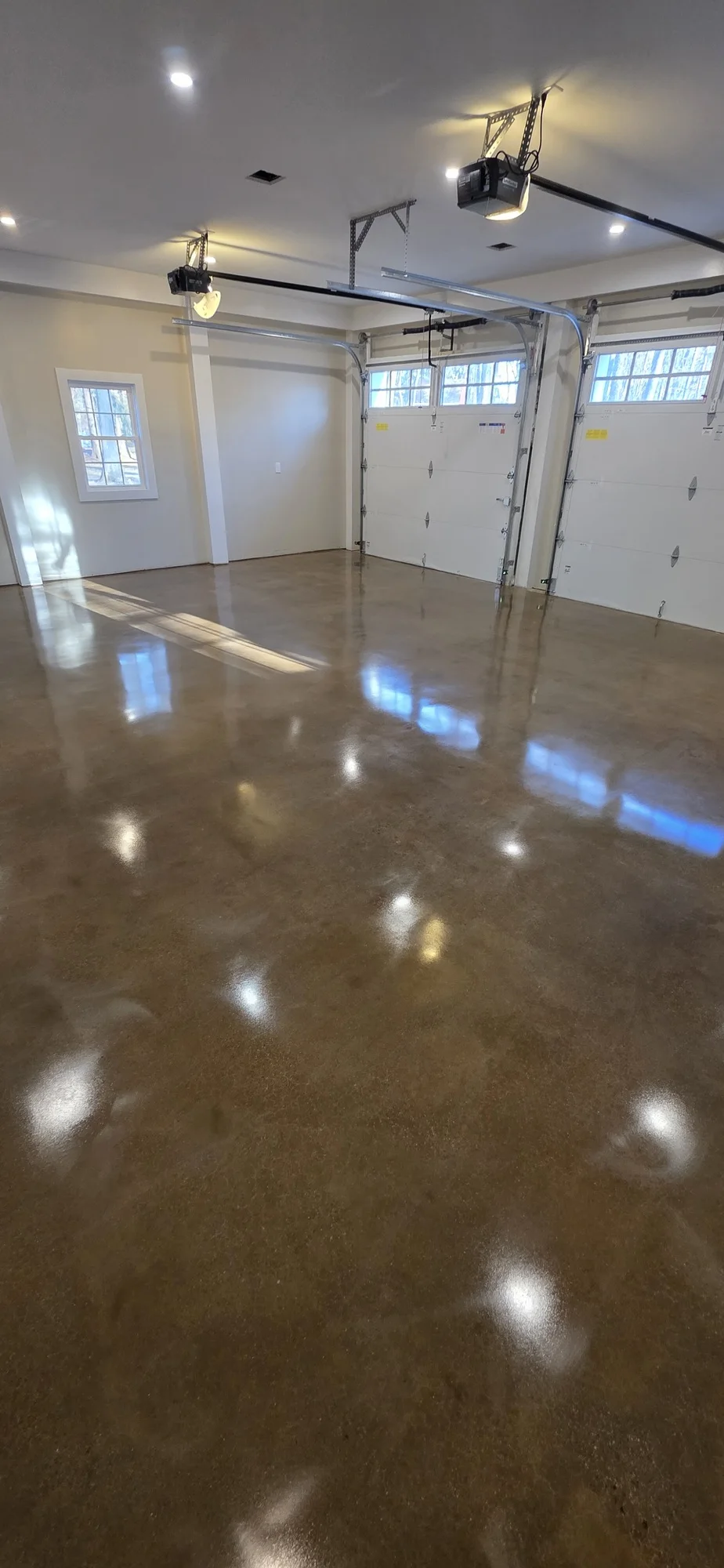
A pale solid or a light flake goes down to throw light up onto the work, with a topcoat that gives some grip where oil or sawdust can make a floor slick. The shop stays empty while the coating cures.
Moving the tools onto it
After the cure, the heavy machines roll in on dollies or skates instead of being dragged across the floor. Danny walks the shop with the owner first and shows where anchor bolts can be drilled and how to seal around them.
More of Danny’s floors
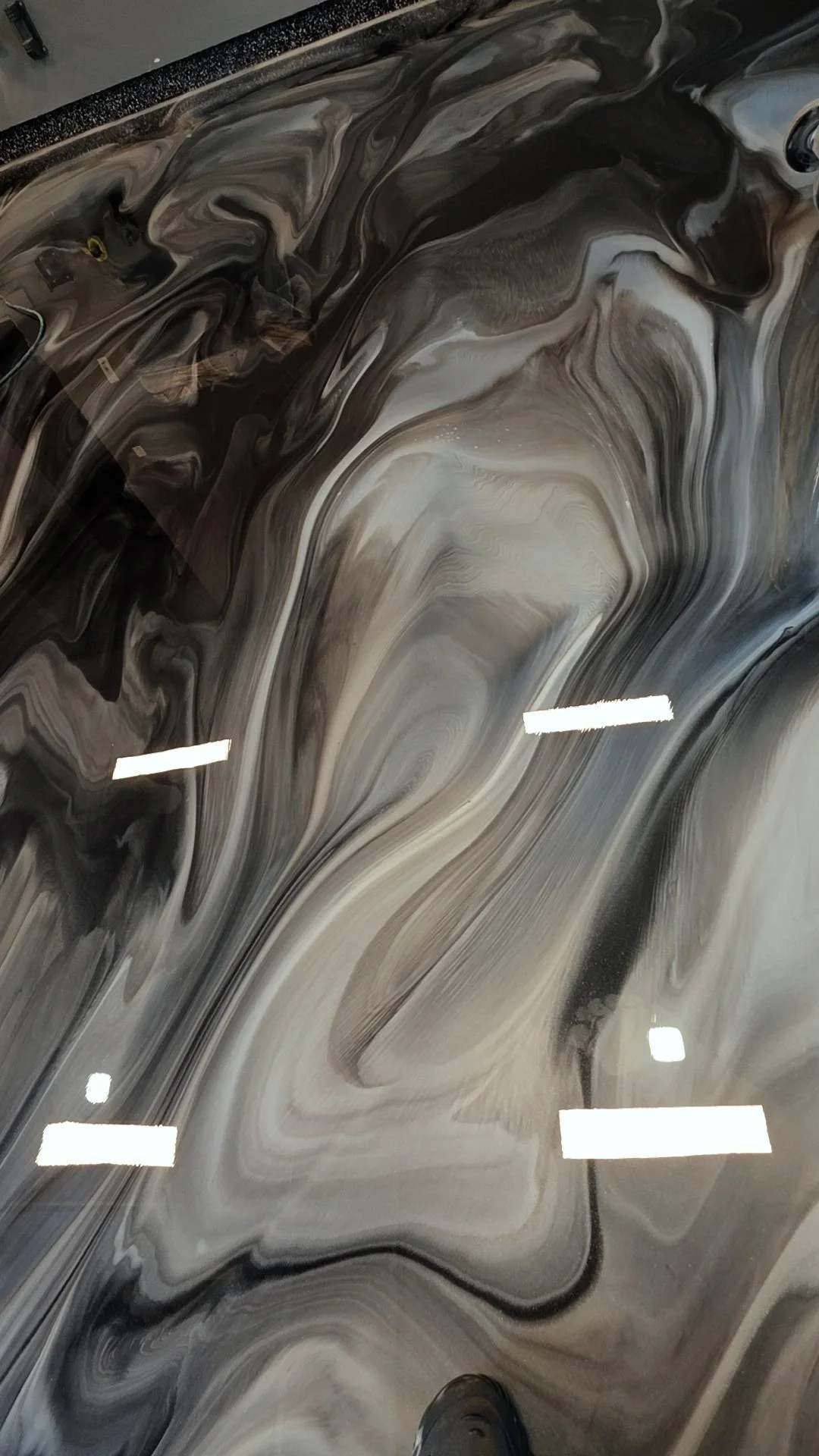
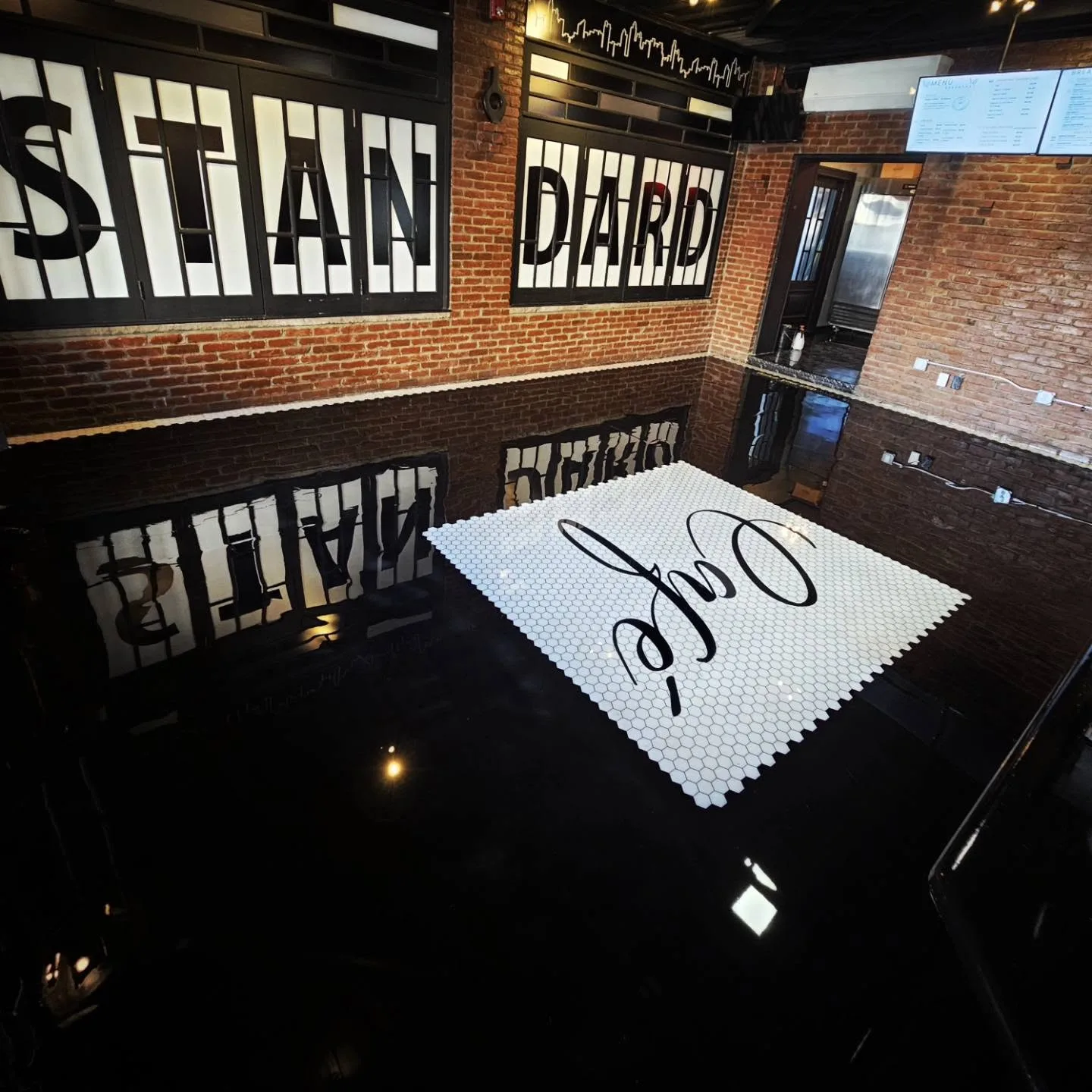
Other jobs from the file, not all of them this service. See the gallery




Questions about floor coating for new workshops
Will a coated floor hold up in a woodshop?
A woodshop is one of the easier shops on a coating. Sawdust sweeps off, glue drips scrape up once dry and dropped tools mostly land without trouble. The bigger choice is color, since sawdust shows on dark floors and dirt shows on very light ones. Danny helps pick a color with that in mind.
Can I do welding on an epoxy floor?
Welding spatter and grinding sparks can mark or burn most coatings. Many metal shop owners keep a steel plate, a welding mat or a bare concrete zone where hot work happens and coat the rest. Danny talks through the layout with the owner so the coated areas match the way the shop will be used.
My shop is a pole barn. Can the slab still be coated?
Yes, as long as the slab is concrete and has cured. The building type does not matter much to the coating. What matters is that the space is closed in, the slab is ready and the floor can stay empty through the cure. Danny looks at the slab in person before planning the job.
Can the floor take an engine hoist and jack stands?
A coated floor handles rolling hoists and floor jacks well when the topcoat suits the work. Jack stands with narrow steel feet put a lot of weight on a small spot, so a square of plywood under each one protects the finish. Danny asks what kind of vehicle work happens before choosing the system.
Should the area inside the shop door get a different finish?
The strip inside a vehicle door sees water, salt and tracked grit, so some owners use a flake there and a solid color across the work area. Others keep one finish throughout the building. Danny looks at how vehicles and weather come through the door and suggests whether splitting the finish makes sense.
What about anti-fatigue mats on a coated floor?
Mats at the bench and the machines are fine on a coated floor. Some rubber backings can mark a coating over time, especially in a warm shop, so a mat made for coated floors is the safer pick. Lifting them now and then to sweep underneath keeps grit from scratching the topcoat.
Close to this one
New builds, renovations and tenant fit-outs, scheduled once the slab has cured and the other trades are out.
- Concrete Floor Coating after Slab CuringCoatings poured on new concrete once a moisture test shows the slab is ready, with the weak top layer ground off first.
- Floor Coating Installation after Concrete RepairsOne coating poured over a slab after concrete repairs, ground to a single texture so the patches and seams stop showing.
- New-Build Garage Floor CoatingsFlake or solid color coating laid over a fresh garage slab in the window between the last trade and move-in day.
- New Construction Commercial Floor CoatingsCoated floors for new shops, offices and showrooms, scheduled in with the general contractor and finished before handover.
- Industrial Facility Flooring InstallationResin floors for production areas, docks and maintenance shops, installed in sections so the facility can keep working.
Every county Danny covers, and every town in them, has its own page. See every areaSee the gallery
Danz Handz
Danny Carrero, epoxy specialist
dhepoxy@gmail.com
Cranford, NJ. Mon to Sat, 8 to 6. Hablamos español.
Book a walkthrough
Describe the floor and what you have in mind. Danny calls back and comes out to look at it.