
Patching holes left by anchors, pipes and old fixtures
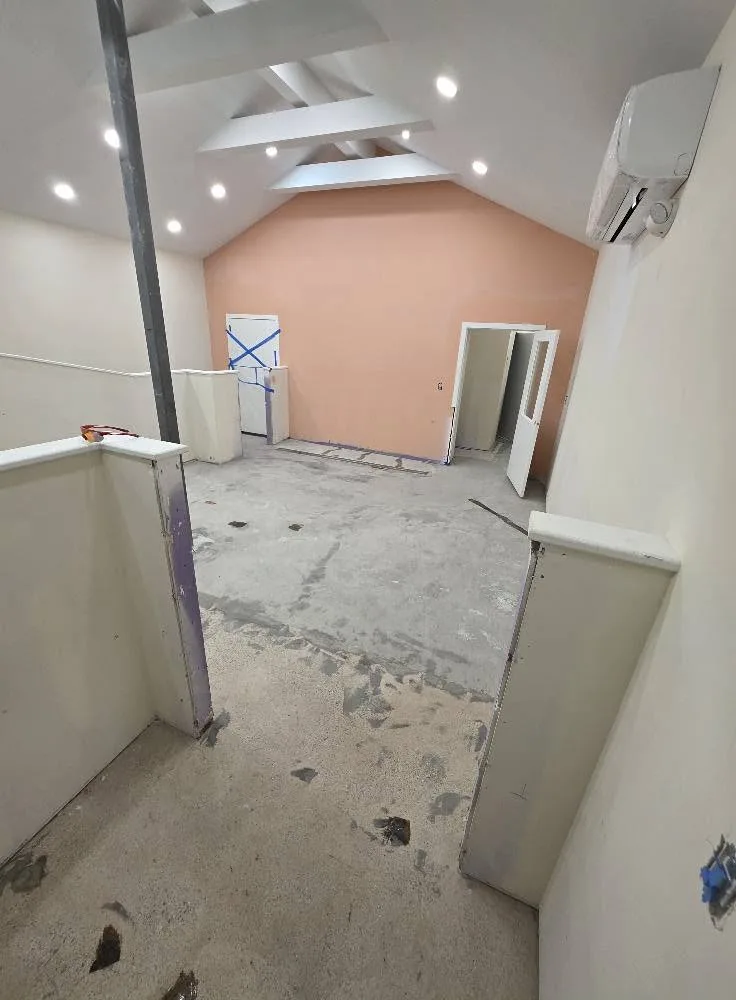
Holes from old shelving anchors, cutouts where plumbing moved, chipped edges and divots from dropped tools pile up on a slab over the years. Patching fills each one and gets ground flush with the floor around it, and Danny notes them all on the walk so none get missed before the coating.

What goes into concrete surface patching
A patch is any local repair that brings a damaged spot back to the level of the floor around it. Danny cleans out the hole, grinds away loose edges and chooses a material based on the depth and the system going over it, from a fast-setting epoxy patch for small holes to a repair mortar for bigger areas. Deep spots may be built up in layers. Once the patch hardens, it is ground flush and feathered so the transition into the floor is flat and smooth.
A patch is any local repair that brings a damaged spot back to the level of the floor around it.
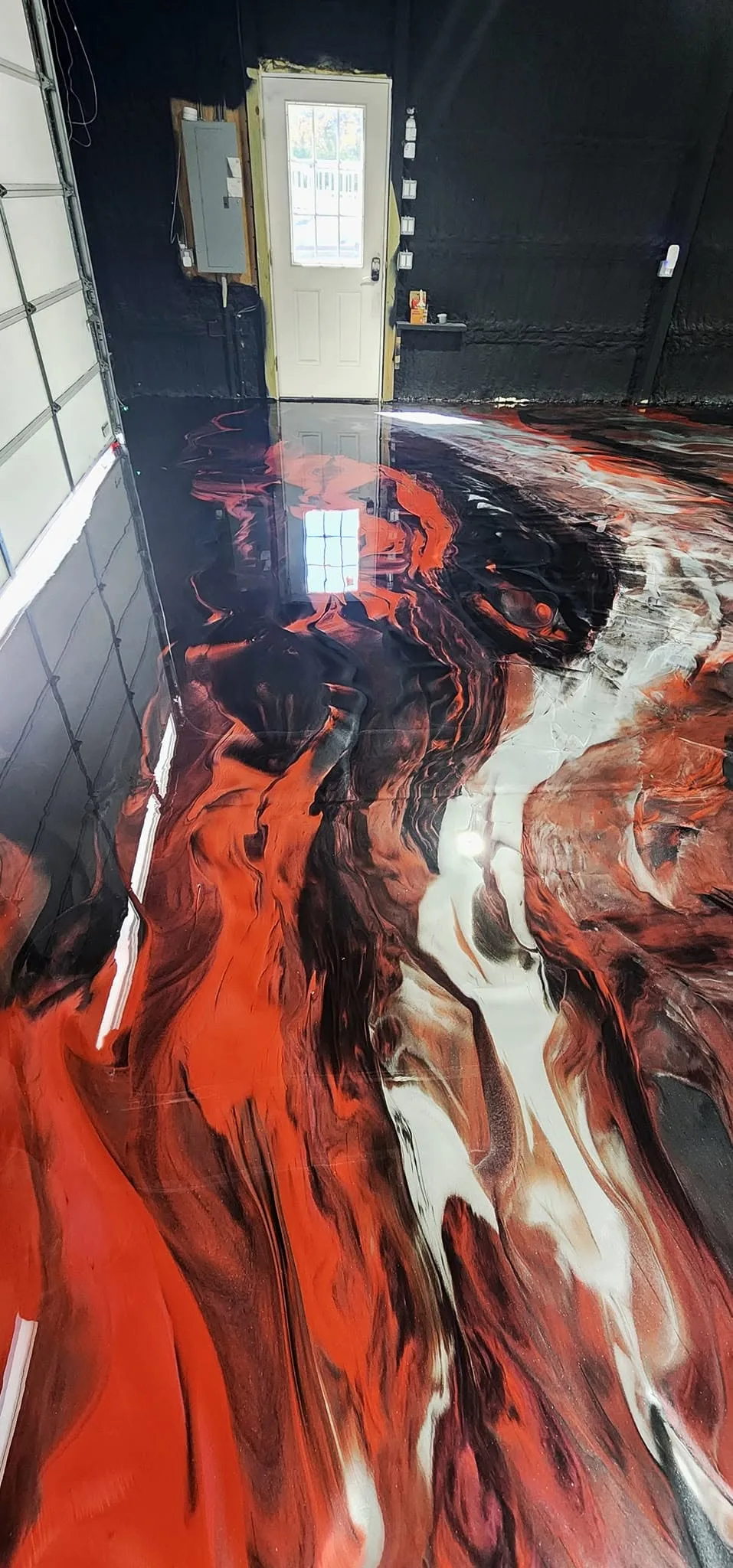
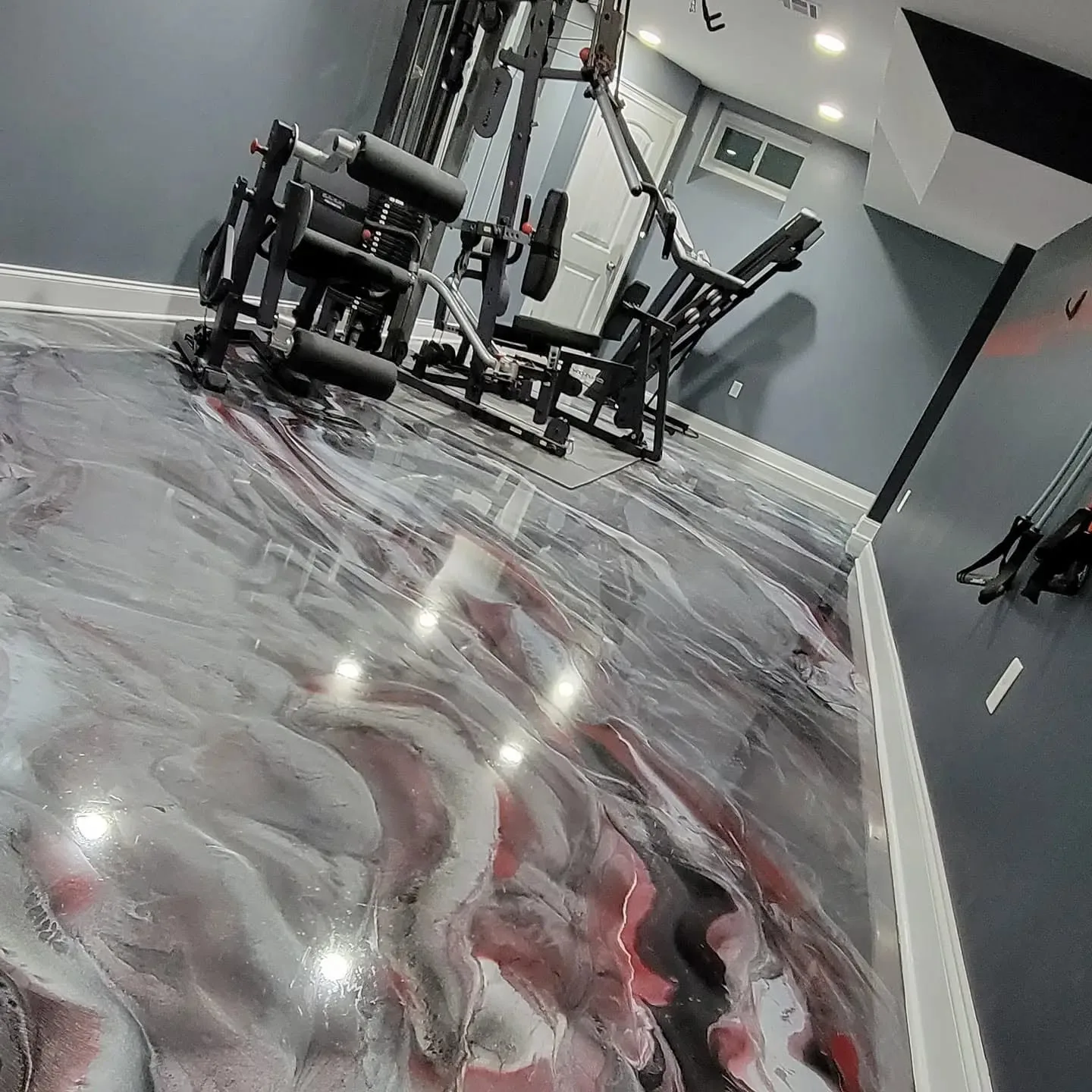
Patching fits isolated damage on a slab that is otherwise sound: anchor and bolt holes, small trenches, chipped joint edges, gouges and old drain or post locations. It is not the answer for a floor where damage covers most of the surface, where resurfacing usually makes more sense. Patches can also show as a slightly different color under clear or thin finishes. On a smooth metallic floor, Danny keeps that in mind when he plans how the pour will move over them.
Danny marks every hole, gouge and old fixture spot during the walk-through, including the ones hidden under shelving that will move. After grinding, he pulls out leftover anchors, cuts off bolts below the surface and cleans each spot down to solid concrete. Patch material goes in at the right depth, slightly proud of the surface. Once it hardens, he grinds each patch flush and runs a hand over it to check for edges. Larger patches get checked with a straightedge. The floor is vacuumed before the coating goes down.
Once the coating is on, nobody should be able to find the patches by hand.
What happens on the job
Patching is a hunt for every hole, cut and leftover fixture on the slab, followed by bringing each one back to floor level.


Logging every hole and fixture
Danny marks anchor holes, trenches, old post bases and gouges at the walk-through, including the ones hidden under shelving or equipment that will move before work starts. Each one goes on the repair list so nothing gets coated over by mistake.

Cutting off what sticks up
After grinding, anchors are pulled or cut below the surface, bolts are trimmed and old fixture bases are knocked down. Nothing is left standing above the floor line, where it would show through the coating as a bump.

Cleaning to solid concrete
Each hole and gouge is cleaned out, loose edges are ground away and the dust is vacuumed, so the patch bonds to sound material all the way around its sides and bottom and nothing crumbles out from under it later.
Choosing material by depth
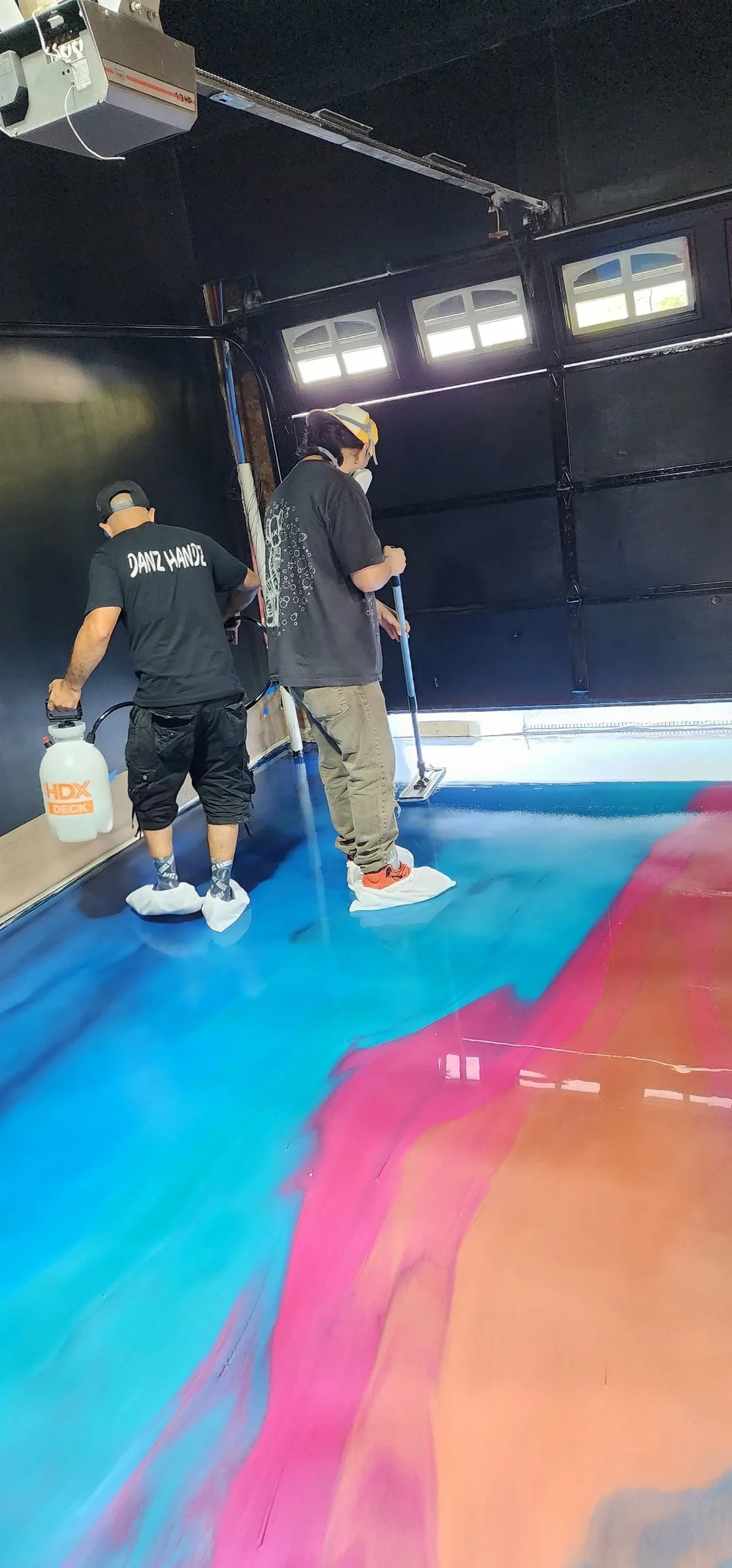
Small holes take a fast-setting epoxy patch. Larger and deeper areas take a repair mortar built up in lifts. Each patch is placed slightly proud of the surface so there is material to grind flush once it has hardened.

Straightedge on the bigger patches
Once hard, the patches are ground flush. The larger ones get a straightedge laid across them, and the small ones get a hand run over them, before the floor is vacuumed and handed on to the coating.
More of Danny’s floors
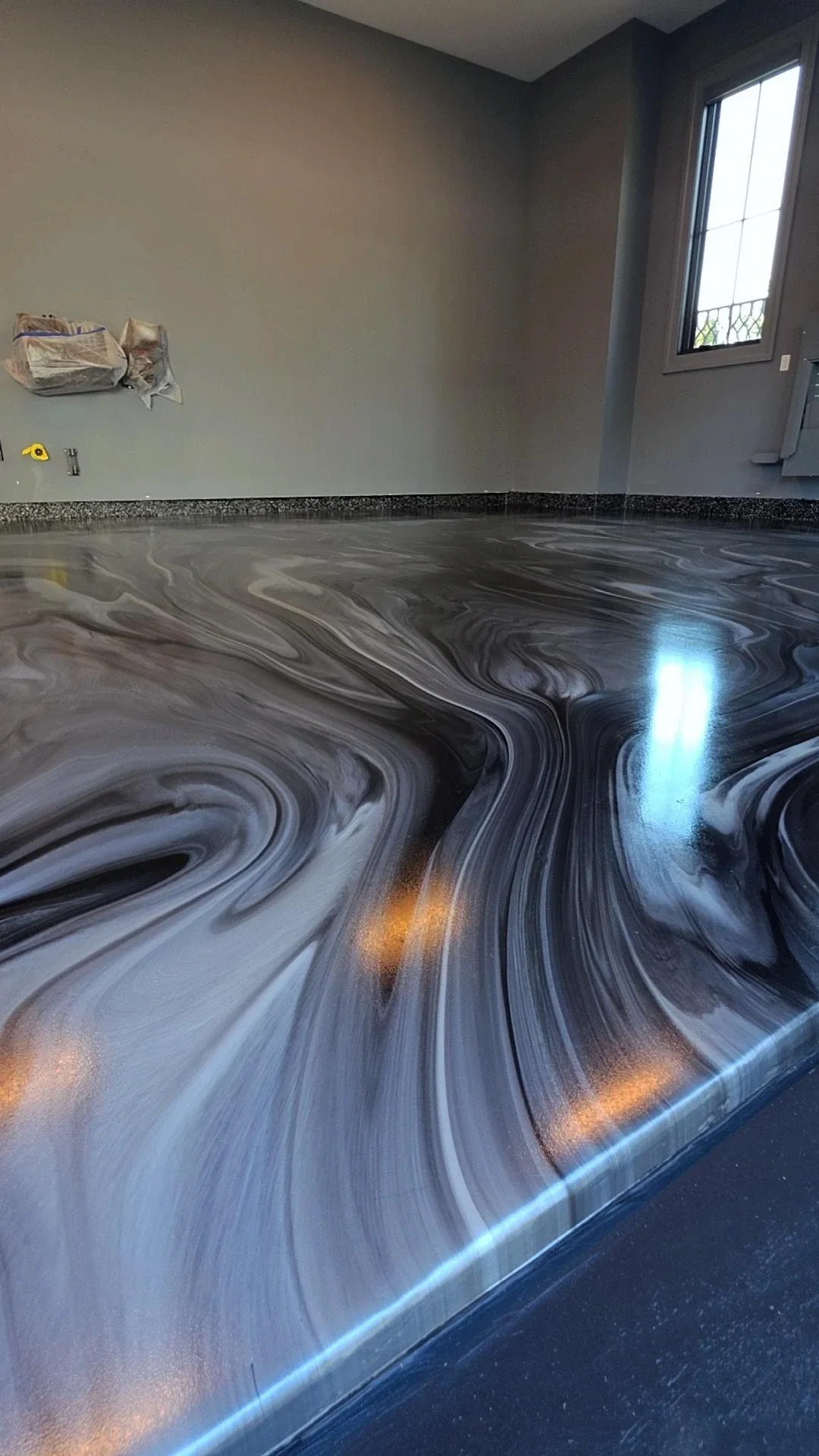
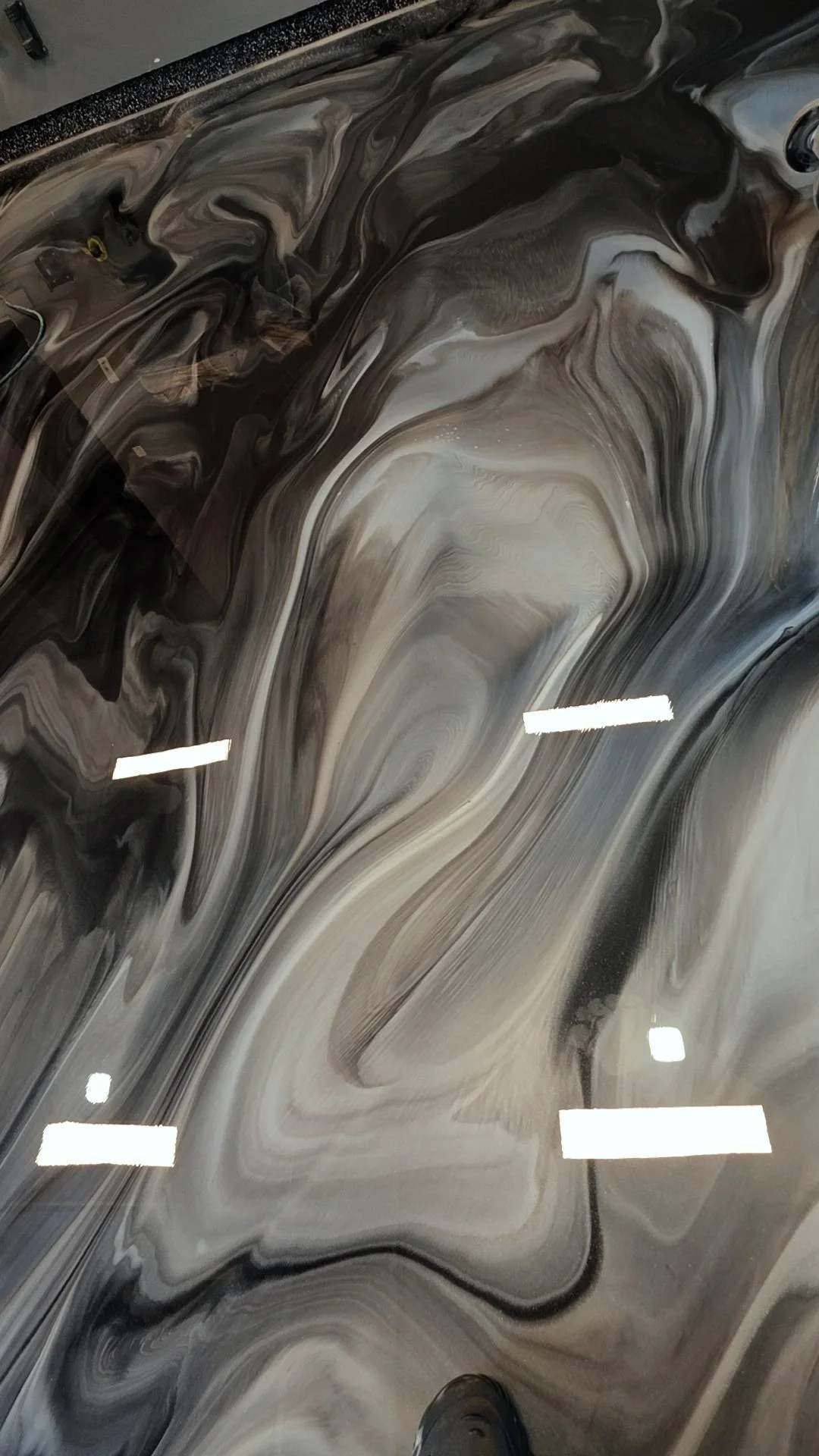
Other jobs from the file, not all of them this service. See the gallery




Questions about concrete surface patching
Can you patch where a wall or post used to be?
Yes. Old post bases, wall footprints and fixture locations are common patch spots. Danny cuts off anything sticking up, cleans out loose material and rebuilds the area to floor level. If the old spot left a step or a large depression, it may need leveling material as well as patching to come out flat.
What about holes from bolts and shelving anchors?
Anchors are pulled or cut below the surface, the holes are cleaned out, and each one gets filled with patch material and ground flush. Under a coating they disappear. If you plan to put shelving back in the same spot, mention it, since new anchors can go through the finished floor later.
Will the patches be weaker than the rest of the slab?
A good patch on clean, sound concrete bonds well and holds up under a coating. The weak point is usually prep, meaning a patch placed over dust or loose edges. That is why Danny grinds and cleans each spot to solid concrete first and uses repair material suited to the depth and how the floor gets used.
Can you patch a trench after a plumber cuts the floor?
Yes. Once the plumbing work is finished and inspected, the trench is cleaned out and refilled to floor level, then ground flush with the slab around it. Deep trenches are usually backfilled and capped with concrete by the plumber or another trade first, and Danny finishes the surface.
Do patches need to harden before the coating goes on?
Yes. Each patch material needs time to cure before it can be ground and coated, and deeper patches take longer than shallow ones. Coating over a soft patch can leave a dent or a soft spot in the finish. Danny schedules the coating around the slowest patch on the floor.
Will patches crack around their edges over time?
A patch on clean, sound concrete with a squared edge usually holds well. Edge cracks tend to come from patches placed over loose material or feathered too thin. Danny cuts each repair back to solid concrete first, which is the main thing that keeps a patch from separating later.
Also in prep
Grinding, shot blasting, crack and joint filling, leveling and moisture testing, done before any coating goes down.
- Concrete Joint FillingDeciding whether each saw cut and control joint gets filled and coated over or kept open, and doing either one cleanly.
- Concrete Spall RepairCutting back flaked and popped-out concrete to solid ground and rebuilding it flush, common near garage doors that see winter salt.
- Concrete Pitting RepairSkim-coating and filling pits and pinholes so smooth metallic, gloss and solid-color floors finish without dimples or bubbles.
- Concrete Floor LevelingFilling dips, low spots and wavy areas with leveling compound so smooth coatings go down flat, while keeping a garage’s slope to the door.
- Concrete Floor ResurfacingA thin cement-based overlay over worn, scaled or heavily patched concrete, giving the floor one sound surface for a coating or sealer.
He drives out from Cranford about 60 miles in every direction for floors like this one. See every areaSee the galleryRead: Why Every Good Epoxy Floor Starts With a Diamond Grinder
Danz Handz
Danny Carrero, epoxy specialist
dhepoxy@gmail.com
Cranford, NJ. Mon to Sat, 8 to 6. Hablamos español.
Tell Danny about the floor
Start with the room and the idea. Danny follows up by phone and comes to see the slab.