
Protecting a basement or garage slab from water
Water reaches a concrete floor two ways. Spills and tracked-in water sit on top, and a damp basement can pull moisture up from the ground. A surface coating handles the first kind, so the first job is an honest read on which kind of water problem the floor actually has, and Danny gives it on the walk.
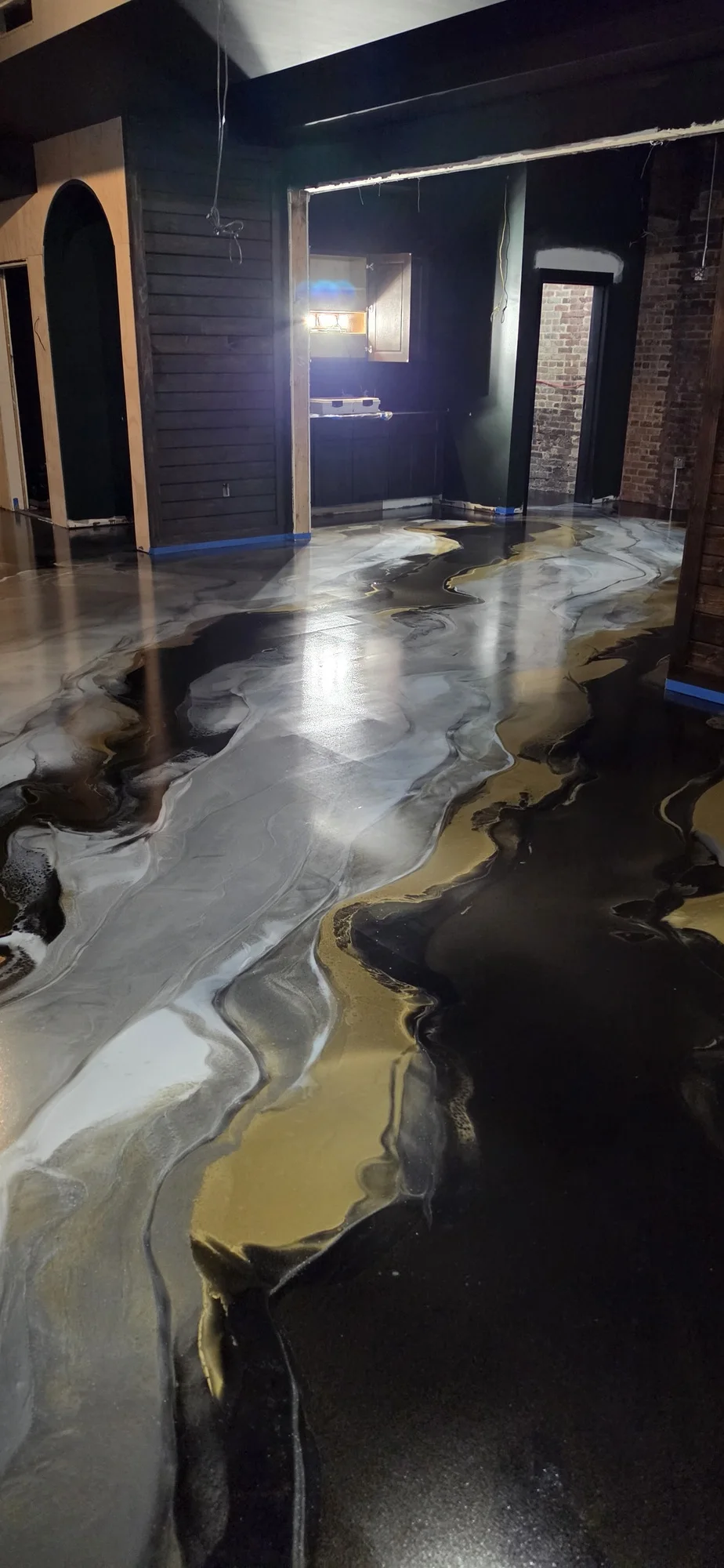
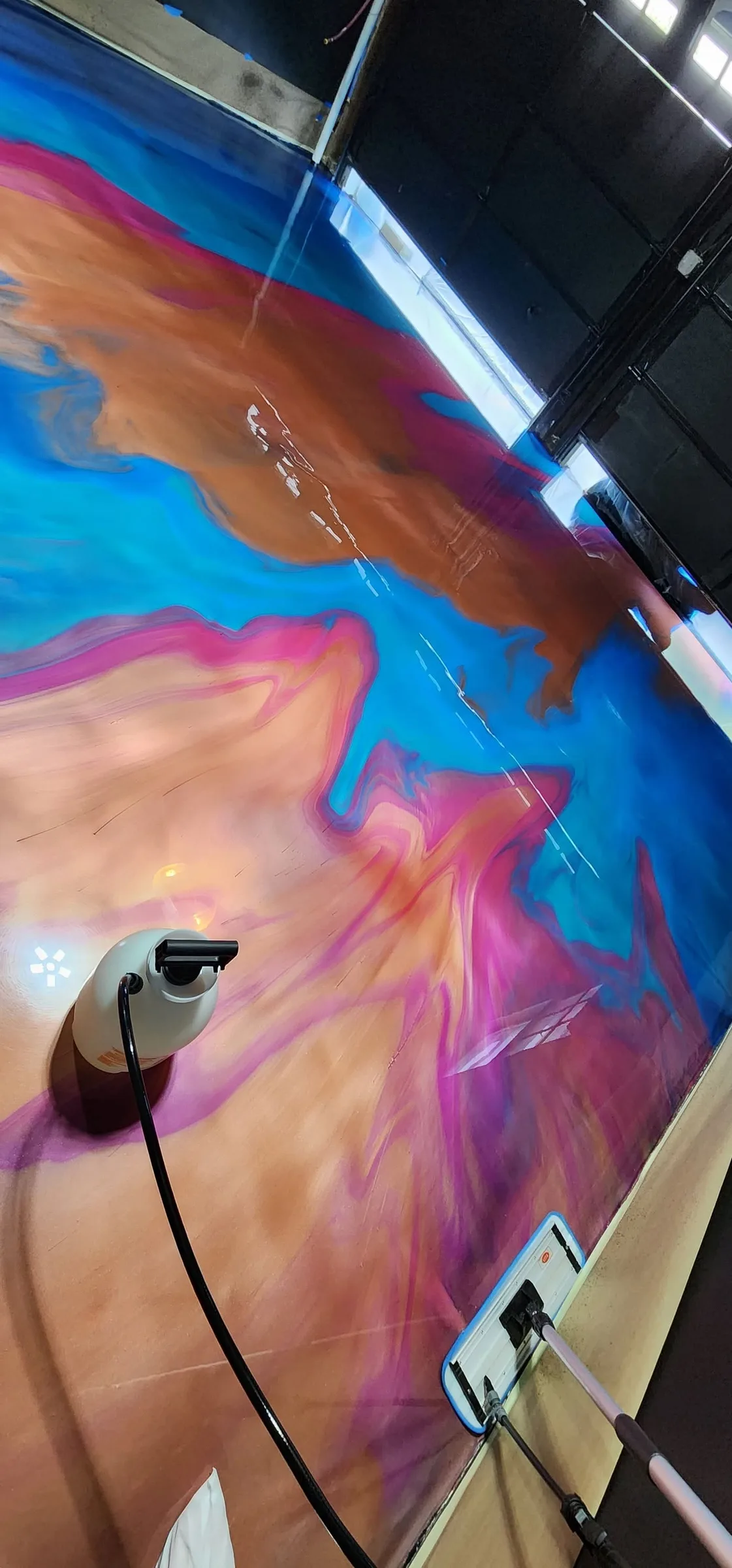
What goes into concrete waterproofing
On Danny’s side, waterproofing a slab means sealing or coating the surface so water from spills, wet shoes, snowmelt off cars and a washing machine leak sits on top and wipes up instead of soaking in. That can be a penetrating sealer, a film sealer or a full resin coating, sometimes run up the base of the wall as a cove so water cannot slip under the edge. The system is chosen to the room’s use and the product data.
Stains along the base of a wall, white residue on the concrete, damp patches after rain or a musty smell point to water from outside or below.
It fits floors where the water comes from above. It does not stop water pushing in through foundation walls, cracks or the slab from groundwater, which is a drainage and foundation problem for a waterproofing contractor the owner arranges. Moisture rising as vapor through the slab can also lift a coating, and that may call for a third-party moisture test before any system is chosen. Danny tells you plainly when he thinks the water is coming from below.
Danny walks the floor and looks for where the water comes from. Stains along the base of a wall, white residue on the concrete, damp patches after rain or a musty smell point to water from outside or below. Puddles near a door or under a washer point to water from above. He asks when the floor gets wet and how often. If the problem is from below, he tells the owner to bring in the right contractor or arrange a moisture test first. For surface water, the slab is ground, repaired and sealed or coated, and after the cure he walks it with you.
Before sealing a wet floor, find out where the water is coming from.
How Danny does the job
Before anything is sealed, the water has to be traced to where it comes from, so these stages separate surface water from water coming up or seeping in.
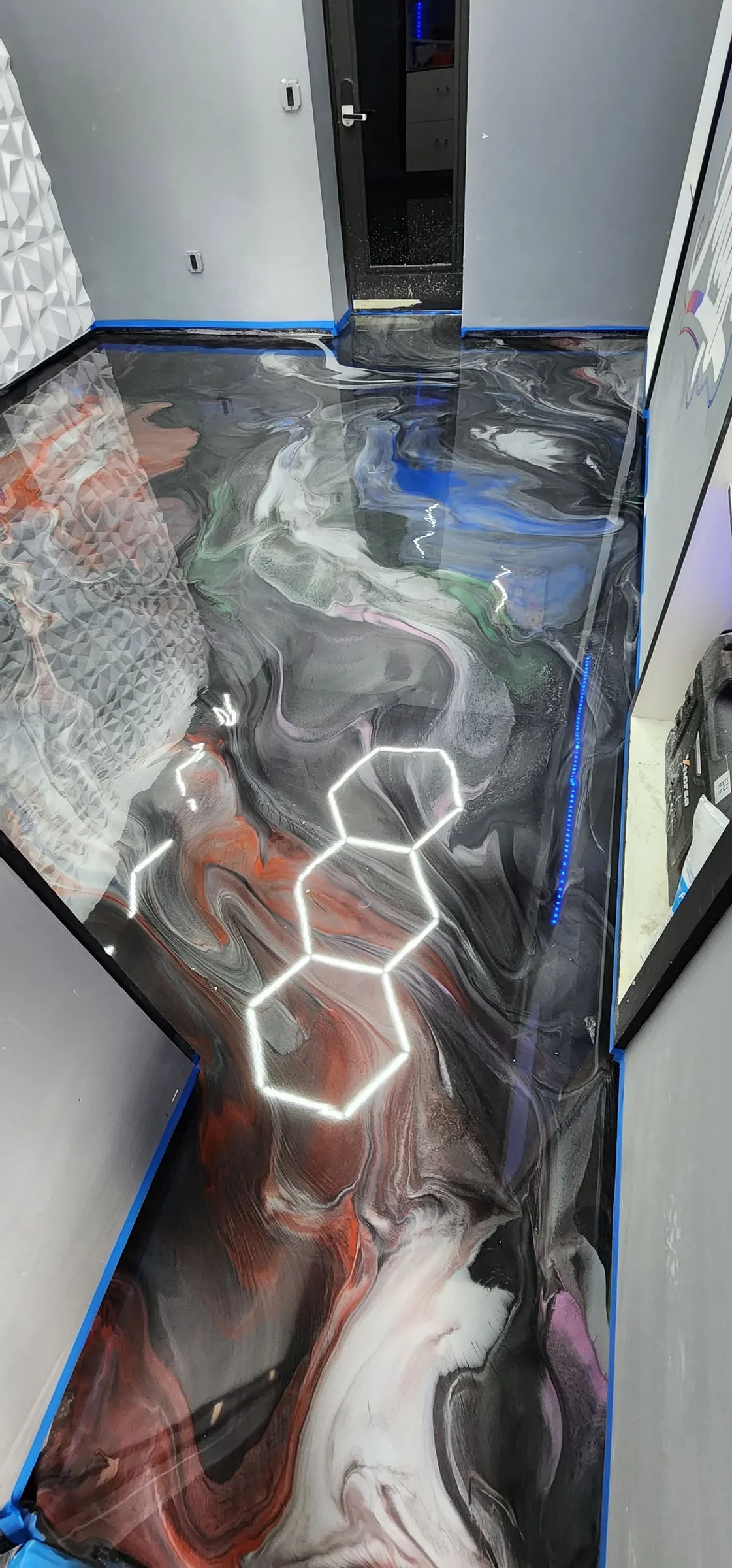

Timing when the floor gets wet
Danny asks when the water appears: after storms, after laundry day, in the spring thaw, or when the car comes in covered in snow. The timing usually points to the source faster than staring at the wet spot itself.

Tracing marks to the walls
He follows water stains, white mineral lines and damp patches back toward walls, cracks and openings. Marks that start at the base of a foundation wall point outside, and marks that ring an appliance or sit in front of the door point to surface water.

Handing off the non-floor problems
Where water is entering through walls or the slab, Danny tells the owner plainly that a drainage or waterproofing contractor needs to fix that first, and he holds the floor work until it is done. Coating over an active leak only hides it for a while.

Sealing the surface and coving edges
For water from above, the slab is ground, cracks are filled, and the chosen sealer or coating goes down, carried up the wall as a cove in rooms with washers or water heaters. Thresholds are detailed so water stays in the room instead of running under the door.
A closing bucket test
After the cure, Danny pours water near the washer, the door or wherever it used to collect, and shows the owner how it now sits on the surface and wipes up. He points out the edges and joints worth watching over time.
More of Danny’s floors
Other jobs from the file, not all of them this service. See the gallery







Questions about concrete waterproofing
Will a coating stop my basement from leaking?
A coating or sealer keeps surface water from soaking into the slab, but it does not stop water entering through walls, cracks or the slab from the ground. That needs a waterproofing or drainage contractor arranged by the owner. Once that is handled, sealing or coating the floor protects it from spills and dampness on top.
How do I know if moisture is coming up through my slab?
Signs include white residue on the concrete, damp spots that appear without a spill, and old coatings bubbling or lifting. A visual walk can point to the problem but does not measure it. The owner can arrange a third-party moisture test, and Danny uses the result to choose a system.
Can a laundry room or garage floor be waterproofed?
Yes, against surface water. A sealer or coating keeps water from washers, wet shoes and snowmelt off cars sitting on top where it can be wiped up, and a cove base helps at the walls. Danny looks at the room and recommends the system that fits.
Can a coated floor limit damage from a burst pipe?
A coated, coved floor keeps water from a burst pipe or a failed washer hose on the surface instead of soaking into the slab, which makes cleanup faster and protects the concrete. It does not stop the water from spreading across the room, so a floor drain or a raised threshold is what contains it. Danny looks at both during the walk.
Should the area around a sump pump be coated?
The floor around a sump pit can be coated, with the coating finished neatly at the pit edge so the lid still seats and the pump can be serviced. The pit itself is left alone. If water around the pit comes from an overflowing or failing pump, a plumber fixes that before any coating goes down.
Does a waterproofed garage floor still need to drain?
Yes. Snowmelt and car-wash water still have to go somewhere, either out the door or to a drain. A coating keeps that water from soaking into the slab, and the floor’s existing slope moves it along. If water pools in low spots, Danny can talk about leveling those areas before the coating goes down.
Other sealing work
Sealing, densifying, polishing and waterproofing for the slabs that do not need a full coating.
- Concrete Floor Coating ConsultationA walk of your slab with Danny to sort out its condition, how the room gets used and the look, then land on a system.
- Concrete SealingClear sealers on bare concrete that keep the slab looking like itself while cutting down on dust, stains and spills soaking in.
- Garage Concrete SealingClear sealer on a bare garage slab to slow road salt, oil and grit from soaking in, while the floor keeps its concrete look.
- Commercial Concrete SealingClear sealers for exposed concrete in shops, offices and storage rooms, cutting dust and stains while keeping the slab’s own look.
- Industrial Concrete SealingHardening and sealing for warehouse and plant slabs, done in zones to cut forklift dust and staining while the facility keeps running.
Every county Danny covers, and every town in them, has its own page. See every areaSee the gallery
Danz Handz
Danny Carrero, epoxy specialist
dhepoxy@gmail.com
Cranford, NJ. Mon to Sat, 8 to 6. Hablamos español.
Tell Danny about the floor
Tell Danny about the space. He calls you back, comes out, looks at the concrete and talks it through before anything gets decided.