
Textured kitchen floors for wet and greasy shifts
Line cooks are usually the first to say a kitchen floor has gotten slick, and they can point to the spots, in front of the fryers and where worn tile has polished smooth by the dish machine. Danny adds texture to the topcoat in those paths and brings samples for staff to feel first.

The short version of slip-resistant commercial kitchen flooring
Slip-resistant kitchen flooring is a resin system with texture built into it, usually by broadcasting a fine aggregate into the coating and locking it in with the topcoat. The texture can be lighter in dry storage and heavier at the fryers, the dish area and the walk-in door. The tradeoff is cleaning: more texture means more grip and more scrubbing. Danny looks at where staff walk fastest and what gets spilled in each spot before recommending a system. Where an owner has a written requirement, the system is chosen to it and the product data.
Grease left to build up will coat any texture, and good shoes, mats where they make sense and regular cleaning still matter.
It fits commercial kitchens on a slab, and it can be done for a whole kitchen or only the worst zones. Texture helps, though it cannot make a floor safe on its own. Grease left to build up will coat any texture, and good shoes, mats where they make sense and regular cleaning still matter. Floors over wood framing are poorly suited to a hard resin system. A kitchen that is slick because of drainage problems needs those fixed during repair.
Danny asks the staff where the floor feels worst, then watches a service if he can. He marks the slick spots: the fryer bank, the dish machine, the walk-in door, the path to the back door. He looks at the drains and where water sits. The kitchen closes for the work. The floor is diamond ground, slopes and cracks are repaired, and the coating is poured with aggregate broadcast to the texture each zone needs. After the cure, Danny walks the floor with the manager, wet and dry, so the grip can be felt before the first service.
More texture gives more grip and more scrubbing, so it goes where the floor gets wet.
How Danny does the job
Grip is set zone by zone, so the job starts with the people who slip on the floor and ends with them walking it before a service.

Collecting the staff’s slip spots
Danny asks cooks, dishwashers and servers where they have slipped or nearly slipped, and marks each spot on a plan of the kitchen. The answers usually line up: fryers, the dish machine, the walk-in door and the back door in bad weather.

Watching shoes during service
If he can, Danny watches part of a service to see where staff turn fast, carry heavy pans and step across wet patches. That shows which spots need the heaviest grit and which only need a light texture.

Grinding off polished tile
Tile worn smooth by years of traffic comes up with its grout, and the slab is ground to clean concrete. Drainage problems that leave water standing are fixed during repair, since standing water undoes any texture laid on top of it.
Broadcasting grit by zone
The coating goes down with aggregate broadcast into it and locked under the topcoat. Heavier grit goes at the fryers, the dish area and the doors, and a finer texture runs across the prep and storage areas, all in one color.
Handing over the brush routine
Before the first service, Danny walks the floor with the manager and the kitchen staff and goes over cleaning: deck brushes and a squeegee in the textured zones, regular degreasing, and keeping grease from building up and filling the grit.
More of Danny’s floors
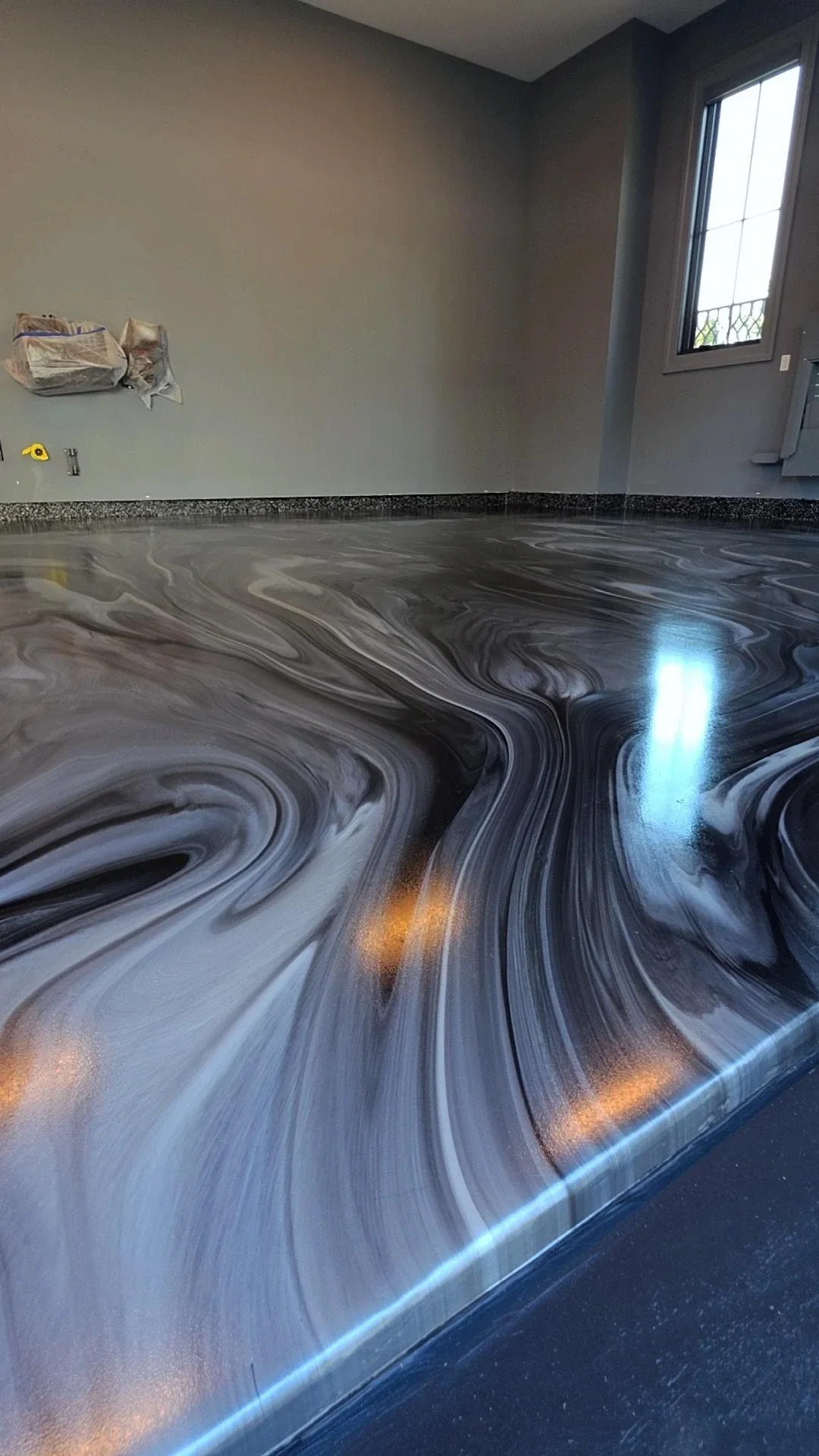
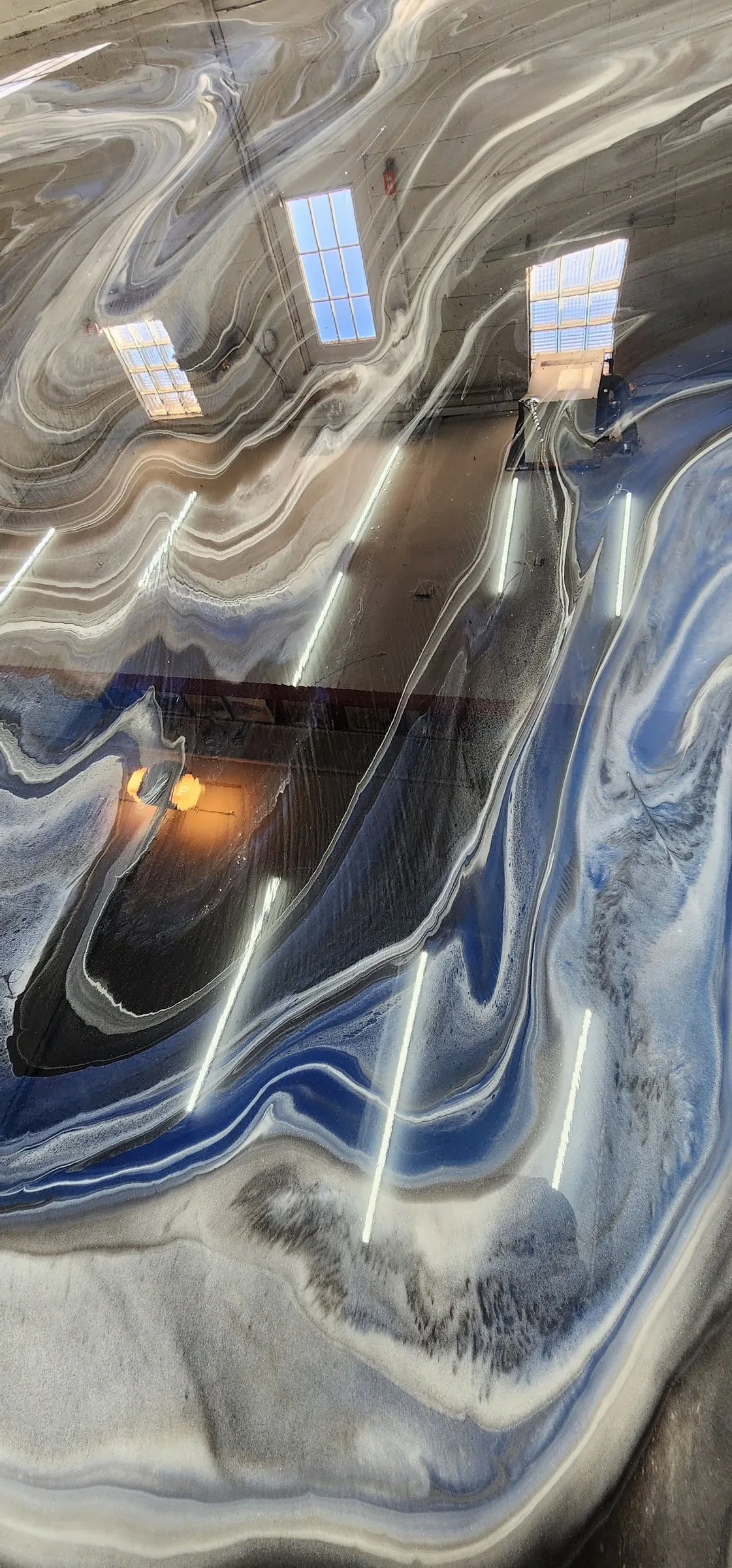
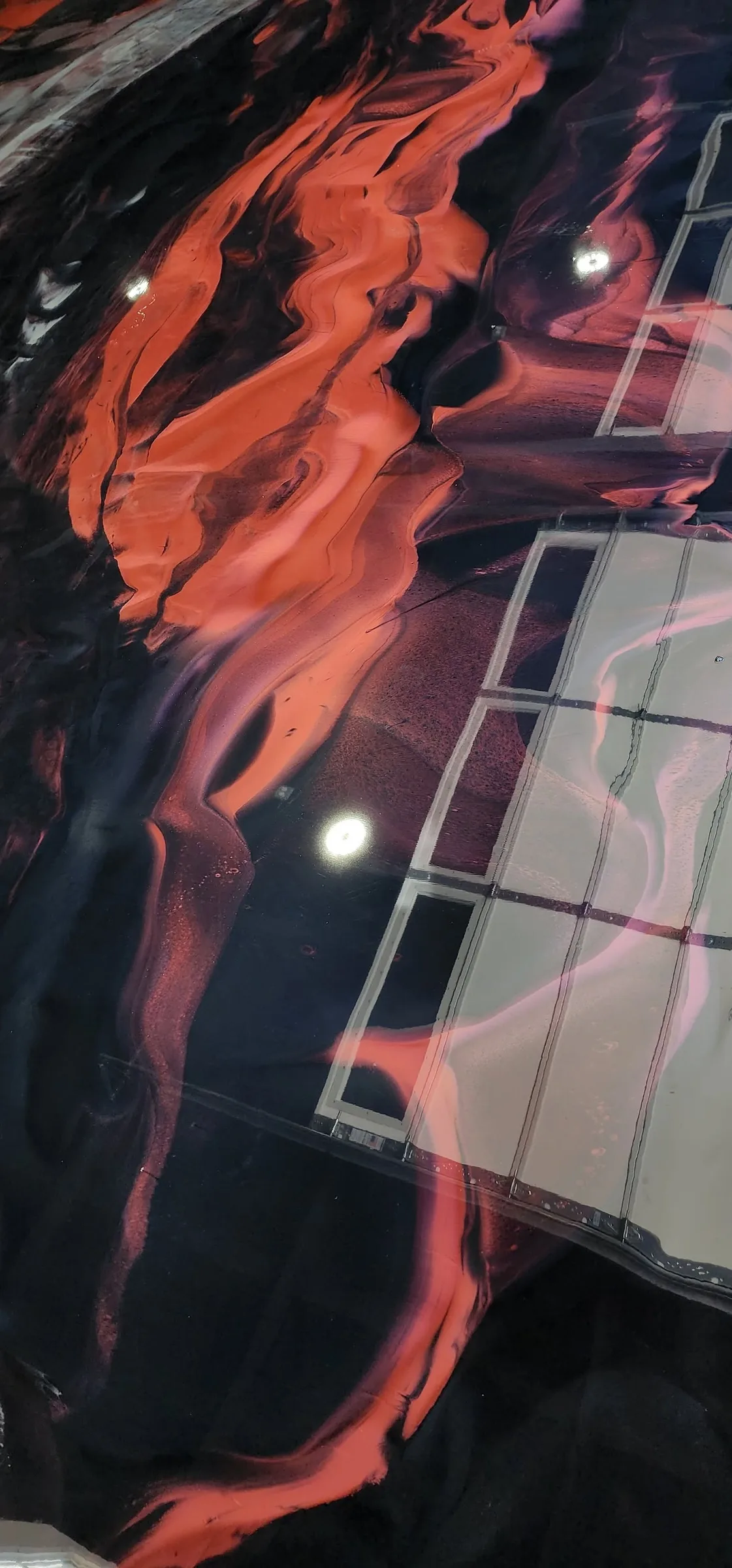
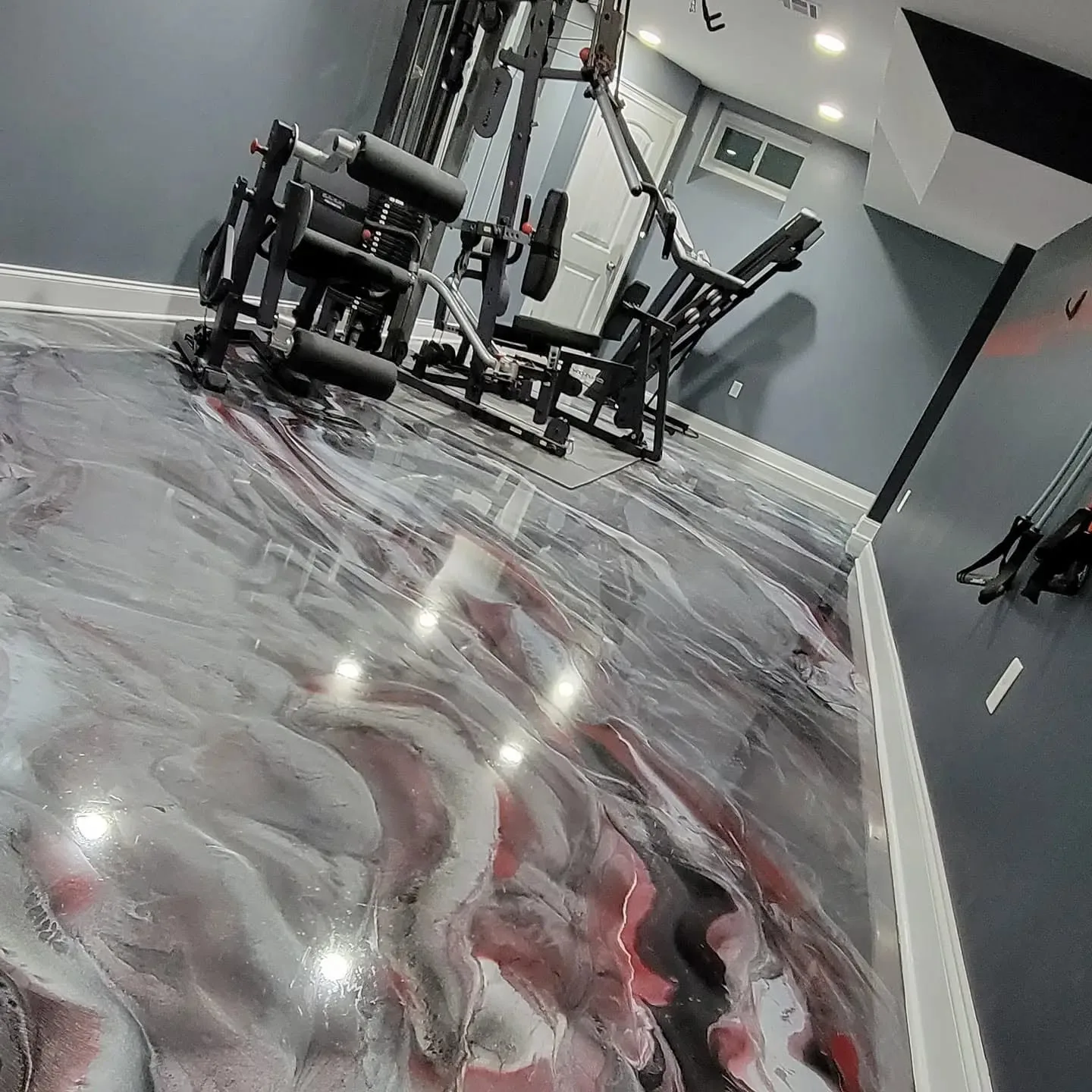
Other jobs from the file, not all of them this service. See the gallery




Questions about slip-resistant commercial kitchen flooring
Will a textured floor stop all slips?
No floor can promise that. Texture adds grip, and grease buildup, standing water, the shoes people wear and how the floor is cleaned all affect whether someone slips. What the floor can do is give a grippier surface than polished tile or a smooth coating. Danny talks through the texture choices and the cleaning habits that keep it working.
Is a textured floor harder to clean?
A little. Texture holds more dirt than a smooth surface, so the cleaning routine shifts to stiff deck brushes and a squeegee in place of a string mop. Most kitchens adjust quickly. Danny can set lighter texture where the floor stays dry and save the heavier texture for the wet zones, which keeps cleaning reasonable.
Can only the worst areas get texture?
Yes. Texture can be heavier at the fryers, the dish area and the walk-in door and lighter across the rest of the kitchen, all in one floor. The zones blend in color so the floor looks consistent. Danny maps the zones during his visit, often from what the staff tell him about where they slip.
Does the grit wear down over time?
Heavy traffic slowly rounds off the texture in the busiest paths, like the walk from the line to the pass. That wear shows as a smoother, shinier strip. A new textured topcoat can be put over the existing floor once that happens, without starting over. Danny can show the manager what to look for.
Do our staff still need slip-resistant shoes?
Yes. Shoes are part of how anyone stays on their feet in a kitchen, and a textured floor works with good soles. Whether shoes are required is the owner’s policy, and Danny does not replace that with a floor. He does point out any spot where grip will depend heavily on footwear.
Can grit be added to the floor we already have?
Sometimes. If the existing resin floor is well bonded and in good shape, it can be sanded and given a new textured topcoat. Tile, a peeling coating or a floor with failed patches needs more work first. Danny looks at the current floor during his visit and says which approach makes sense.
Other kitchens work
Commercial kitchens, bakeries, breweries and cold rooms, with coved bases and slip-resistant finishes.
- Commercial Dairy Facility FlooringCoved resin floors for creameries, cheese plants and dairy processors, chosen against acidic residue and strong cleaners, done room by room.
- Commercial Catering Kitchen FlooringCatering and commissary kitchen floors that handle carts rolling to the loading door, scheduled around the event calendar.
- Commercial Dishwashing Area FlooringTextured, coved floors for dish pits that stay wet all night, often done on their own ahead of the rest of the kitchen.
- Cold Storage Facility FlooringCoated floors for walk-in coolers and freezer rooms, planned around the shutdown, the warming for the cure and the threshold.
- Refrigerated Warehouse Floor CoatingsCoatings for refrigerated warehouse docks, staging lanes and cold rooms, phased door by door so trucks keep loading.
Danny works out of Cranford, NJ and covers about 60 miles: North and Central Jersey, the city and Long Island, the Hudson Valley counties, Fairfield County and eastern Pennsylvania. See every areaSee the gallery
Danz Handz
Danny Carrero, epoxy specialist
dhepoxy@gmail.com
Cranford, NJ. Mon to Sat, 8 to 6. Hablamos español.
Schedule a look at your floor
Tell Danny about the space. He calls you back, comes out, looks at the concrete and talks it through before anything gets decided.