
Decorative flake floors for busy rooms
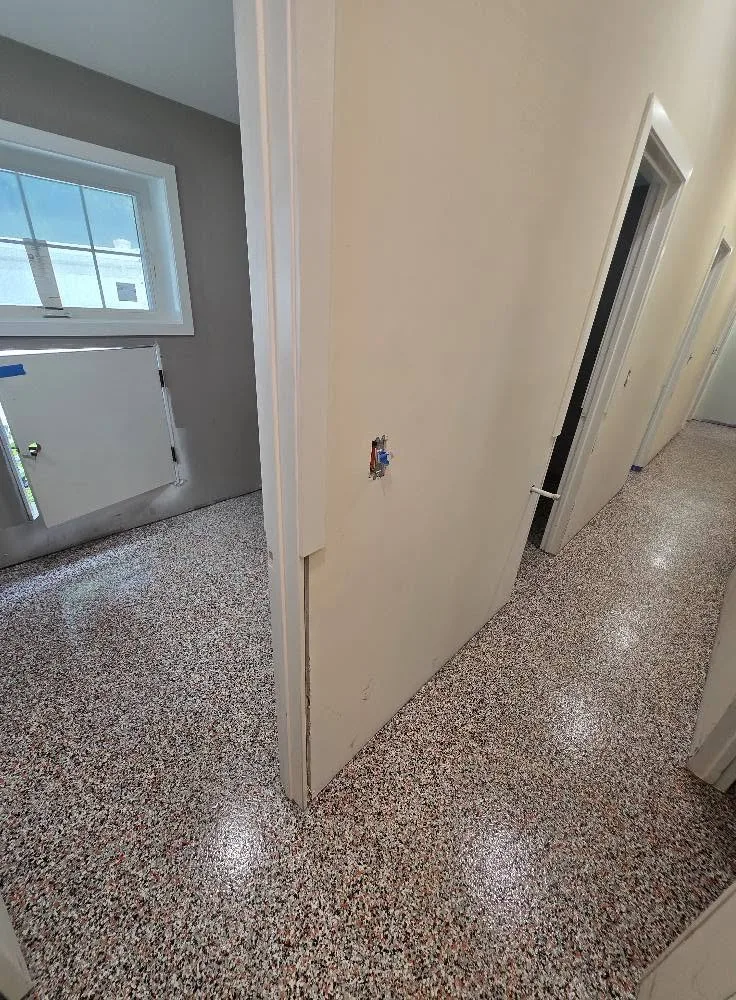
Muddy boots and pets are hard on a basement, laundry room or mudroom floor, and colored vinyl chips broadcast into wet epoxy hide that everyday dirt in a speckled, granite-like finish. Danny usually suggests flake for rooms that have to look put together on a busy day, then builds the blend with you.
What goes into decorative flake epoxy flooring
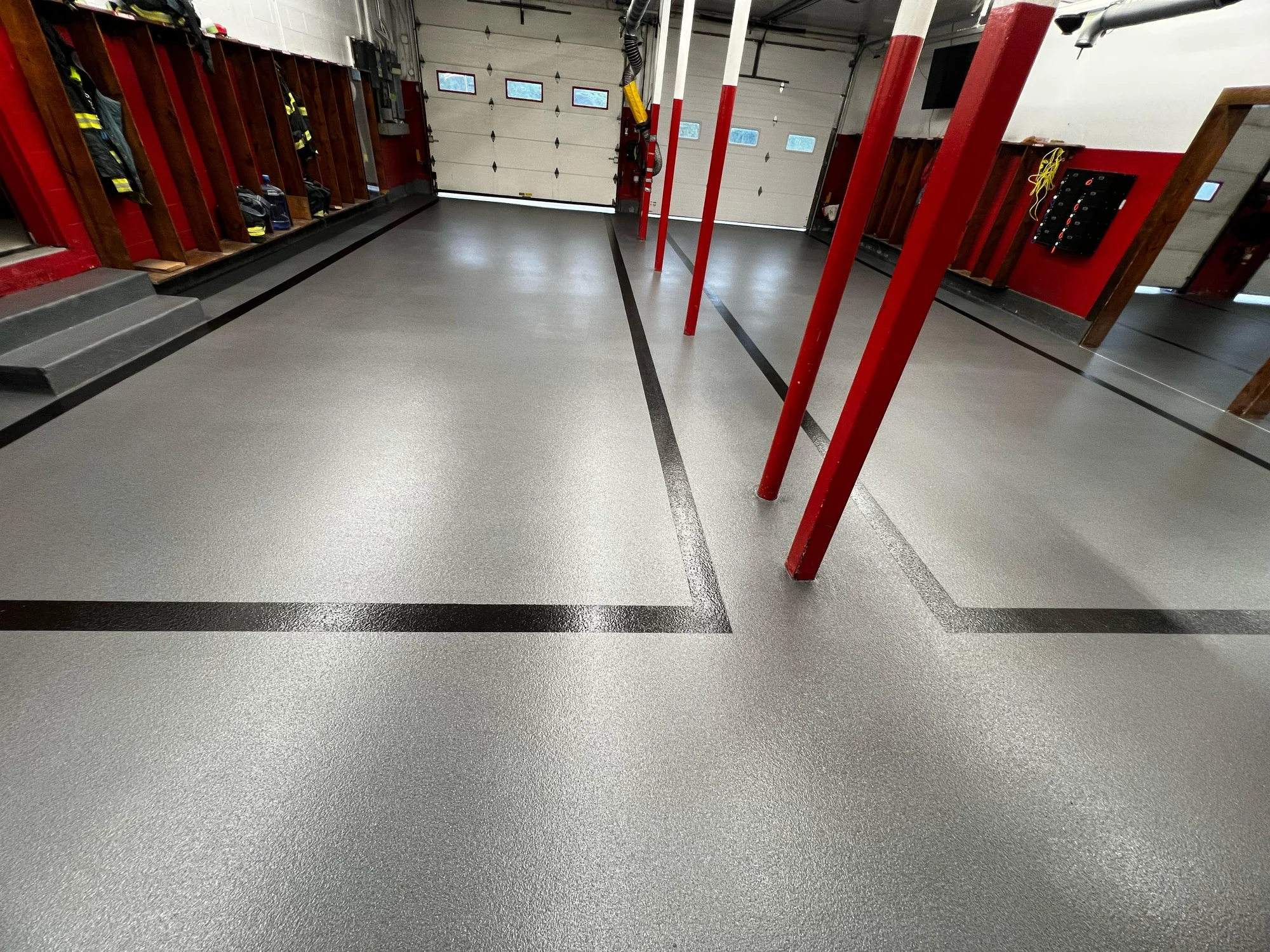
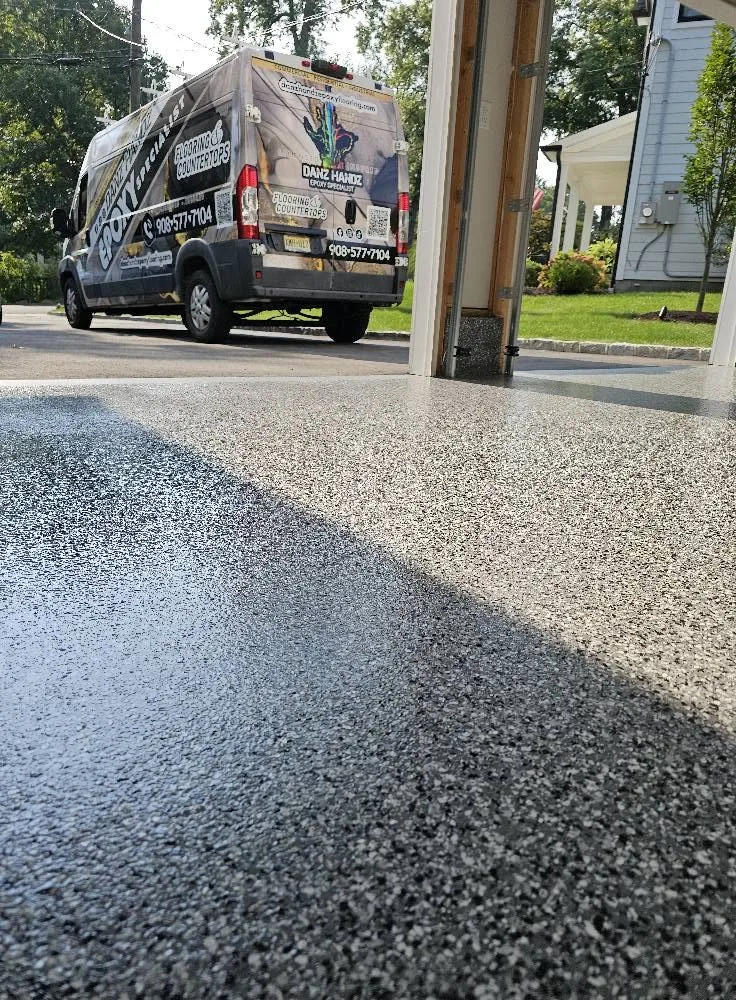
The system goes down in layers. After the slab is ground and repaired, Danny rolls a pigmented base coat and throws flake into it by hand while it is wet. On a full broadcast, he keeps throwing until the base is covered, then scrapes off the loose chips once it hardens and seals everything under a clear topcoat. A partial broadcast leaves some base color showing between chips for a lighter, more spread-out look. Chip size, the blend and how much base shows decide how the finished floor looks.
After the slab is ground and repaired, Danny rolls a pigmented base coat and throws flake into it by hand while it is wet.
Flake is the forgiving choice. The speckle hides dust and small scuffs that would stand out on a solid or metallic floor, and the chips give the surface some texture underfoot. It fits basements, utility rooms, garages and back-of-house spaces in shops. It does not have the polished, one-of-a-kind look of a metallic pour, so in a formal living room or an entry meant to impress, Danny will usually point you somewhere else. Very small chips read almost solid from across a room, which some clients like and some do not.
Danny starts with how the room gets used. A mudroom that takes wet boots all winter gets a different conversation than a basement gym. He walks the slab, then diamond grinds it and fills cracks and divots, because flake hides color variation but it does not hide a bad surface. He helps the client pick a blend and base color from samples held on the actual floor, in the actual light. The base coat and broadcast go down first. Once that hardens, the loose chips are scraped and vacuumed off and the clear topcoat seals the floor. He finishes by going over the edges and corners with the client up close. Material comes from Bulletproof Resins, which Danny partners with, and the color gets mixed on site in small batches.
Flake hides the dirt between moppings. It does not hide a badly prepped slab.
From bare slab to finished floor
Every floor goes through the same five stages. What changes is how much each one takes, and that gets settled at the walkthrough.

Walk the space
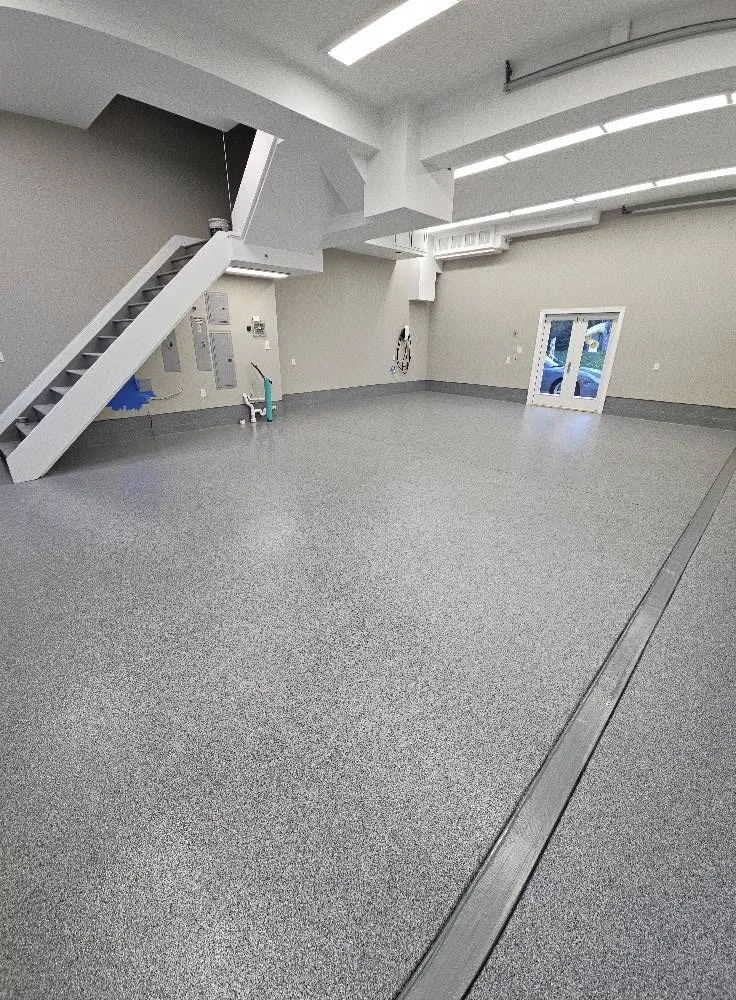
The job starts with a walkthrough: the slab, the edges, the drains and doors, and what you want it to look like.

Prep the concrete
Prep is grinding and cleaning, done until the concrete is ready to take a coating, not before.

Fix what is underneath
Damage in the slab gets repaired now, so it does not show through the finished floor later.
Lay it down
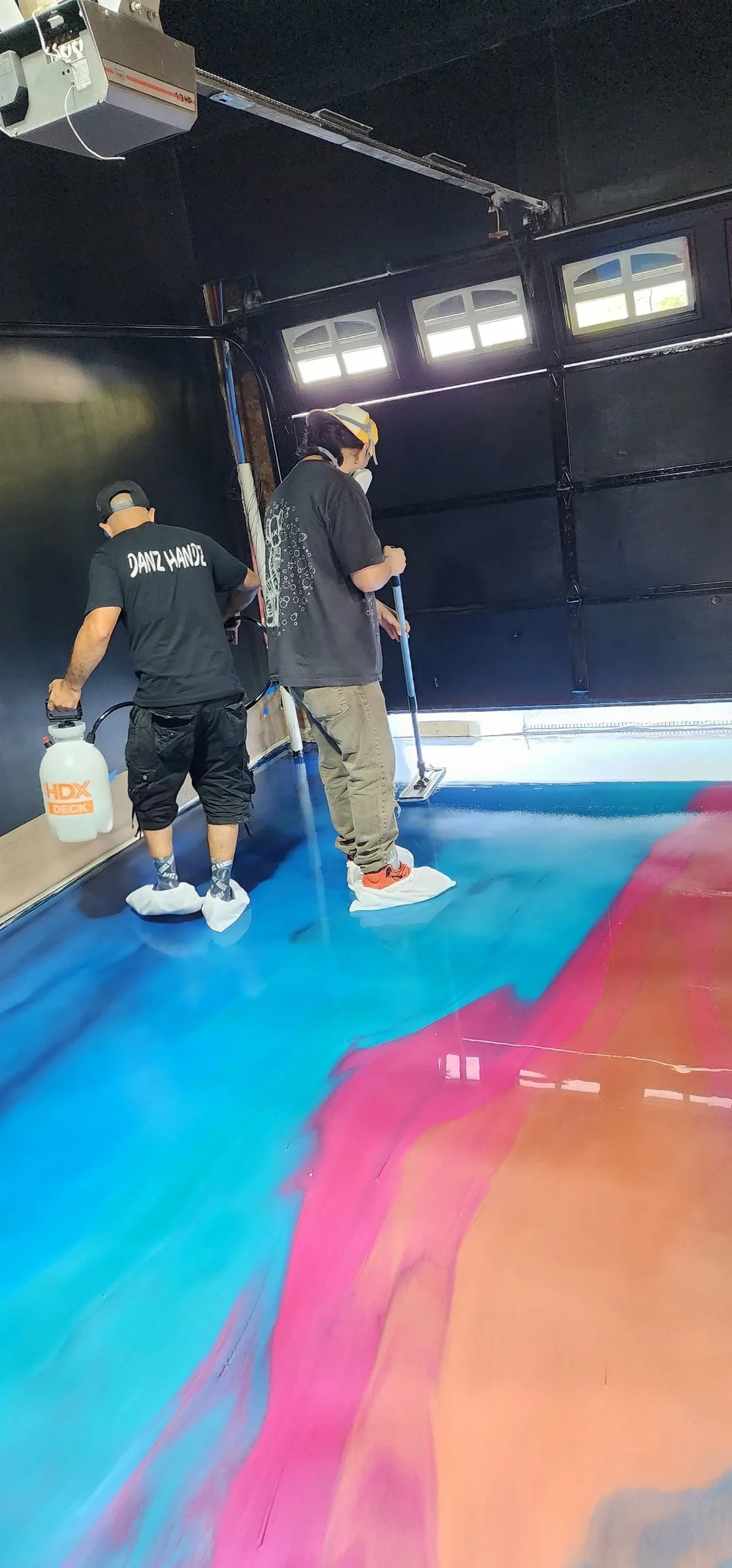
Base coat, color or broadcast, then the topcoat, laid down by hand in the order the system calls for.
Cure and the final walk
Cure time comes first, foot traffic second. Then a final look together.
More of Danny’s floors
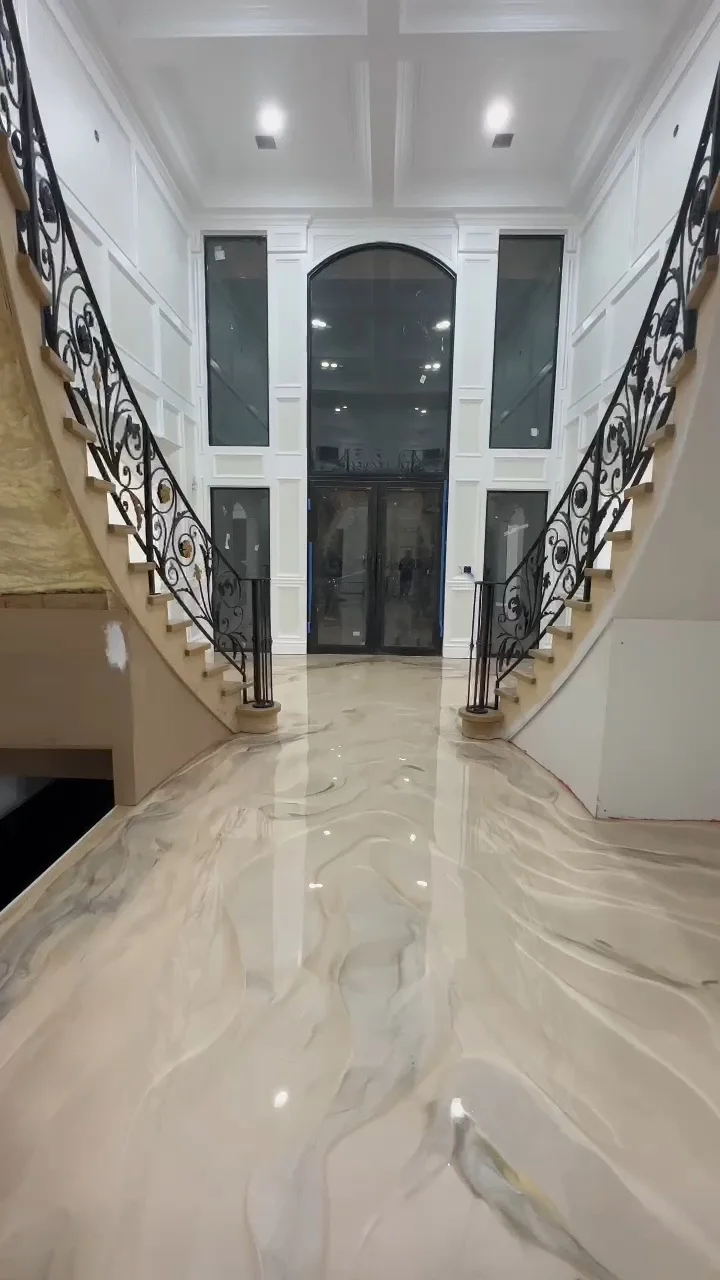
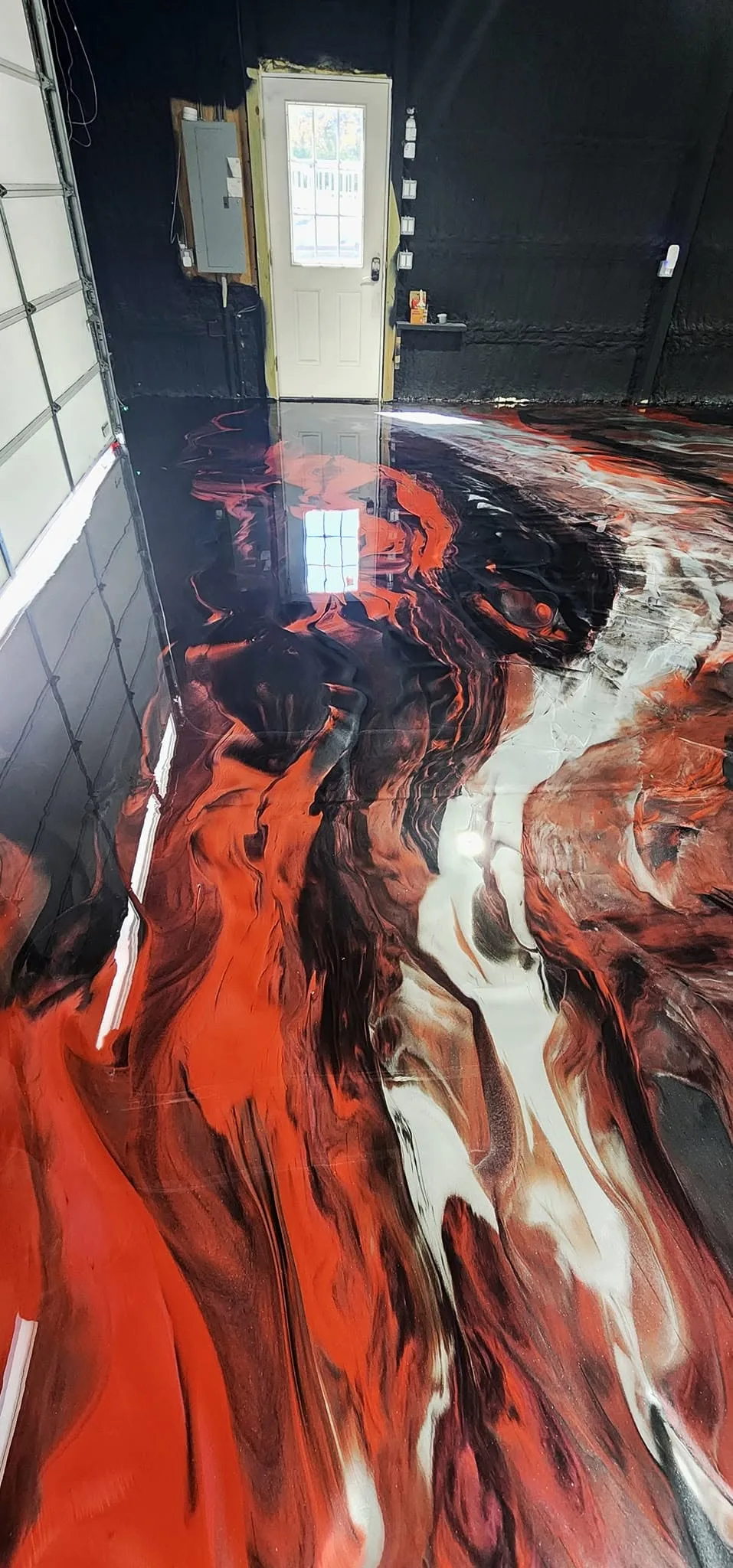
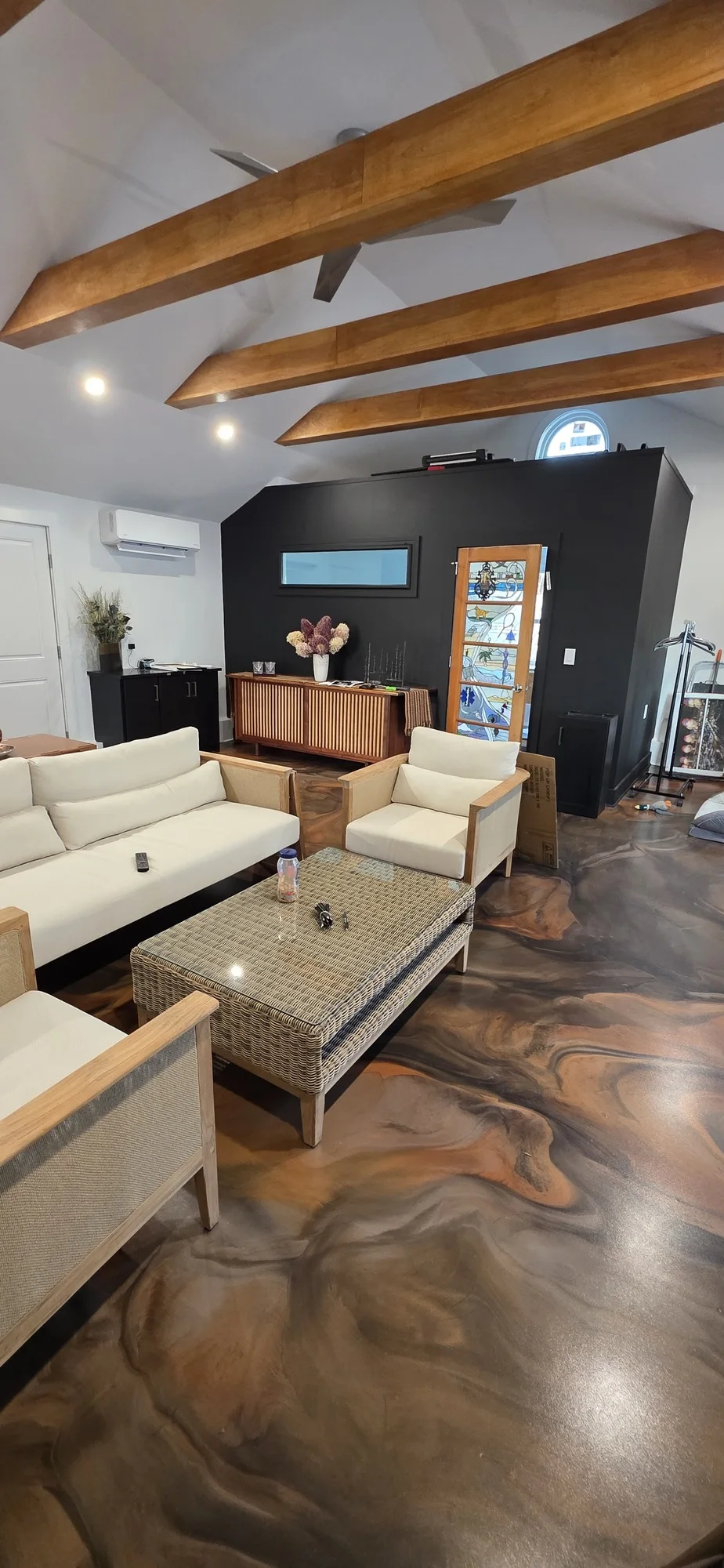
Other jobs from the file, not all of them this service. See the gallery




Questions about decorative flake epoxy flooring
What is the difference between full and partial flake?
Full broadcast covers the base coat completely with chips, so you see only flake. Partial broadcast spreads fewer chips so the base color shows between them. Full gives more texture and hides more. Partial looks lighter and more modern, though it shows wear a bit sooner. Looking at both on your own floor makes the choice easy.
Is flake a good fit for a basement that sometimes gets damp?
It depends where the dampness comes from. Spills and wet shoes on top are not a problem for a sealed flake floor. Moisture coming up through the slab is, because it can push the coating off from underneath. Danny looks for signs of that during the walk-through and will tell you if the slab needs to be dealt with first.
How do I clean it?
Sweep or dust mop regularly, and mop with warm water and a mild cleaner when it needs more. Avoid soaps that leave a film, since that dulls the topcoat over time. The texture holds a little grit in the low spots between chips, so a soft deck brush now and then helps on full broadcast floors.
Do you teach epoxy too?
He has run hands-on epoxy classes in Cranford for the last three years. The training page covers what a class goes through.
How do I take care of the floor afterward?
Mostly a soft broom and a damp mop with a mild cleaner. Danny goes over care for your specific system at the final walk-through.
Do you speak Spanish?
Sí. Hablamos español. Call or write in whichever language is easier for you.
More from the decorative section
Metallic marble, 3D, pearl and two-tone pours, custom blends and logo inlays. This is the work Danny is known for.
- Color-Flake Floor CoatingsFlake floors where the chip blend and base color are chosen to sit right with your walls, cabinets, siding or brand colors.
- Quartz Aggregate FlooringColored quartz granules sealed in epoxy for a dense, sandy-textured floor suited to kitchens, locker rooms and other rooms that get washed.
- Solid-Color Epoxy FlooringA single pigmented color wall to wall for workshops, gyms and back rooms that need a bright floor where spills and parts show up fast.
- Custom Blend Epoxy FlooringEpoxy colors mixed from a sample you bring in, a swatch, a tile or a car, with optional metallics and Glitter ELEMENTZ sparkle.
- High-Gloss Resin FlooringA wet-look topcoat that reflects light and deepens color, best for display garages, dark basements and showrooms with a well-prepped slab.
The shop is in Cranford. Most jobs are within an hour or so, across four states. See every areaSee the gallery
Danz Handz
Danny Carrero, epoxy specialist
dhepoxy@gmail.com
Cranford, NJ. Mon to Sat, 8 to 6. Hablamos español.
Schedule a look at your floor
Send a few lines about the room and the look you want. Danny will call and set up a time to see it.