
Coating a concrete slab once it has finished curing
A new slab can feel hard long before it has stopped giving off water, and coating it too soon is how moisture problems start. Danny comes out once the slab has cured, or earlier to help the builder judge whether it has, so the coating goes down on concrete that is ready for it.

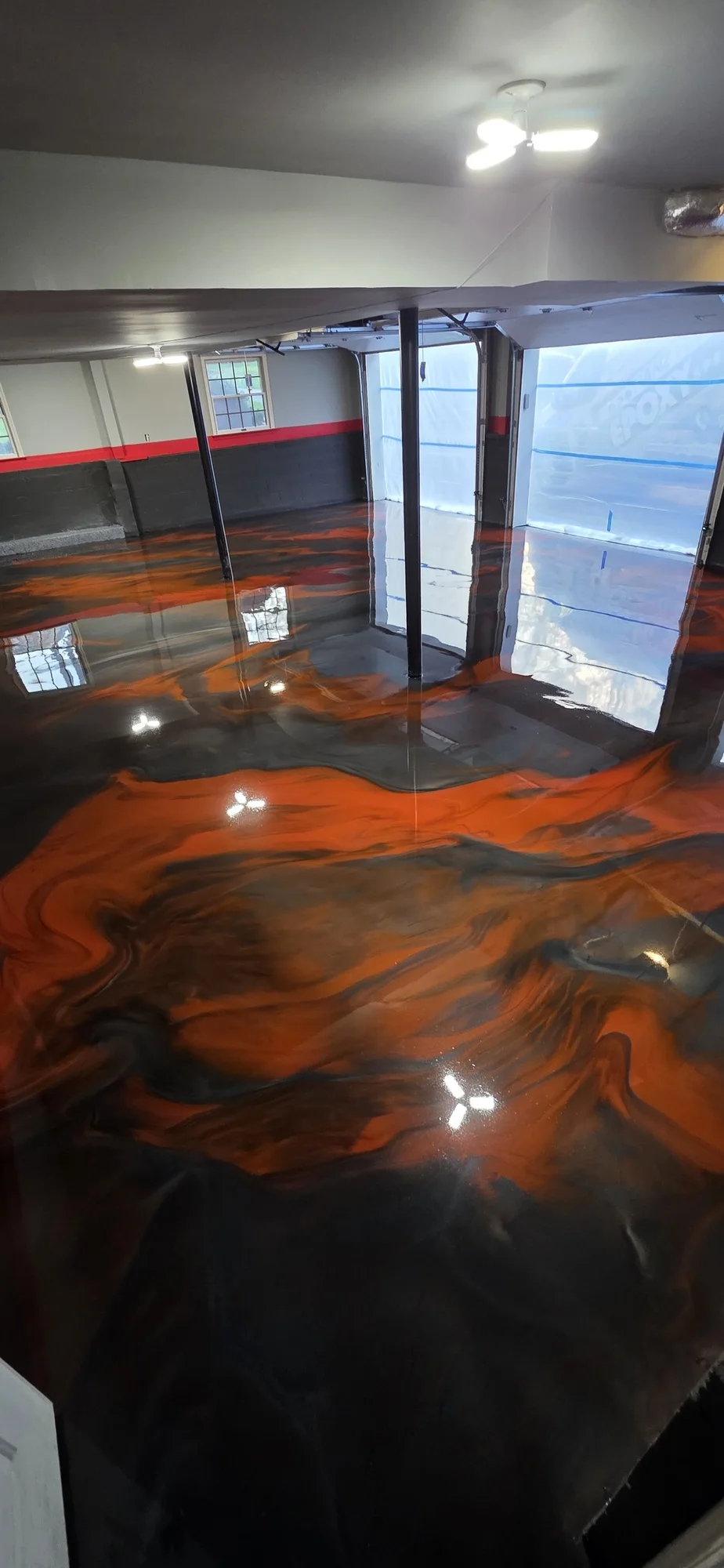
Concrete Floor Coating after Slab Curing, start to finish
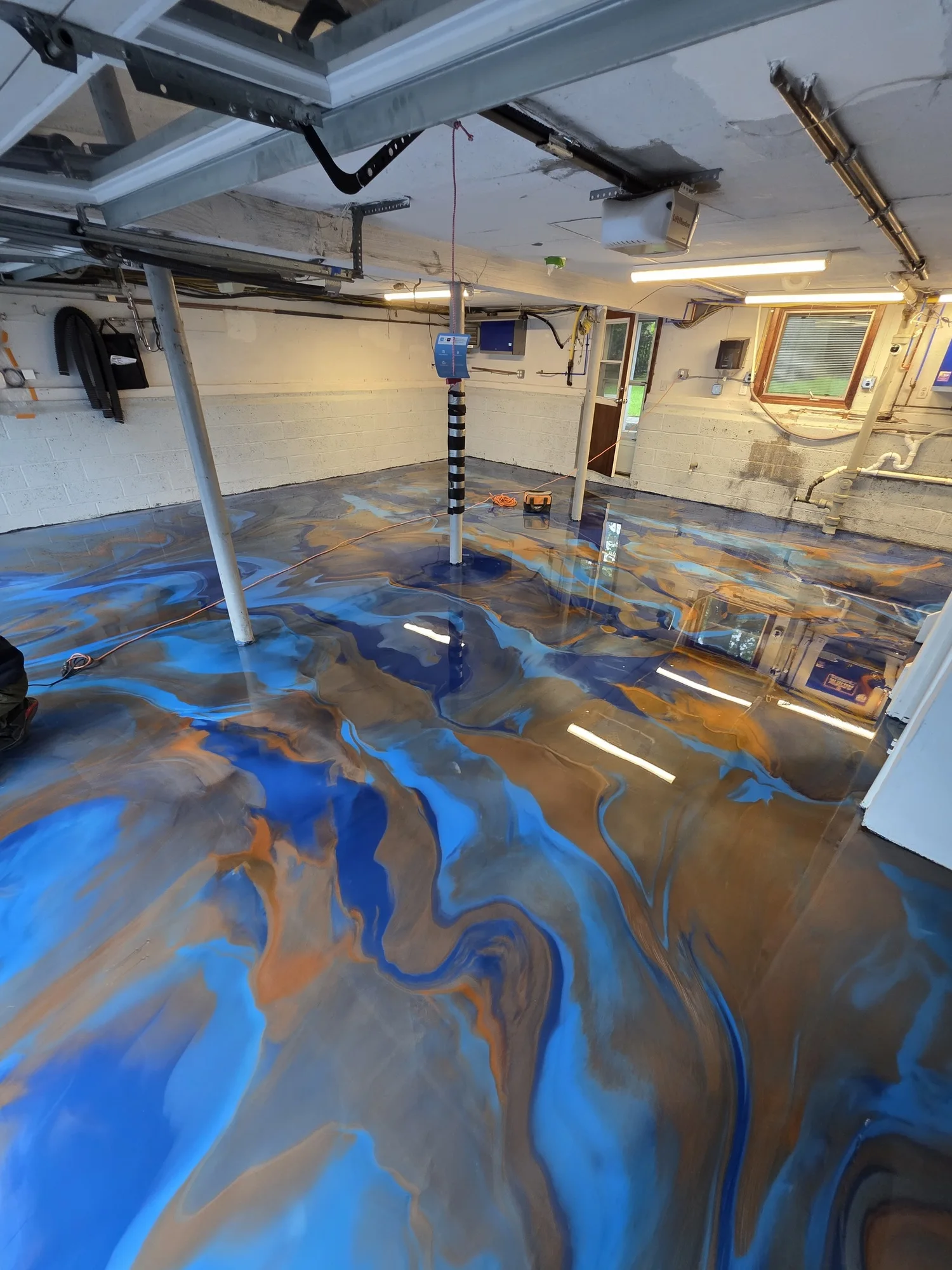
This service is the coating of a slab that has gone through its cure and dried enough to accept a resin system. The work is the same grind, repair and pour Danny does on any floor, with extra attention on the new concrete itself. Fresh slabs often carry a weak, powdery top layer and sometimes a curing compound sprayed on during the pour. Both come off in the grind. The coating, whether flake, solid color or metallic, then bonds to sound concrete underneath.
The coating, whether flake, solid color or metallic, then bonds to sound concrete underneath.
It fits any new slab: garages, basements, shops, commercial floors. The hard part is timing. A slab that looks dry on top can still be holding water inside, and coating it too early can lead to bubbles, blisters or a coating that lets go later. The answer to whether a slab is ready comes from a moisture test, which the owner or builder arranges. Danny reads the results with the product data for the system before he pours. A tight schedule is never a good enough reason to skip that step.
Danny asks when the slab was poured, what mix was used if anyone knows, and whether anything was sprayed on it. He walks the slab looking at the surface, the joints and any cracks that showed up during the cure. Once a moisture test confirms the slab is ready, he diamond grinds off the weak top layer and any curing compound, repairs shrinkage cracks and pour defects, and levels the low spots. Then he pours in coats and lets the floor cure on its own schedule. The final walk covers care for the new surface.
Concrete keeps drying long after it looks finished.
How the work runs
Most of this job is waiting well and then reading the results right. These stages cover the slab’s history, its drying, the moisture readings and the first coats.
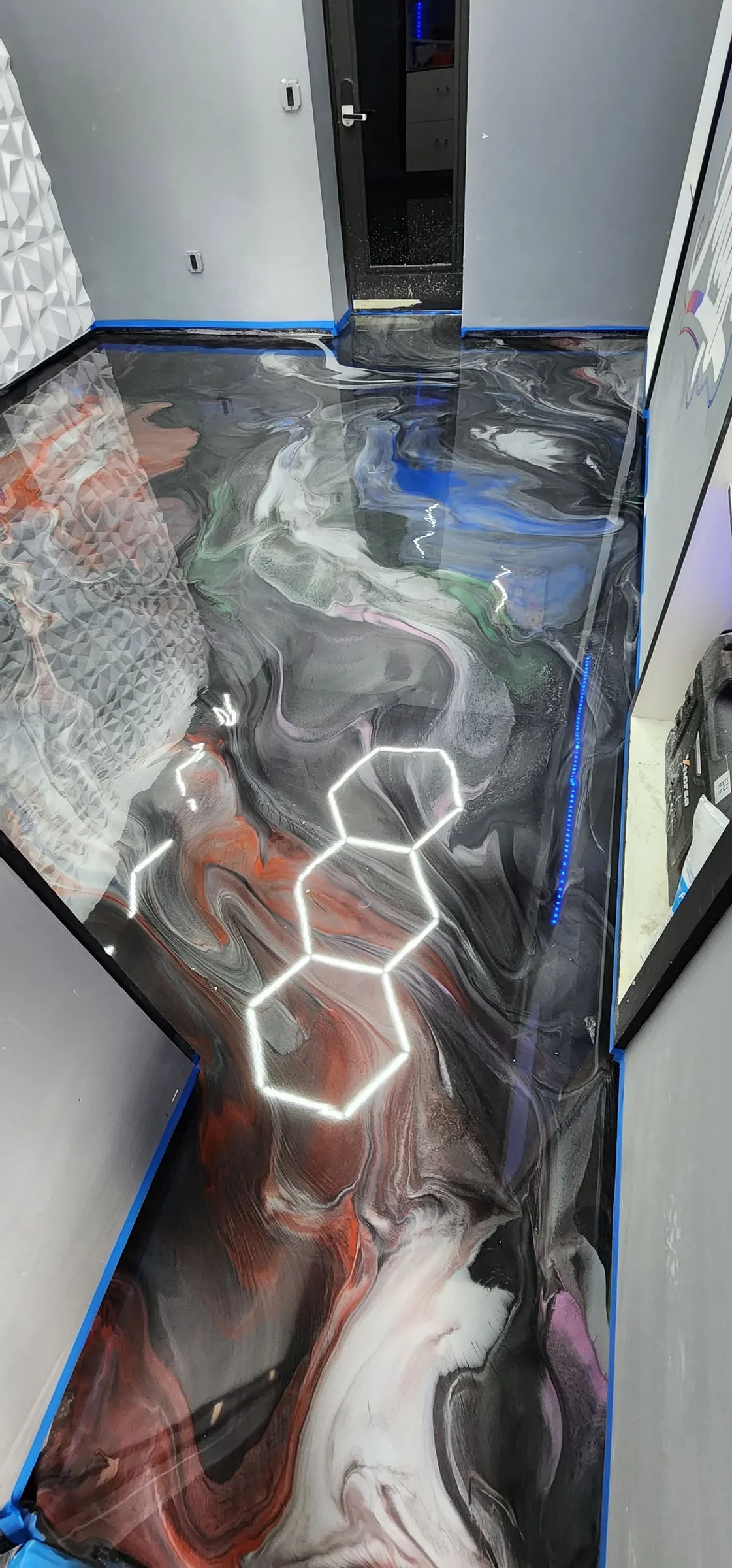

Writing down the slab’s history
The first notes are the pour date, the mix if anyone has the delivery ticket, whether a vapor barrier went under it and what was sprayed on top. That history tells Danny how long to expect the slab to keep drying and what the grind must remove.

Getting the building to help it dry
Concrete dries faster in a closed, conditioned building than in an open shell. Danny suggests closing the space and running the heat or air once the builder can, since steady conditions shorten the wait more than anything done to the slab itself.

Reading the moisture results
The testing company the owner or builder hires places its tests across the slab, including spots far from doors. Danny compares the results with the product data for the planned system, and if they fall short he sets a later date instead of guessing.

Grinding past the curing layer
Once the slab passes, the diamond grind removes the curing compound and the soft top skin together. Hairline cracks that opened during the cure get filled, and the saw-cut joints are cleaned out and handled the way the owner chose.
Priming for fresh concrete
A young slab can still give off more moisture than an old one, so the primer is chosen with that in mind from the product data. The coats follow, and the floor cures without traffic until Danny and the owner walk it at the end.
More of Danny’s floors
Other jobs from the file, not all of them this service. See the gallery




Questions about concrete floor coating after slab curing
How do I know when my new slab is ready for a coating?
A moisture test is the reliable answer. Looks and touch fall short, since the top can feel dry while the slab still holds water inside. The owner or builder arranges the test with a testing company, and Danny reads the results against the product data for the system he plans to use.
What happens if a coating goes on too early?
Moisture moving up through the slab can push against the coating from underneath. That can show up as bubbles, blisters, a cloudy look or a coating that peels in patches. It may not happen right away, so a rushed floor can look fine for a while before the trouble starts. Waiting for a ready slab avoids most of it.
Do you need to grind a brand new slab?
Yes. New concrete usually has a smooth, troweled surface and a thin weak layer on top, sometimes with a curing compound over it. A coating needs a clean, open surface to bond to. The grind removes that top layer and gives the whole floor the same texture before the pour goes down.
Does a vapor barrier under the slab matter?
It does. A vapor barrier under the concrete slows moisture coming up from the ground long after the slab itself has dried. Without one, a basement or ground-level floor can keep sending moisture up for years, which affects what system can go on it. Ask the builder whether one was used, and Danny factors the answer into his plan.
Can the wait be shortened?
The slab dries on its own schedule, though conditions help. A closed building with the heat or air running dries concrete faster than an open shell in damp weather, and fans and dehumidifiers can help too. What cannot be skipped is the moisture test, since the slab has to actually be ready before the coating goes down.
What if the slab passes in some rooms and not others?
It happens, especially where some rooms closed in sooner or sit over damper ground. The ready rooms can be coated first while the others keep drying, as long as the schedule allows. Danny plans the edges between them so the later pour ties in cleanly at a doorway or a joint.
Next to this on the list
New builds, renovations and tenant fit-outs, scheduled once the slab has cured and the other trades are out.
- New Construction Commercial Floor CoatingsCoated floors for new shops, offices and showrooms, scheduled in with the general contractor and finished before handover.
- Industrial Facility Flooring InstallationResin floors for production areas, docks and maintenance shops, installed in sections so the facility can keep working.
- Concrete Slab Coating for New BuildsMetallic or solid color coatings poured over new slabs inside a house, so the concrete itself becomes the finished floor.
- Renovation Epoxy FlooringNew epoxy floors poured on a slab after the old flooring is pulled, with glue, mortar and patches ground and leveled first.
- Floor Coating for Tenant ImprovementsCoated floors installed during a commercial build-out, ground clean of the last tenant’s leftovers and ready for the new business to open.
Jobs run about 60 miles out from the Cranford shop, from the Jersey shore and the Poconos to Long Island and Fairfield County. See every areaSee the gallery
Danz Handz
Danny Carrero, epoxy specialist
dhepoxy@gmail.com
Cranford, NJ. Mon to Sat, 8 to 6. Hablamos español.
Start with a visit
A short note about the space is enough. Danny calls back and books a walkthrough.