
Floor upgrades timed to a plant shutdown or retooling
Plant floors rarely get redone on their own schedule. The chance usually comes when a line moves, equipment gets replaced or the plant shuts down for a planned stretch, and the bare or painted concrete gets upgraded inside that window. Danny plans it ahead so the grind starts when the line stops.
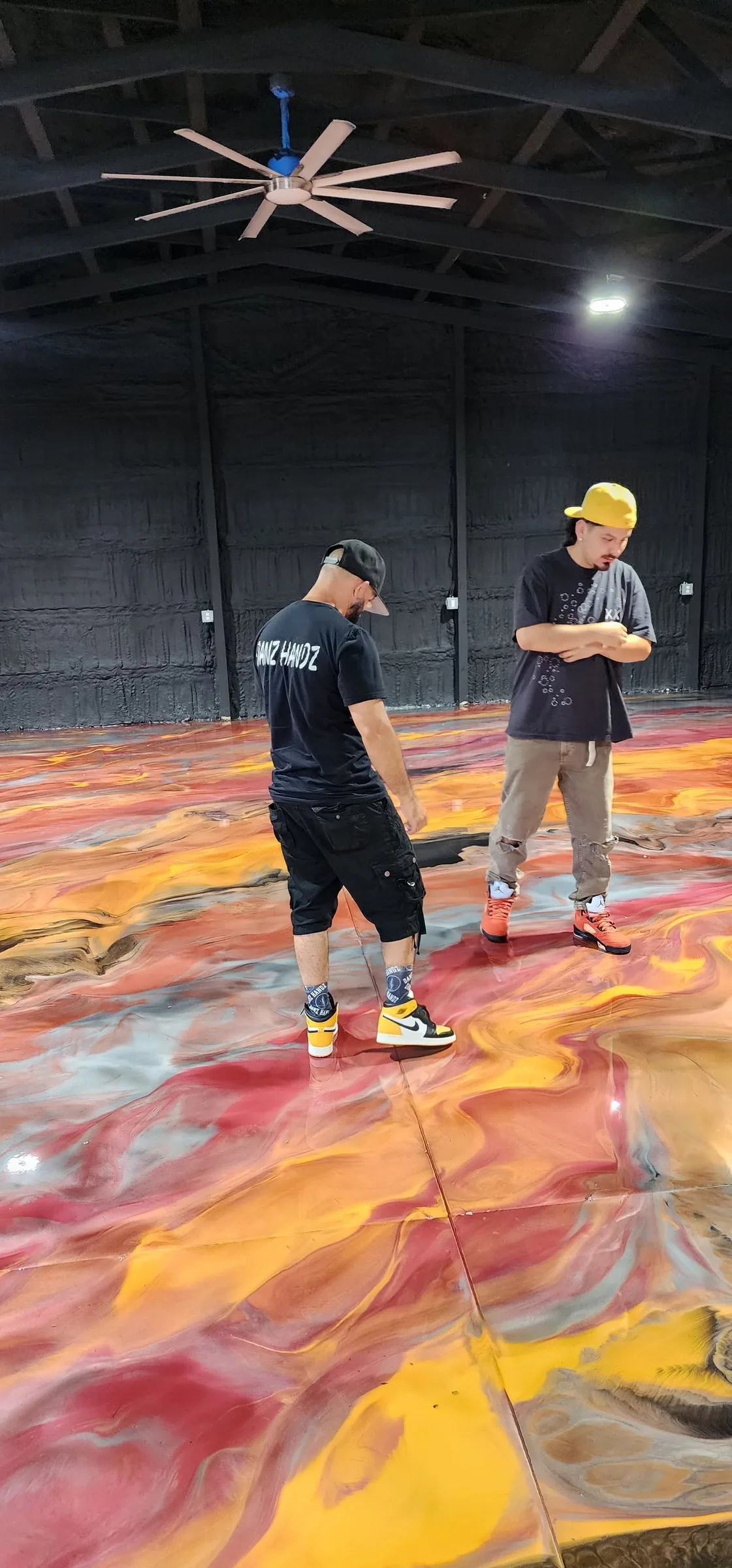

Manufacturing Facility Floor Upgrades, start to finish
A manufacturing floor upgrade replaces bare concrete, painted floors or a worn coating in production areas with a new resin system. Danny grinds the slab, repairs the damage left by old machine anchors, pits from dropped parts and edges broken by carts, and pours a coating built for that area. The process decides a lot. A machining area with coolant and chips sees different abuse than an assembly area or a packing room. Danny looks at the space, the traffic and what gets spilled on it before recommending a system.
A manufacturing floor upgrade replaces bare concrete, painted floors or a worn coating in production areas with a new resin system.
It fits plants that can give Danny a defined area and a defined window, such as a holiday shutdown or the gap between removing old equipment and installing new. It fits poorly when the floor has to be done around a running line. Anything specific to the plant, like hazardous material rules, housekeeping standards or insurer requirements, comes from the plant, and the system is chosen to the job’s requirements and the product data. Anchoring, rigging and utility work belong to the plant’s own trades.
Danny walks the area with the plant manager or engineer and goes over the shutdown dates, the new equipment layout and the fluids each process puts on the floor. He marks where old anchors and pits need repair. When the window opens and the area is cleared, he diamond grinds the slab, fills old anchor holes and broken spots, levels the surface, then pours. The area stays closed through the cure so riggers do not set equipment on a soft floor. The final walk happens before the new equipment comes in. Danny works with Bulletproof Resins material on his floors and keeps the mixing in small, measured batches.
The best time to coat under a machine is the week it is gone.
What happens on the job
Every floor goes through the same five stages. What changes is how much each one takes, and that gets settled at the walkthrough.


Walk the space
First visit is a look at the concrete and a talk about the look you want and how hard the floor works.

Prep the concrete
Grinding opens up the top of the slab. It is the step that decides whether a coating holds.

Fix what is underneath
Cracks, pits, spalls and low spots get filled and leveled before the first coat goes down.

Lay it down
Coats go on one at a time, each one mixed and spread by hand, with the finish chosen at the walkthrough.
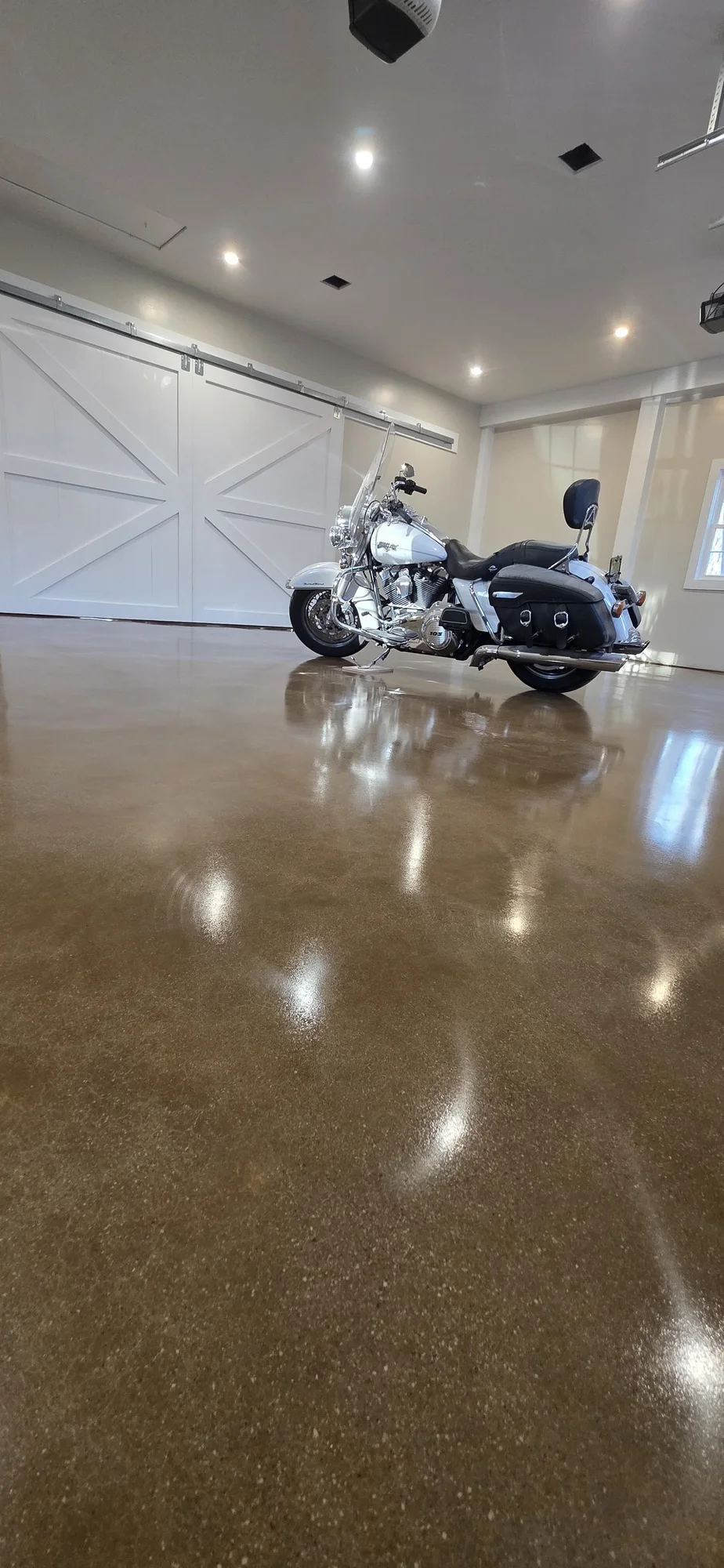
Cure and the final walk
Cure time comes first, foot traffic second. Then a final look together.
More of Danny’s floors
Other jobs from the file, not all of them this service. See the gallery








Questions about manufacturing facility floor upgrades
Can you coat while the plant keeps running?
Only in areas that can be fully closed off. Grinding makes dust and noise, and a curing floor cannot take traffic. Most manufacturing upgrades happen during a planned shutdown or between moving equipment out and moving new equipment in. Danny plans the job around whichever window the plant can give him.
What happens to the old anchor holes in the slab?
They get filled and leveled as part of the repairs, so the new coating runs flat over them. If the new layout needs anchors in the same spots, the plant’s installers drill through the finished floor after the cure, and the edges around new anchors can be touched up. Danny plans that with the layout in hand.
How do you choose a system for a production floor?
By looking at the work. Danny walks the area, asks what each process drops or spills, and watches the traffic from carts and lifts. The plant shares any internal standards or insurer requirements. The system is then chosen to the job’s requirements and the product data, one area at a time.
What should I have ready for the walkthrough?
Clear enough of the floor for Danny to see the concrete, and have a rough idea of the look you want. Photos of floors you like help.
Can I pick the color and the finish?
Yes. Danny brings samples and photos of past floors, and you settle on the color, the finish and how much movement or texture you want at the walkthrough.
Who actually does the work?
Danny does. He walks the space, plans the floor with you and runs the pour, so the person you talk to on the phone is the one on your job.
Also in construction
New builds, renovations and tenant fit-outs, scheduled once the slab has cured and the other trades are out.
- New Construction Commercial Floor CoatingsCoated floors for new shops, offices and showrooms, scheduled in with the general contractor and finished before handover.
- Industrial Facility Flooring InstallationResin floors for production areas, docks and maintenance shops, installed in sections so the facility can keep working.
- Concrete Slab Coating for New BuildsMetallic or solid color coatings poured over new slabs inside a house, so the concrete itself becomes the finished floor.
- Renovation Epoxy FlooringNew epoxy floors poured on a slab after the old flooring is pulled, with glue, mortar and patches ground and leveled first.
- Floor Coating for Tenant ImprovementsCoated floors installed during a commercial build-out, ground clean of the last tenant’s leftovers and ready for the new business to open.
Jobs run about 60 miles out from the Cranford shop, from the Jersey shore and the Poconos to Long Island and Fairfield County. See every areaSee the gallery
Danz Handz
Danny Carrero, epoxy specialist
dhepoxy@gmail.com
Cranford, NJ. Mon to Sat, 8 to 6. Hablamos español.
Tell Danny about the floor
Start with the room and the idea. Danny follows up by phone and comes to see the slab.