
Restoring rough concrete in older commercial buildings
Patched, painted, glued down and scraped up several times over, the concrete in an older commercial building often reads like several old floors at once. Before a reopening or a new tenant, Danny walks the floor to see how much of it can be saved and what it will take to bring it back.
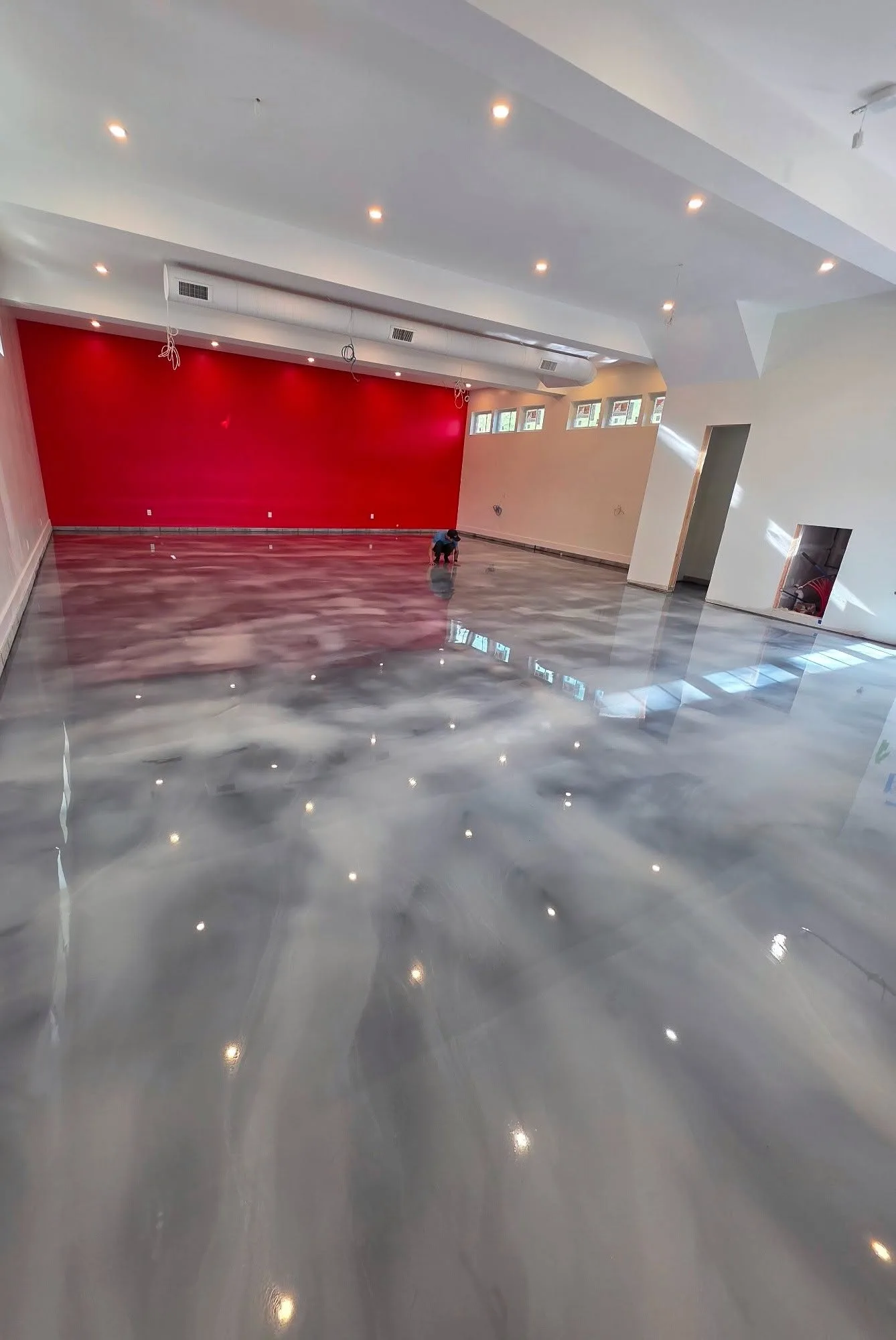

Commercial Building Concrete Restoration, from Danny’s side of the job
Concrete restoration means bringing a damaged slab back to a sound, even surface. In practice that is grinding off old paint, glue and failed coatings, filling cracks, pits and spalled areas, and leveling uneven spots so the floor is flat and clean again. From there the owner decides what goes on top: a coating, a clear sealer, or new flooring installed by someone else. Danny handles the concrete work and the coatings, using material from Bulletproof Resins where a coating is chosen.
He says plainly what can be restored and what needs someone else.
It fits slabs that are worn and ugly but structurally sound. It does not cover structural problems: slabs that are sinking, cracks that keep moving, or concrete broken through to the ground below. Those call for an engineer or a concrete contractor, which the owner brings in. Old adhesives and coatings in older buildings can also contain materials that need professional testing before anyone grinds them. Danny asks about that before work starts, and the owner arranges the testing.
Danny walks the space with the owner or the tenant’s contractor and reads the floor: what is on it, how deep the damage goes, where it is uneven. He says plainly what can be restored and what needs someone else. If old flooring adhesive or coatings need testing, the owner arranges it before grinding. Then the old layers are ground off, cracks and spalls are repaired, low spots are leveled and the slab is ground flush. If a coating is part of the plan, it is poured and cured. The final walk is with the owner.
Most old floors are worth saving once the layers on top come off.
How the work runs
An old commercial slab carries marks from every business that used it. Restoration reads those marks, clears them away and leaves a floor ready for whatever comes next.


Reading past tenants’ footprints
Old commercial floors show traces of every business that used them: equipment pads, cut-off anchor bolts, capped drain lines and outlines where walls once stood. Danny walks the space and marks each one in chalk, since every footprint needs its own fix before any finish can go down.

Waiting on test results
If the building is old enough that its adhesives or coatings may need special handling, the owner arranges testing and Danny waits for the results. Only areas cleared by the testing company are ground, and anything that needs abatement is handled by others first.

Stripping layers in stages
Heavy glue and tile mortar are scraped first, then the slab is ground in passes until consistent concrete shows across the whole space. Danny changes tooling as the layers change, since paint, mastic and old epoxy each come off best with a different approach.

Flattening where walls once stood
Where interior walls were taken out, the slab often carries a ridge, a channel or a strip of different concrete. Those lines are ground down, filled and leveled, so the next tenant’s layout is not tied to the old one and nothing trips a cart.

Handing the slab to its next finish
The restored slab is either coated or sealed by Danny or left clean and flat for the flooring installer the owner hires. He walks it with the owner or the tenant’s contractor and points out any spot that still needs attention from another trade.
More of Danny’s floors
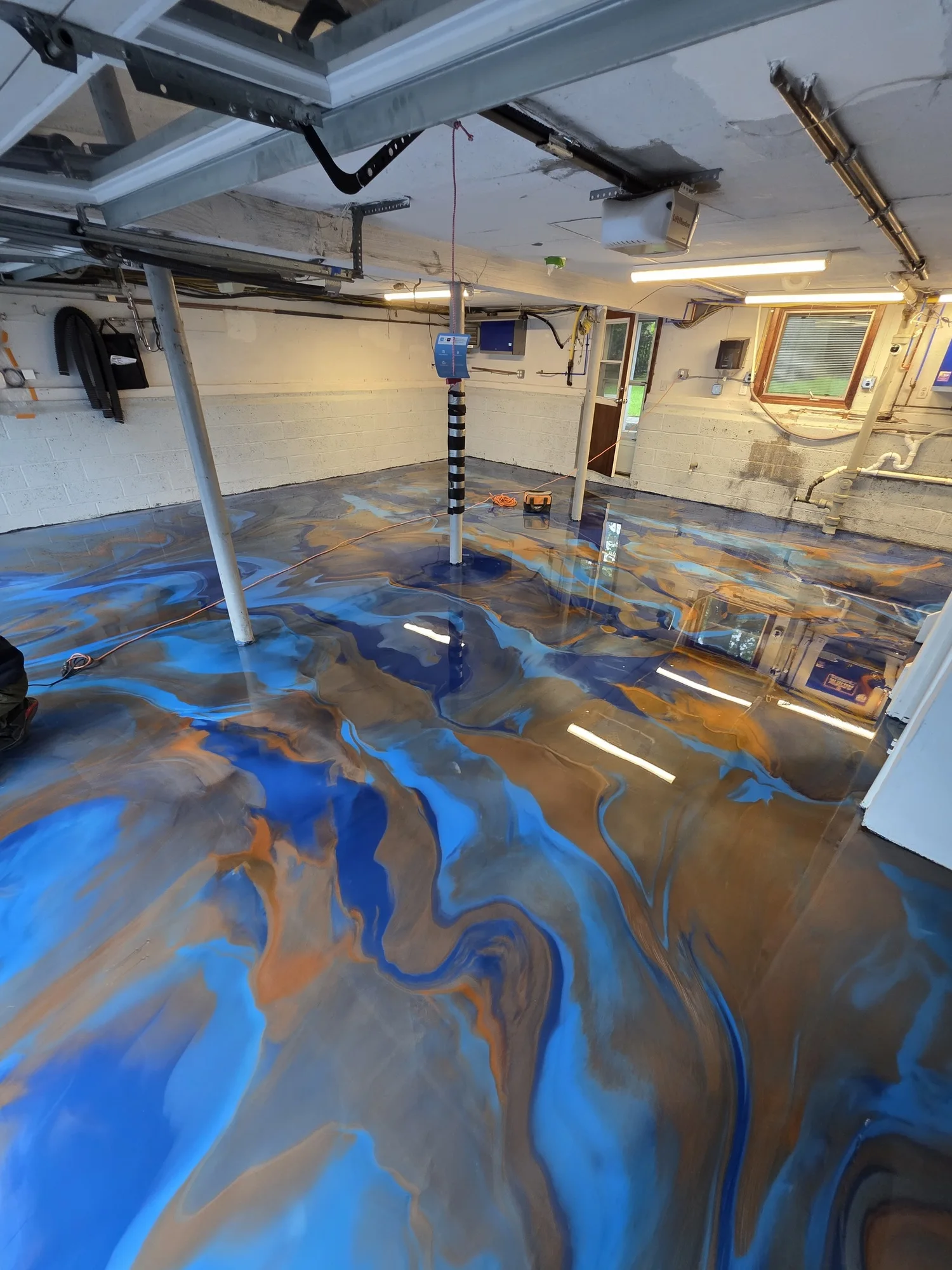
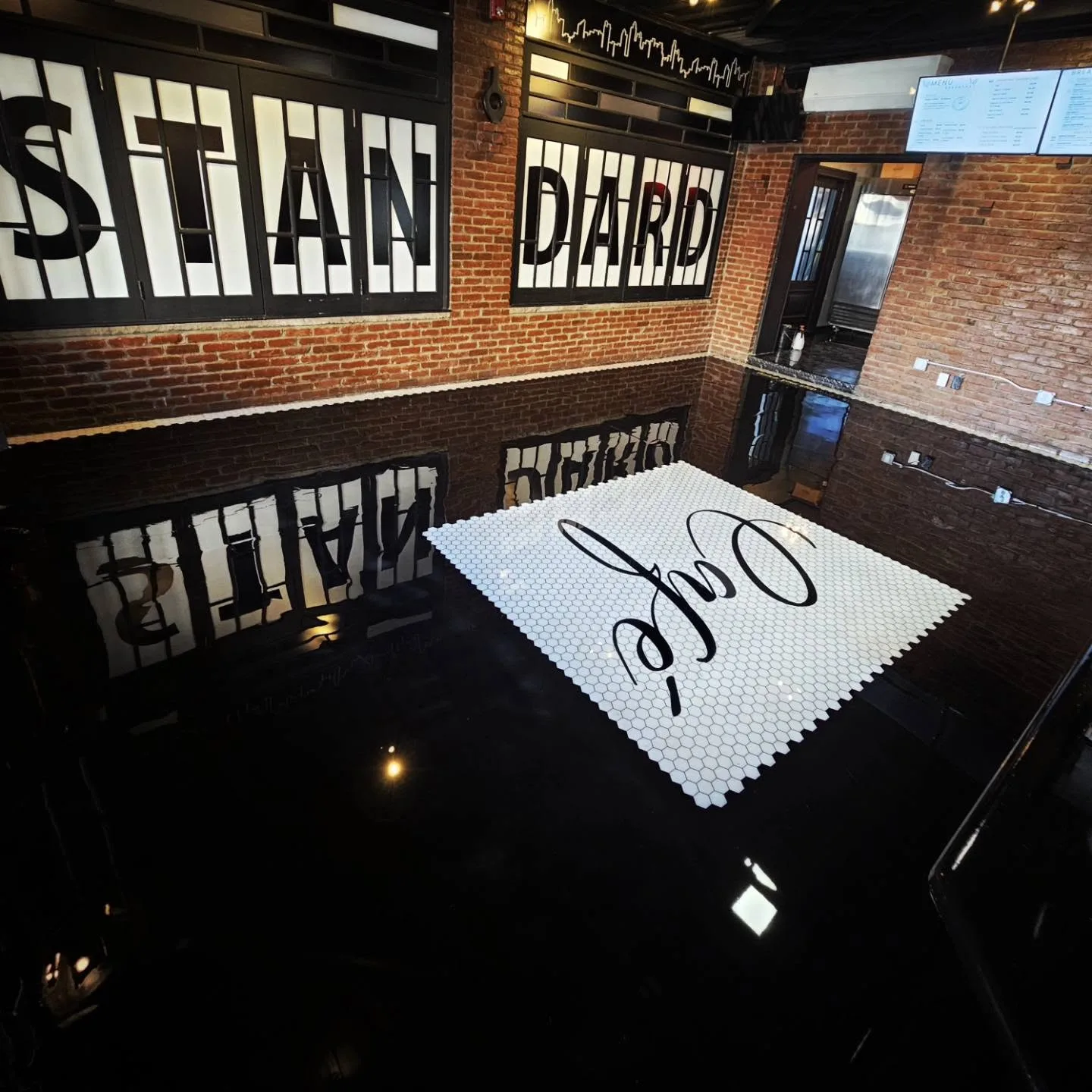
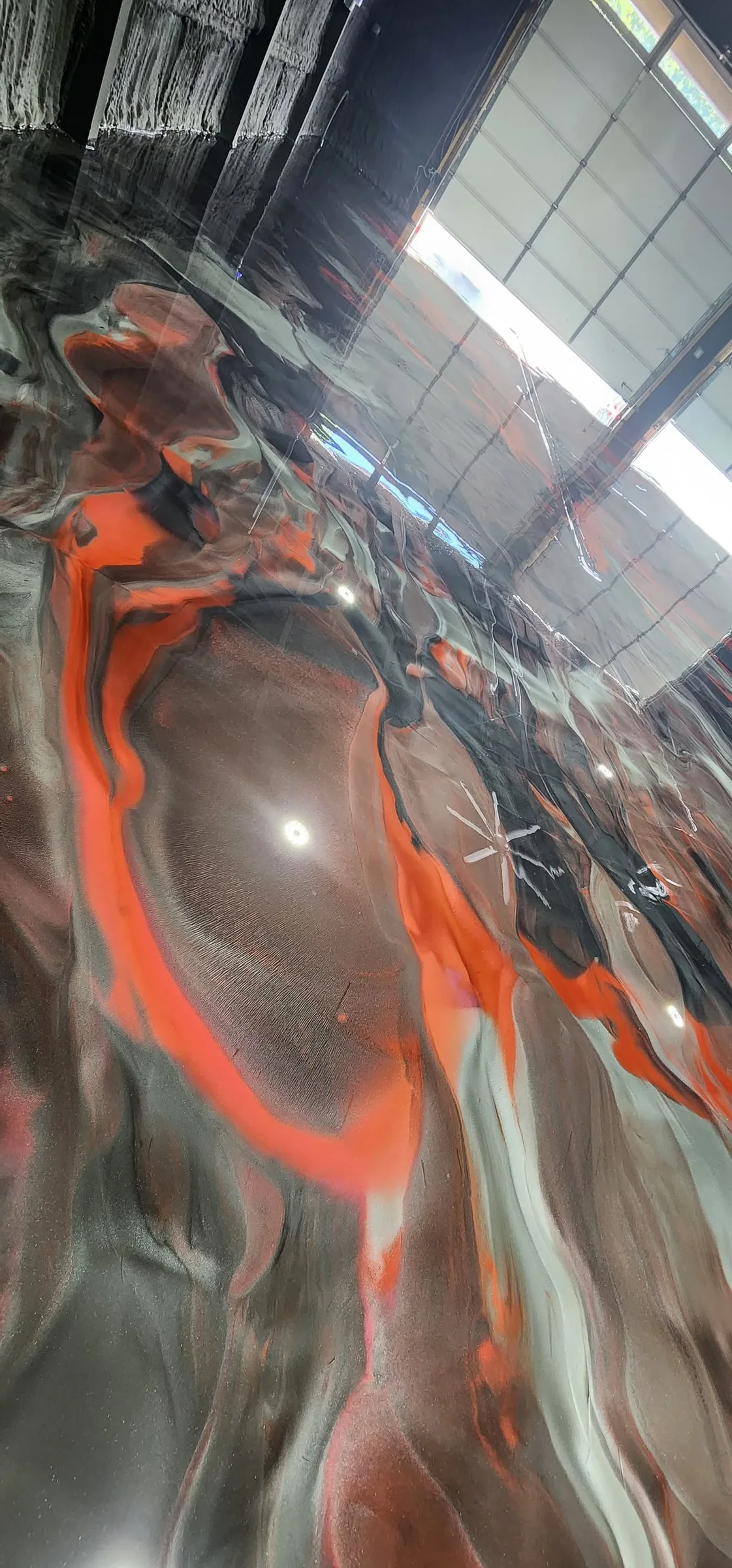
Other jobs from the file, not all of them this service. See the gallery





Questions about commercial building concrete restoration
Can every old concrete floor be restored?
Most can, if the slab itself is sound. Worn surfaces, old paint, glue, small cracks and spalled spots are all repairable. Floors that are sinking, broken through or moving with every season are a different problem that needs an engineer or a concrete contractor. Danny tells you which kind of floor you have on the walk.
What about old tile glue and paint?
Those get ground off down to clean concrete. In older buildings, the owner should have old adhesives and coatings tested first, since some materials from past decades need special handling. Once the results are in and the floor is cleared to grind, Danny takes the layers off and repairs what is underneath.
Does the restored floor have to be coated?
No. Some owners coat it, some seal it and leave the concrete showing, and some hand it off to a flooring installer for carpet, tile or wood. Each of those needs the slab prepared a little differently, so the decision should be made before the work starts. Danny can do the coating or sealing himself.
Can a restored slab carry a new tenant’s heavy equipment?
That depends on the concrete below the surface. Restoration brings the top back to sound and flat, while how much load a slab can take is a question for an engineer when heavy equipment is planned. Once that is answered, Danny can choose a coating suited to the traffic and the machines.
Can old plumbing trenches and saw cuts be filled?
Yes. Trenches that were backfilled poorly often settle and crack along their edges. The loose material is cut back to solid concrete, refilled and ground flush with the rest of the slab. A trench that has sunk badly may need a concrete contractor first, and Danny points those out on the walk.
Can restoration happen while other tenants in the building stay open?
Usually, with planning. Grinding is loud and runs on dust collection, so work near occupied suites is scheduled for hours the owner sets, doors to the work area are sealed and the route for equipment is agreed in advance. Danny talks through noise and access with the owner before the start date.
Next to this on the list
Apartment garages, condo and HOA spaces and rental turnovers, for managers who want it done once.
- Apartment Turnover Floor RestorationConcrete floors in empty apartment and loft units ground, repaired and recoated during turnover, so the next tenant moves in on a clean floor.
- Commercial Property Floor MaintenanceRecoats and repairs for worn coated floors in commercial buildings, so traffic lanes and chipped spots come back without tearing out the whole system.
- HOA Clubhouse Floor CoatingsDecorative clubhouse floors for HOA communities, from solid colors to Danny’s metallic pours, chosen with the board and timed around the events calendar.
- Shared Amenity Space Floor CoatingsCoatings for apartment gyms, package rooms, bike storage and pet wash rooms, each matched to what actually gets dropped, rolled or spilled there.
- Multifamily Parking Structure CoatingsCoatings for residential parking decks, ramps and drive lanes, phased so residents keep parking, with structural problems flagged before anything is poured.
Jobs run about 60 miles out from the Cranford shop, from the Jersey shore and the Poconos to Long Island and Fairfield County. See every areaSee the gallery
Danz Handz
Danny Carrero, epoxy specialist
dhepoxy@gmail.com
Cranford, NJ. Mon to Sat, 8 to 6. Hablamos español.
Tell Danny about the floor
A short note about the space is enough. Danny calls back and books a walkthrough.