
Thick epoxy coats for warehouses, shops and Hard-Working floors
When a thin coating keeps wearing through in warehouse aisles and around work areas, the usual next step is high-build epoxy, applied thicker per coat than a standard floor epoxy. The higher build per coat means fewer passes to reach a thick system, and Danny sets the thickness from the traffic and the product data.
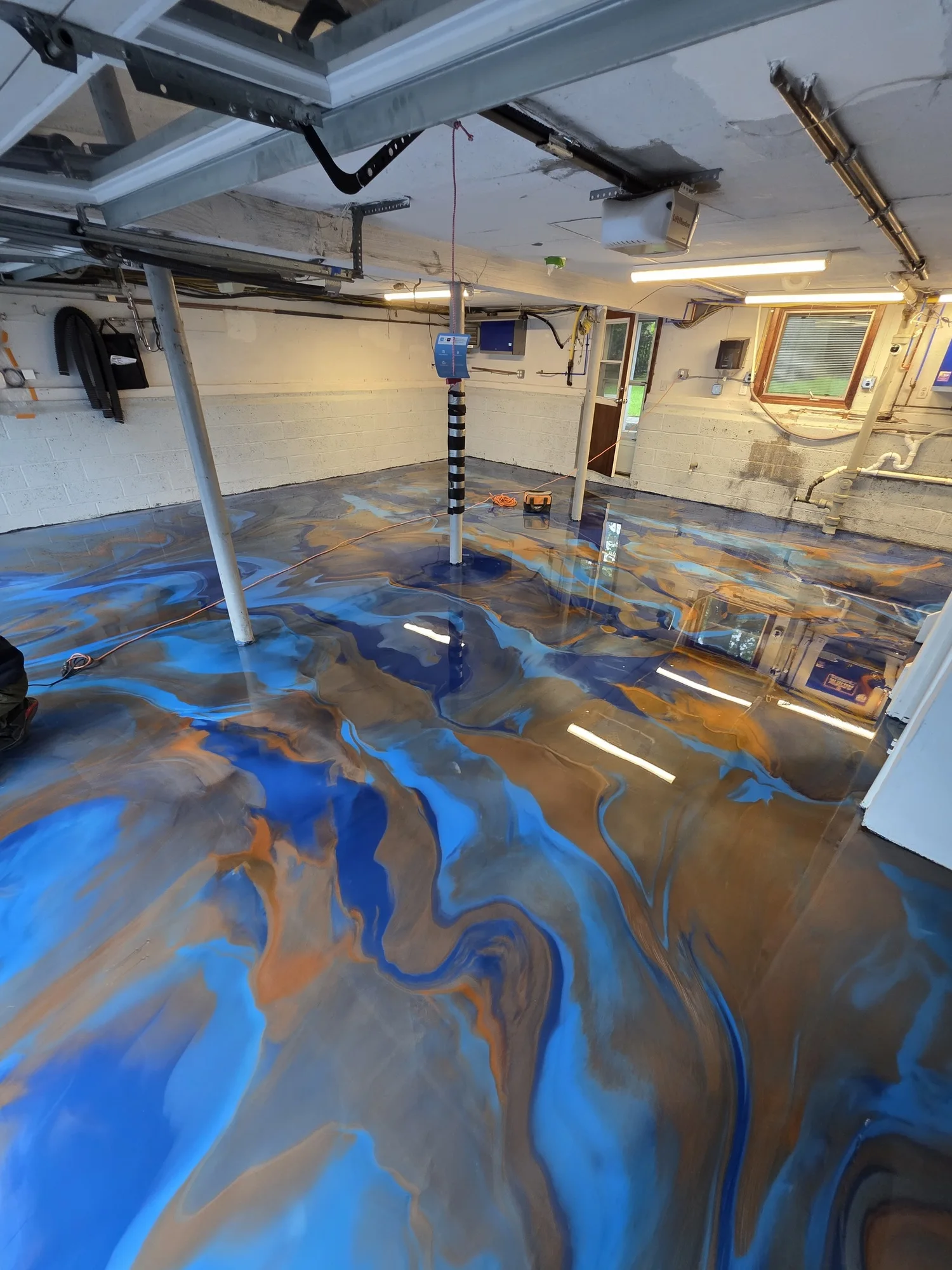

What goes into high-build epoxy floor systems
Most thin floor epoxies are water-based or solvent-thinned and lay down a light film. High-build epoxies are made with more solids, so each coat stays thicker after it cures. That extra body helps with wear from carts, pallet jacks and foot traffic, covers minor surface texture and gives a broadcast layer more to hold onto. A high-build system is usually a primer, one or more thick body coats and a topcoat chosen for the use. The thickness is set by the product data and the traffic the floor has to carry.
The slab is diamond ground to the profile the system calls for, joints and cracks are repaired, and the floor is vacuumed.
Warehouses, manufacturing floors, auto shops, storage areas and back rooms with steady rolling traffic are its main territory. It also suits floors with a rough surface that a thin coat would show. Thickness does not make up for poor prep, though, and a heavy coat on contaminated concrete fails like a thin one. In rooms with hot washdowns or steam, a cement-based urethane usually holds up better than any epoxy. Danny looks at the space, the forklift or cart traffic and what spills there before setting the build of each coat.
Forklift paths tell Danny most of what he needs, so he watches the floor during working hours if he can, noting where loads turn and where pallets drop. Those paths get the closest look for wear and damage. The slab is diamond ground to the profile the system calls for, joints and cracks are repaired, and the floor is vacuumed. Primer goes on, then the high-build body coats, each applied at the thickness the product data sets for that traffic, with a broadcast if the floor needs texture. The topcoat finishes it. Work can be phased so part of the building stays open.
Thick coats go where the forklifts turn, because that is where floors wear through first.
What happens on the job
A high-build system gets its thickness coat by coat, so the steps track how each body coat is measured, spread and checked before the next one goes on.

Charting wear on the old floor
Danny walks the building with the operations lead and marks where the current floor is worn through, chipped at joints or scuffed at turns. That chart becomes the plan for where the build runs heaviest.

Deeper profile for a thick system
The slab is ground or blasted to a coarser texture than a thin coating needs, since heavy coats grip best on more tooth. Joint edges that have chipped under wheels are rebuilt square at the same stage.

Gauging each body coat
High-build epoxy is spread with notched squeegees set to lay down the thickness the product data calls for, then back-rolled. Danny checks wet thickness with a gauge as he goes, correcting a thin stretch before it has time to cure.

Broadcast where footing matters
In aisles, ramps and dock approaches, aggregate is broadcast into a body coat for texture. Areas where carts roll and footing matters less stay smoother, so the texture follows the floor’s real use, zone by zone.

Lines and topcoat last
Safety lines and zone markings are laid out and painted before the final top, so they sit under its protection. The topcoat goes over the whole area, and each zone reopens once it has cured as directed.
More of Danny’s floors
Other jobs from the file, not all of them this service. See the gallery




Questions about high-build epoxy floor systems
How is high-build epoxy different from regular garage epoxy?
Garage kits and thin floor paints are often water-based or thinned with solvent, so much of what goes on evaporates and a light film is left. High-build epoxy has more solids, so the coat stays thick after curing. That extra thickness gives traffic more material to wear through before it reaches the concrete underneath.
Can it handle forklifts?
High-build systems are common under forklift traffic, and the system is chosen for the loads and the type of wheels, which change how much wear a floor sees. Hard wheels turning in a tight spot wear a floor faster than straight runs. Danny looks at the forklifts, their routes and how often they run before recommending a build and topcoat.
Can you coat part of a warehouse while we keep working?
Often, yes. Floors can be done in zones, with racks and stock moved section by section and work scheduled around shifts or weekends. Each zone needs to cure before traffic returns to it. Danny plans the phases with the operations manager so the building keeps running while the floor gets done.
Does a thicker floor change how pallet jacks roll?
On a smooth high-build floor, pallet jacks and carts roll easily, often more easily than on worn concrete with chipped joints. Broadcast texture in aisles adds a little resistance, which is one reason texture is placed by zone. Danny talks through where loads move by hand and keeps those routes smoother wherever footing allows.
Will a high-build floor hide the cracks in our slab?
Thicker coats bridge fine texture and small surface flaws, but cracks still need to be filled first. An open crack under a coating can telegraph as a line or reopen if the slab moves. Danny chases and fills cracks before the build, and moving joints are honored through the system so they do not crack the new floor.
How does high-build epoxy handle a cold warehouse?
Installing it needs the slab and air inside the product’s temperature range, so an unheated building may need temporary heat or a warmer stretch of weather. Once cured, the floor handles cold storage and unheated spaces in normal use. Danny checks the building’s conditions during the walk and plans the install schedule around them.
Also in resin
Polyaspartic, polyurea, urethane cement, self-leveling and fast-cure systems, picked to fit the room and the schedule.
- Polyaspartic Floor CoatingsA fast-setting, color-stable resin used as a tough clear topcoat or full system, chosen when sun and quick return to service matter.
- Polyurea Floor CoatingsA tough, fast-reacting coating family for floors that take impact and some movement, with the exact product chosen to the job’s needs.
- Polyurethane Concrete CoatingsA thin, hard urethane topcoat over epoxy that takes the scuffs and comes in gloss, satin or matte, renewable when it wears.
- Epoxy Primer and Topcoat SystemsPrimer, base and topcoat chosen to work together, each doing its own job, so the floor bonds, holds its color and takes the wear.
- Hybrid Epoxy-Polyaspartic FlooringAn epoxy primer and flake base under a clear polyaspartic top, pairing epoxy’s bond with a top that resists sun and wear.
The shop is in Cranford. Most jobs are within an hour or so, across four states. See every areaSee the gallery
Danz Handz
Danny Carrero, epoxy specialist
dhepoxy@gmail.com
Cranford, NJ. Mon to Sat, 8 to 6. Hablamos español.
Book a walkthrough
Start with the room and the idea. Danny follows up by phone and comes to see the slab.