
Repairing coated floors in warehouses and plants
Forklift wheels rut the turns and spills eat at the coating around the machines. Left alone, that damage spreads into the sound floor next to it. The repairs usually have to fit a planned shutdown or a weekend, so Danny lays the work out around that window before anything is ground.


Industrial Floor Coating Repairs, start to finish
Industrial repair targets the specific damage on a working floor. Ruts and gouges are ground out and filled, chipped and worn zones are cut back to sound coating and rebuilt, and failed sections near machines or loading areas are removed and recoated. Repairs are planned in zones so the plant can keep running around them. The repair system is chosen to the floor’s requirements and the product data, so the new sections can handle the same traffic and spills as the rest of the floor.
Before recommending anything, Danny looks at the space, the traffic and what gets spilled on it.
It fits facilities with a coated slab that is mostly sound, where damage is concentrated in aisles, docks, turns and work cells. It is the wrong answer for a coating that is failing across the whole plant, which needs replacement. Before recommending anything, Danny looks at the space, the traffic and what gets spilled on it. If the facility has a written floor specification, he works from it, and he says plainly when a repair needs a product he does not carry.
Danny walks the floor with the plant or facility manager and follows the traffic: the forklift routes, the dock, the turns at the end of each aisle and the spots around each machine. He notes what gets spilled where and asks what the floor is cleaned with. From there he lays out the repairs by zone and priority, so the worst damage gets done first and the work fits the shutdown window. Each zone is closed, ground back, repaired and recoated, and traffic stays off through the cure. A final walk with the manager checks every zone before it goes back into service.
Forklift damage starts at the turns and spreads down the aisle.
What happens on the job
Coating repairs in a working plant are matched to the existing system and to whatever the floor faces, so these stages start with what spills where and end with each zone handed back.
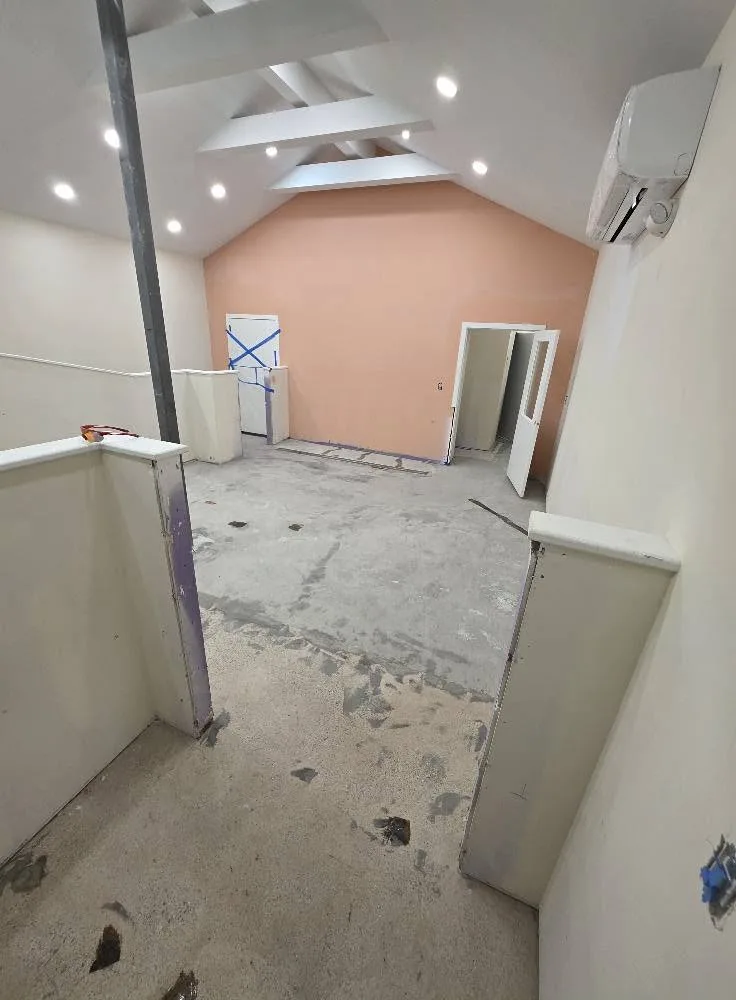

Matching the spill to the failure
Danny walks each damaged zone with the facility manager and asks what lands there: hydraulic fluid, coolant, cleaning chemicals, hot parts or washdown water. Coating that softened, stained or wore through often shows which exposure did it, and that points to the system the repair will need.

Identifying the existing system
Where records exist, he reads what was installed. Where they do not, a small scraping and a look at the layer build show whether the floor is a thin coat, a broadcast system or something heavier, so the repair bonds to it and wears at a similar rate.

Locking out each repair zone
Zones are taped and barricaded with signage, and forklift routes are redrawn around them with the manager’s input. Machines next to a zone are covered so grinding dust does not reach moving parts, and the zone is cleaned of oil before any tooling touches it.
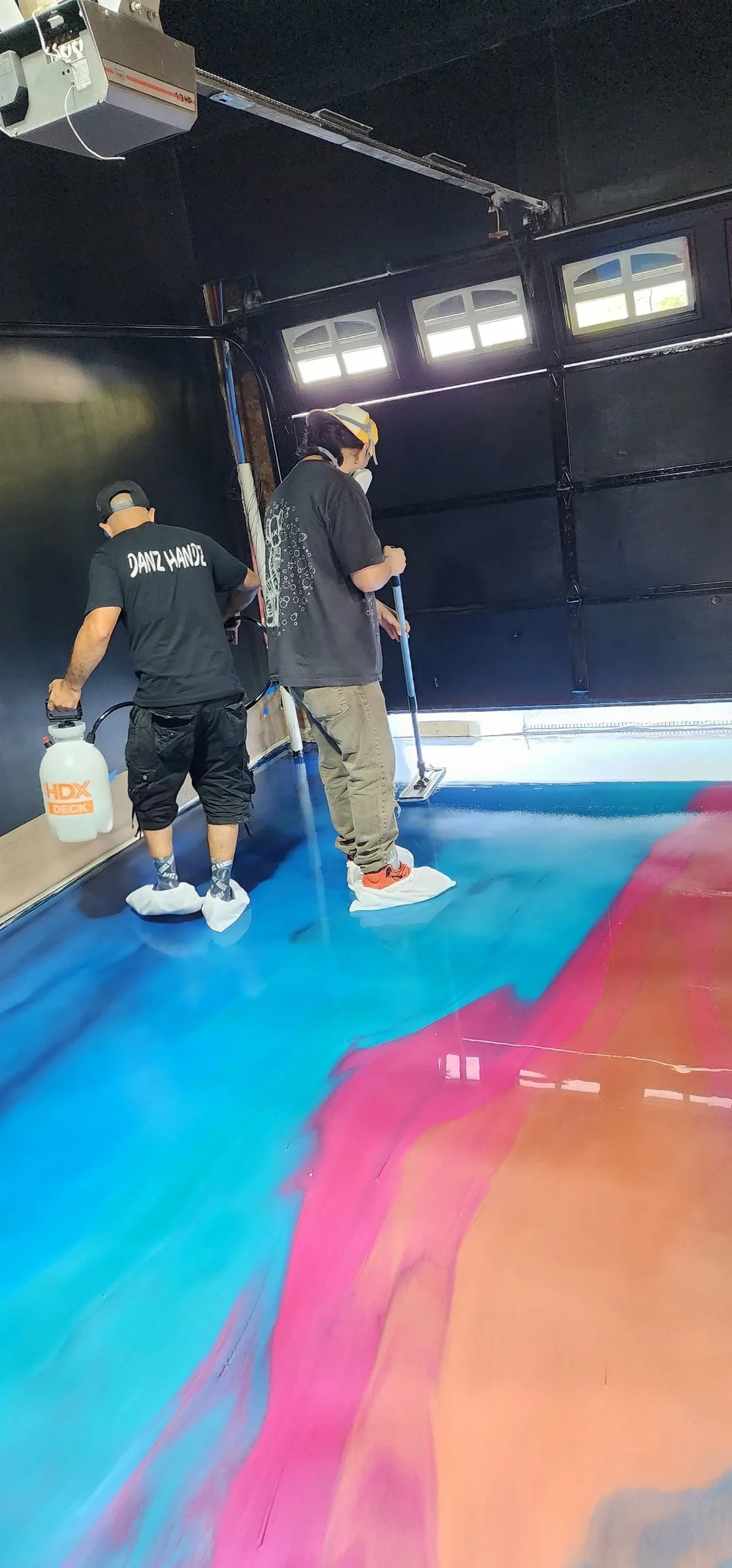
Rebuilding to the system’s depth
Inside each zone, the damaged coating is ground back to a firm edge, ruts in the concrete below are filled, and new layers are built up to match the floor around them. Bulletproof Resins material is chosen to the exposure list from the walk and its product data.

Handover zone by zone
When a zone has cured to the point its product data allows traffic, Danny and the manager walk it, check the edges where new meets old and pull the barricades. The manager gets a short written note of what went into each zone for the facility’s records.
More of Danny’s floors
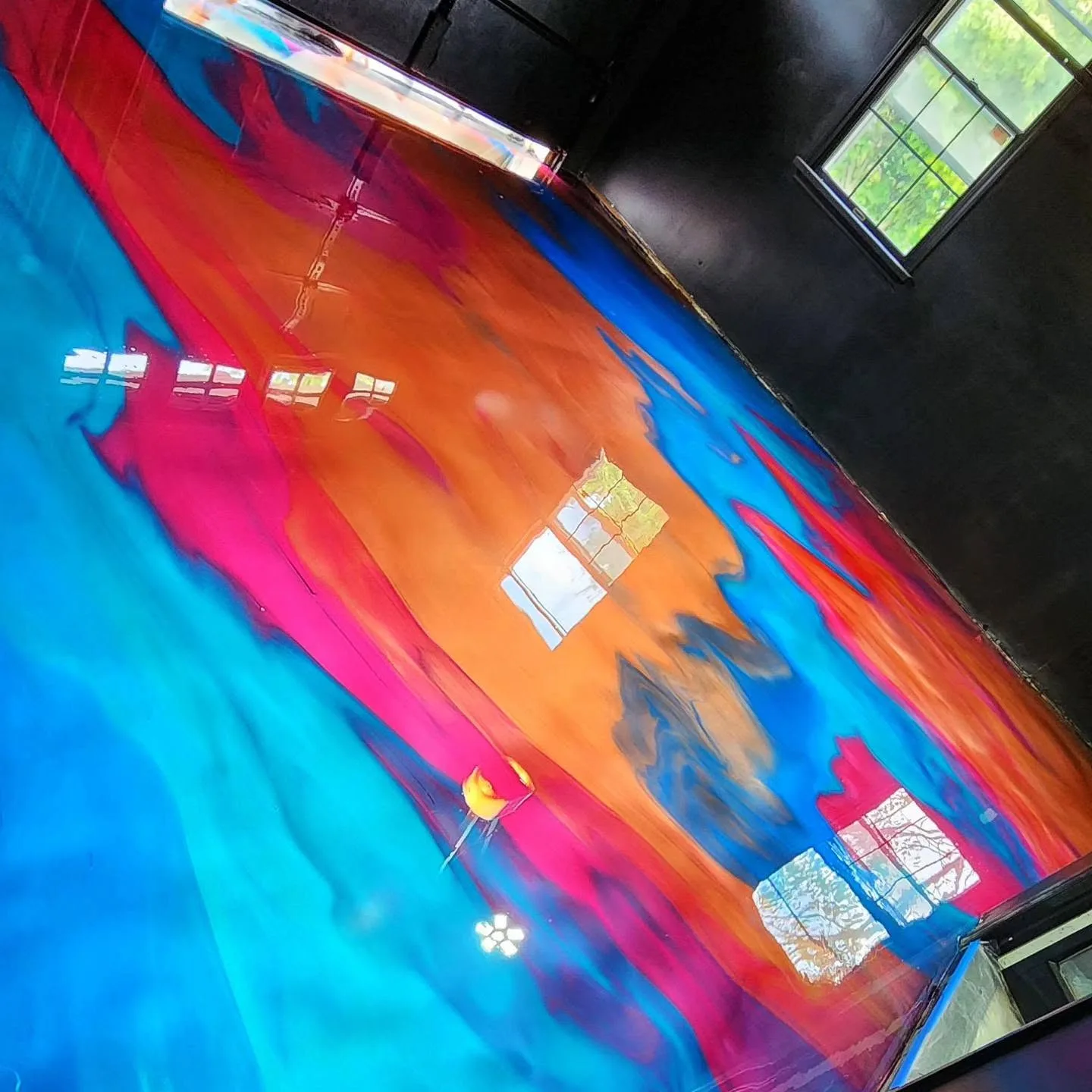
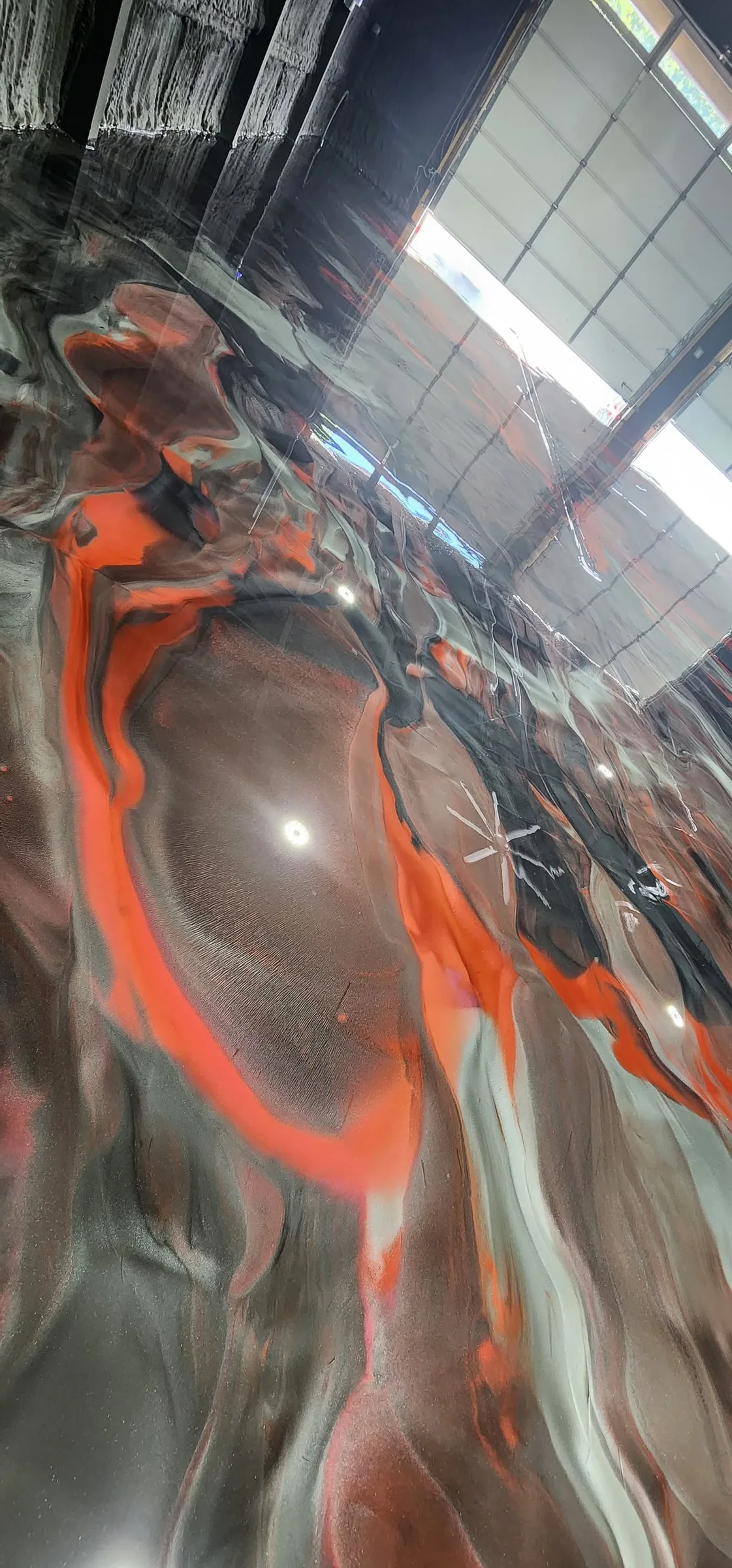
Other jobs from the file, not all of them this service. See the gallery




Questions about industrial floor coating repairs
Can repairs be done while the plant is running?
Often in zones. Each repair area is closed off for grinding, pouring and cure, while forklifts and staff are routed around it. Some areas, like main aisles, may need to wait for a shutdown or a weekend. Danny works through the layout with the facility manager during the walk to set the sequence.
Will the repaired areas hold up to forklift traffic?
The repair system is selected for the traffic and the spills the floor actually sees, based on the facility’s requirements and the product data. A repair also depends on the concrete underneath being sound, so Danny grinds back to firm concrete and fills ruts and gouges before any coating goes down.
Do you need our floor specification?
If the facility has one, yes. A written specification tells Danny what the floor has to do, and the repair system is chosen to match it and to the manufacturer’s product data. Where there is no specification, he works from what he sees on the walk and what the manager tells him about traffic and spills.
Why did our coating fail around one machine but nowhere else?
Usually because that spot gets something the rest of the floor does not: a steady drip, a hot part set down, a cleaner used at full strength or water sitting under the machine. A coating chosen for general traffic can soften or lose its bond under that kind of exposure. Danny asks about the machine’s routine to find which one it is.
Can repairs match the safety striping and aisle colors?
Yes. Where a repair crosses an aisle line, a hatched zone or a walkway, the marking is restored on the new coating in the same color and width, lined up with the existing stripe on each side. A gap in a safety line has no place on a working floor, so the marking goes back before the zone reopens.
Should we repair now or wait and recoat the whole plant later?
If a full recoat is planned soon, small repairs may be folded into it. If it is not, damaged zones keep spreading under forklift traffic, and what starts as a coating repair can turn into concrete repair. Danny looks at how fast the damage is growing and gives the manager a straight view on whether waiting makes sense.
Also in repair
Peeling, bubbling, chipped or faded coatings, patched or recoated, plus upkeep plans for floors that work hard.
- Floor Coating Maintenance ProgramsReturn visits on a schedule you choose, catching chips, dull lanes and worn topcoats early so a coated floor stays ahead of its wear.
- Epoxy Floor Deep CleaningCleaner haze, tire marks and ground-in grime stripped off a dull epoxy floor, so you see what it really looks like before deciding on repairs.
- Floor Coating Inspection ServicesA hands-on walk of an existing coated floor, with a plain read on what is sound, what is failing and what each part needs.
- Protective Topcoat RenewalA fresh clear wear layer poured over a sound coated floor before traffic reaches the color, with the option to change the sheen.
- Scheduled Commercial Floor MaintenanceFloor maintenance visits set on the business calendar, with small fixes handled on the spot and bigger work booked for planned closures.
The shop is in Cranford. Most jobs are within an hour or so, across four states. See every areaSee the gallery
Danz Handz
Danny Carrero, epoxy specialist
dhepoxy@gmail.com
Cranford, NJ. Mon to Sat, 8 to 6. Hablamos español.
Book a walkthrough
Start with the room and the idea. Danny follows up by phone and comes to see the slab.