
Winery floors planned around harvest
Harvest is off-limits for floor work at a winery, so the job gets planned for the months after, when the fermentation and barrel rooms quiet down. Danny looks at where grape juice and cleaning water have worn the concrete or stained it purple. The tasting room gets its own conversation about looks.

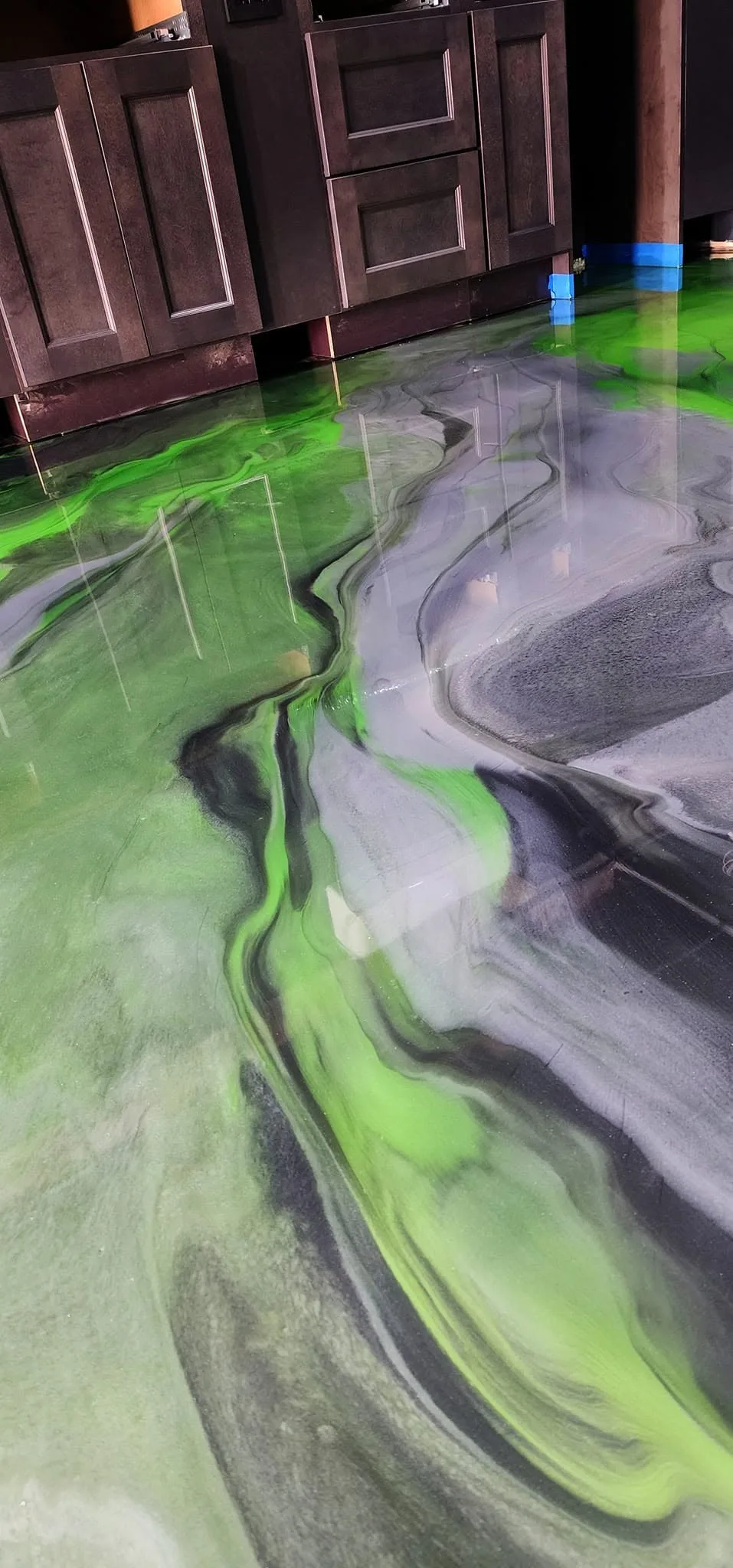
The short version of commercial winery flooring
Winery flooring is a resin system poured over ground concrete in the production areas, with texture for wet boots and coves where floors meet walls. Grape juice and wine are acidic, and over many harvests they eat into bare concrete and leave it rough and stained. In the barrel room, forklifts move heavy racks, so the floor needs a system that takes that traffic. A tasting room can take a decorative finish. Danny checks each room for traffic and spills before he recommends a system for it.
It fits wineries with production space on a slab, whether a larger estate or a small urban winery.
It fits wineries with production space on a slab, whether a larger estate or a small urban winery. The crush pad, if it is outdoors, faces sun and weather and calls for a different system from the indoor cellar. Tanks bolted in place get worked around. Wineries that make wine every month of the year, with no slow stretch, are harder to schedule. Old floors with trench drains that hold water need slope repair before the pour, which adds to the schedule.
The timing comes first. Danny visits after harvest, when the cellar is quieter, and walks every production room with the winemaker. He looks at the trench drains, the slope, the areas stained by juice and the paths forklifts take with barrels. The work is planned for the off-season, with barrels and equipment shifted from room to room so the winery keeps working. Each room is diamond ground, repaired and poured, and barrels or tanks return after it cures and Danny has walked it again. The tasting room can be scheduled around guest days.
Every harvest leaves its mark on bare concrete, and most of it is purple.
From bare slab to finished floor
Winery floor work belongs to the quiet months after harvest. The stages run from booking that window to the tasting room reopening to guests.
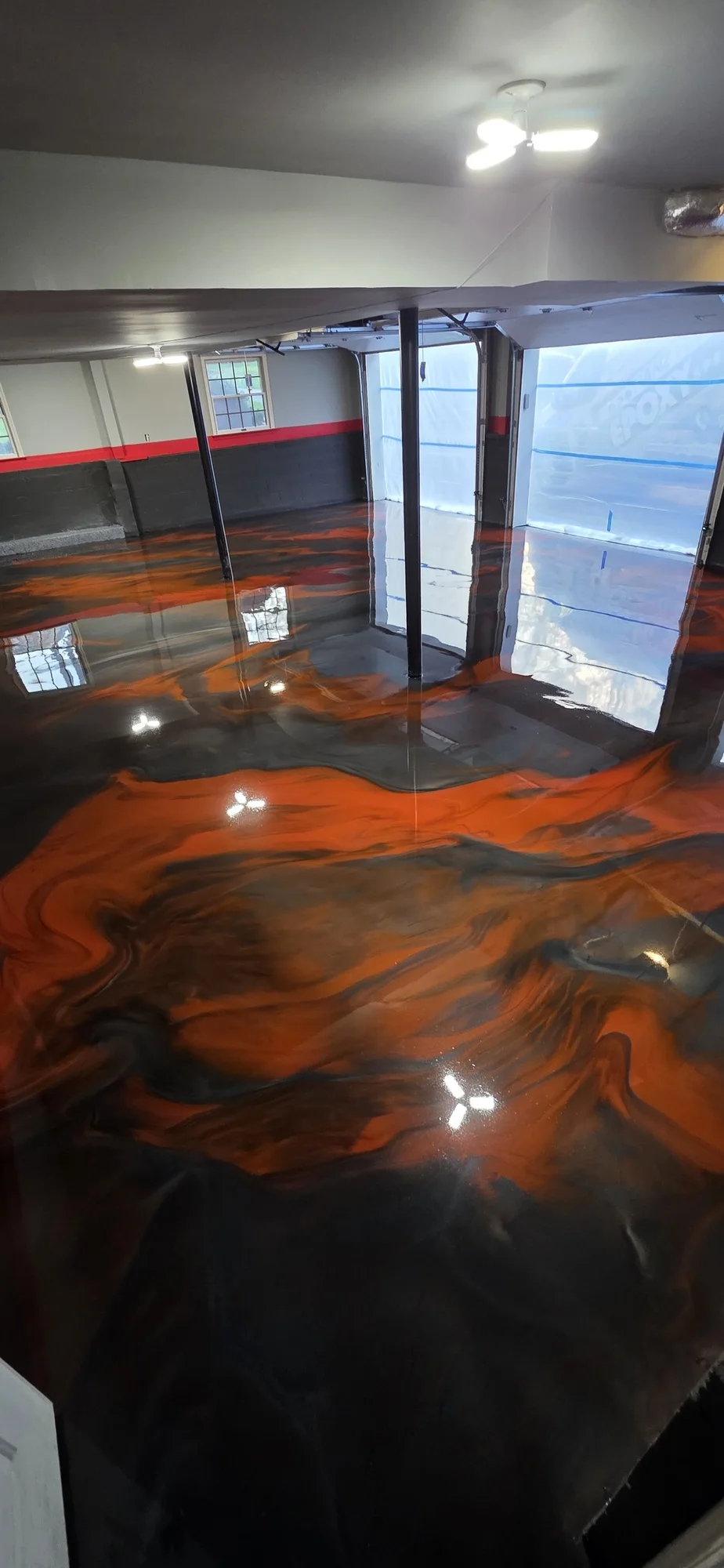

Booking the cellar’s quiet months
The first visit can happen any time, even during harvest, and Danny uses it to look and plan. The pour itself is booked for the months after fermentation settles, when the winemaker can spare rooms and barrels can be moved without risk to the wine.

Shuffling barrels room by room
Barrels and racks move out of the room being worked into a space that stays cool, and they come back once the floor cures. The order of rooms is set with the winemaker so the wine is never sitting somewhere warm for long.

Grinding off the purple
Years of juice and wine leave bare concrete stained, rough and etched. The grinder takes that layer off until clean, sound concrete shows, and pits are filled. Floor around the tanks and the barrel washer usually needs the deepest grinding.

Grip where barrels get washed
The barrel washing area and the crush room see hot water and cleaners nearly every day in season, so they get a heavier textured system and a cove at the walls. The barrel room takes a system chosen for forklift traffic with lighter texture.
Tasting room after the cellar
The tasting room is done last, on days with no guests, in the finish the owner picked. Danny walks the cellar and the tasting room with the winemaker once everything cures, before barrels go back and the doors open again.
More of Danny’s floors
Other jobs from the file, not all of them this service. See the gallery








Questions about commercial winery flooring
Why is our cellar floor turning rough?
Grape juice, wine and some cleaning chemicals are acidic, and over years of harvests they slowly eat the top surface of bare concrete. The result is a rough, stained floor that holds dirt and is harder to clean. A coating keeps those spills on top of the surface. Danny grinds off the damaged layer and repairs the worst spots before the pour.
Can forklifts with full barrels drive on the floor?
Barrel rooms see heavy forklift traffic, so the system there is chosen for that load, using the product data. Tight forklift turns and dropped barrel racks are the hard moments on any floor. Danny asks how barrels move through the room and where forklifts turn, and lays out the system and the repair work around that.
Can the tasting room have a decorative floor?
Yes. A tasting room takes foot traffic, dropped glasses and the occasional spilled pour, and it is where guests form their picture of the winery. A metallic floor in deep wine tones or a quieter solid both work. Danny can bring samples, and the tasting room can be scheduled separately from the cellar.
Can the barrel washing area get more protection than the rest?
Yes, and it usually should. Hot water, cleaning chemicals and constant wetness all meet at the barrel washer, so that area can take a heavier system than the barrel room around it. The change is placed at a natural line in the floor. Danny checks the cleaners used there against the product data before choosing.
Will red wine stain a coated floor?
A sealed floor keeps wine on the surface, so fresh spills wipe up. Wine left to dry for a long time, especially on a very light color, can leave a faint mark in the topcoat. Picking a mid or darker tone in the cellar and rinsing spills during busy days keeps the floor looking clean.
Do tank pads and catwalk posts need special work?
Each tank pad gets a cove where it meets the floor, so wine and water do not sit in that corner. Catwalk posts and their base plates are coated around by hand, with the edges sealed. These spots take time, so a cellar with many of them takes longer to finish. Danny counts them on his walk.
More from the kitchens section
Commercial kitchens, bakeries, breweries and cold rooms, with coved bases and slip-resistant finishes.
- Refrigerated Warehouse Floor CoatingsCoatings for refrigerated warehouse docks, staging lanes and cold rooms, phased door by door so trucks keep loading.
- Chemical-Resistant Kitchen FlooringKitchen floors picked against your actual cleaner and sanitizer list, with the system matched to its product data before anything is poured.
- Seamless Hygienic FlooringJointless poured floors with cove bases for food rooms, so mops and squeegees reach every corner and nothing settles in grout.
- Slip-Resistant Commercial Kitchen FlooringTextured resin floors for commercial kitchens, with grip set zone by zone so the wet and greasy spots get the most.
- Coved Resin FlooringFull resin floor systems that curve up the wall in one piece, taking away the corner where grease and water collect.
The shop is in Cranford. Most jobs are within an hour or so, across four states. See every areaSee the gallery
Danz Handz
Danny Carrero, epoxy specialist
dhepoxy@gmail.com
Cranford, NJ. Mon to Sat, 8 to 6. Hablamos español.
Schedule a look at your floor
Send a few lines about the room and the look you want. Danny will call and set up a time to see it.