
A showroom floor that helps sell what sits on it
Car dealers, boat and motorcycle sellers, kitchen and bath showrooms and furniture stores all need the same thing from a showroom floor: it has to make the product look better under the lights and still take people walking the room all day. Danny starts from what is being sold and where the lights hit.


Custom Showroom Floor Design, start to finish
A custom showroom floor is a decorative coating designed for a space where products are on display and customers walk around them. Danny often uses metallic epoxy here, since a deep, glossy floor reflects the lights and makes cars and fixtures look like they are sitting on something special. Some showrooms prefer a calm solid color that lets the product do the talking, or a design that marks out zones. Material comes from Bulletproof Resins, with Glitter ELEMENTZ as an option for extra sparkle.
Danny walks the showroom with the owner or manager and asks how products come in and out, where customers walk and what the lighting looks like.
It fits showrooms on a concrete slab that can close for the install, whether in a new build or a remodel. It needs more planning where vehicles or equipment will be driven in and turned on the floor often, since those drive lanes may call for a tougher topcoat than the display areas. A very glossy floor also shows dust and footprints, so the showroom’s cleaning routine has to keep up with it. Danny raises both points before the design is settled.
Danny walks the showroom with the owner or manager and asks how products come in and out, where customers walk and what the lighting looks like. He talks through looks that suit the brand and the product, then shows samples. On install, the space is emptied, the floor is diamond ground, repaired and leveled, and the design is poured in layers. Vehicles and displays stay out until the floor has cured. He does the final walk with the owner before the product goes back on the floor.
Under showroom lights, the floor is the backdrop for everything sitting on it.
The order the work goes in
A showroom floor is designed from the customer’s side of the glass, starting at the front window and ending with products back under the lights.


Standing at the front window
Danny looks at the showroom the way a passerby does, through the glass from the sidewalk, and then from the door. That view shows how much floor appears behind the displays and where a bolder pattern or a calmer field will help the products stand out.

Marking display pads and lanes
The floor plan is divided into display pads where products sit still and lanes where vehicles, carts or customers move. Each gets its own topcoat, and the boundary between them is placed so it reads as part of the design instead of a patch.

Clearing displays and counters
Every product, display stand and counter on the slab comes out, with heavy pieces moved by the owner’s team or movers. Anything bolted down is either unbolted or worked around, and that decision is made piece by piece before the start date.

Prep for a reflective field
A floor meant to reflect light shows every dip, so cracks are filled and low spots leveled with extra care before the pour. Dust control matters just as much, since a single speck trapped in a glossy coat is easy to see under showroom lights.

Products back, then a final look
Once the floor has cured, displays and products return on pads or dollies, and Danny walks the room with the owner the way a customer would, checking reflections, pad edges and the lanes where vehicles will roll in.
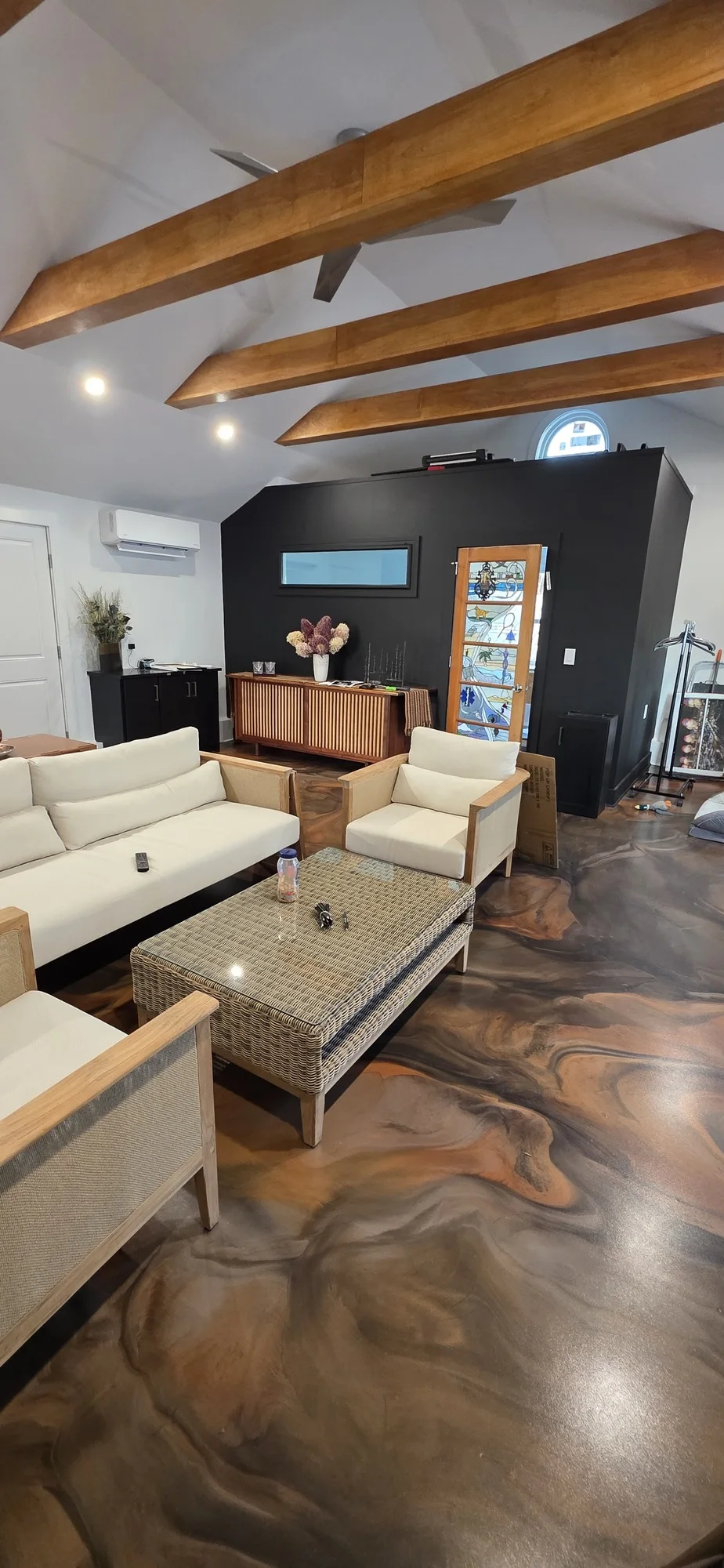
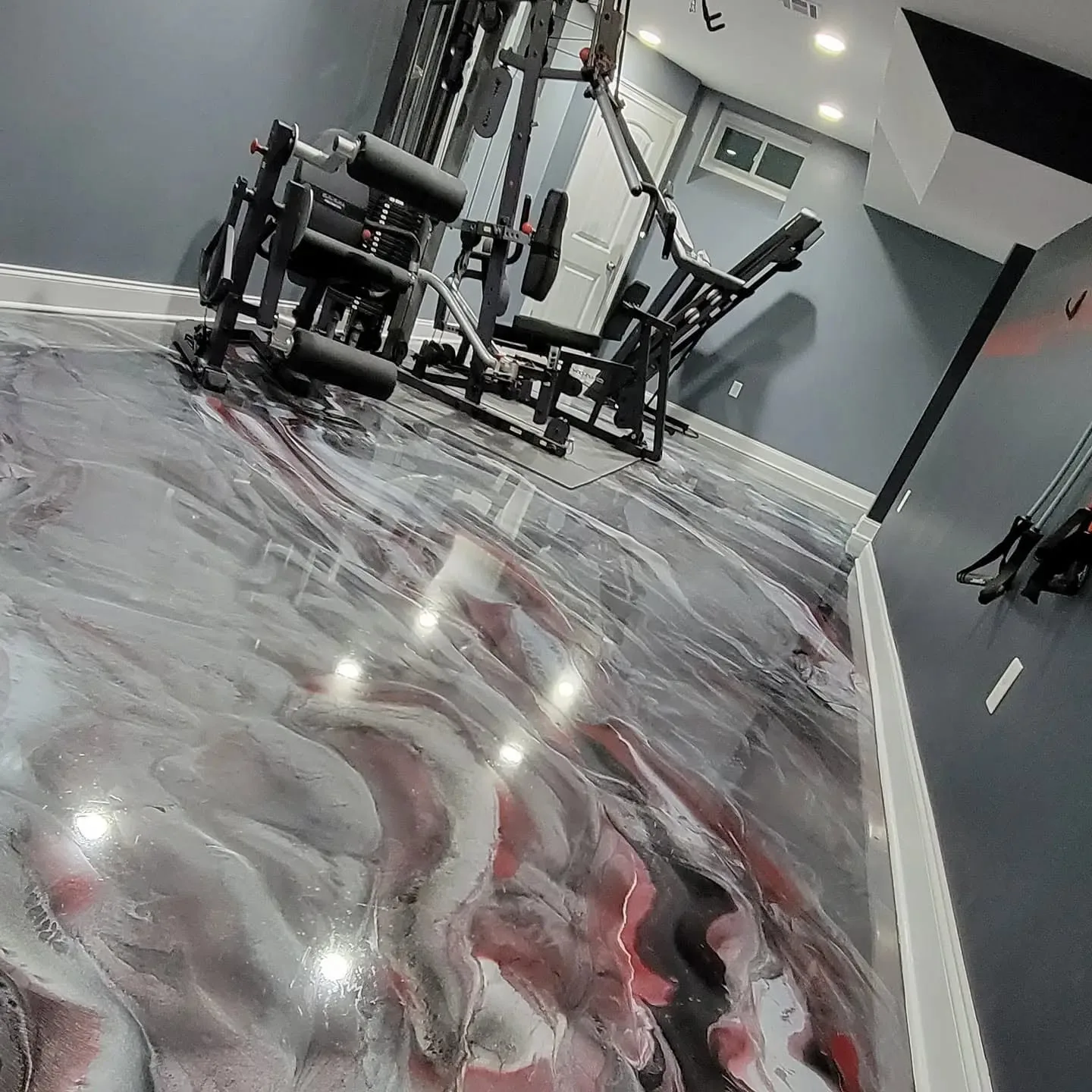
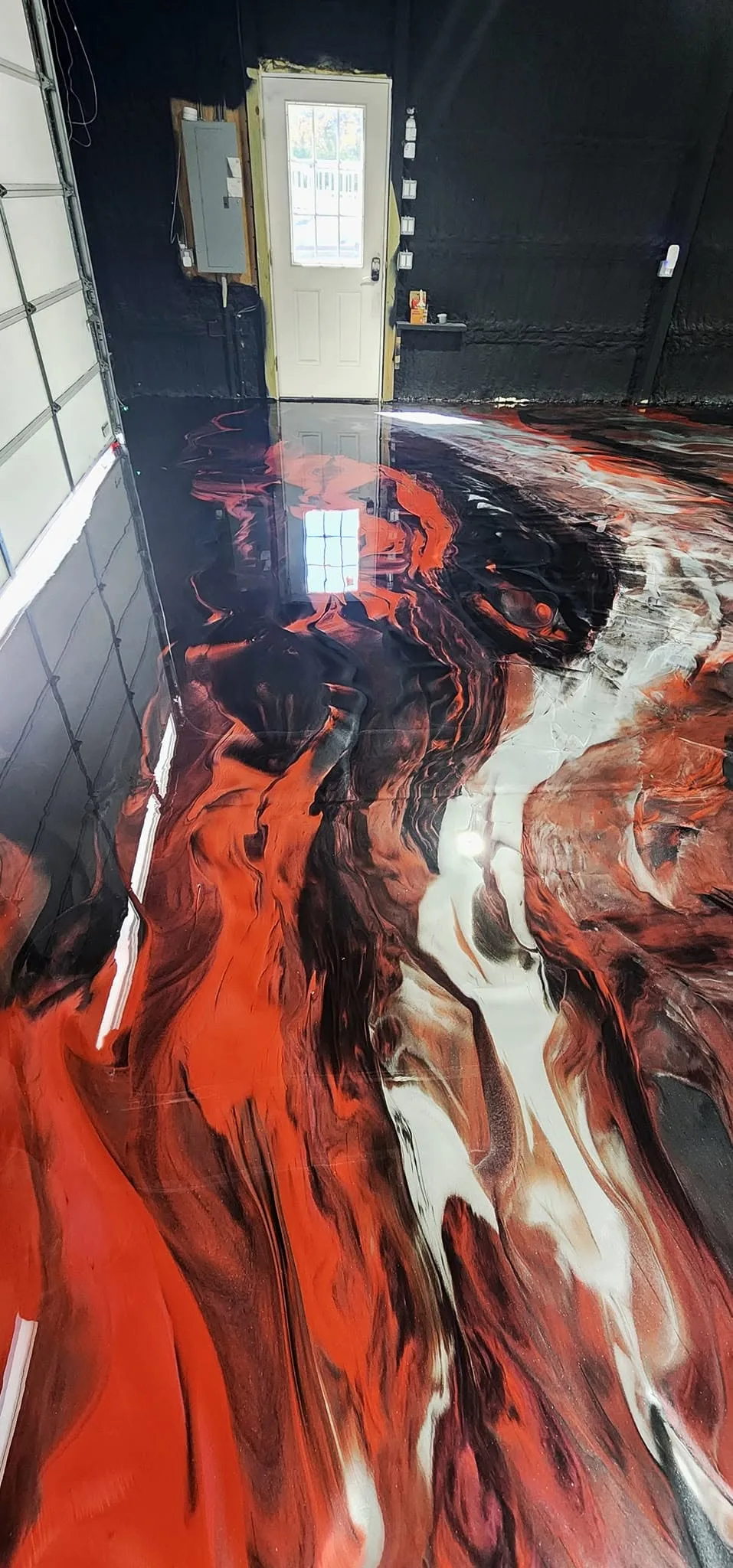
More of Danny’s floors
Other jobs from the file, not all of them this service. See the gallery





Questions about custom showroom floor design
Can vehicles be driven onto a decorative showroom floor?
Yes, once the floor has fully cured. Danny asks how vehicles come in, how often they move and where they turn, since turning tires are hardest on a coating. Drive lanes may get a tougher topcoat or a different finish from the display areas, which he plans into the design from the start.
Which look works best for a showroom?
It depends on the product and the brand. Metallic floors suit cars, motorcycles and anything glossy that benefits from reflection. Furniture and kitchen showrooms sometimes do better with a calm solid color that does not compete with the displays. Danny shows samples under light similar to the showroom’s so the choice is easier.
How do we keep a glossy showroom floor looking good?
Dust mop daily and damp mop with a mild cleaner, since grit dragged across the surface is what dulls it. Walk-off mats at the doors catch a lot of it. Wipe up oil or fluid drips from vehicles quickly. Danny goes over the routine with the staff who will clean it at the final walk.
Can the floor highlight a featured product spot?
Yes. A hero display or new-arrival area can sit on a contrasting circle, a richer metallic patch or a framed field that draws the eye. Danny plans it where customers naturally look first and keeps it out of the main walking path, so the feature stays crisp as people move around it.
How should display stands with metal feet be handled?
Put pads under every foot. Felt, rubber or nylon pads spread the weight and keep bare metal from cutting into the topcoat when displays are rearranged for a new season. Heavy stands should be lifted or moved on dollies instead of slid. Danny reviews the display hardware during the walk.
Is high gloss always the best finish for a showroom?
Not always. Gloss gives depth and reflects products well, and it also shows dust, footprints and glare in photos. A satin topcoat softens those while keeping much of the richness. Some showrooms use gloss on display pads and satin in walking lanes. Danny shows both under light similar to the showroom’s.
Close to this one
Color matching, sample boards, branded floors and epoxy countertops. Bring the idea and Danny builds the sample.
- Sample-Board PreparationReal samples of the proposed floor poured on boards, with the actual colors, flake or metallic and topcoat, to judge under your own lights first.
- Custom Finish ConsultationA consultation on the top layer of the floor: sheen, texture and glitter in the topcoat, chosen for how each room is actually used.
- Residential and Commercial Coating DesignOne plan for a multi-room home or business project, tying systems, colors, finishes and the order of work together before the first floor is ground.
- Epoxy CountertopsHand-poured CRYZTAL epoxy countertops for kitchens, bathrooms and bars, built up in layers into marble, metallic or one of one looks.
- Custom Epoxy Floor DesignOne of one epoxy floors planned around the client’s idea, most often metallic pours, with color, pigment and layout worked out before grinding starts.
Based in Cranford, NJ. Danny takes work across New Jersey, the five boroughs, Long Island, Westchester and Rockland, Fairfield County and Bucks County. See every areaSee the gallery
Danz Handz
Danny Carrero, epoxy specialist
dhepoxy@gmail.com
Cranford, NJ. Mon to Sat, 8 to 6. Hablamos español.
Start with a visit
Describe the floor and what you have in mind. Danny calls back and comes out to look at it.