
Repairing a flaking, pitted garage slab
Spalling is the top of the concrete flaking and popping off, and in a garage it usually starts by the door, where salt and slush drip off the cars. Danny grinds the loose surface back to solid concrete and rebuilds the pits before any new floor goes on.

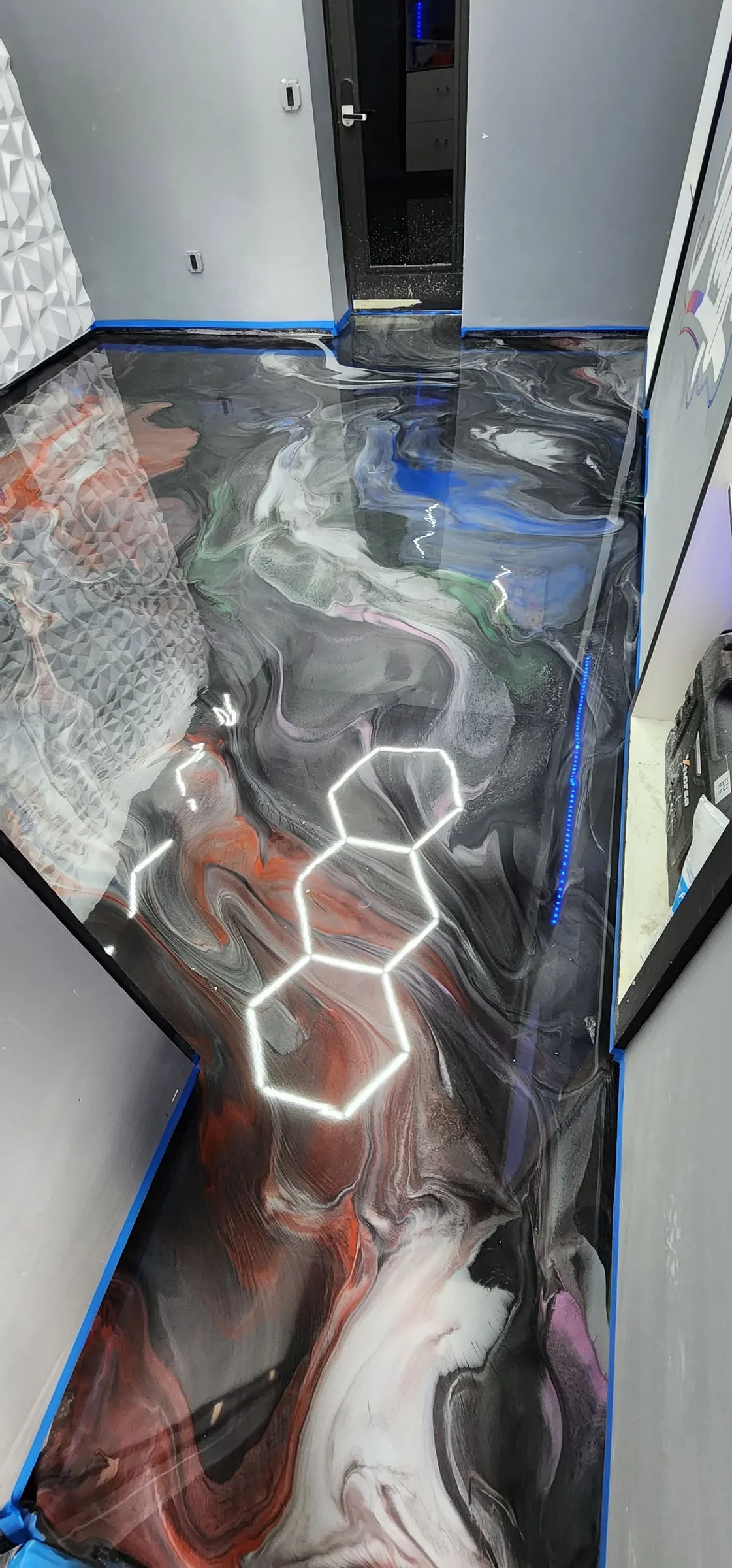
What garage floor spall repair really involves
Spall repair rebuilds the damaged top layer of the slab. Danny grinds away the loose, weak concrete until he reaches solid material, then fills the pits with a repair compound and levels it with the surrounding floor. On large spalled areas, a skim coat can bring the whole section back to a flat surface. After the repair cures, it is ground smooth, and the full coating system goes over it. The coating then sits between the repaired concrete and the salty water dripping off the cars.
Spalls that reach deep into the slab or expose rebar may need concrete replacement instead.
Spall repair works when the damage is on the surface and the concrete underneath is sound. Spalls that reach deep into the slab or expose rebar may need concrete replacement instead. Spalling usually has a cause, most often salt and freezing water, and the cause should be addressed along with the repair. A slab that keeps getting wet from outside drainage will keep breaking down. Danny will tell you if the damage is beyond what a resurfacing can fix, before any work is scheduled.
Danny taps and scrapes the damaged area to see how far the weak concrete goes, since spalls are often bigger than they look. He grinds out everything loose until solid concrete is showing, then cleans out dust and salt residue. The repair material is placed and leveled, and on larger areas he blends it into the floor so there is no ridge. Once it cures, the area is ground flat. From there the coating system goes on like any floor, with extra attention at the door line where the spalling started.
Spalls are usually larger than they look, so the grinder decides how far the repair goes.
The order the work goes in
Spall repair is mostly finding where the weak concrete ends, so this process chases the damage out to solid material and rebuilds the surface before any coating is planned.
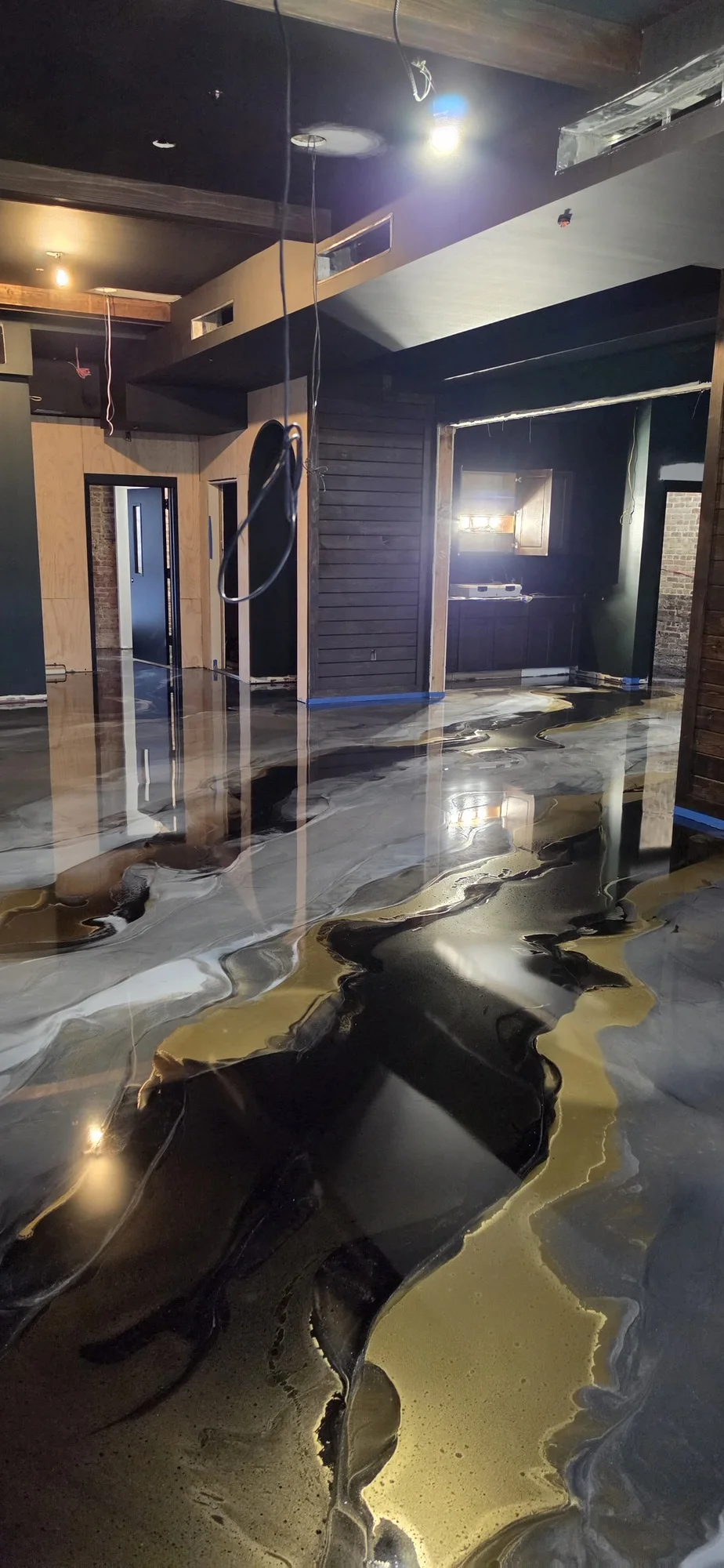

Sound out the damaged area
Danny taps around each spalled patch with a hammer and listens for the dull sound of loose concrete. The weak area is usually bigger than the visible flaking, so he chalks a line around everything that sounds hollow or crumbles under a scraper.

Cut back to solid concrete
The marked area is ground or chipped out until the edges and the bottom are hard, sound concrete. Edges are squared off where they can be, since a thin feathered edge on a deep spall tends to break down before a clean shoulder does.

Wash out the salt
Salt residue left in the pores keeps drawing in moisture and can attack the new repair, so the area is cleaned, rinsed and dried. Dust from the grinding is vacuumed out, and the surface is primed if the repair material calls for it.

Rebuild and skim to level
Repair mortar is placed in the cutouts and struck level with the floor. Where spalling covers a wide area near the door, a skim coat goes across the whole section so the floor ends up flat and reads as one surface.
Grind flush and coat the door line
After the repair cures, it is ground smooth with the floor around it. The full coating system then goes on, with extra attention at the door line where the salt dripped, and Danny shows the owner how far the repair reached.
More of Danny’s floors
Other jobs from the file, not all of them this service. See the gallery





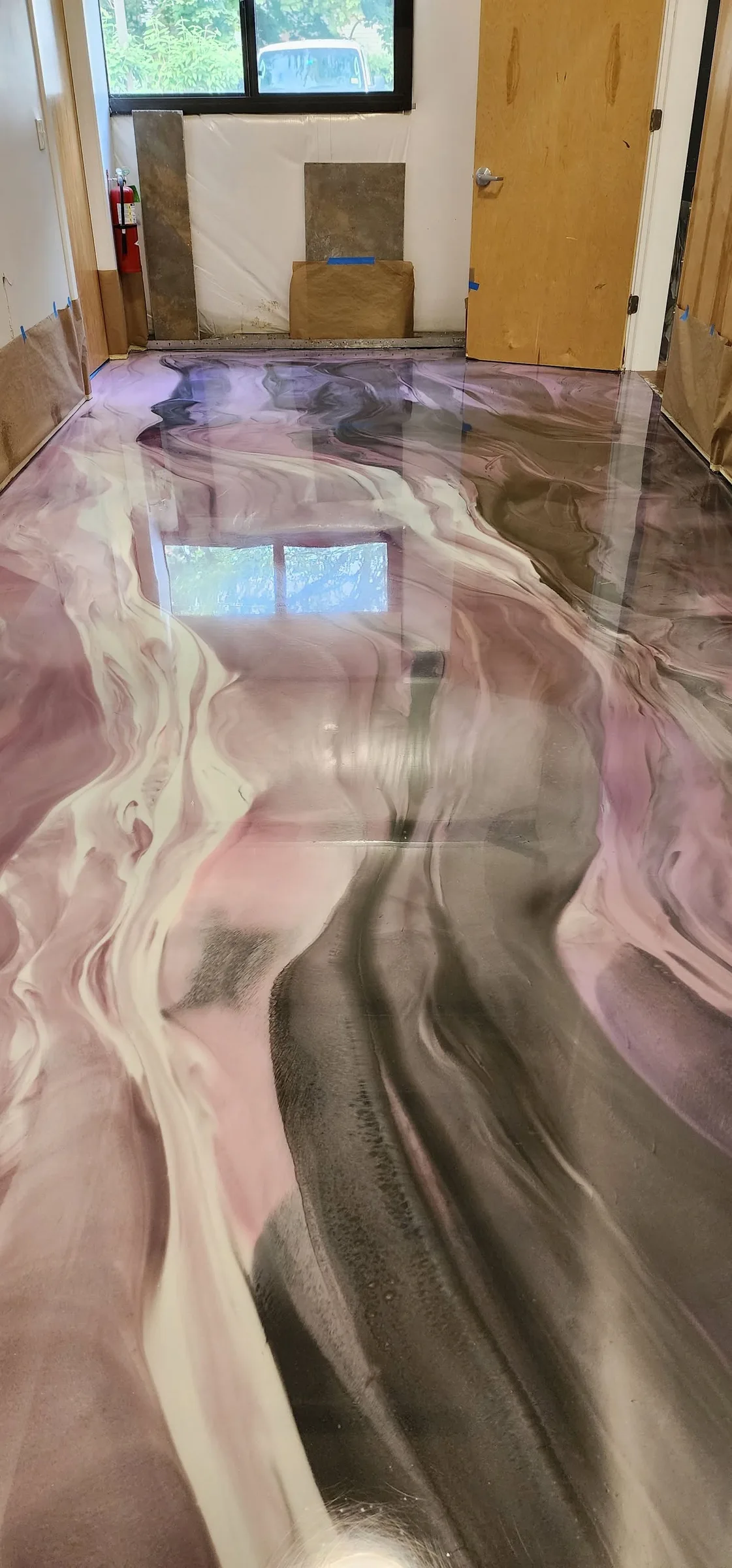
Questions about garage floor spall repair
What causes garage floor spalling?
Most often it is salt and water. Cars bring in slush carrying road salt, the water soaks into the surface, and freezing and thawing breaks the top layer loose. Weak finishing when the slab was poured can make it worse. The damage usually shows first near the door, where the most slush drips off.
Can you coat over spalled concrete without repairing it?
No. A coating over loose, flaking concrete bonds to the weak layer, and that layer keeps breaking away, taking the coating with it. The damaged concrete has to be ground out to solid material and filled first. Coating over spalls without repair is one way new garage floors fail early.
Will the repaired area match the rest of the floor?
Under the coating, it should not show much. The repair is ground flush, and the coating covers the old floor and the patch the same way. Full flake hides repairs best. On solid colors and metallics, a large repair can show a slight difference in texture or sheen, which Danny will mention before you choose a finish.
Is spall repair worth doing if I am not coating the floor right away?
It helps, though it works best when the coating follows soon after. A bare repair still takes salt and water, and the concrete around it keeps breaking down if nothing protects it. If the coating has to wait, rinse salt off the floor through the winter. Danny can schedule the repair and the floor as one job to avoid repeating the prep.
Can spalling on the apron outside the garage door be fixed too?
Yes. The apron gets the most salt and water of all, so it often spalls before the inside floor does. It is repaired the same way, cut back to solid concrete and rebuilt. An outdoor apron then needs an exterior coating or sealer, since it sits in the weather. Danny looks at the inside floor and the apron together.
What deicer should I use after the floor is repaired and coated?
Use a deicer the coating maker approves, and use as little as you need. Rock salt left sitting is what started the damage, so sweep or rinse the floor after storms. Mats where the car drips catch most of the slush before it spreads. Danny can point you to products that are easier on concrete and coatings.
Close to this one
Flake, solid color, metallic and marble-look garage floors, plus the crack, spall and moisture work that comes first.
- Garage Floor Moisture AssessmentTesting garage slabs for rising moisture before coating, so the primer and system are chosen to what the concrete is actually doing.
- Garage Floor Coating SystemsA plain guide to garage floor systems, from flake and solid color to metallic, matched to how your garage is actually used.
- Epoxy Garage Floor InstallationThe full epoxy garage install, from the first walk-through and grinding to the topcoat and final check, done in order without skipped steps.
- Full-Flake Garage Floor CoatingFull-broadcast flake garage floors that hide dirt and road salt, with chips scraped down to an even texture under a clear topcoat.
- Partial-Flake Epoxy FlooringPartial-flake floors with a lighter scatter of chips over a base color you choose, smoother underfoot than a full broadcast.
Based in Cranford, NJ. Danny takes work across New Jersey, the five boroughs, Long Island, Westchester and Rockland, Fairfield County and Bucks County. See every areaSee the galleryRead: What Road Salt Does to a Garage Floor, and How a Coating Helps
Danz Handz
Danny Carrero, epoxy specialist
dhepoxy@gmail.com
Cranford, NJ. Mon to Sat, 8 to 6. Hablamos español.
Book a walkthrough
Describe the floor and what you have in mind. Danny calls back and comes out to look at it.