
Small Touch-Ups for a coated floor that is mostly fine
Sometimes a floor needs very little. The movers scuffed it, a contractor dropped a ladder, or a cabinet came out and left a nick at the edge. Danny matches each touch-up to the color and sheen around it as closely as the floor allows, and the rest of the floor is left alone.
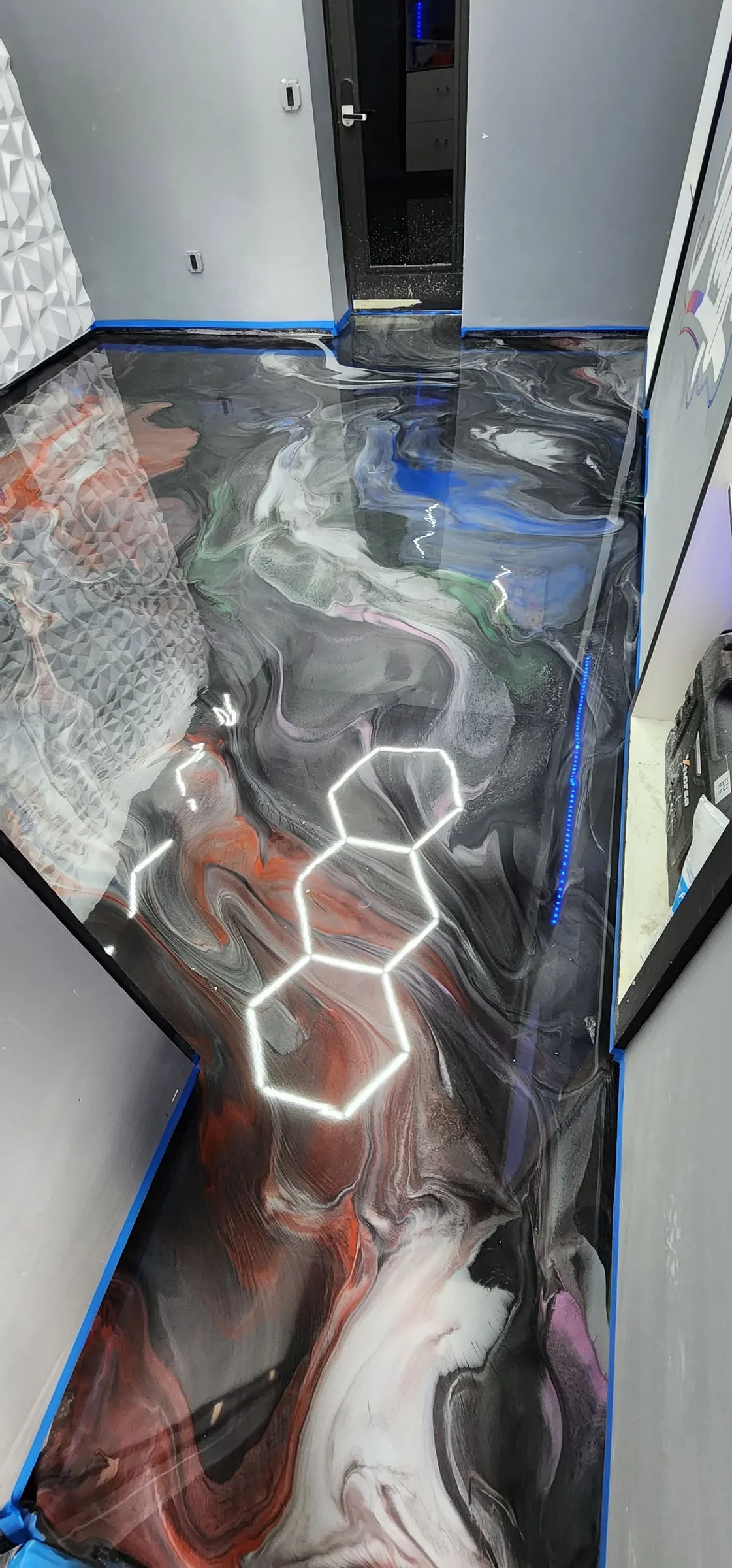

What goes into concrete coating touch-ups
A touch-up is a small, local fix to the surface of a coated floor. The damaged spot is cleaned and lightly sanded, filled if it is a nick, and brushed or poured with matching color and topcoat. On flake floors a pinch of matching flake can go in so the spot blends into the pattern. The goal is to make a mark stop catching the eye from standing height, with the rest of the floor left untouched.
Danny walks the floor with you and you point out the spots that bother you.
Touch-ups work best on flake floors and on solid colors in a mid-tone. They are hardest on metallic floors and on very glossy dark colors, where any small difference in sheen or flow shows in the right light. They are a poor fit for marks that keep multiplying, which usually point to a bonding or wear problem better handled by repair or recoating. Danny will tell you when a touch-up will look like a touch-up.
Danny walks the floor with you and you point out the spots that bother you. He looks at each one under the room’s normal light and from standing height, since that is how the floor actually gets seen. He checks the original color or flake blend so the match is right, and he looks around each mark to make sure it is surface damage and nothing deeper. The spots are cleaned, sanded, filled where needed, and recoated, then left to cure. On the final walk, he goes back to each mark with you and checks it from the same spot you first noticed it.
A good touch-up is the one you have to look for.
How Danny does the job
Touch-ups are small jobs with a narrow goal, making a handful of marks stop drawing the eye, so these stages put most of their effort into matching.
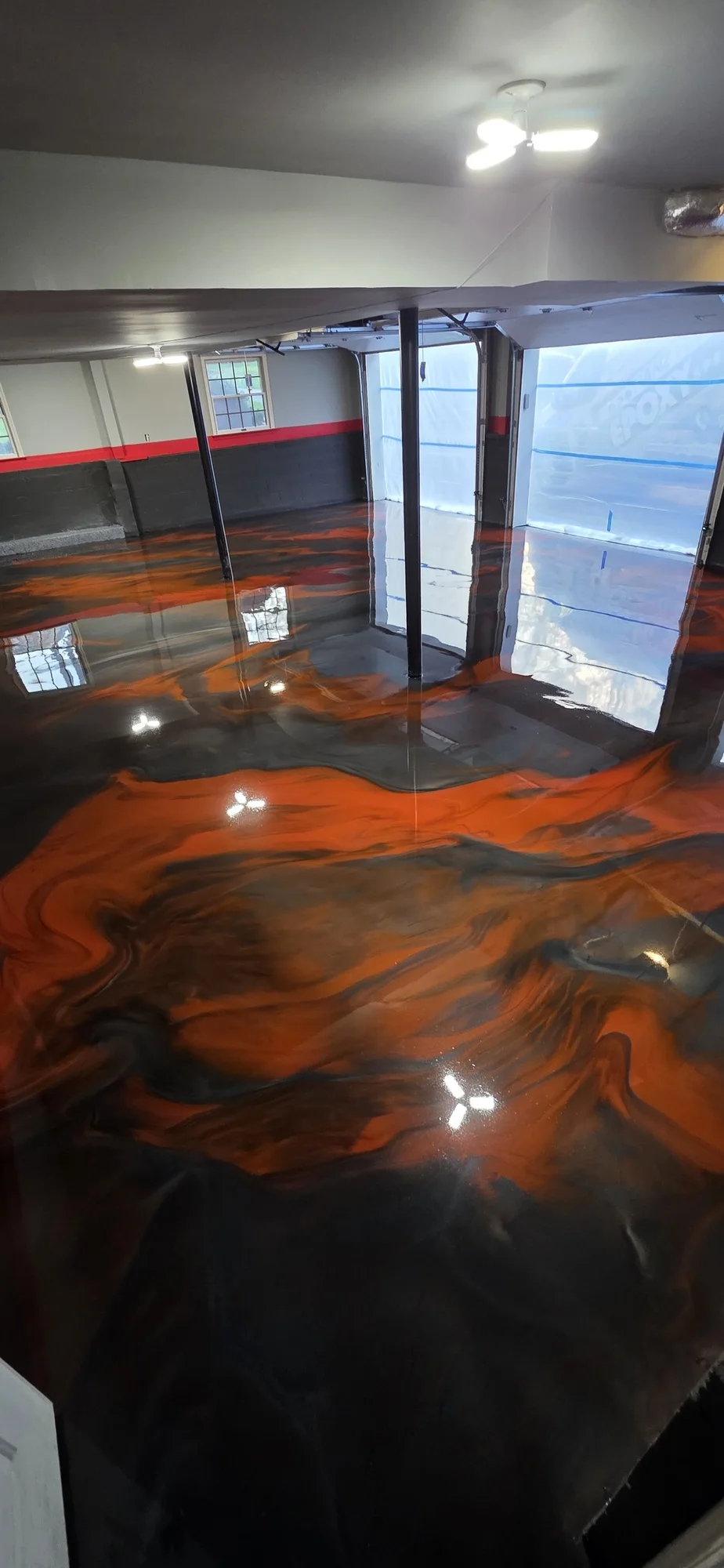
The owner points, Danny marks
The visit starts with the owner pointing out each mark that bothers them while Danny circles it with a grease pencil. He adds any nearby marks the owner missed, so everything worth fixing gets done on the same visit instead of turning into a second trip.
Reading the original finish
He checks the sheen, the flake size and blend, and the color around each mark, ideally against leftover flake or paperwork from the first job. Where nothing is left over, he mixes small test batches and holds them against the floor until one disappears into it.
Scuffing just around each spot
Each mark and a small margin around it is cleaned and lightly sanded, so the new material grips without the sanding spreading wider than it has to. Nicks deep enough to catch a fingernail get a dab of filler first and are sanded level once it hardens.
Dabbing color, flake and clear
Matched color goes on with a small brush or a touch-up roller, fresh flake is sprinkled in where the floor has flake, and the clear is feathered at the edges so no ring forms. Each spot is kept to the size of the damage, which stops the repair from becoming a visible patch of its own.
Revisiting each circle
Once everything has hardened, Danny and the owner revisit every marked spot and look at each one from where the owner usually stands or parks. Any spot that still catches the eye is noted for a second light pass on a later visit.
More of Danny’s floors
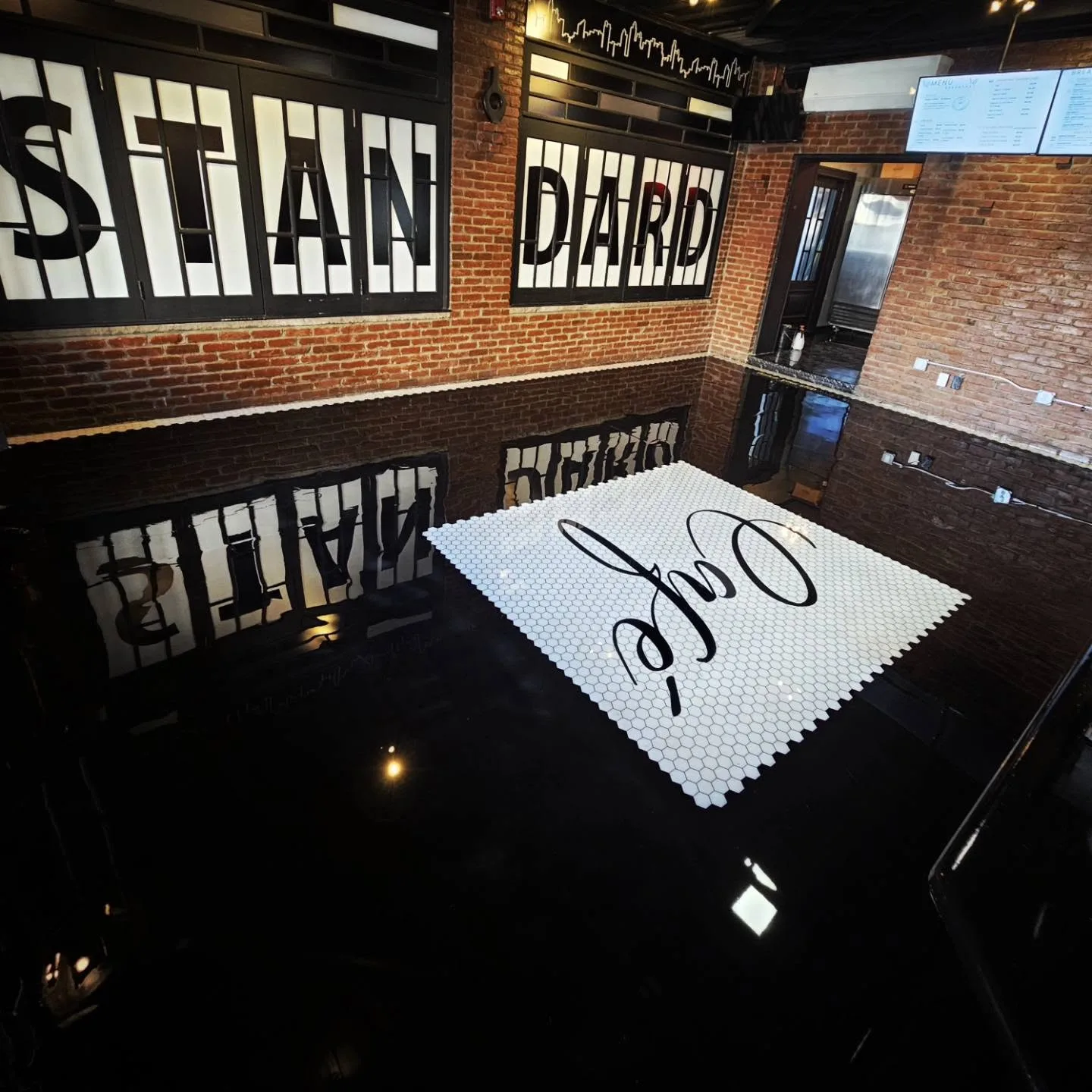
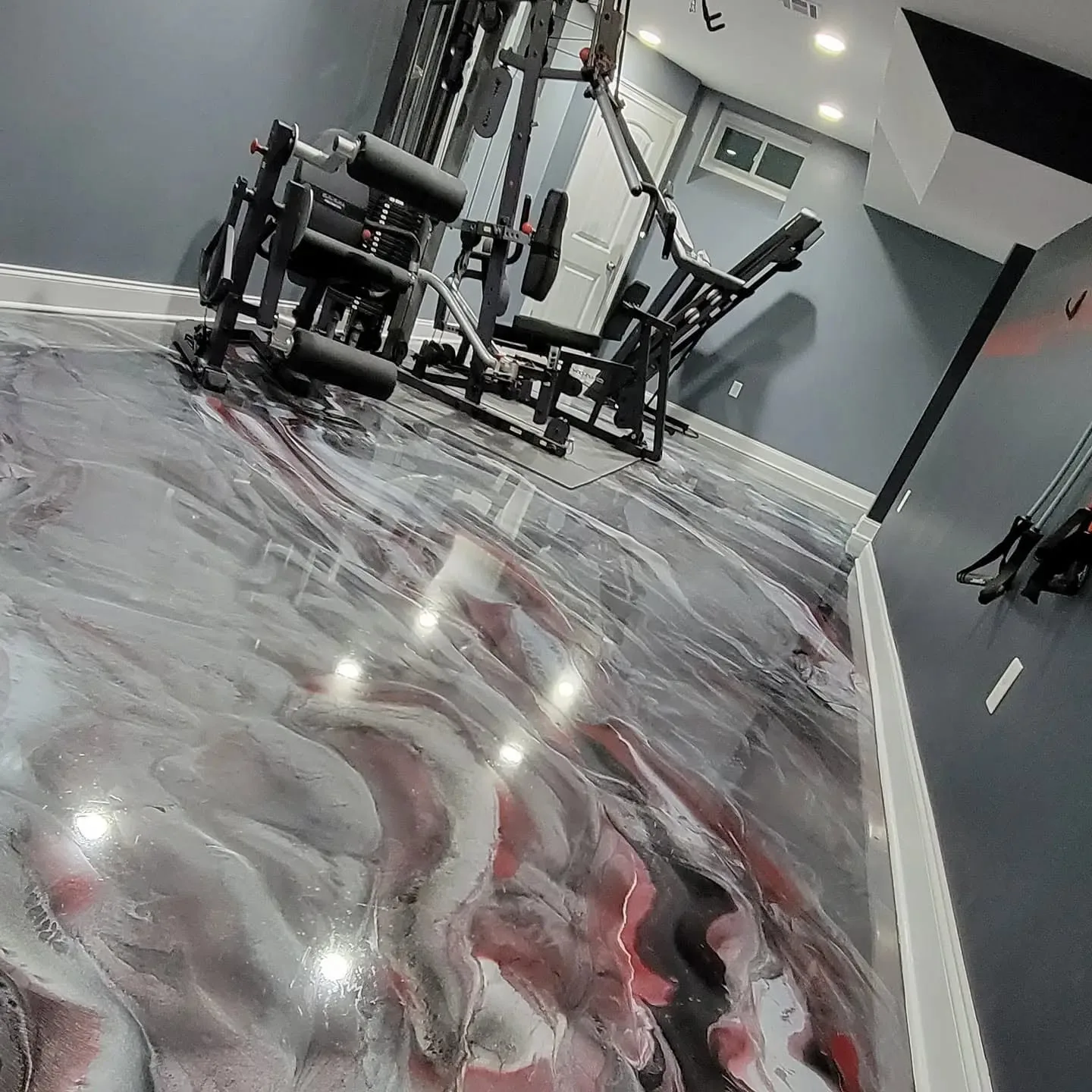
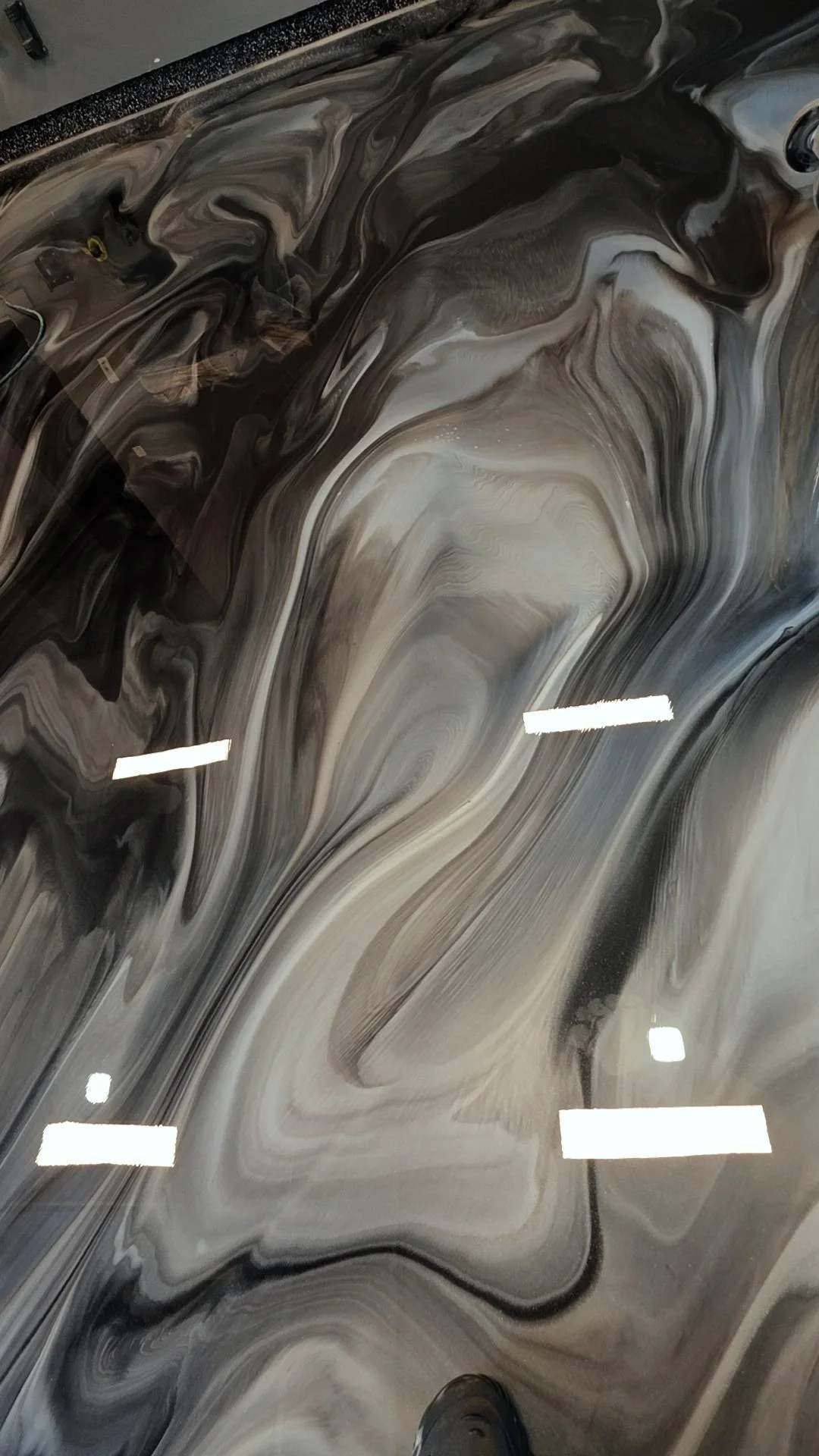
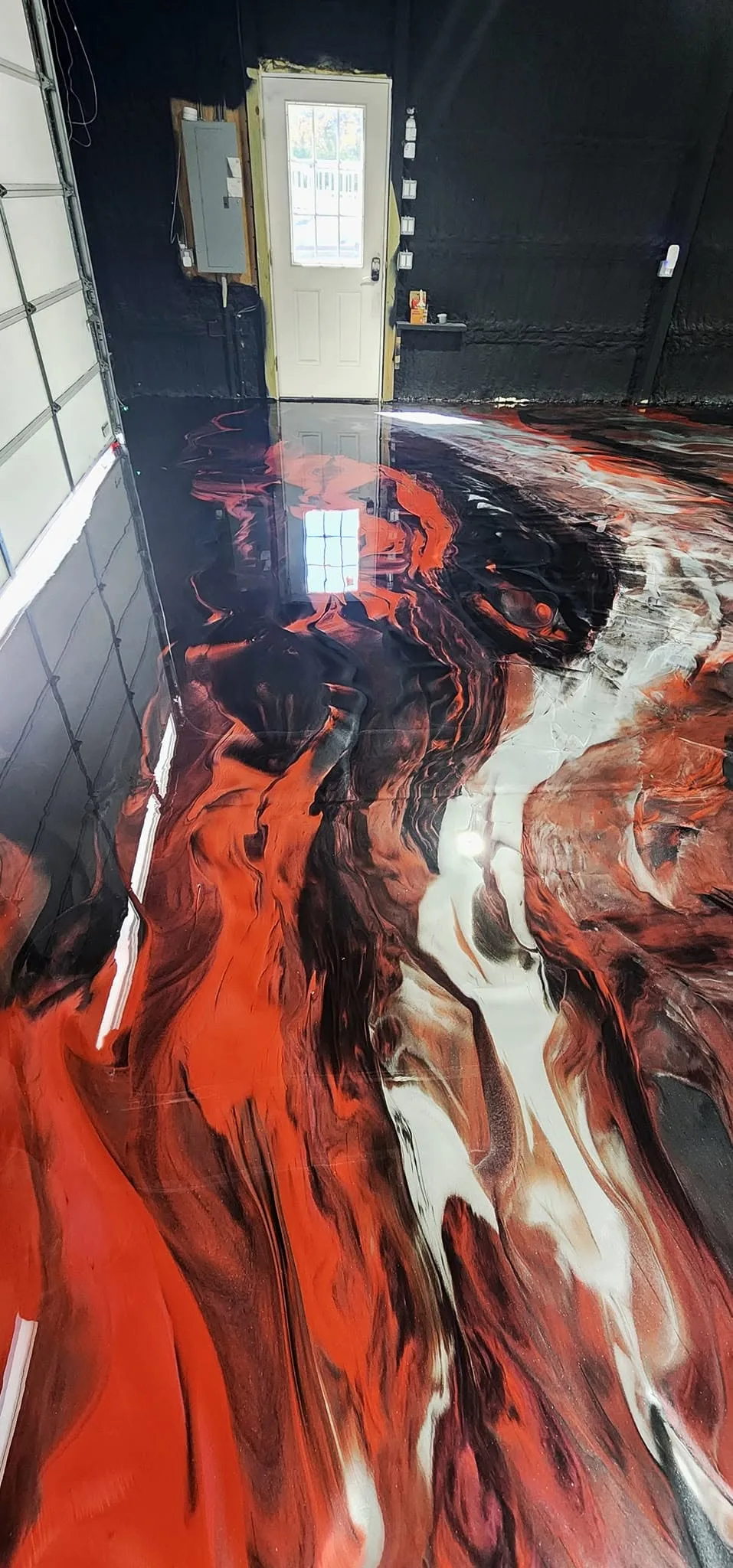
Other jobs from the file, not all of them this service. See the gallery




Questions about concrete coating touch-ups
Will a touch-up match the rest of my floor?
On most flake and solid color floors it comes very close, especially once new flake is broadcast in. Sheen can differ a little at first and usually evens out as the floor gets walked on. On metallic and very dark glossy floors a touch-up is easier to spot, and Danny will say so before doing the work.
Can you touch up a floor someone else installed?
Usually, yes. Danny looks at the coating, the color and the flake to match them as closely as he can. It helps to know the product if you have any information from the original installer. If the coating turns out to be failing around the marks, he will tell you that a touch-up will not hold.
How small does a job need to be for a touch-up?
Touch-ups are for a few isolated marks on a floor that is otherwise sound. If the damage covers a large area, runs along traffic lanes or keeps appearing in new spots, a section repair or a recoat is the better fit, and Danny will lay out the difference when he sees the floor.
Why does a touch-up sometimes look shinier than the floor around it?
A fresh clear layer has its full gloss, while the floor around it has been dulled slightly by months or years of foot traffic and cleaning. The difference usually softens as the spot gets walked on. On a floor where sheen matters a lot, Danny may feather the clear wider or recommend a light topcoat refresh across that area.
Is it worth saving leftover flake after a new floor goes in?
Yes. A small bag of the original blend, labeled and kept somewhere dry, makes future touch-ups match far better than any blend mixed from memory. The same goes for the color name or code if the installer gave you one. Danny suggests owners keep both for exactly this kind of small repair.
Can touch-ups be done the same day as a cleaning visit?
Often, yes. A cleaned floor shows the marks clearly, and small spots can be prepped and coated right after, as long as the area can be kept clear while it hardens. Combining the two saves a trip and leaves the whole floor looking even at once. Danny suggests it whenever an owner books both.
Other repair work
Peeling, bubbling, chipped or faded coatings, patched or recoated, plus upkeep plans for floors that work hard.
- Protective Topcoat RenewalA fresh clear wear layer poured over a sound coated floor before traffic reaches the color, with the option to change the sheen.
- Scheduled Commercial Floor MaintenanceFloor maintenance visits set on the business calendar, with small fixes handled on the spot and bigger work booked for planned closures.
- Epoxy Floor Replacement and ReinstallationFailed epoxy floors ground off to bare concrete and replaced from the base up, with the chance to switch to flake or a high-end metallic.
- Epoxy Floor RepairRepair for chipped, peeling, cracked and worn epoxy floors, starting with why the floor failed before deciding to patch, recoat or redo.
- Bubbling Epoxy Floor RepairRepair for epoxy floors that cured full of bubbles, pinholes and craters, ground open, filled and recoated so the cause gets fixed too.
Danny works out of Cranford, NJ and covers about 60 miles: North and Central Jersey, the city and Long Island, the Hudson Valley counties, Fairfield County and eastern Pennsylvania. See every areaSee the gallery
Danz Handz
Danny Carrero, epoxy specialist
dhepoxy@gmail.com
Cranford, NJ. Mon to Sat, 8 to 6. Hablamos español.
Start with a visit
Tell Danny about the space. He calls you back, comes out, looks at the concrete and talks it through before anything gets decided.