
Bringing an old, Beaten-Up concrete floor back
An older garage, shop or commercial floor carries its whole history: chipped joints, worn patches, old paint, oil, glue and repairs that never matched. Restoration brings the slab itself back into sound, decent-looking shape. How it gets finished after that (sealed, polished or coated) is decided once the concrete is cleaned up.


Concrete Floor Restoration, start to finish
Concrete floor restoration is the work that takes a tired slab back to a sound, even surface. It usually combines several jobs: grinding off old coatings, paint, glue and stains, repairing cracks, chipped joints and spalled spots, filling holes left by old fixtures, and leveling low areas. Once the slab is restored, it can be left bare and sealed, polished, or coated with flake, solid color or a metallic. The restoration itself is about getting good concrete back underneath whatever comes next.
An old slab will always show some of its history if it is sealed or polished.
It fits old slabs that are structurally sound but worn, stained and patched on the surface. It is the wrong answer for a slab that is heaving, sinking or breaking apart in large pieces, which needs a concrete contractor to repair or replace. An old slab will always show some of its history if it is sealed or polished. Under a coating, most of that history disappears. Danny tells you what the restored slab will look like with each finish.
Danny walks the slab end to end with you and makes a list of everything on and in it: coatings, paint, glue, stains, cracks, broken joints, holes from old equipment and low spots. He asks what the space will be used for and how you picture it finished, since that decides how far the restoration needs to go. The surface is ground, old material removed, and every crack, joint and hole repaired and leveled. Then the chosen finish goes on, whether a sealer, polish or coating. After the cure, he walks the restored floor with you.
Under the paint, glue and stains, most old slabs still have good concrete.
How Danny does the job
Restoring an old slab is planned backward from its finish, so these stages begin by picking sealed, polished or coated and let that choice set every repair.


Picking the finish first
Danny starts by asking how the owner wants the floor to end up. A slab headed for polish or a clear sealer needs cosmetic repairs that blend, while one going under a coating only needs repairs that are sound and flat, so the finish sets the scope.

Pulling up the old fixtures
Old anchor bolts, abandoned pipe stubs, embedded tack strips and floor-mounted brackets are removed or cut flush. Each one leaves a hole or a rust ring, and finding them all early keeps them from turning up halfway through the grind.

Grinding through the history
Paint, glue, old sealer and staining come off in passes until the slab is open and consistent. Danny watches each layer as it comes off, since old floors often hide earlier patches and cracks under whatever was put down last.

Repairs matched to the finish
Cracks, broken joints, holes and low spots are filled with materials chosen for the finish ahead, color-matched fillers where the slab will show and structural fillers where a coating will cover them. Each one is ground flush with the floor.
Finishing and the before photos
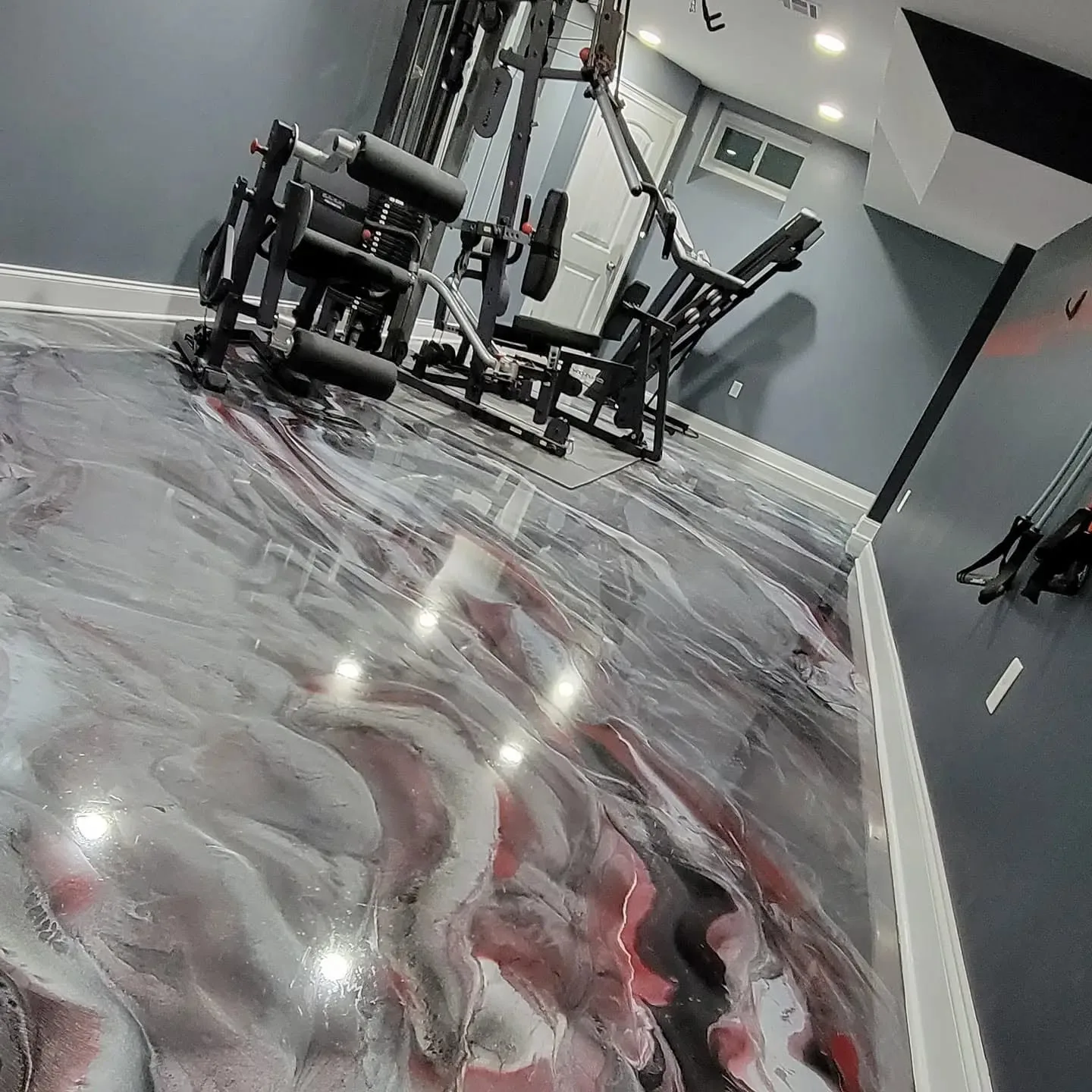
The sealer, polish or coating goes on, and after it cures Danny walks the floor with the owner alongside photos taken at the first visit. Seeing the old slab next to the restored one makes it easy to check every area that was worked on.
More of Danny’s floors
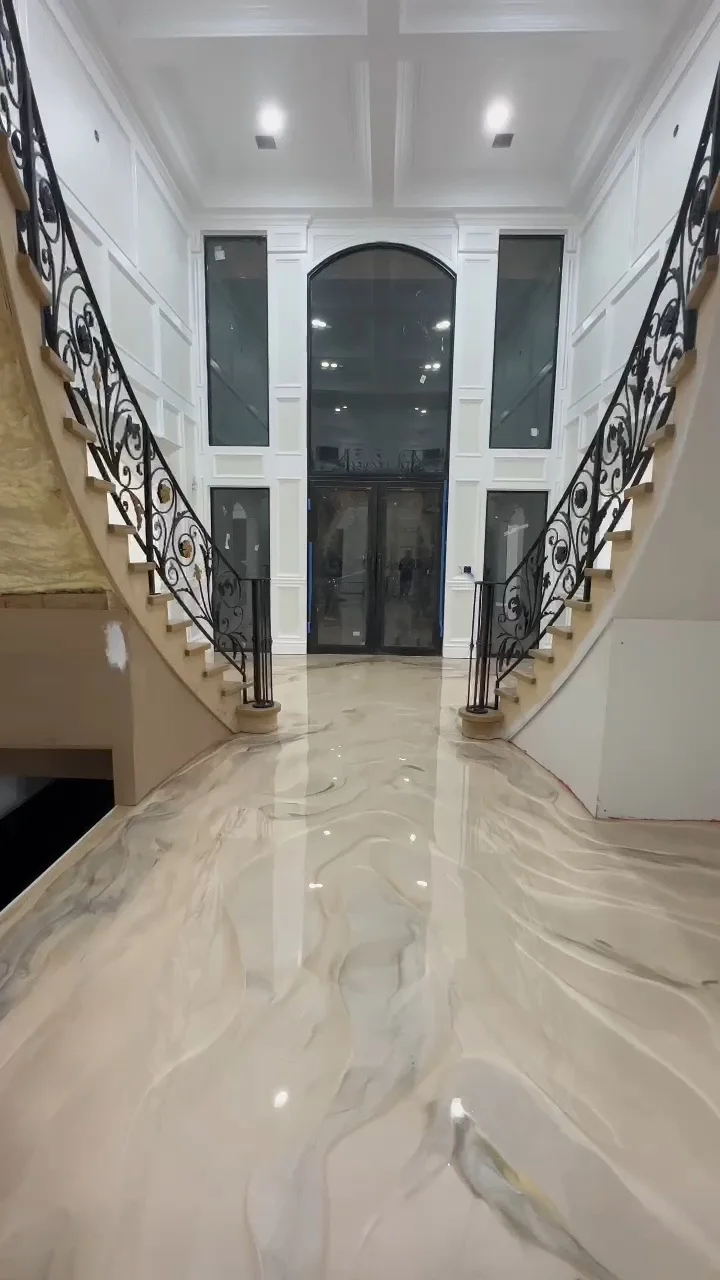
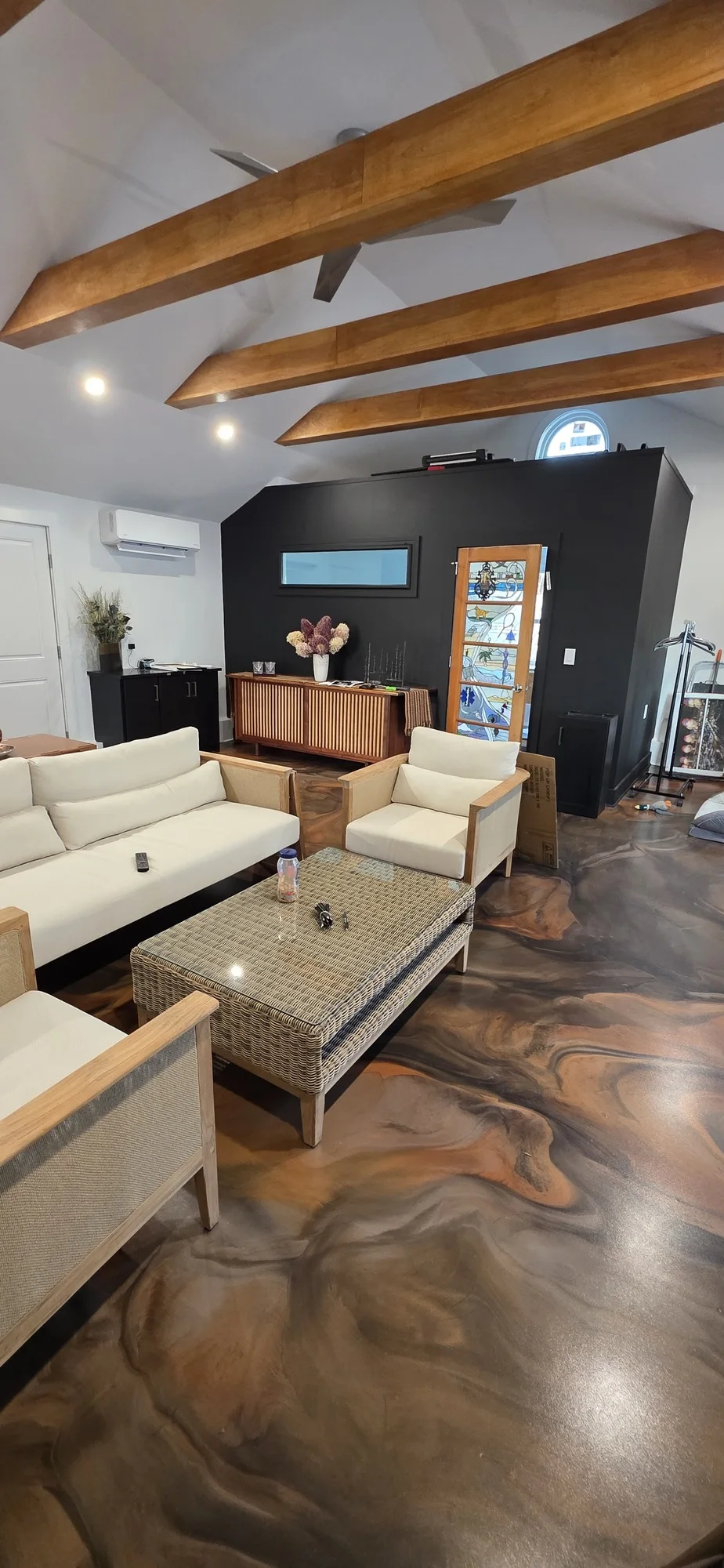
Other jobs from the file, not all of them this service. See the gallery






Questions about concrete floor restoration
Can an old concrete floor really look good again?
Usually, yes, if the slab is sound. Grinding off old material and repairing the damage gives a clean surface. How it looks after depends on the finish: a coating hides most of the slab’s history, and a sealer or polish shows some character. Danny walks the floor and tells you what to expect.
What if my slab is badly cracked?
Cracks from shrinkage and age are repaired as part of restoration. Cracks with one side higher than the other, or a slab that is sinking or heaving, point to a structural problem, and the owner should have a concrete contractor look at it first. Danny explains which kind of cracks he sees during the walk.
Is restoration different from resurfacing?
Restoration repairs and refinishes the existing surface of the slab. Resurfacing adds a new leveling layer over a slab whose surface is too rough or damaged to finish directly. Danny looks at the floor and tells you which one it needs, and sometimes a floor needs both in different areas.
Can an old floor be restored in phases while the space is in use?
Yes, often by room or by section, with each area closed while it is ground, repaired and finished. Phases are planned to meet at doorways or joints, where a seam between sections reads naturally. A floor finished in one pass looks the most consistent, so Danny suggests phasing only when closing the whole space is not possible.
What happens to old floor drains and cleanouts during restoration?
They stay working. Drains and cleanouts are protected during grinding, the concrete around them is repaired if it has broken down, and the finish is cut in neatly at their edges so covers still fit. If a drain is damaged or sits too high or low, a plumber adjusts it before the floor is finished.
Is it worth restoring a slab that is going under new carpet or tile?
For carpet or tile, the slab mainly needs to be flat, sound and clean, so a lighter restoration focused on repairs and leveling usually does the job. The full grind and finish only matter when the concrete itself will be the floor. Danny matches the scope to whatever goes on top.
Other sealing work
Sealing, densifying, polishing and waterproofing for the slabs that do not need a full coating.
- Concrete Floor ProtectionSealers and coatings that stop dusting, staining and wear on a sound concrete slab before the damage becomes a repair job.
- Protective Concrete TopcoatsA fresh clear wear layer over a new or existing coated floor, chosen for the room and for the sheen you want.
- Concrete Floor Cleaning and PreparationDiamond grinding, oil spot cleanup and crack repair that take a slab down to clean, open concrete a coating can bond to.
- Concrete Floor Coating ConsultationA walk of your slab with Danny to sort out its condition, how the room gets used and the look, then land on a system.
- Concrete SealingClear sealers on bare concrete that keep the slab looking like itself while cutting down on dust, stains and spills soaking in.
Every county Danny covers, and every town in them, has its own page. See every areaSee the gallery
Danz Handz
Danny Carrero, epoxy specialist
dhepoxy@gmail.com
Cranford, NJ. Mon to Sat, 8 to 6. Hablamos español.
Schedule a look at your floor
Tell Danny about the space. He calls you back, comes out, looks at the concrete and talks it through before anything gets decided.