
Warehouse coatings for floors that get scraped and dragged
Grit does a lot of the damage on a scraped warehouse floor. It rides in on boots and wheels, then gets ground under every pallet slid across the slab until the drag paths are worn to bare concrete. Danny traces those drag paths first, and the system is picked to take scraping there.
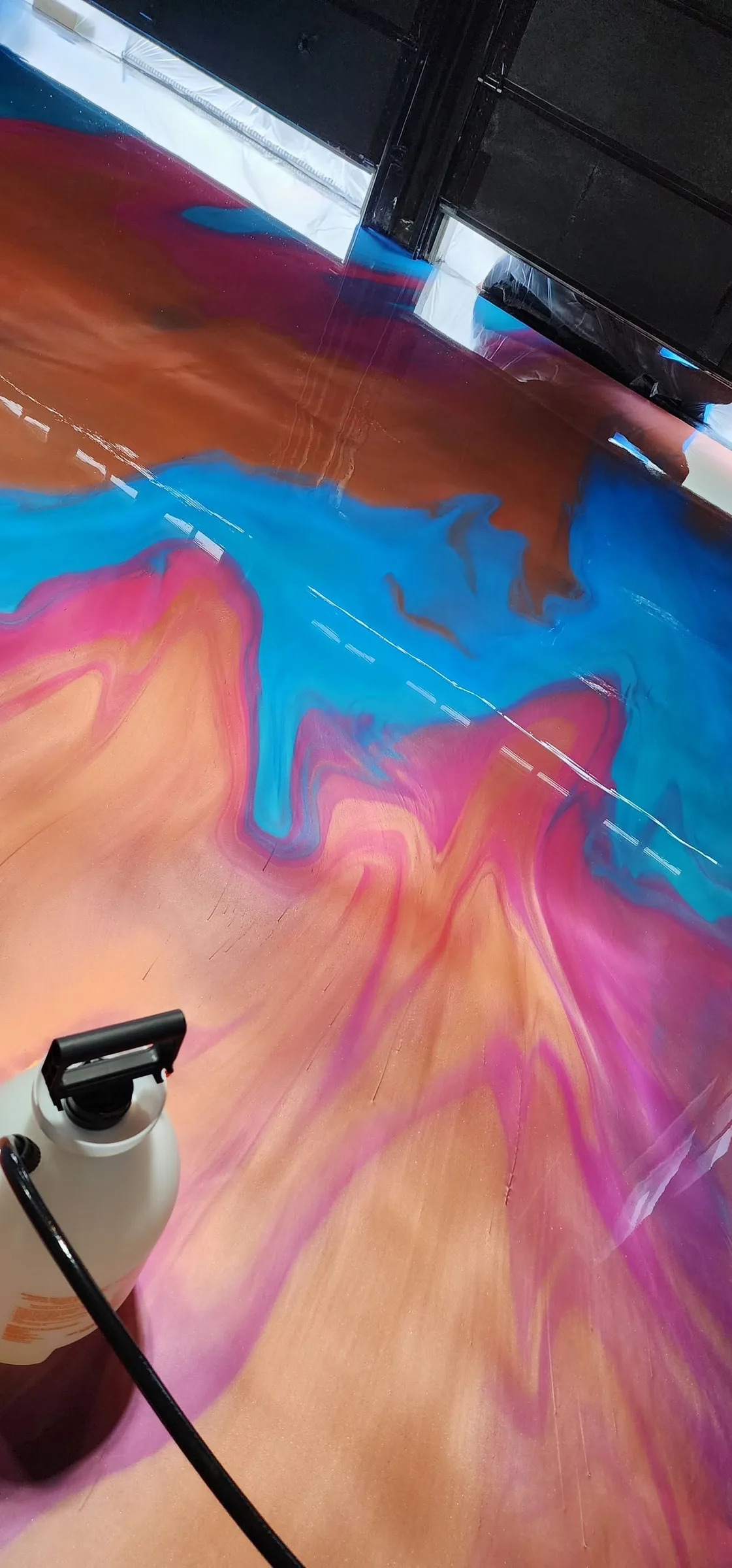
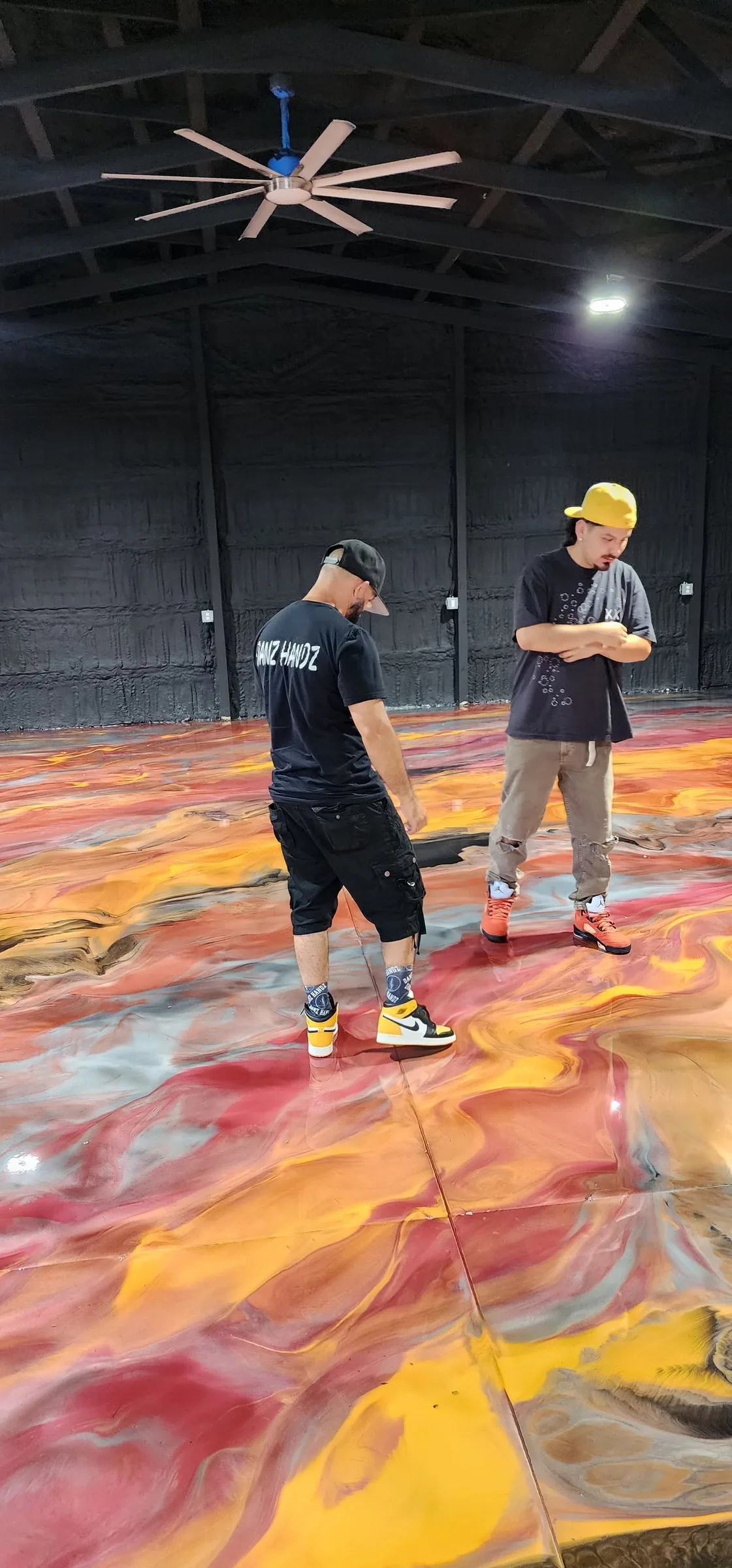
Abrasion-Resistant Warehouse Coatings, start to finish
Abrasion-resistant coatings are resin systems built to stand up to scraping and grinding wear. Often that means hard aggregate worked into the build, a tougher topcoat, or both, so the surface wears more slowly under sliding loads and grit. The system has to fit what is actually doing the damage, and wear is usually concentrated in some lanes more than others. Danny takes in the space, the loads that move across it and anything spilled on the floor before recommending a system, which is then matched to those requirements and the product data.
The system has to fit what is actually doing the damage, and wear is usually concentrated in some lanes more than others.
Abrasion and impact are two different kinds of damage. A floor built for scraping can still chip when heavy steel parts are dropped on it, and that calls for a different approach. Aggregate in the surface also makes the floor rougher, which helps with grip but makes it harder to sweep and mop. Even the right system wears over time under dragging loads, and the worst lanes will need a fresh topcoat eventually.
Abrasion leaves signs, and the walk-through looks for them: worn shiny lanes, scratch patterns from skids, areas where the coating or concrete has been sanded down to aggregate. Danny asks how pallets and loads are moved and what gets tracked in. The floor is diamond ground, damaged areas are repaired, and the system is poured with aggregate or a tougher topcoat where the wear is concentrated. Each section cures before loads return. The final walk covers the worst lanes first, where the new surface will work hardest.
Grit under a sliding pallet acts like sandpaper on any floor.
The order the work goes in
Scraping wear comes from grit and dragged loads, so these stages start with where both come from and end with a surface built to take it.


Tracing the drag paths
Danny follows the shiny worn lanes and scratch patterns across the floor to their source: a pallet slid out of a bay, a skid dragged to a machine, a cart pushed with a bad wheel. Each path is marked for extra build.

Finding where the grit enters
Grit is half the problem, so the walk also looks at doors, dock entries and spots where sand and debris come in on wheels. Mats, sweeping schedules and door seals are noted as part of the plan alongside the coating.

Grinding out the worn lanes
Worn lanes are ground down to sound concrete, often deeper than the rest of the floor where the old surface has been sanded away. Exposed aggregate and pits are filled level so the new build starts on a flat base.

Broadcasting aggregate in the paths
Hard aggregate is broadcast into the body coat along the marked drag paths, with a tougher topcoat locking it in. Lighter texture goes in areas that need easier cleaning, and the two blend at the edges so no step shows.

Trying the broom and scrubber
After the cure, Danny runs a broom and the facility’s scrubber across a textured section with the cleaning crew. That shows them how the new surface cleans and which brushes work before daily sweeping starts.
More of Danny’s floors
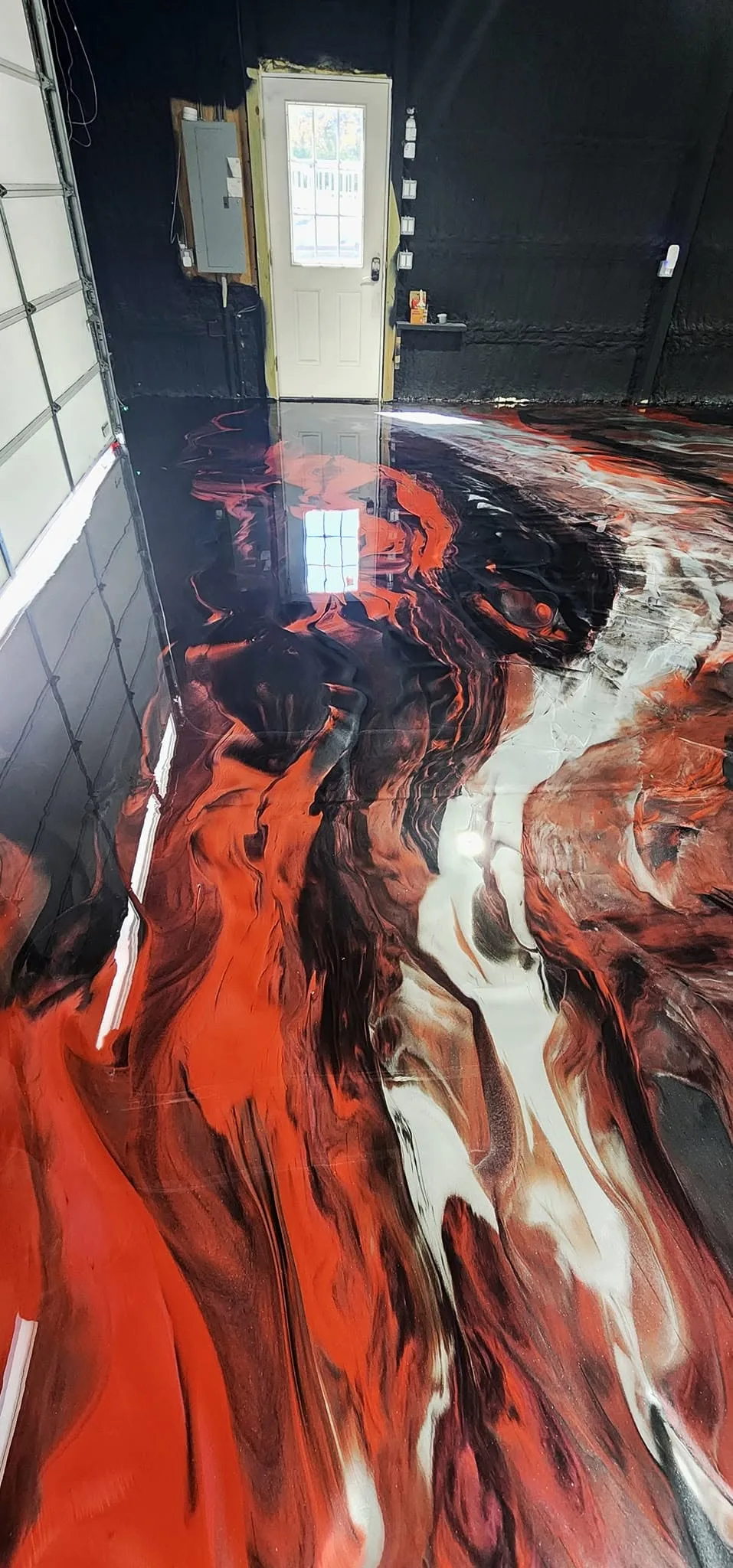
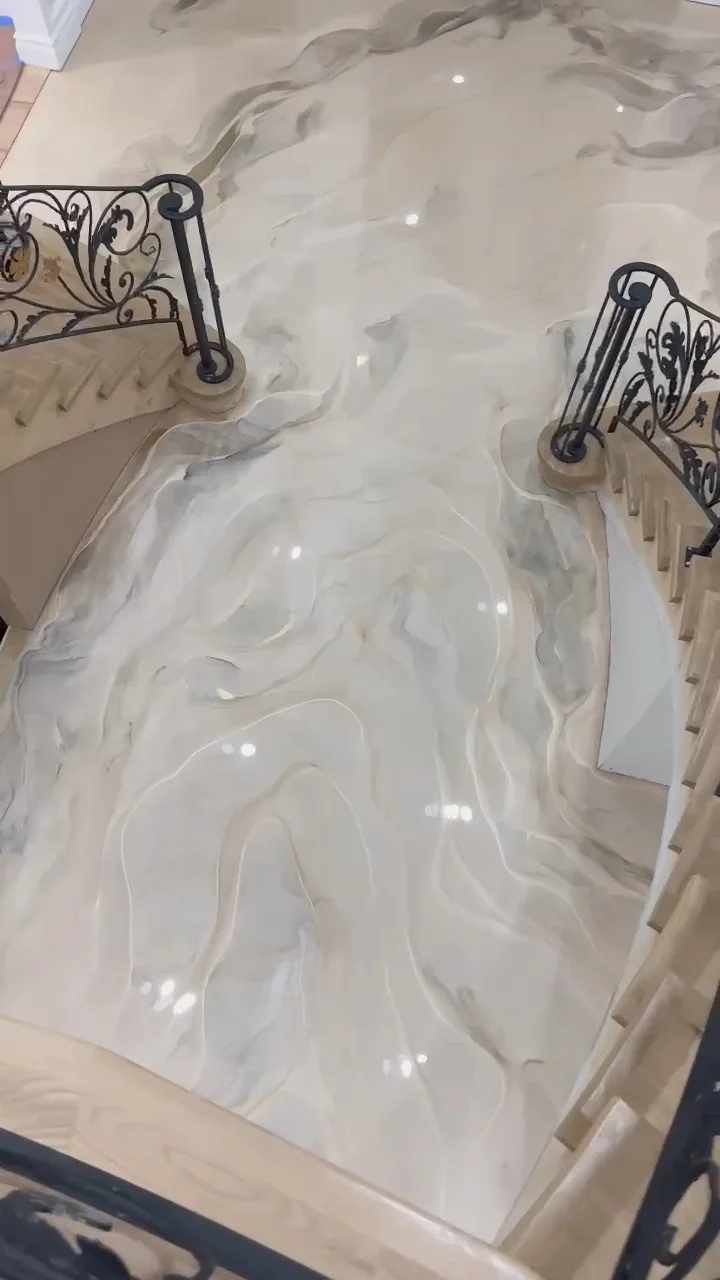
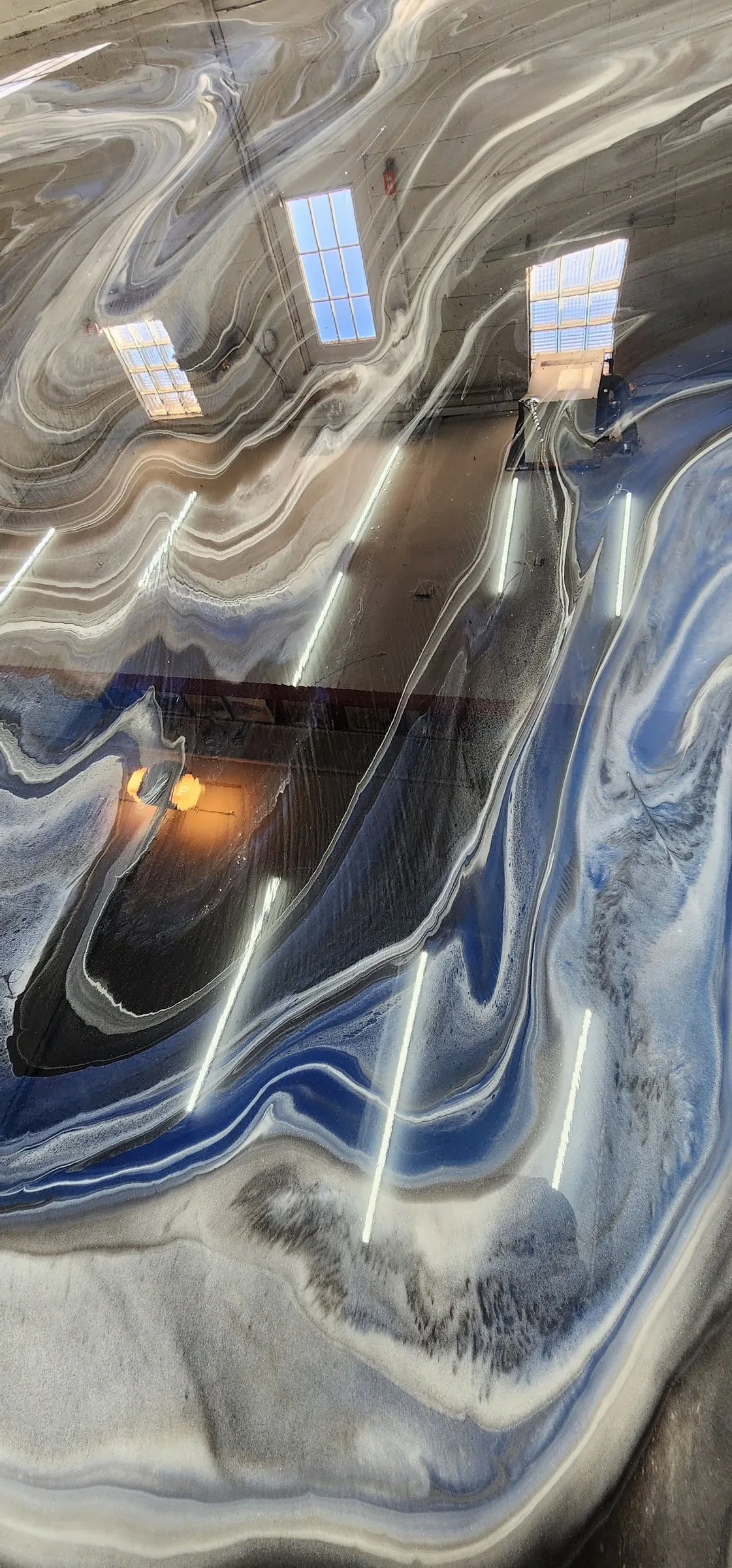
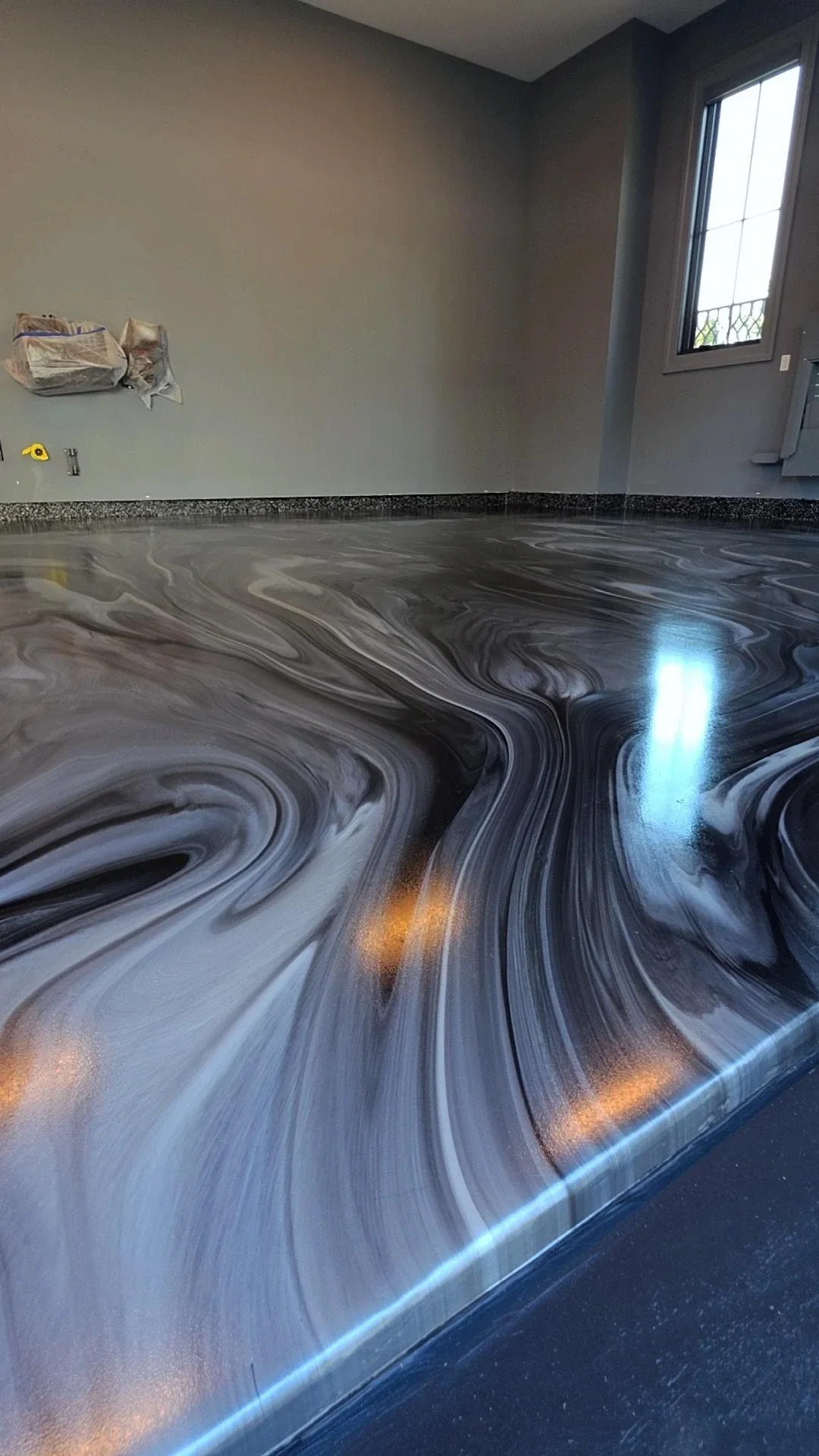
Other jobs from the file, not all of them this service. See the gallery




Questions about abrasion-resistant warehouse coatings
What makes a coating abrasion resistant?
Usually a combination of hard aggregate built into the coating and a tougher topcoat over it. The aggregate takes the scraping, and the topcoat protects the layers below. The right mix depends on what is wearing the floor, which Danny looks at in person, and on what the product data shows for each system.
Will it stop chips from dropped parts?
Not necessarily. Abrasion and impact are different kinds of damage, and a surface built for scraping can still chip when heavy steel is dropped on it. If dropped parts are a problem in your building, tell Danny so he can look at a heavier system for those areas while the rest of the floor gets the abrasion build.
Is a textured floor harder to clean?
Somewhat. Aggregate gives the surface grip and scrape resistance, and it also gives dirt more places to sit. A stiff broom and an auto scrubber with the right brushes handle it well. Danny can use a lighter texture in areas where cleaning matters more and a heavier texture where wear is worst.
Can changing how we move pallets reduce wear?
Yes, often a lot. Lifting pallets fully before moving them and replacing worn wheels on carts and jacks cut down on scraping. Dragging a load across the floor is the fastest way to wear any surface. Danny can point out the habits he sees on the walk that are causing the worst lanes.
Which kind of aggregate goes into the coating?
Hard aggregates like quartz or aluminum oxide are common choices, with the type and size picked from the product data for the wear involved. Coarser aggregate resists scraping and adds grip but is harder to clean. Danny chooses a grade that balances wear and cleaning for each area.
Will walk-off mats help a warehouse floor?
At the doors where grit comes in, yes. Mats catch sand and debris before wheels and boots carry it into the aisles, where it gets ground into the topcoat. They need regular shaking or replacing to keep working. Danny points out which entrances bring in the most grit.
Close to this one
Warehouses, plants, loading docks and machine shops, with safety striping and aisle marking when the space needs it.
- Equipment Room Floor CoatingsSealed resin floors for boiler, pump and mechanical rooms, so leaks and drips sit on the surface where someone can see them.
- Machine Shop Floor CoatingsResin floors for shops running lathes and mills, laid around the machines so chips sweep clean and coolant stays on top.
- Maintenance Bay FlooringResin floors for in-house maintenance shops where a facility repairs its own forklifts and equipment, built light so drips and parts show.
- Industrial Workshop Floor CoatingsResin floors for shared workshops where assembly, fabrication and woodworking happen in one room, sealed against dust and easy to sweep.
- Industrial Concrete Joint RepairRebuilt joint edges and fresh filler for slabs where forklift wheels have broken down the joints, so traffic rolls across without a jolt.
Danny works out of Cranford, NJ and covers about 60 miles: North and Central Jersey, the city and Long Island, the Hudson Valley counties, Fairfield County and eastern Pennsylvania. See every areaSee the gallery
Danz Handz
Danny Carrero, epoxy specialist
dhepoxy@gmail.com
Cranford, NJ. Mon to Sat, 8 to 6. Hablamos español.
Book a walkthrough
Describe the floor and what you have in mind. Danny calls back and comes out to look at it.