
Resinous floors: picking the right resin for the room
On a drawing, "resinous flooring" can mean epoxy, polyaspartic, urethane or a mix of them, and the exact system is often still open. Danny narrows it down by looking at the room, the traffic and what gets cleaned or spilled there, then matches the system to the product data.


What resinous floor installation really involves
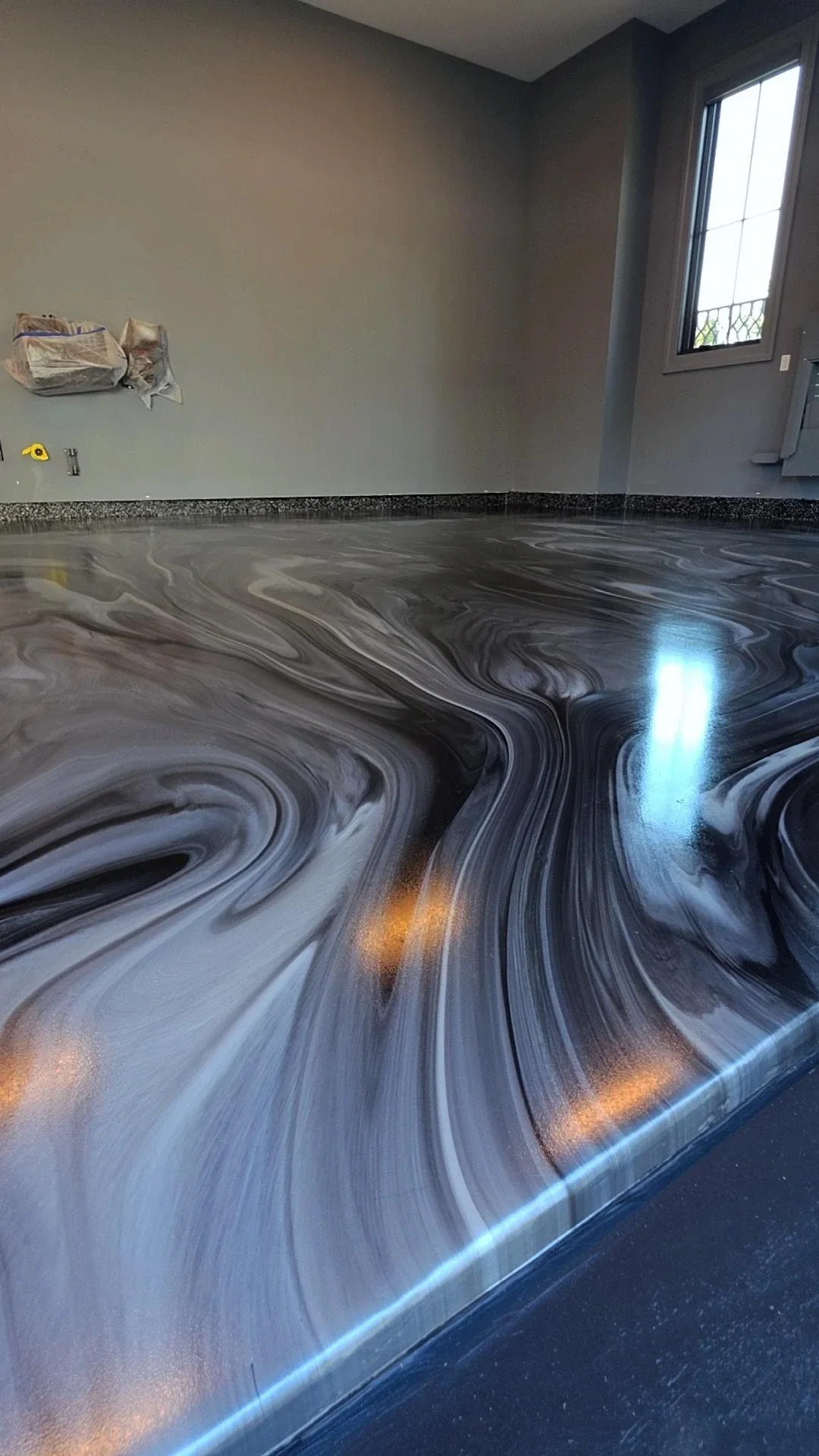
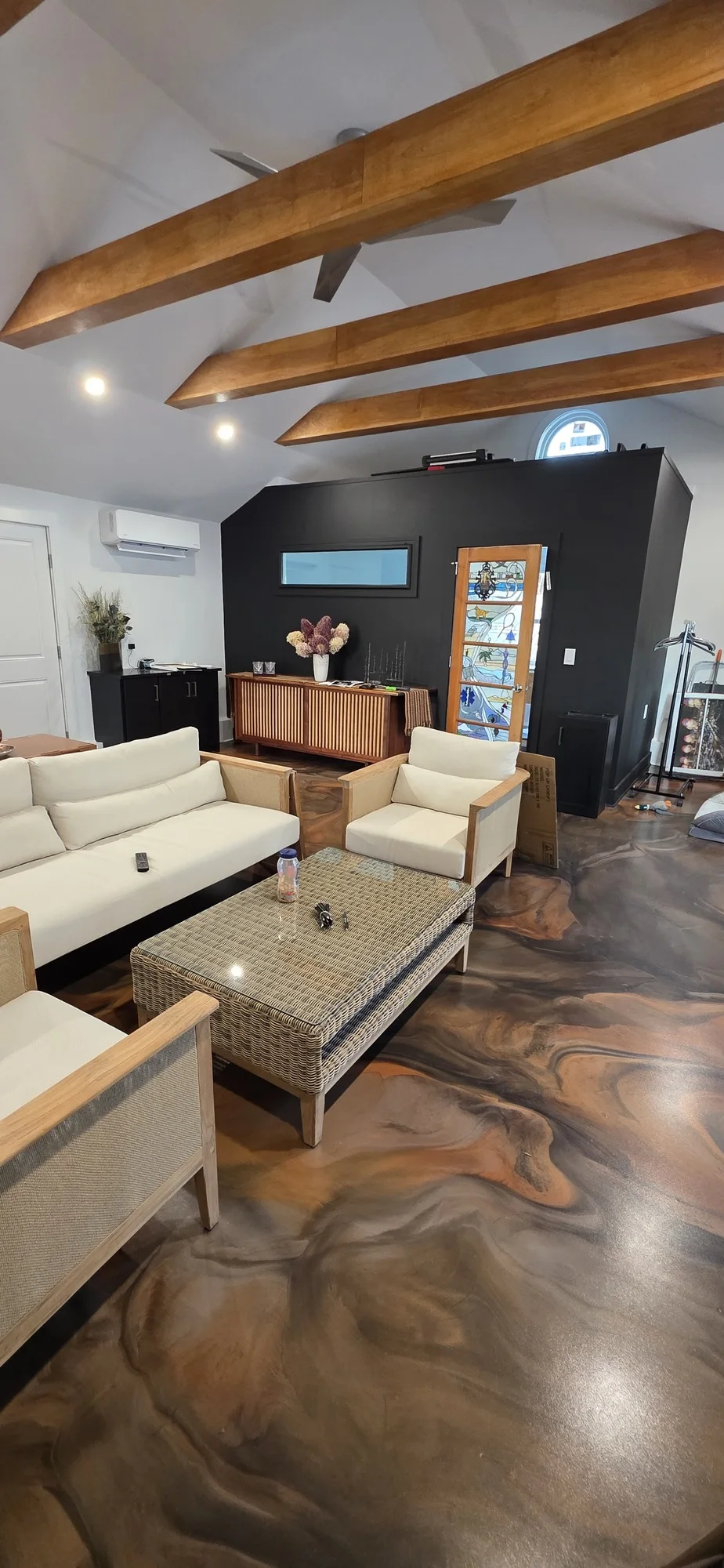
Each resin does something a little different. Epoxy builds thickness, bonds strongly to concrete and is the usual base for color, flake and metallic work. Polyaspartic topcoats tend to hold their color in sunlight and resist scratches. Urethane topcoats are often used where abrasion and cleaning are the main concern. Most installed floors mix them, epoxy in the body and a different resin on top. Danny pours Bulletproof Resins material and puts the system together from what the floor will face. The choice also affects how long the job takes on site.
They do not fit over wood framing, and slabs with moisture or movement need those problems handled first.
Resinous floors fit garages, basements, commercial spaces, back-of-house rooms and many industrial areas. They do not fit over wood framing, and slabs with moisture or movement need those problems handled first. When a project comes with a written specification or a required performance, the system has to be chosen to those requirements and the product data, and Danny reads the spec with you before recommending anything. If a spec calls for a product he does not carry, he will say so. Some resins also suit sunny spaces better than others.
Danny starts with the use and works back to the resin. He walks the space, asks about traffic, spills, cleaning and sunlight, and reads any plans or specs. He checks the slab for moisture and old coatings. Then he lays out a system: primer, body and topcoat, with the resin for each layer named, so you know what you are getting. Questions about the choice are welcome. Install follows the same order as every floor he pours: grinding, repairs, then each layer in its window, and a final walk-through.
Resin is a family of materials. The room decides which members belong on the floor.
From bare slab to finished floor
Resinous floors are often bought from a drawing or a written spec. These stages follow how Danny turns that paperwork into a named system and puts it down layer by layer.
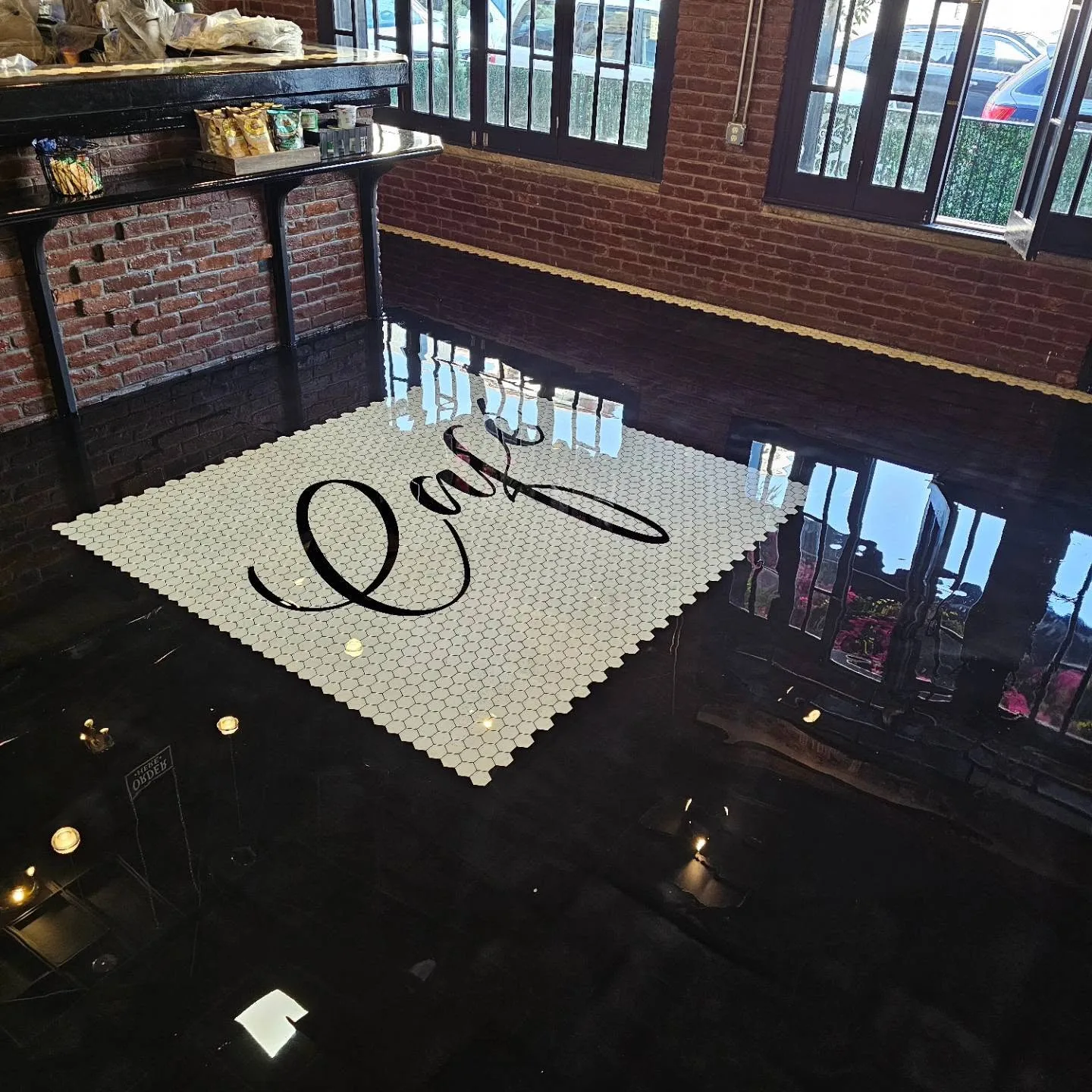

Read the spec and drawings
Where a designer or architect has written a flooring section, Danny reads it first: the resin types named, the finish, any cove or texture, and the conditions the floor must handle. Gaps or vague lines get flagged as questions.

Check the site against it
The slab on site does not always match what the spec assumed. Moisture, old coatings, a smooth hard finish or a lot of cracking can each change which primer works. Those findings go back to you and the designer in writing.

Name every layer
Each layer is written down by resin type and purpose: primer, body coat, any broadcast and topcoat. Product data for the Bulletproof Resins products chosen is shared so anyone on the project can check it against the requirements.
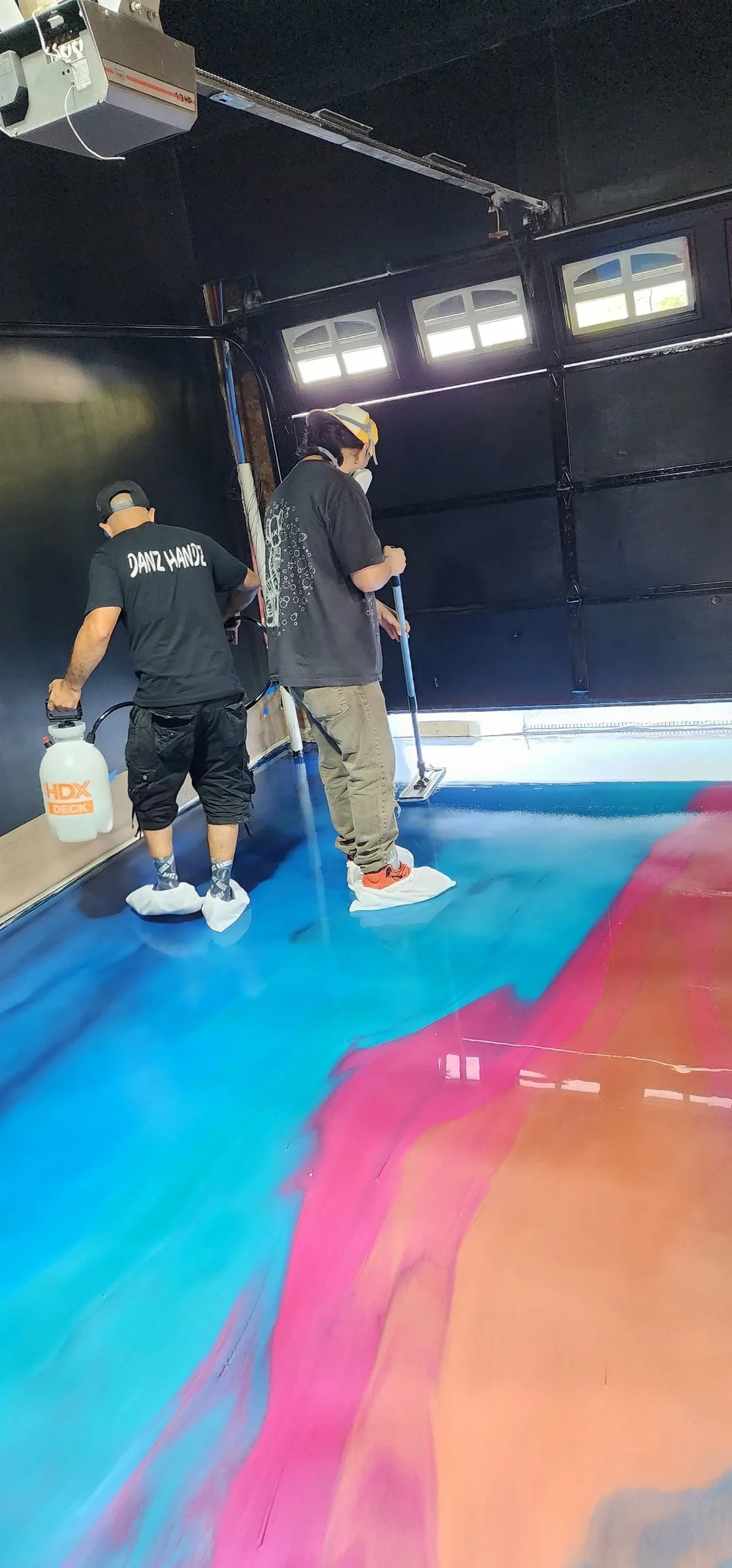
Install to the schedule
Once the system is agreed, the floor is ground and repaired, and each resin goes down in the order and timing its data calls for. Room temperature and humidity are noted each day, since they affect how each resin behaves.
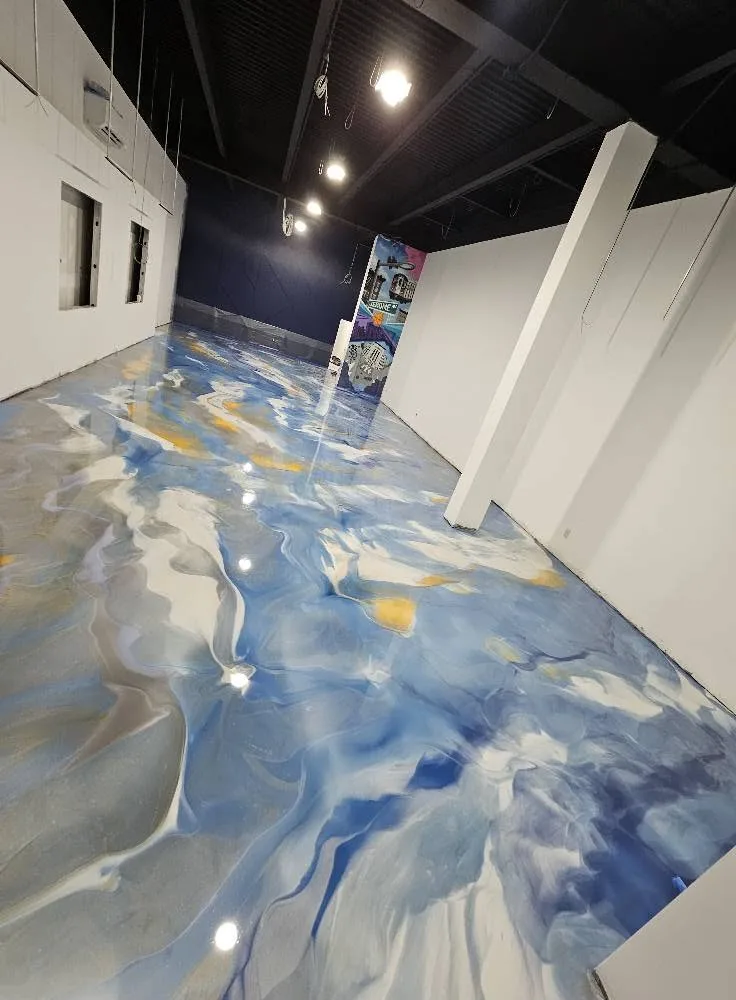
Leave a record of the system
At the final walk, the owner gets a short record of what was installed: each resin, the finish and the care it needs. That record makes future maintenance and any recoat far simpler for whoever handles the floor next.
More of Danny’s floors
Other jobs from the file, not all of them this service. See the gallery





Questions about resinous floor installation
What is the difference between resinous and epoxy flooring?
Epoxy is one kind of resinous floor. Resinous is the broader term and includes polyaspartic, urethane and other poured resin systems. Many floors called epoxy are really a mix, with epoxy underneath and another resin on top. Danny tells you exactly which resins go into your floor and why.
Can you work from an architect’s specification?
Yes. Danny reads the spec, checks it against the slab and the use, and works from the product data for the system it calls for. If something in the spec does not fit the conditions he finds on site, he raises it with you and the designer before install rather than after.
Which resin is best for my floor?
It depends on what the floor faces. A quiet basement might need little more than an epoxy system. A sunny garage may call for a polyaspartic topcoat. A busy commercial room might lean on urethane for wear. Danny makes the call after walking the space and hearing how it gets used.
What paperwork do you provide for a resinous floor?
You get the product data for each resin in the system, the layer order and the care instructions for the finished floor. Some projects also want daily notes on conditions during install, which Danny can keep. Anything required by a specific program or inspector comes from that program’s own list, so share it early.
Do resinous floors need a primer if the spec does not list one?
Almost always. A primer anchors the system into the concrete and seals the surface so the body coat does not lose resin into the pores and develop pinholes. If a spec skips it, Danny raises the question before install, since the bond depends on it and the product data usually calls for one.
Can a resinous floor be matched to finishes elsewhere in the building?
Usually. Colors can be mixed toward a sample, and finish can be matched to a satin or gloss level used elsewhere. A clear system can echo exposed concrete in another area. Matching a floor poured years ago is harder, since materials and aging differ, so Danny brings samples to compare in place.
More from the epoxy section
The core systems: residential, commercial and industrial epoxy, on new slabs and old ones, inside and out.
- Residential Epoxy FlooringEpoxy for the concrete rooms inside a home, from a quiet solid color to a swirled metallic, picked to suit the house and the family.
- Commercial Epoxy FlooringEpoxy for storefronts, showrooms, salons and offices, scheduled around your hours so the floor gets done without closing the doors for long.
- Industrial Epoxy FlooringEpoxy for warehouse, plant and shop floors, laid out in sections around your shifts, with striping built into the coating if you want it.
- Garage Epoxy FlooringGarage epoxy built for hot tires, road salt and dripped oil, ground and coated in layers so it stays bonded under the cars.
- Concrete Epoxy Floor CoatingsEpoxy coatings that start with the slab: moisture checked, old products ground off and cracks repaired so the coating bonds to sound concrete.
The shop is in Cranford. Most jobs are within an hour or so, across four states. See every areaSee the gallery
Danz Handz
Danny Carrero, epoxy specialist
dhepoxy@gmail.com
Cranford, NJ. Mon to Sat, 8 to 6. Hablamos español.
Book a walkthrough
Send a few lines about the room and the look you want. Danny will call and set up a time to see it.