
Coatings for floors that get dragged, rolled and scraped
Abrasion is the slow grinding a floor takes from grit, wheels, dragged pallets and boots. It shows first as thin, dull paths, and on a loading dock, in a school hallway or across a busy garage, Danny follows those paths to see how much wear the new system has to absorb.

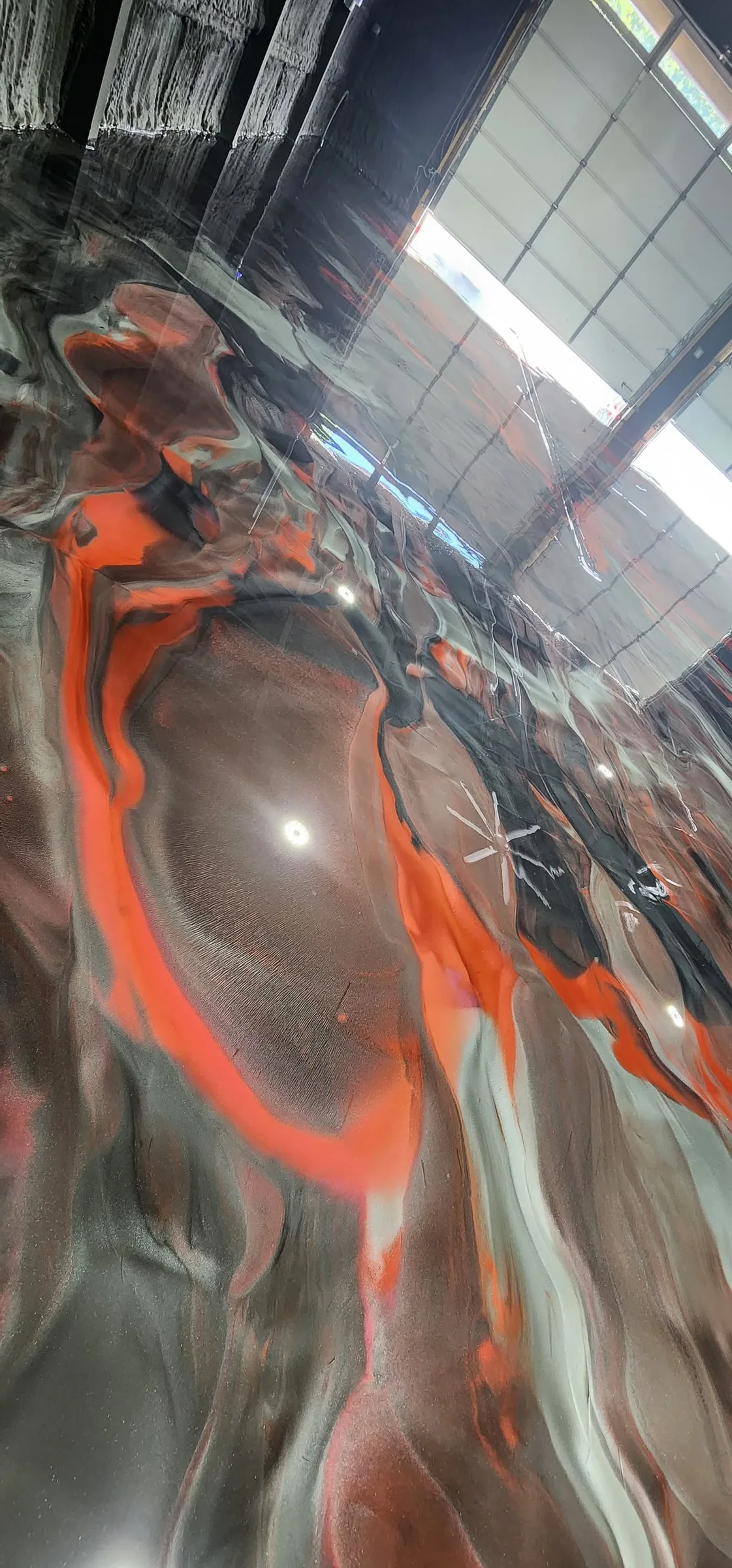
What abrasion-resistant floor coatings really involves
Wear resistance comes from a few places. A harder topcoat, often a urethane or polyaspartic, takes scratching better than a bare epoxy surface. Aggregate like quartz or aluminum oxide broadcast into the system puts hard particles at the surface, so grit wears on them instead of the resin. Thicker builds give traffic more to wear through. The right mix depends on what does the wearing: steel wheels, rubber tires, dragged metal or sand tracked in on boots. Each product’s data shows how it performs, and the system is chosen to that.
Danny looks at the space, what crosses it, how heavy it is and what gets spilled before choosing the system.
Loading docks, shop floors, warehouse aisles, school hallways, gyms with free weights and garages where gravel and road sand come in on tires all wear floors this way. Added aggregate makes a floor rougher, which helps footing and makes cleaning a little slower. Some wear will still show. Paths and turns dull before the rest of the floor, and a topcoat is meant to be renewed before wear reaches the base. Danny looks at the space, what crosses it, how heavy it is and what gets spilled before choosing the system.
Danny reads the wear already on the floor: polished lanes, scuffed turns, gouges at doors and drop zones. He asks what does the wearing, what kind of wheels and how often. The slab is diamond ground and repaired, with extra attention to joints, since chipped joint edges wear fast under wheels. The base goes down, aggregate is broadcast where the system calls for it, the loose material is removed after cure, and the wear-resistant top is applied. In the heaviest paths he may build extra coats. The final walk covers the routes that take the most traffic.
The old floor already shows where the new one will wear first.
The order the work goes in
Abrasion jobs follow the grit, starting with what wears the floor down and ending with a plan to renew the top before the wear goes deeper.
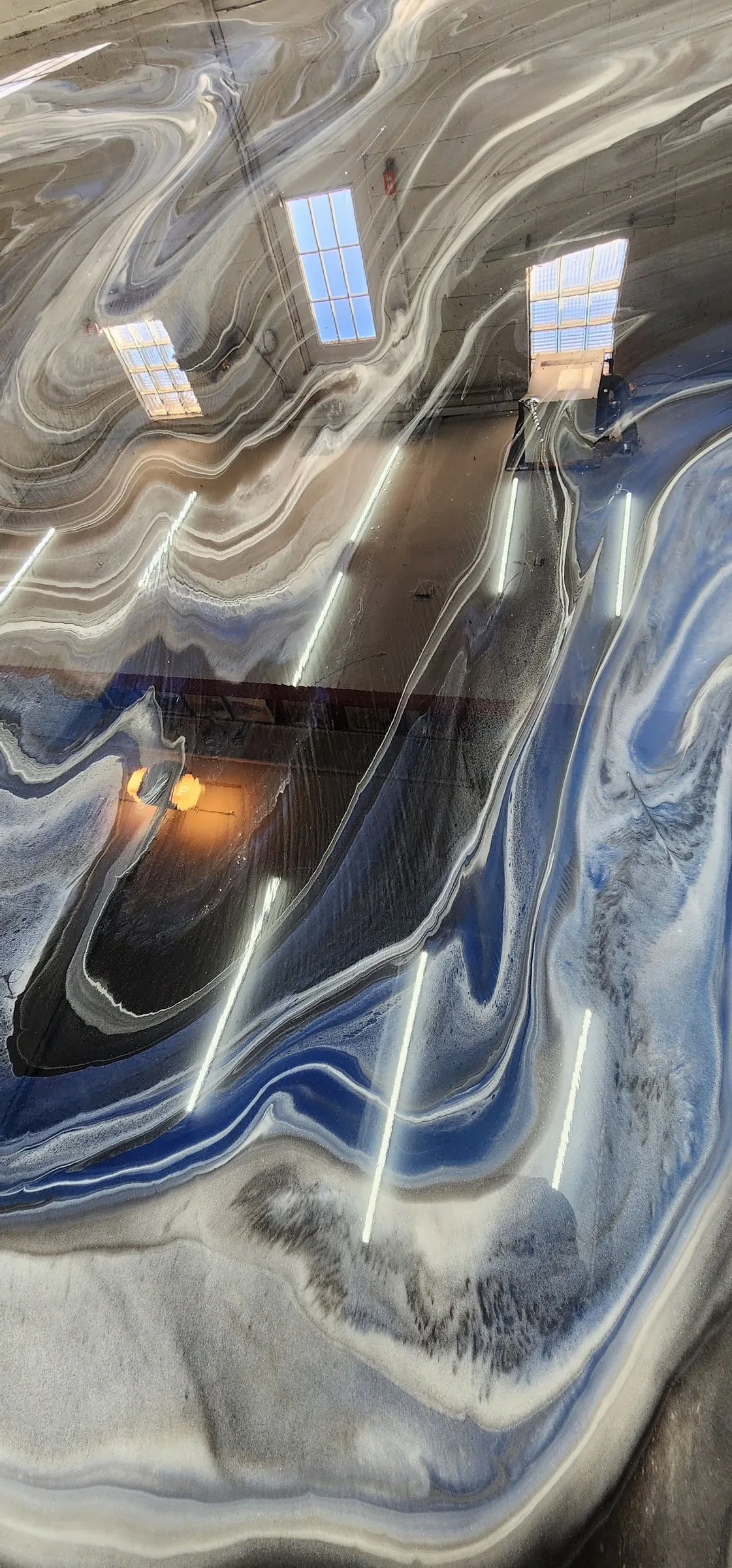

Identifying the abrasive
Danny figures out what actually does the grinding: road sand on tires, metal shavings, dragged pallets, steel casters or grit on boots. Each one wears a floor differently, so he names the main culprit before choosing materials.

Fixing joint edges and entries
After grinding, chipped joint edges are rebuilt square and worn entry zones are patched, since those are where wheels catch and wear speeds up. The slab ends up sound and even before the coating system starts.

Choosing aggregate and top
Danny picks a hard topcoat and, where needed, an aggregate such as quartz or aluminum oxide from the product data, matched to the abrasive he identified. Fine aggregate suits foot traffic, and coarser grades take heavier wear.

Extra build in the lanes
Heavily used paths, turns and doorways receive additional coats so they have more material to wear through. The extra build is feathered into the rest of the floor so the surface stays even underfoot and under wheels.

Setting a recoat baseline
At handoff, Danny shows the owner what the fresh top looks like in the busiest lanes. When those lanes start to look duller than the rest of the floor, it is time to renew the top before wear reaches the color or base.
More of Danny’s floors
Other jobs from the file, not all of them this service. See the gallery








Questions about abrasion-resistant floor coatings
What makes a coating abrasion resistant?
Hardness at the surface, hard aggregate in the system and enough thickness to wear through slowly. A urethane or polyaspartic top resists scratching better than plain epoxy. Quartz or aluminum oxide in the coating takes the grinding from grit. Danny combines those based on what wears your floor, and the product data shows how each performs.
Will the floor still scratch?
Any floor scratches under enough grit and weight. A wear-resistant system scratches less and shows it less, especially in satin or with aggregate, and the scratches stay in the topcoat. Gloss shows fine scratches most. When paths start to dull, the topcoat can be renewed so the wear stays in the top layer.
Is this the same as anti-slip flooring?
They overlap. Hard aggregate added for wear also roughens the surface and improves grip. Anti-slip systems are built mainly for footing, sometimes with softer or finer texture. If your floor needs both, as many shop and dock floors do, Danny can build a system that handles wear and footing together.
Do walk-off mats really make a difference?
They do. Most grit enters on shoes and tires, and a good mat at each entrance catches much of it before it reaches the floor. Mats need regular cleaning or replacing, or they start shedding the dirt they trapped. Pairing mats with daily sweeping slows wear across the whole floor more than any single coating choice can.
Will an abrasion-resistant floor still look good?
It can. Hard tops and aggregate come in many colors, and flake or quartz broadcasts add pattern while helping with wear. A satin top hides fine scratches better than gloss. The look is chosen along with the materials, so the floor can suit a school hall or a customer-facing shop as well as a dock.
Do steel wheels need a different floor than rubber tires?
Often, yes. Hard steel or nylon wheels concentrate weight on a small contact area and grind grit into the surface, which wears a floor faster than soft rubber. Floors with steel-wheeled carts usually get a harder top, more aggregate or a thicker build in the paths. Danny asks about the wheels during the walk, since they shape the system.
Close to this one
Polyaspartic, polyurea, urethane cement, self-leveling and fast-cure systems, picked to fit the room and the schedule.
- Anti-Slip Resin Floor SystemsResin floors with texture built into the topcoat or broadcast, set per room so wet, greasy and busy floors give better footing.
- Conductive Resin FlooringGrounded resin floor systems that carry static charge away in rooms where sparks are a hazard, installed to the facility’s written spec.
- Static-Dissipative FlooringFloor systems that drain static from people and carts at a controlled rate, protecting electronics, labs and equipment rooms, built to spec.
- ESD Flooring SystemsConductive or static-dissipative floors chosen from the facility’s ESD standard, grounded with the electrician and installed to the product data.
- Decorative Quartz FlooringColored quartz blends, borders and bands for lobbies, restrooms and halls that want some design in a floor built for heavy cleaning.
Cranford is home base. Danny covers 33 counties in New Jersey, New York, Pennsylvania and Connecticut. See every areaSee the gallery
Danz Handz
Danny Carrero, epoxy specialist
dhepoxy@gmail.com
Cranford, NJ. Mon to Sat, 8 to 6. Hablamos español.
Start with a visit
Describe the floor and what you have in mind. Danny calls back and comes out to look at it.