
Fixing cracks that run through an epoxy floor
Almost every crack in an epoxy floor starts in the concrete underneath. The slab shrinks or moves with the seasons and the coating splits right along with it, which is why caulk over the line rarely lasts. Danny looks at whether the crack is still moving before he decides how to fill it and blend the repair into the floor around it.


The short version of cracked epoxy flooring repair
Cracked floor repair means opening the crack, cleaning it out to sound concrete, filling it with a repair material, and recoating over the fill so the line disappears into the floor around it. The trick is telling a crack that has stopped moving from one that is still active. A settled shrinkage crack can be filled and coated over. A crack that opens and closes through the year behaves more like a joint, and coating straight over it usually brings the line right back.
It fits floors where the coating is still bonded on either side of the crack and the slab is otherwise sound.
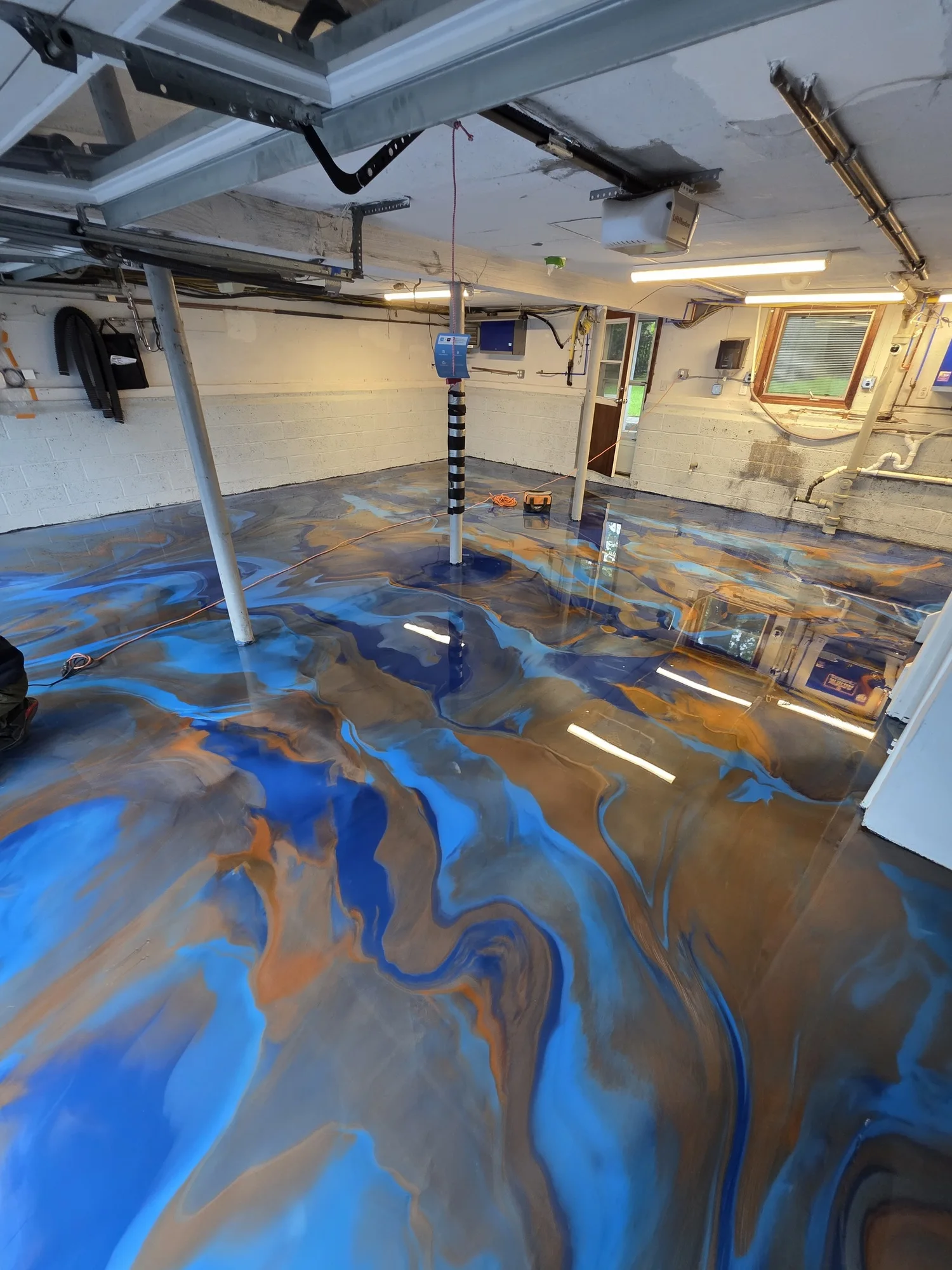
It fits floors where the coating is still bonded on either side of the crack and the slab is otherwise sound. Matching is the honest limit. A flake floor hides a repair well, because new flake can be broadcast into the patch, and a solid color can be matched closely. A metallic floor has movement in it that cannot be copied in one strip, so on a metallic the repair often means recoating the whole section. A slab that is heaving or sinking is a structural question for someone else first.
Danny starts by walking the floor and following each crack end to end. He looks at whether the edges sit level, whether the coating beside the crack is lifting, and whether the line lines up with a saw cut or a doorway where the slab naturally moves. Then the crack gets ground open and cleaned, the coating along its edges is ground back to where it is firmly bonded, and the repair goes in. A crack that is still active may be turned into a joint and filled with a flexible material. The area is recoated to match, left to cure, and Danny walks it again with you before the room goes back into use.
Most epoxy cracks are concrete cracks that came up through the coating.
How the work runs
Crack work on a coated floor turns on one question, whether the slab under the line has stopped moving, and each stage below answers part of it before anything gets filled.
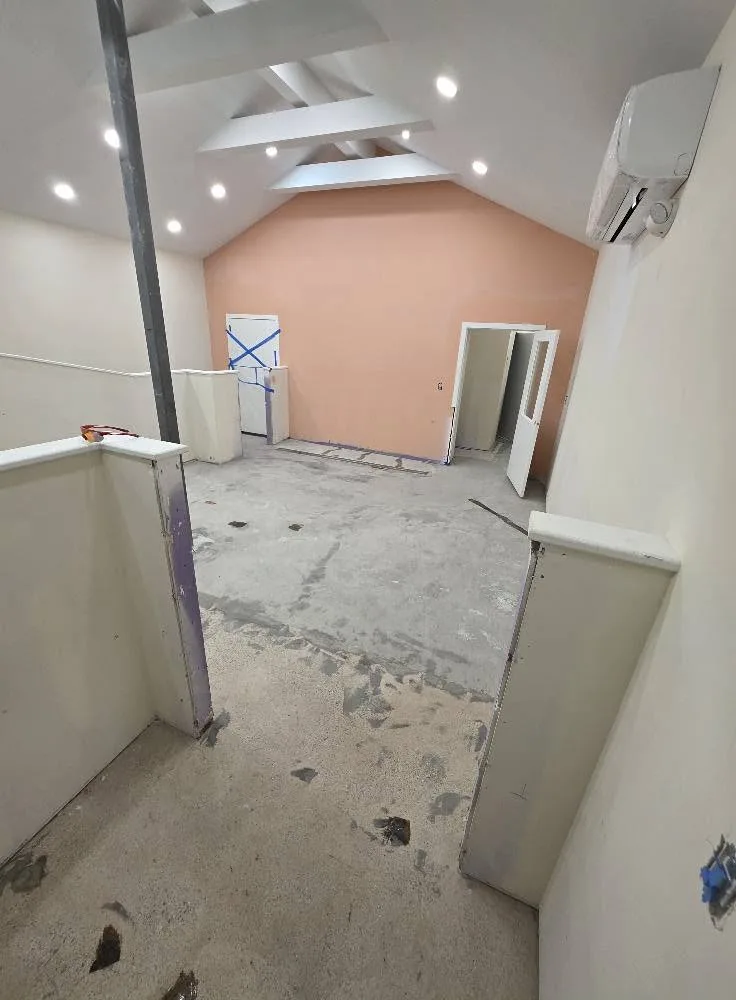
Tracing each line to its source
Danny follows every crack from one end to the other and notes where it starts: a column base, an inside corner, a drain, a saw cut that was never cut deep enough. Where a crack begins usually says why it formed and whether more will follow it.

Pencil marks at the tips
Where the owner can wait, Danny marks the ends of a crack in pencil with the date and asks the owner to check them over the following weeks. A crack that runs past its marks is still active, and that changes the repair from a fill to a joint.

Grinding back the lifted edges
Coating along a crack often curls up slightly where the slab split beneath it. Those edges are ground back until the coating on both sides sits tight to the concrete, and the crack itself is opened into a clean channel so the fill has solid walls to hold.

Rigid fill or flexible joint
A crack that has gone quiet gets a rigid filler, pressed in and ground flat. One that is still moving is cut straight and treated as a joint with a flexible filler, so the slab has a planned place to move instead of tearing the new coating along the old line.

Recoating across the scar
The repaired strip gets color, flake or a matched base and then a topcoat carried past the edges of the grind. After the cure, Danny and the owner look down the length of the old crack from standing height and from a low angle to judge how well the line has disappeared.
More of Danny’s floors
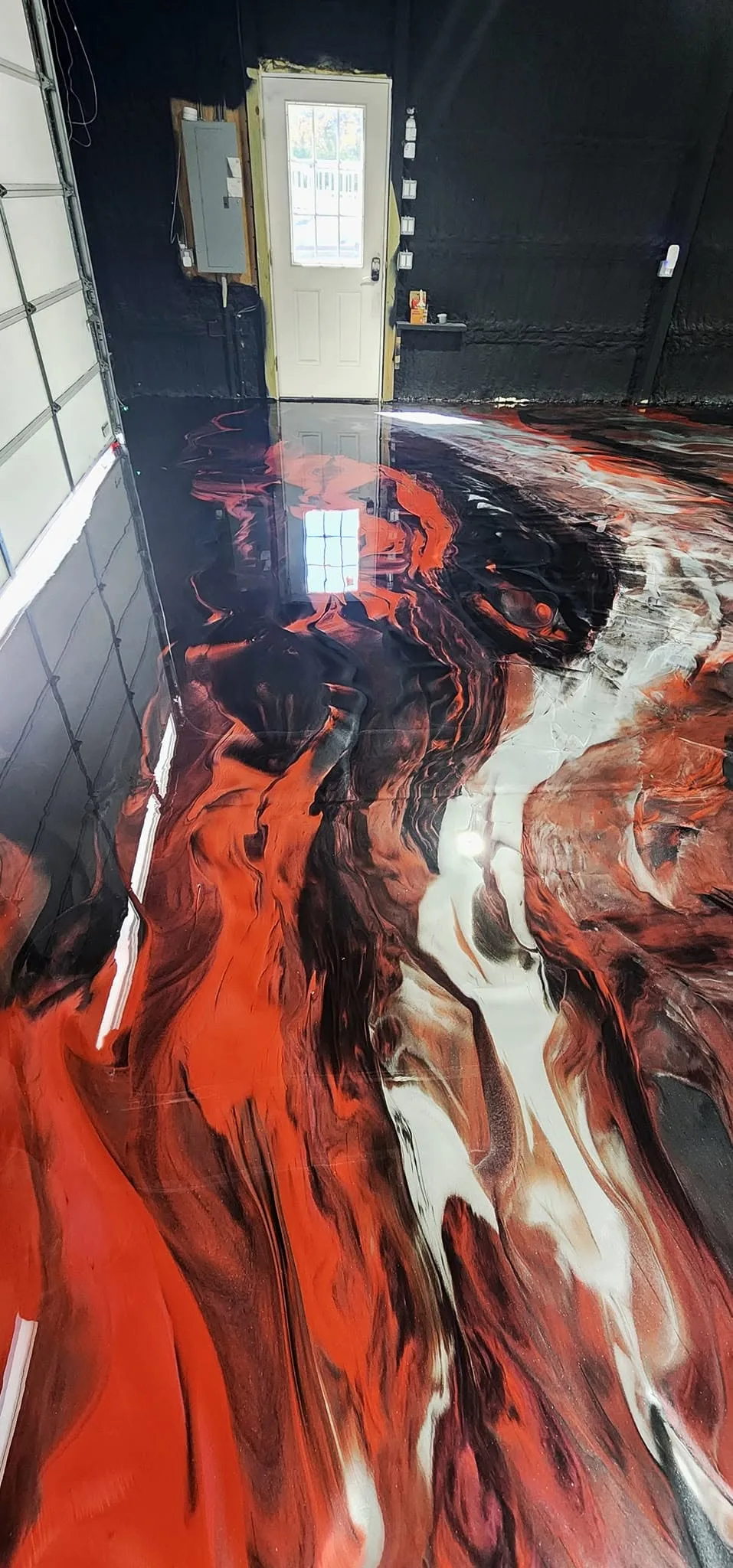
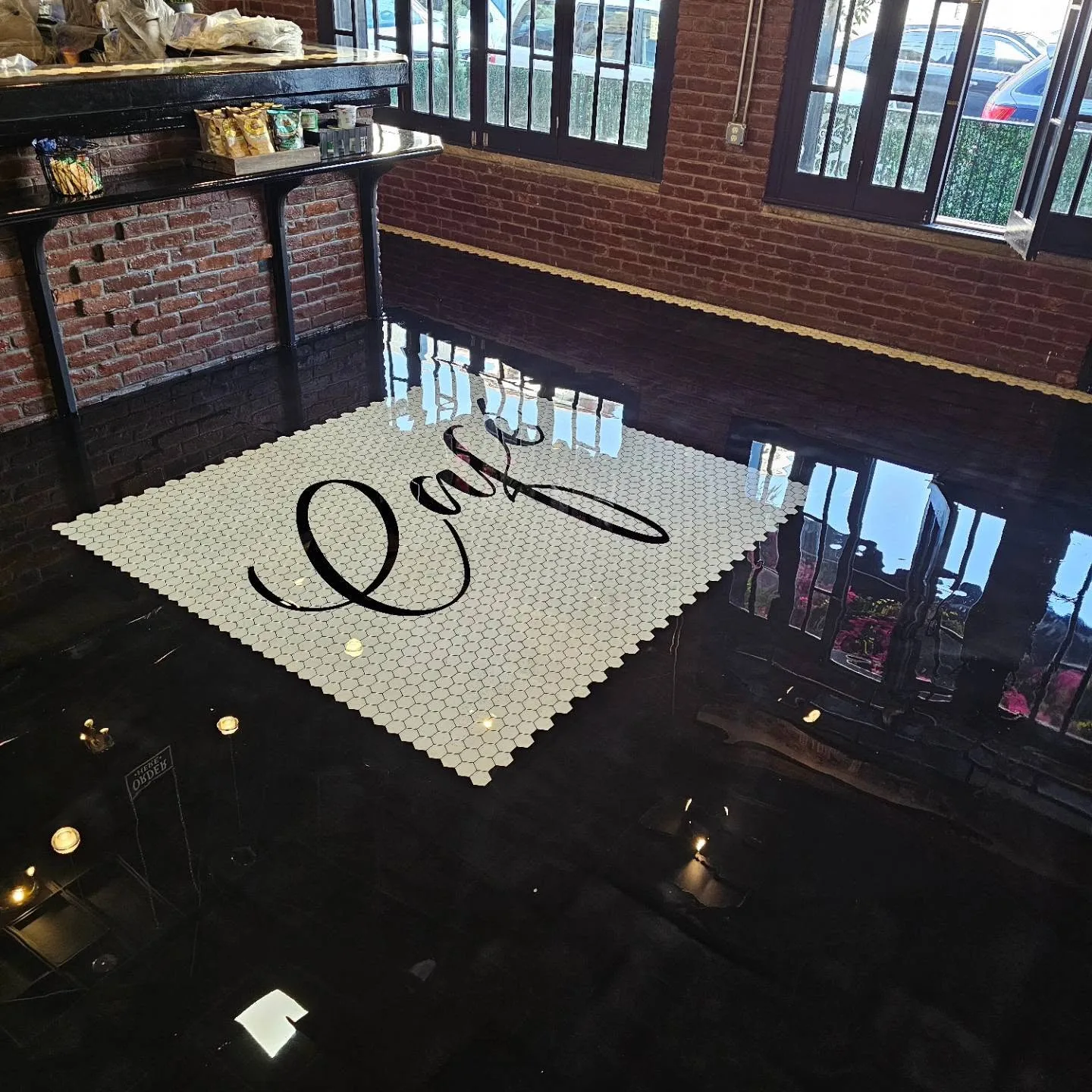
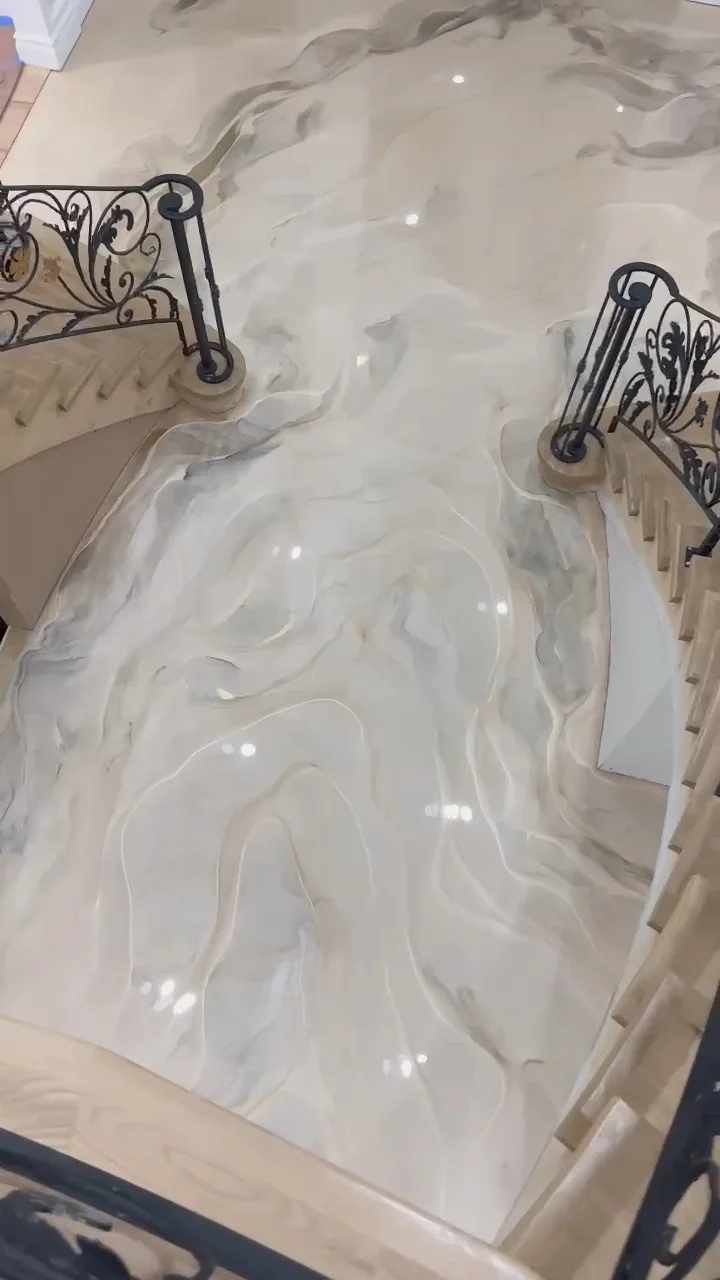
Other jobs from the file, not all of them this service. See the gallery




Questions about cracked epoxy flooring repair
Will the crack come back after it is repaired?
A crack in concrete that has finished moving usually stays closed once it is filled and coated. One that is still opening with the seasons can come back as a fine line, which is why Danny may turn it into a joint instead of hiding it. He tells you which kind he thinks you have after looking at it.
Can you repair a crack without redoing the whole floor?
Usually, yes, on flake and solid color floors. The repair is ground out, filled and recoated along a strip, and new flake or matched color ties it in. On a metallic, the pattern makes a strip repair stand out, so Danny will talk through recoating the section between joints, or the whole floor if the look matters most.
What if the floor on one side of the crack is higher than the other?
That points to the slab settling or lifting, and filling the crack will not change it. Danny can grind and level a small lip during the repair. A step that keeps growing, or a slab that rocks underfoot, is a structural concern, and the owner should have a concrete or foundation contractor look at it before any coating work.
Why did a crack show up in my epoxy floor when the concrete looked fine before?
Many slabs carry hairline shrinkage cracks too fine to notice until a glossy coating sits over them, and some cracks form later as the slab dries, cools or settles. The coating simply makes the line easier to see. Danny checks whether a crack predates the floor by looking at its edges and at any filler from the original install.
Should I fill a crack myself to keep water out until the repair?
A strip of painter’s tape over the crack keeps grit and mop water out without leaving anything inside it. Store-bought fillers often stay soft or sit on top, and they have to be dug out before a real repair can bond. Leaving the crack open also lets Danny see how it has been behaving.
Can a crack repair be timed with a full recoat of the floor?
Yes, and it often looks better that way. Cracks are opened, filled and ground first, then the whole floor is sanded and recoated in one pass, so the repaired strips and the rest of the surface share the same fresh topcoat. On a metallic floor, this is usually the route Danny suggests from the start.
Next to this on the list
Peeling, bubbling, chipped or faded coatings, patched or recoated, plus upkeep plans for floors that work hard.
- Delaminating Coating RepairPeeling and lifting coatings removed back to sound bond, the cause tracked down, and the slab ground and recoated so the failure does not repeat.
- Discolored Epoxy Floor RepairYellowed, tire-marked or stained epoxy floors cleaned, sanded and recoated, with the topcoat chosen around how much sun the room actually gets.
- Worn Epoxy Floor RecoatingWorn epoxy floors sanded and recoated across the whole room, bringing tired traffic lanes back even with the rest of the floor.
- Damaged Garage Floor Coating RepairGarage coatings damaged by hot tires, salt, oil and dropped tools repaired and recoated as one finish, or removed when the old kit is failing.
- Concrete Coating Touch-UpsSmall scuffs, nicks and dropped-tool marks on an otherwise sound coated floor, matched and blended so they stop catching the eye.
The shop is in Cranford. Most jobs are within an hour or so, across four states. See every areaSee the gallery
Danz Handz
Danny Carrero, epoxy specialist
dhepoxy@gmail.com
Cranford, NJ. Mon to Sat, 8 to 6. Hablamos español.
Start with a visit
A short note about the space is enough. Danny calls back and books a walkthrough.