
Giving a concrete driveway a coated, finished surface
The driveway is the biggest slab most homeowners own, and it spends every winter under tires and road salt. It often comes up right after the garage floor gets coated, when the blotchy concrete leading up to it suddenly looks worse, and Danny is upfront about which outdoor systems a driveway can carry.


What residential driveway coatings really involves
A driveway coating is an outdoor system with texture, built to take vehicle traffic on a slab exposed to every season. The concrete is ground, cracks are repaired, and a base coat goes down with a broadcast that gives tires and shoes grip. A topcoat chosen for sun and weather seals it. Some owners want a finish that ties into a coated garage floor, and others want the driveway to look like clean, even concrete again. Both are possible with the right color choice.
Concrete with heaved panels or deep salt spalling needs concrete repair first, and sometimes replacement makes more sense.
Driveways are the hardest outdoor slab to coat, and not every one is a good candidate. Asphalt is outside this work entirely. Concrete with heaved panels or deep salt spalling needs concrete repair first, and sometimes replacement makes more sense. Long driveways also take careful scheduling, since the whole slab has to stay off limits to cars while it cures. Danny will be straight with you about whether a coating is worth doing on your slab, and he will say so if it is not.
Danny starts with the condition of the concrete, panel by panel, and where your cars actually park and turn. He maps the cracks and the low places where water sits. Prep is grinding and repair, then a thorough clean, since a driveway carries years of tire residue and oil. The work is scheduled around a dry forecast and around getting your cars parked elsewhere. Coats go down in sections that make sense for the slab, and the driveway reopens to cars only once it has cured enough. He walks the finished surface with you before the cars come back.
Every car turns in the same spots on a driveway, and that is where wear shows first.
How the work runs
A driveway is the largest slab most homeowners coat and the hardest one to keep cars off, so this job is planned around the forecast, the panels and where everyone parks for a while.
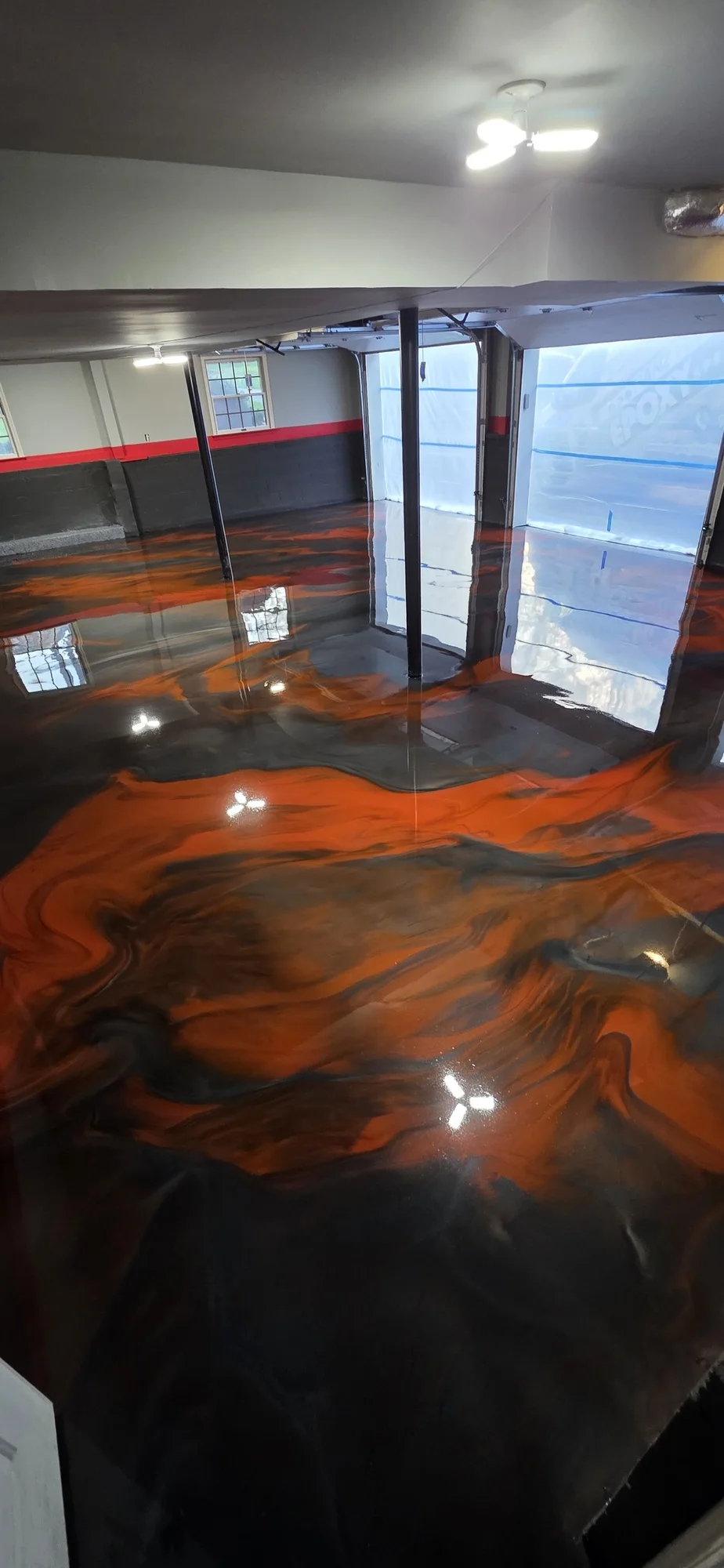

Check every panel for heave
Danny walks the driveway panel by panel, looking for lifted edges, sunken sections and salt damage near the street. He notes where cars turn and park, because tire scrub concentrates wear there. Panels that need concrete replacement get flagged before anything else is planned.

Scrub out tire and oil residue
Driveways carry years of tire film, oil drips and fertilizer stains. Those are degreased and cleaned before the grinder goes on, and the worst spots get extra passes so the primer reaches clean concrete from the garage door to the curb.

Fill cracks and keep the joints
Cracks are routed out and filled, and pitted salt damage is patched level. Control joints stay open so the slab can keep moving with the seasons, and their edges are rebuilt where they have chipped so the coating can stop cleanly along them.

Coat in sections on a dry stretch
The base and a broadcast for tire and shoe grip go down in sections that follow the joints, so each part gets an even coat. The top is picked from the product data for an exterior slab that takes full sun, road salt and vehicle traffic.
Open it to cars last
Foot traffic comes back first, and cars return only after the coating has cured enough to take hot tires. Danny walks the finished driveway with the owner, points out the joints left open and explains how to treat it after the first snow.
More of Danny’s floors
Other jobs from the file, not all of them this service. See the gallery







Questions about residential driveway coatings
Can you coat an asphalt driveway?
No. The coatings Danny installs bond to concrete, and asphalt is a different material that moves and softens in heat. Asphalt driveways are sealed by paving companies with their own products. If you have a concrete apron at the garage door and asphalt beyond it, the concrete part can be coated on its own.
Will tires mark a coated driveway?
Tires can leave marks on many coatings, especially when a hot tire sits on a fresh surface. That is one reason the topcoat and the cure schedule matter so much on a driveway. Danny chooses the system with vehicle traffic in mind and tells you when cars can return. Light tire marks usually clean up with a degreaser.
Should I coat the driveway or replace it?
It depends on what is wrong with it. A stained, dull driveway that is still flat and solid is a good coating candidate. One with sunken panels or crumbling sections needs concrete work first, and a coating will not hide those problems for long. Danny will look at it in person and give you a straight answer.
Can the driveway be done in two halves so one car can still get out?
On a wide driveway, sometimes. Danny can split the work along a control joint, coat one side while a car uses the other and then switch. It takes longer and leaves a line where the halves meet, which sits along the joint so it reads as part of the slab. Narrow driveways usually have to be done in one go.
Should the garage floor and the driveway be coated at the same time?
Doing both together lets the colors and the edge at the garage door be planned as one job, and it saves a second setup. The two usually get different systems, since the driveway needs more texture and an exterior top. If the garage is already coated, Danny matches the driveway blend to it as closely as the outdoor materials allow.
How does the coating meet the street or the sidewalk?
The coating stops at the edge of your concrete, usually at the joint where the apron meets the public sidewalk or the street. The town often controls the sidewalk and apron, so check before including them. Danny finishes the stop line cleanly and keeps that edge rebuilt and sealed, since it is where plows and tires hit first.
Next to this on the list
Garages, basements, laundry rooms, mudrooms, home gyms and porches, each floor laid out for how the room gets used.
- Pool Deck Coating SystemsTextured coatings for concrete pool decks, with grip set for bare feet and a topcoat chosen for sun and splashing pool water.
- Outdoor Entertainment Area CoatingsOutdoor coatings for grilling, bar and seating areas, with zones laid out by use and grease ground out before the pour.
- Concrete Walkway CoatingsTextured coatings for front walks and garden paths, with rebuilt edges and colors that can match a coated porch or driveway.
- Residential Epoxy Floor RestorationRestoring older epoxy floors that still bond to the slab, with chip repair, a fresh topcoat and the option to change color.
- Decorative Epoxy Floors for Modern HomesOne of one metallic and decorative epoxy floors for modern interiors, poured by hand from your references and finished in the sheen you choose.
Jobs run about 60 miles out from the Cranford shop, from the Jersey shore and the Poconos to Long Island and Fairfield County. See every areaSee the galleryRead: What Road Salt Does to a Garage Floor, and How a Coating Helps
Danz Handz
Danny Carrero, epoxy specialist
dhepoxy@gmail.com
Cranford, NJ. Mon to Sat, 8 to 6. Hablamos español.
Start with a visit
A short note about the space is enough. Danny calls back and books a walkthrough.