
Getting a concrete slab clean and ready for a coating
Oil, old paint, glue, sealer and ground-in dirt all stand between a slab and a new floor. Prep is the part of the job that gets the concrete down to clean, open material a coating can bond to, and everything poured later sits on how well it was done.
Concrete Floor Cleaning and Preparation, start to finish
Preparation means diamond grinding the surface, clearing off whatever is sitting on it, and fixing the damage that turns up once the slab is bare. Grinding takes off the top skin of the concrete along with old sealers and coatings, leaving a rough, clean face. Oil spots get extra attention, because oil soaked deep into concrete can keep a coating from sticking. Cracks, pits and chipped joints get filled and leveled. When the dust is cleared away, the slab is ready for the pour.
Cracks and pits are repaired and leveled once he can see them clearly, and the slab gets cleaned of dust before anything is poured.
Prep is where most failed floors went wrong. A coating rolled over a slab that was only swept or acid washed can look fine for a while and then let go in sheets. Grinding avoids most of that. It has limits, though. Grinding removes what sits on and in the surface, but moisture coming up from under the slab is a separate issue, and so is a slab that is cracking from movement. If either shows up, the owner arranges testing or a concrete contractor before the coating goes down.
Danny walks the slab first and figures out what he is grinding through: bare concrete, old paint, epoxy, tile glue or sealer. That decides how many passes the floor needs. He grinds the whole surface, edges included, so there is no slick band left along the walls. Oil-stained areas get ground deeper. Cracks and pits are repaired and leveled once he can see them clearly, and the slab gets cleaned of dust before anything is poured. From there the job moves into the pour and the cure, and the final walk happens once the new floor is done.
A coating is only as good as the concrete it is stuck to.
The order the work goes in
Prep takes more hours than any other part of most coated floors, and each pass has its own job. Here is how a slab goes from contaminated to ready for primer.

Finding out what is on it
Before any machine starts, Danny scrapes a few test spots, drips water in several places and notes where it beads. Beading usually means sealer, paint or oil, and each of those changes the tooling, the number of passes and how long the prep will run.

Pulling oil before it spreads
Oil spots get scrubbed with a degreaser and cleaned out ahead of the grind, so the machine does not smear residue across clean concrete. Spots that keep darkening after cleaning are marked for deeper grinding or, in bad cases, a cut-out patch.

Coarse to fine across the slab
The first passes use coarse diamonds to break through coatings and glue, and finer ones follow to even out the scratch pattern. Edge grinders work the strip along the walls and around posts so the perimeter matches the open floor.
Filling what the grind uncovers
A bare slab shows damage that a stained one hid: pits, chipped joint edges and cracks that ran under old paint. Each is filled and ground flush so the surface is flat and sound from wall to wall before any coating is mixed.
Vacuuming down to clean concrete
Dust left in the pores keeps a coating from bonding, so the floor is vacuumed thoroughly, joints and corners included. Danny then checks the whole slab by eye and with water once more, and the floor is ready for the primer and the pour.
More of Danny’s floors
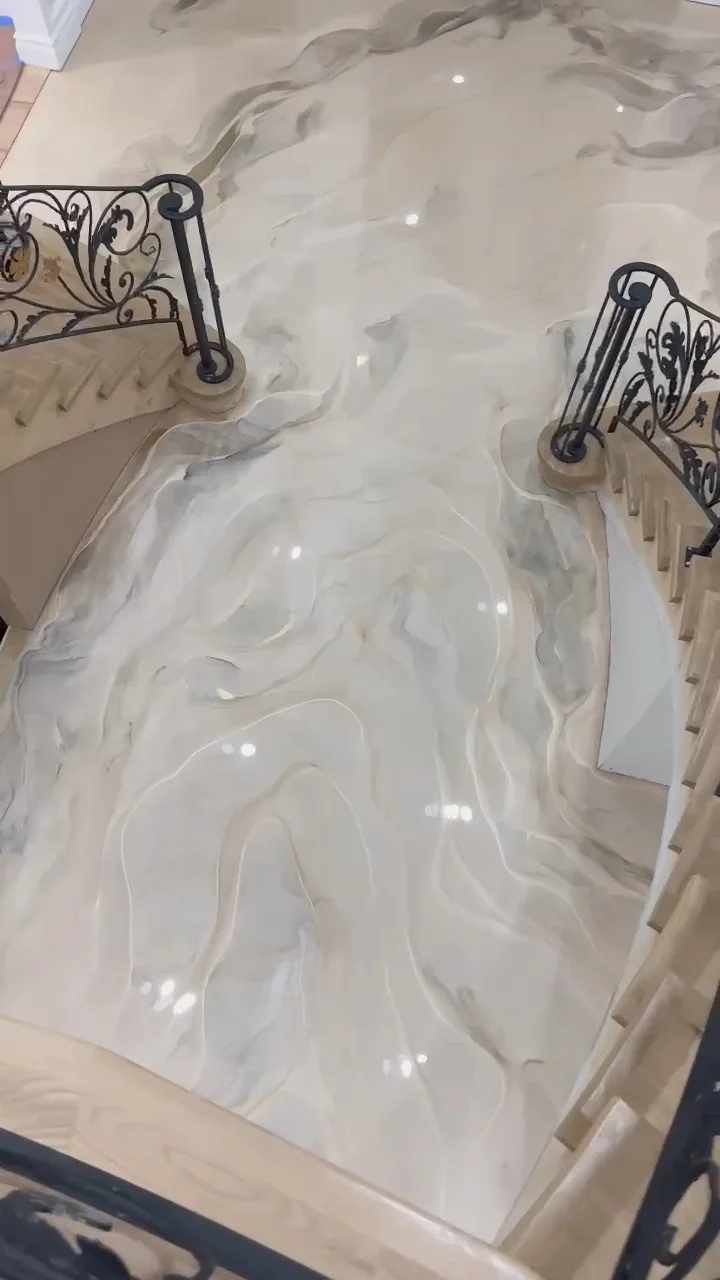
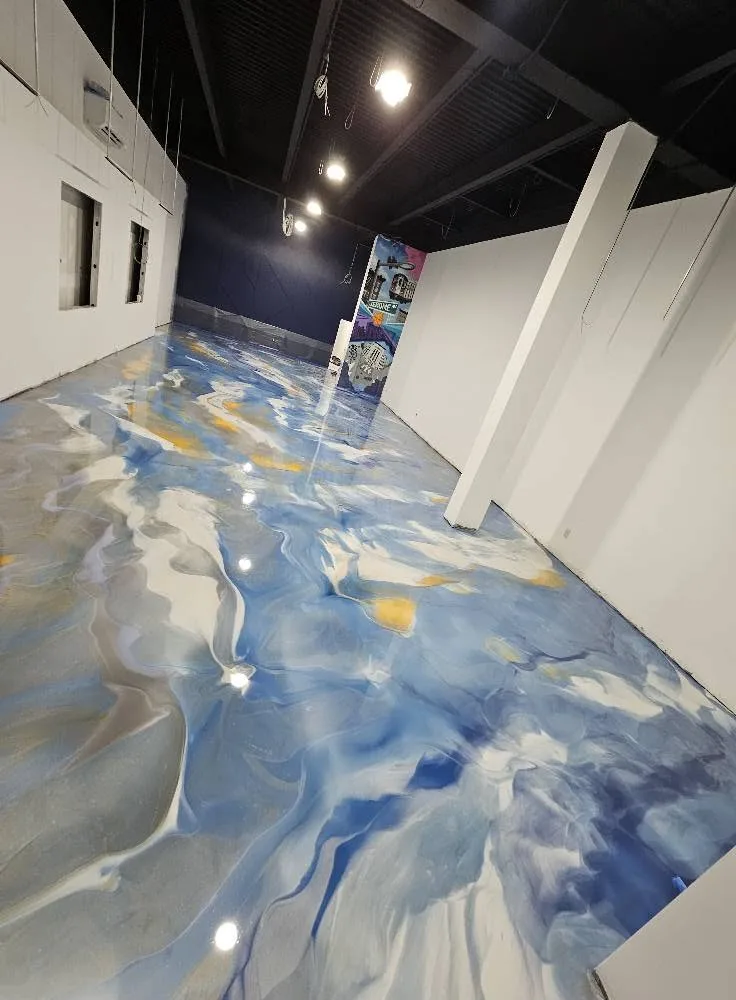
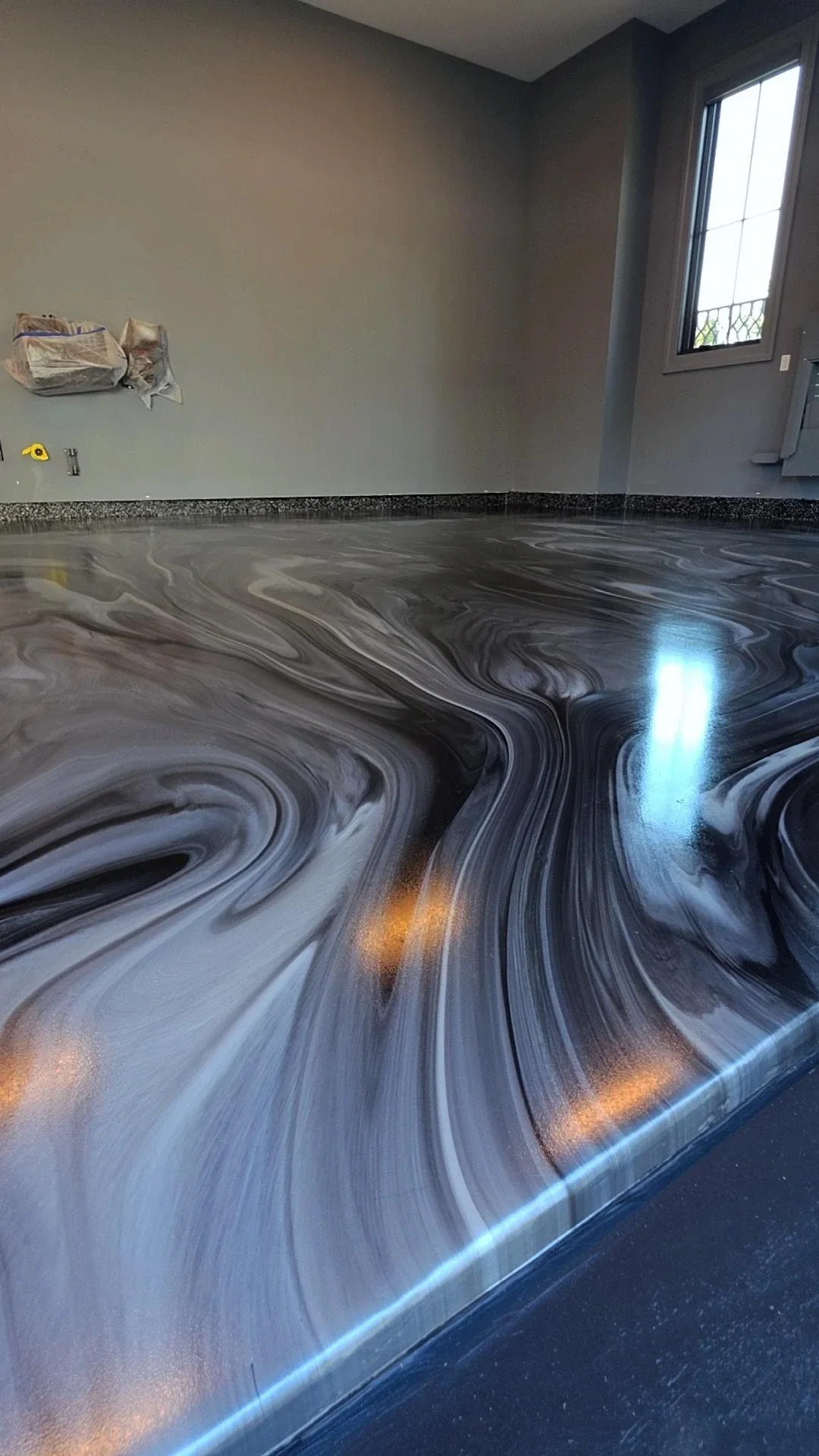
Other jobs from the file, not all of them this service. See the gallery





Questions about concrete floor cleaning and preparation
Why grind instead of acid etching?
Acid etching cleans the surface but does not take off old sealers or coatings, and it leaves residue that has to be rinsed out of the concrete. Grinding removes the top layer mechanically and gives a consistent texture across the whole floor. That consistency is what lets a coating bond the same way from one wall to the other.
Can you get old paint and epoxy off my floor first?
Yes. Old paint, worn epoxy and many sealers come off in the grind, though thick or stubborn coatings take extra passes. Danny looks at what is there during the walk and plans the prep around it. Removing the old layer is simply the first part of the job, before any repairs or the new pour.
Do you prep floors and leave them bare?
Prep is part of every floor Danny pours, and that is how he does it. Grinding a slab and leaving it bare for a long stretch lets dirt and oil settle back into the open concrete, which means cleaning it again later. If you are planning a coating, schedule the prep and the pour together.
Does grinding make a mess of the rest of the house?
The grinders run with vacuums attached, which catch most of the dust at the machine. Some fine dust still drifts, especially from a basement or an attached garage, so doors to living space get closed and covered. Danny asks where the dust could travel on the walk and plans the containment before the first pass.
Why does my floor look rough after prep?
That roughness is the point. A coating holds by gripping the open texture the diamonds leave behind, and a smooth, sealed surface gives it little to hold. The scratches fill in completely once the primer and base coats go down, so none of that texture shows in the finished floor.
What if the old coating turns out thicker than expected?
It happens, especially when several layers were put down over the years by different owners. Thick or stubborn layers need extra passes or coarser tooling, which adds time to the prep. Danny tells the owner as soon as the grind shows it, so the schedule can shift ahead of the pour date instead of on it.
Close to this one
Sealing, densifying, polishing and waterproofing for the slabs that do not need a full coating.
- Penetrating Concrete SealersSealers that soak into bare concrete and leave no film, slowing water and spills while the slab looks and feels unchanged.
- Decorative Concrete SealingStamped, stained and exposed aggregate slabs cleaned and resealed so the color and pattern come back, with failed cloudy sealer dealt with first.
- Concrete DensificationA liquid hardener that soaks into bare concrete to cut dusting and toughen the surface, often paired with sealing or polishing.
- Polished Concrete FlooringThe slab itself ground, refined and finished to the sheen you choose, with as much or as little stone aggregate showing as you want.
- Concrete PolishingExisting slabs ground, refined and polished to an even sheen, or older polished floors brought back up from a finer stage.
Cranford is home base. Danny covers 33 counties in New Jersey, New York, Pennsylvania and Connecticut. See every areaSee the gallery
Danz Handz
Danny Carrero, epoxy specialist
dhepoxy@gmail.com
Cranford, NJ. Mon to Sat, 8 to 6. Hablamos español.
Start with a visit
Describe the floor and what you have in mind. Danny calls back and comes out to look at it.