
Floor coatings for businesses that cannot close for long
Some floors only get one night. Fast-curing coatings are resin systems built to return to service sooner than standard epoxy, which suits a store or restaurant that has to reopen in the morning. Working time is shorter, so Danny has every bit of prep finished before the first kit is mixed.
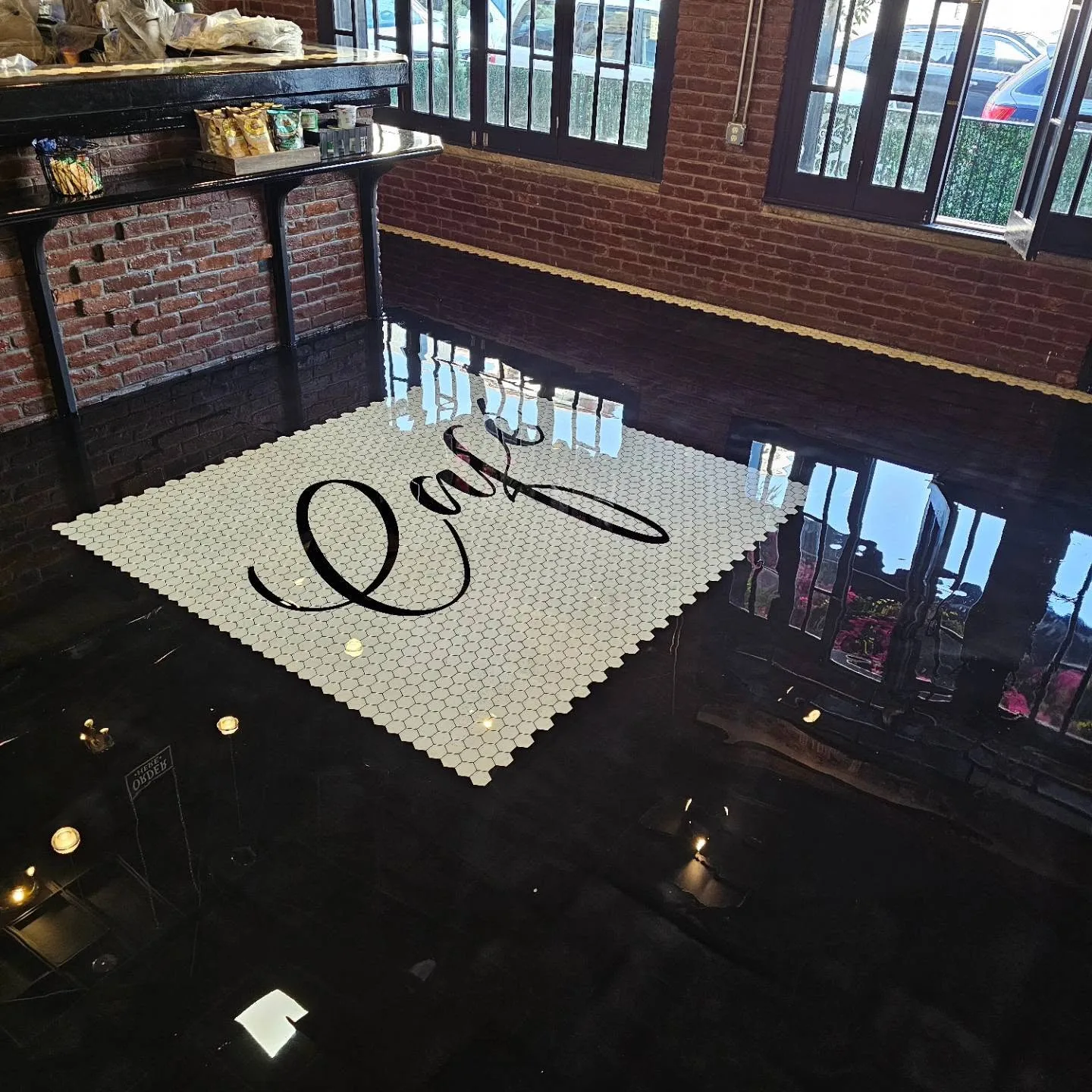
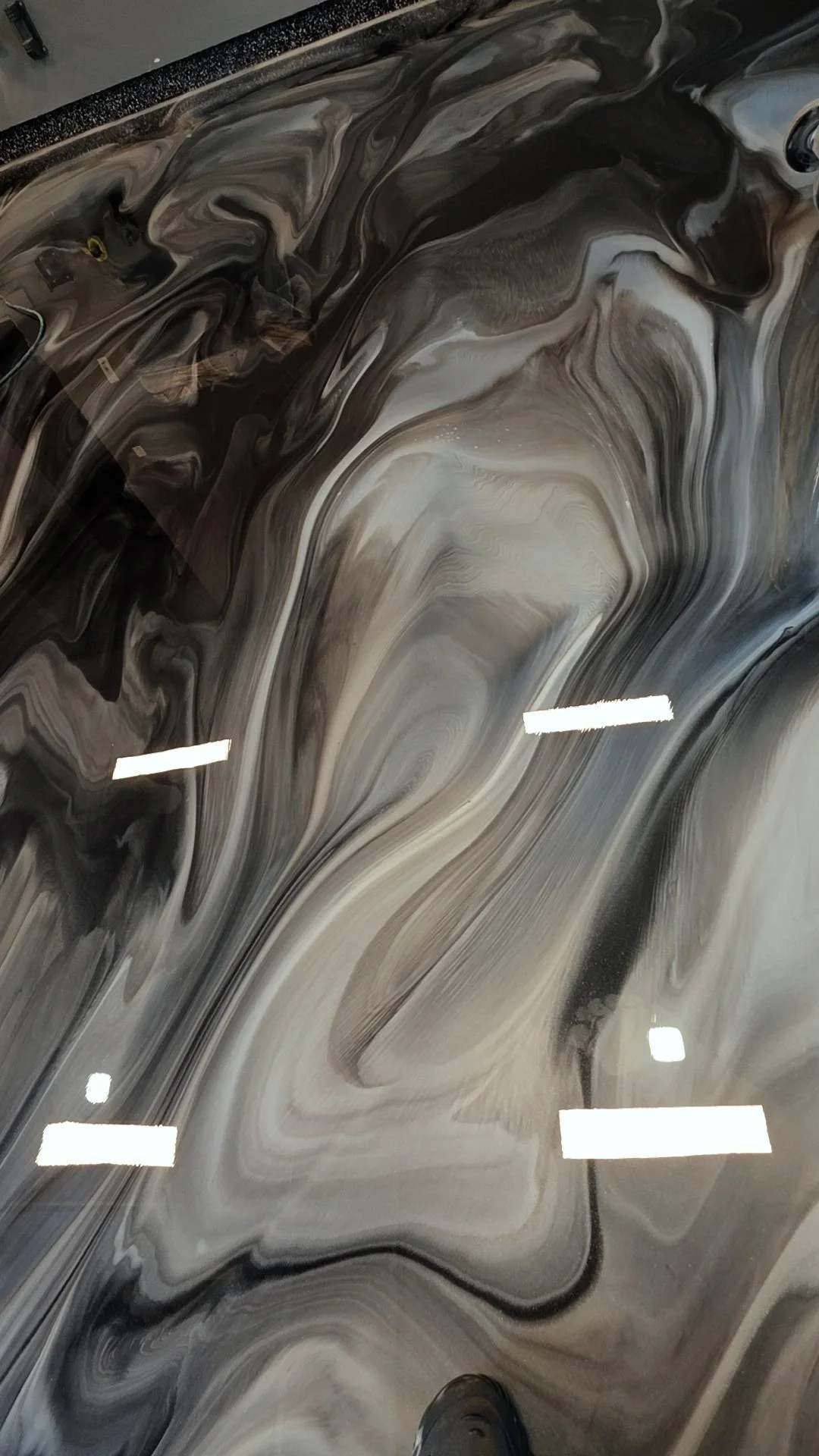
What fast-curing concrete coatings really involves
Speed comes from chemistry. Polyaspartic, polyurea and some fast-set epoxies and urethanes react quicker than a standard epoxy, so they reach walk-on and service condition sooner. Some are used for the whole system and some only for certain layers, such as a fast primer or a fast topcoat over a standard base. How fast depends on the product, the thickness and the temperature and humidity in the room on install day, so the schedule comes from the product data and the conditions, and the fastest product is not always the right one.
Danny looks at the space, the traffic coming back onto it and what spills there before promising any timeline.
Restaurants that close one night a week are a typical case, along with stores that cannot lose a weekend, offices that redo a floor between Friday and Monday, and homeowners who need the garage back. The tradeoff is working time. Fast systems give less time to spread and correct the material, so they suit flake, quartz and solid floors more than a metallic art pour. Prep does not get faster either, and a slab that needs repairs still needs them. Danny looks at the space, the traffic coming back onto it and what spills there before promising any timeline.
The schedule drives the plan. Danny starts by asking when the space closes, when it has to reopen and what has to come out of it. He walks the slab to see how much prep it needs, because grinding and repairs take the same time with any coating. Then he picks products whose cure fits the window and the room’s conditions. On the job, prep and the coats follow back to back, mixed in small batches and placed quickly. Before handing the space back, he walks it with the owner and tells them when equipment, carts and full traffic can return.
A fast coating saves time on the cure. The prep takes as long as it takes.
How the work runs
Fast-curing jobs run like a closing-night checklist, with every step timed backward from the moment the doors have to open again.


Writing the reopening deadline
Danny and the owner fix two times: when the space is empty and when staff or customers return. Every task is scheduled backward from the second time, with a margin left for cure and a final check.

Doing heavy repairs ahead
Where possible, deep patches and crack work happen on an earlier visit so they have hardened before closing night. That leaves only touch-up grinding and the coats themselves for the short window, which keeps the schedule realistic.

Staging kits and tools
Material, mixers, rollers and squeegees are staged before the room is empty, and batches are laid out in the order they will be used. On a fast system, hunting for a missing tool costs working time the coating does not have.

Coats back to back
Primer, base, broadcast and top follow one another as soon as each reaches its recoat stage, with the room kept at a steady temperature. Danny tracks each coat against the product data so the schedule holds.
Phased return of traffic
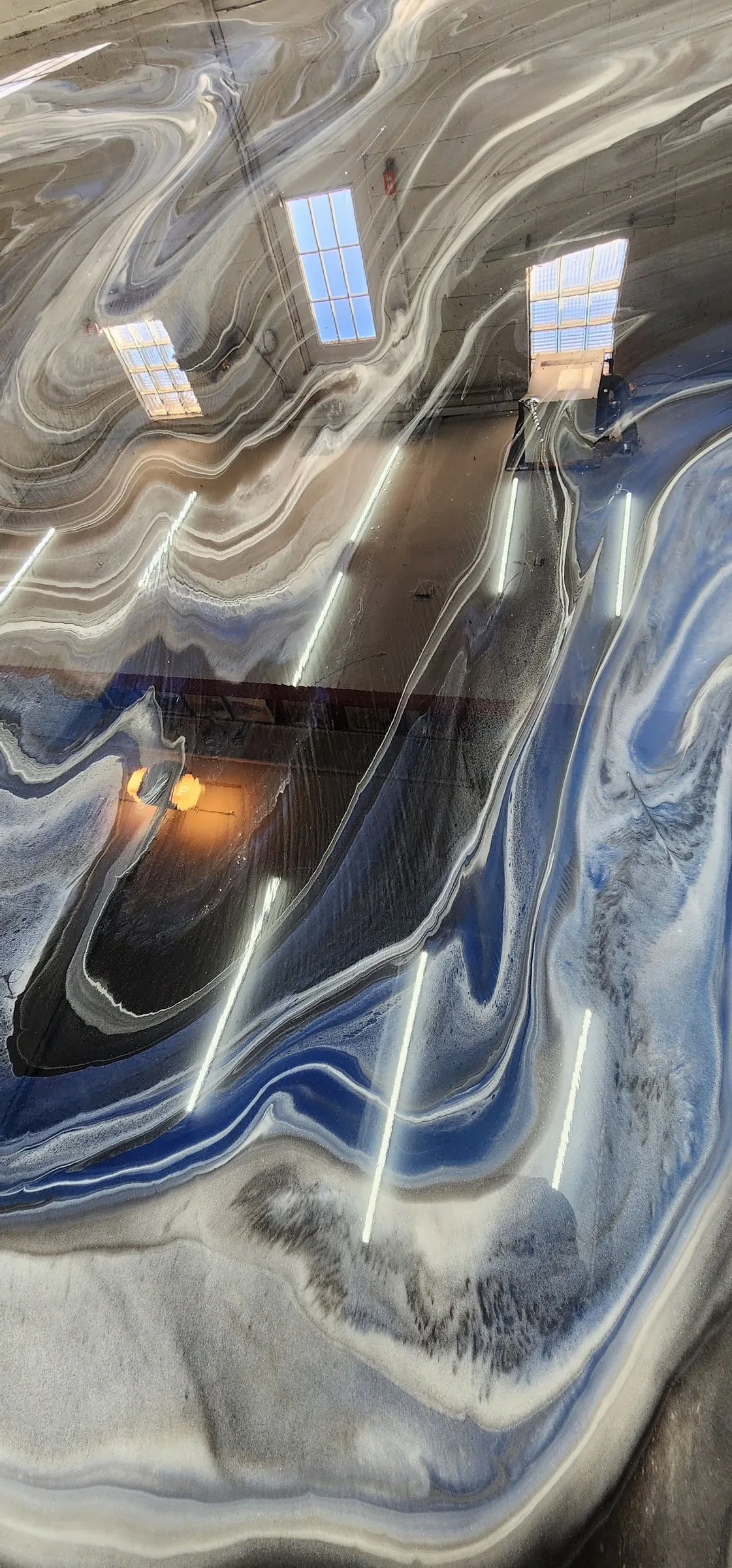
Before leaving, Danny walks the floor with the owner and sets the order things come back: foot traffic first, then chairs and light carts, then heavy equipment, each at the time the product data allows.
More of Danny’s floors
Other jobs from the file, not all of them this service. See the gallery








Questions about fast-curing concrete coatings
Can a floor really be done overnight?
Some can, when the slab needs little repair, the room is small enough and a fast system suits the use. Larger rooms, heavy repairs or a multi-layer system may need a weekend or a phased plan. Danny tells you after the walk-through which is realistic for your space, before anything is booked.
Are fast-curing coatings weaker than slower ones?
Not as a rule. Many fast systems are very hard and wear well. What you give up is working time, which affects decorative work, along with some sensitivity to conditions on install day. The right question is whether the product suits your floor’s traffic and spills, and Danny answers that from the product data and the room.
Why not use fast products on every floor?
They leave less time to work the material, which matters on large pours and on metallic floors where the pigment needs to move. They can be less forgiving of humidity and temperature. When nobody is in a hurry, a standard system gives more control. Danny uses fast products where the schedule is the main constraint.
What if the room is colder than expected on install night?
Cold slows any coating, fast ones included, and can push walk-on time past the reopening deadline. Danny checks the room’s temperature before starting and may ask the owner to keep the heat running for a day beforehand. If conditions fall outside the product’s range, he would move the date before handing back a soft floor.
Can fast-curing coatings carry flake or quartz?
Yes. Fast systems are often used with flake and quartz broadcasts, which go into a fast base and are sealed under a fast clear top. The broadcast has to be thrown quickly while the base is wet, so the room is worked in sections. Decorative metallic pours are the exception, since they need a slower resin.
Does the smell clear before customers come back?
Most of it clears as the coating cures, and ventilation speeds that up. Some products carry a stronger odor than others, and Danny considers that when choosing a system for a space that reopens to the public. Running the HVAC and opening doors once the surface is ready for air movement helps the room air out.
Next to this on the list
Polyaspartic, polyurea, urethane cement, self-leveling and fast-cure systems, picked to fit the room and the schedule.
- Cementitious Urethane FlooringA thick, cement-filled urethane floor for kitchens, breweries and wash areas that see hot water, steam and daily cleaning.
- Self-Leveling Epoxy FlooringEpoxy poured and spread so it flows into a smooth, solid-color surface without roller marks, over a slab leveled and primed first.
- Self-Leveling Resin FlooringPoured resin floors in epoxy, urethane or both, chosen by the room’s light and use for a smooth surface with no grout lines.
- High-Build Epoxy Floor SystemsThick-coat epoxy systems for warehouses and shops, built heavier where carts and forklifts wear floors down, with work phased around operations.
- UV-Stable Resin TopcoatsA clear aliphatic topcoat that holds its color in sunlight, protecting light and decorative floors in sunrooms, garages and bright rooms.
From Union County out to the Lehigh Valley, Long Island and Fairfield County, the work is all within about 60 miles of Cranford. See every areaSee the gallery
Danz Handz
Danny Carrero, epoxy specialist
dhepoxy@gmail.com
Cranford, NJ. Mon to Sat, 8 to 6. Hablamos español.
Book a walkthrough
A short note about the space is enough. Danny calls back and books a walkthrough.