
Epoxy floors for independent repair shops
For an independent shop, the bays are part of the pitch, since customers often stand at the open door while the owner explains the repair. Oil-black, dusting concrete behind them works against that. Danny opens up the stained slab and pours a bright floor that wipes clean, so the shop looks the way the owner already runs it.

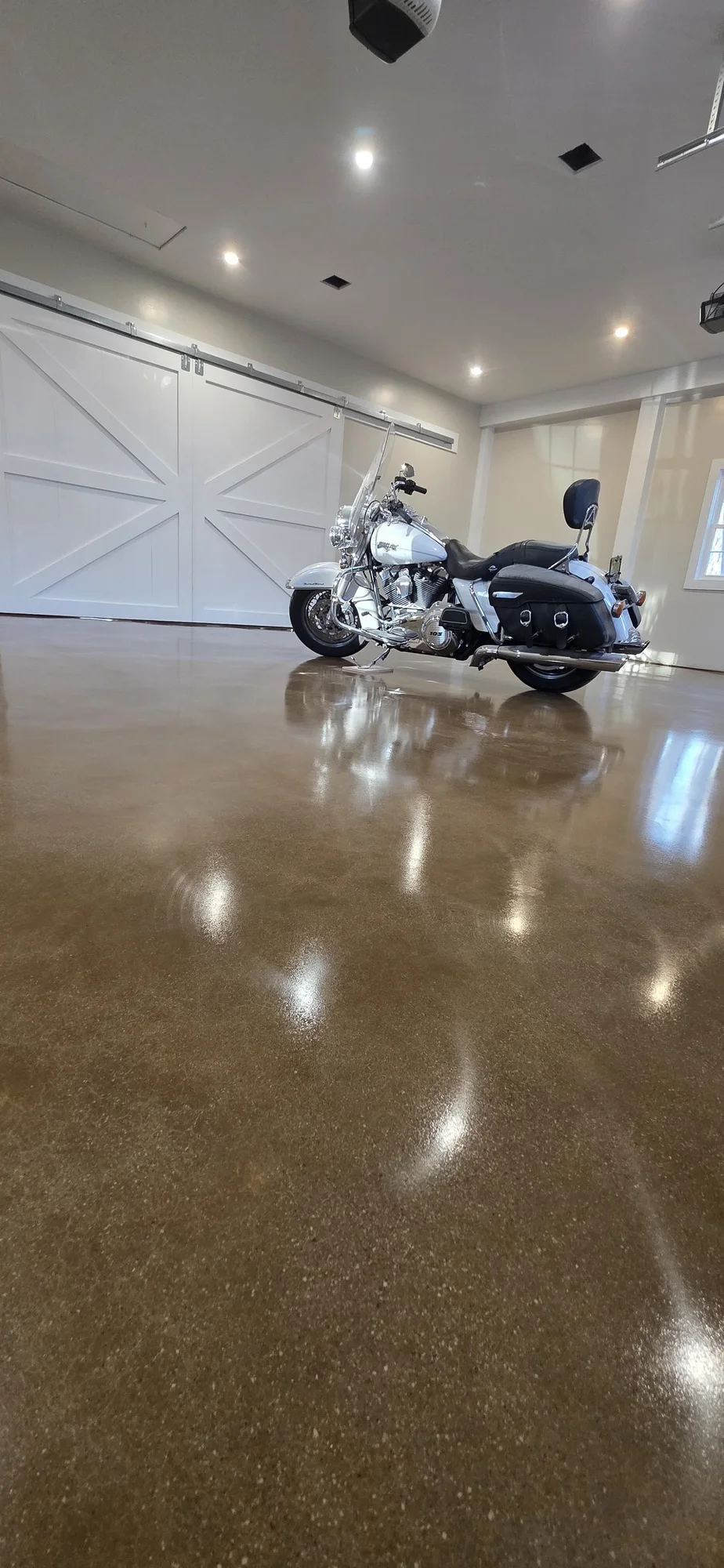
The short version of auto repair shop epoxy flooring
A repair shop epoxy floor is a coating system poured over the bays after the concrete is diamond ground and repaired. It seals the slab so oil, coolant and brake fluid sit on top where they can be wiped up, and it brightens the shop so techs can see dropped parts and leaks. Many shops pick a light gray or a flake blend. A light texture in the topcoat gives grip when the floor is wet or oily. Danny looks at the bays and the work done in them before recommending a system.
He plans the job around the shop’s slowest days, often working a few bays at a time so the shop keeps some open.
It fits shops on a slab where the bays can be cleared for the work. The floor under two-post lifts can be coated around the base plates, or the lifts can be unbolted for a cleaner job, which needs the lift installer involved. Slabs soaked with years of oil need heavy grinding and sometimes extra prep before a coating will bond. Hot tires parked on the floor right after a road test and dragged jack stands are the usual wear points.
Danny walks the shop with the owner and looks at each bay: the lifts, the drain if there is one, the oil-soaked spots under where cars sit longest and the cracks that run across the slab. He plans the job around the shop’s slowest days, often working a few bays at a time so the shop keeps some open. Each section is cleared, diamond ground hard enough to pull up old oil, repaired at cracks and pits, and poured. Cars come back in after the cure and a walk through the bays with the owner.
Customers judge a shop by what they can see through the bay door.
How the work runs
An independent shop can usually keep some bays working during the job. The stages below run from standing where customers stand to resetting the lifts on a clean floor.
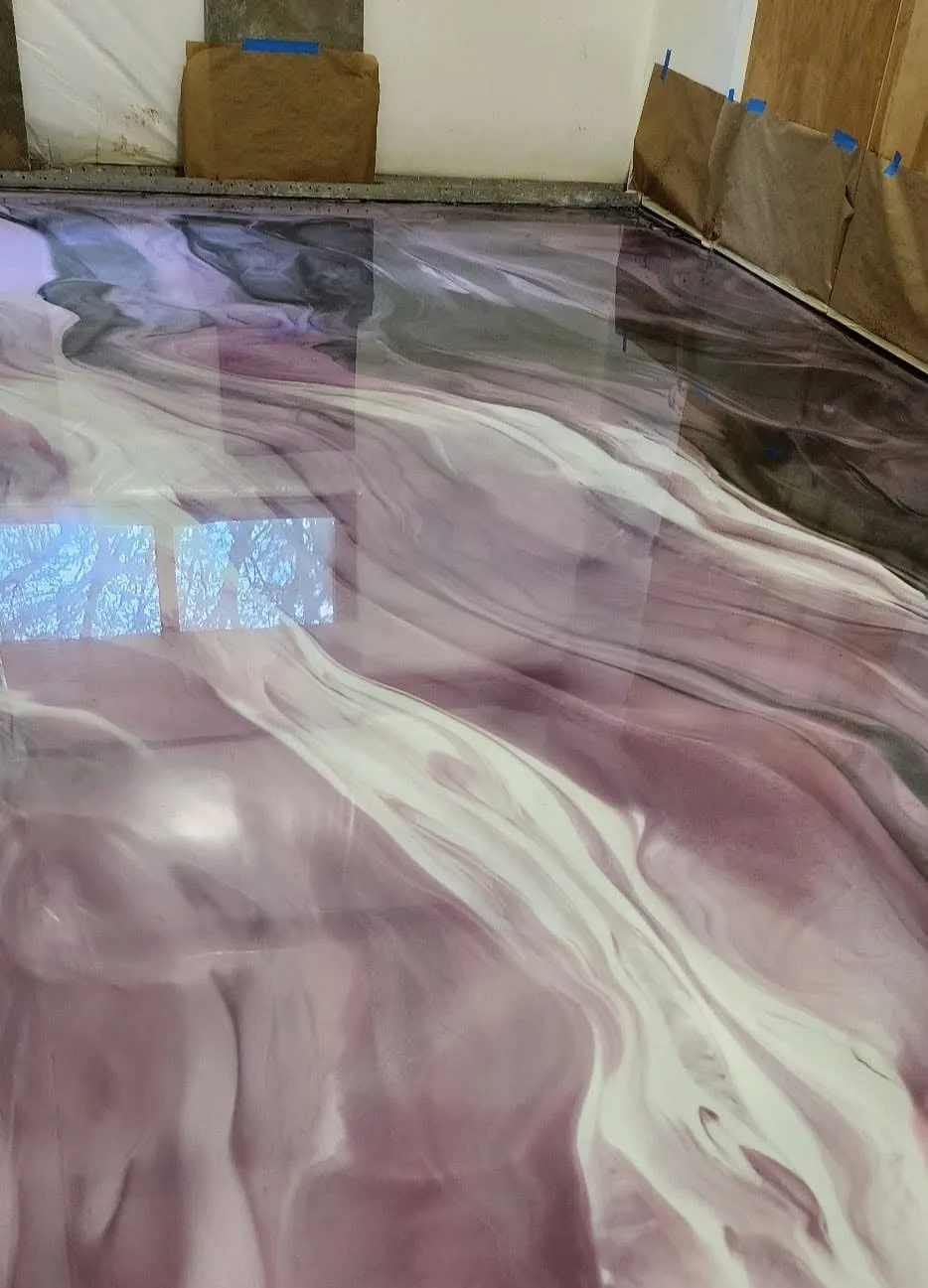

Standing at the open bay door
Danny starts where a customer would, at the open bay door, and looks at what that view shows: oil-dark stalls, dusty corners and stained concrete under the lifts. Then he walks each bay with the owner, checking cracks, drains and lift base plates.

Splitting the bays into pairs
The bays are grouped, often in pairs, so the shop keeps the rest working. Danny sets the order with the owner around the shop’s appointment book, and the lift installer is booked for any lifts that come out.

Degreasing before the grinder
Heavy oil is cleaned out of the stained areas first, since a grinder spreads oil around if it goes in too early. Then the bays are diamond ground until clean concrete shows, and cracks, pits and broken edges at the bay doors are repaired.

Gray or flake with grit
The coating goes down in the color the owner chose, often a light gray or a flake blend that hides drips. The topcoat gets a light grit, so techs keep their footing when coolant or water hits the floor.

Lifts reset, owner’s walk
After the cure, lifts are bolted back down by the installer and the edges around each base plate are sealed. Danny walks the bays with the owner, checking the floor around the lifts and at the door line, and then the first cars roll back in.
More of Danny’s floors
Other jobs from the file, not all of them this service. See the gallery







Questions about auto repair shop epoxy flooring
Can you coat the shop while we stay open?
Partly. Many owners split the job so a few bays are done while the others keep working, then switch. Each section needs to be clear from grinding through the cure. Danny looks at your layout and the number of bays and works out a sequence that keeps as many lifts running as possible.
Our floor is soaked with years of oil. Can it still be coated?
Usually, with more prep. Heavy diamond grinding takes off the stained top layer, and badly soaked spots may need extra cleaning before a coating will bond. Danny looks at how deep the oil has gone during his walk and tells you which areas need extra work. Oil-soaked concrete is a common reason shop coatings fail, so it gets real attention.
Do the lifts have to come out?
Not always. The coating can be finished neatly around the base plates of two-post lifts. Pulling the lifts gives a cleaner floor underneath and a tidier look, and it requires your lift installer to unbolt and reset them. Danny talks through both choices during his walk so you can decide based on how long each bay can be down.
Does the shop’s floor drain or oil separator change anything?
It can. A floor drain or an oil separator in the shop needs its edges repaired and the coating finished tight to its frame, and the slope toward it should be checked. Separators are serviced by others, so their lids stay accessible. Danny looks at any drain in the shop during his walk and plans around it.
Will brake fluid or battery acid damage the coating?
Brake fluid and battery acid are among the harsher things that land on a shop floor. Many shop coatings handle them when they are wiped up promptly, though a spill left to sit can mark or soften a topcoat. Danny checks the system’s product data for both and suggests keeping absorbent near the battery charger.
Do parts washers need anything special?
Parts washers drip solvent or cleaning solution around their base, and some sit in one spot for years. A drip pan or a mat under the washer keeps the solution off the floor. Danny asks what goes in the washer and checks it against the product data for the system he recommends.
Next to this on the list
Repair shops, detailing studios, dealership bays and showrooms, where oil, tires and lifts meet the floor every day.
- Commercial Parking Garage CoatingsCoatings for enclosed and ground-level parking garages, staged section by section so tenants keep parking while lanes, ramps and walkways get redone.
- Parking Structure Deck CoatingsCoatings for open-air upper parking decks that help keep water, salt and oil out of the concrete once structural repairs are done.
- Vehicle Showroom Decorative FlooringDecorative metallic epoxy showroom floors, each one a one of one, with optional Glitter ELEMENTZ sparkle for dealers and private car rooms.
- Mechanic Workshop Floor CoatingsBright, coated workshop floors for mechanics, restorers and hobbyists, so dropped parts show up and oil wipes off the surface.
- Automotive Service Center FlooringCoated floors for full service centers, from the drive-in lane and bays to the customer lounge, phased so bays keep working.
He drives out from Cranford about 60 miles in every direction for floors like this one. See every areaSee the gallery
Danz Handz
Danny Carrero, epoxy specialist
dhepoxy@gmail.com
Cranford, NJ. Mon to Sat, 8 to 6. Hablamos español.
Schedule a look at your floor
A short note about the space is enough. Danny calls back and books a walkthrough.