
Shot blasting for large, open concrete floors
Shot blasting throws small steel shot at the slab, stripping the surface and leaving it textured, and it is built for big open floors: warehouses, shops and parking areas. When a commercial coating is planned, Danny looks at the size of the floor and the profile the system needs before deciding between blasting and diamond grinding.


The short version of concrete shot blasting
A shot blaster is a walk-behind machine with a spinning wheel inside that fires steel shot down onto the concrete. The shot chips away the surface layer, light coatings and contaminants, then bounces back into the machine, where it is separated from the dust and reused. A dust collector pulls the debris away. The result is an evenly textured surface, often a little rougher than diamond grinding leaves, ready for coatings that need a stronger profile. On large open areas it covers ground quickly in straight runs.
A shot blaster is a walk-behind machine with a spinning wheel inside that fires steel shot down onto the concrete.
Shot blasting fits big rectangular areas with few obstacles, such as warehouses, loading areas and commercial shops. It is a poor fit for small rooms, tight basements and floors with lots of corners, columns or fixtures, and it cannot reach edges, which still need a hand grinder. It can leave visible lane lines on bare concrete and is too rough for thin decorative finishes that need a smooth base. It also does not take down high spots the way grinding does. Danny weighs it against diamond grinding for each floor.
Danny looks at the floor’s size, shape and condition and what coating is going on it, then decides whether blasting, grinding or a mix of both makes sense. When a floor calls for blasting, he plans the runs so the lanes overlap evenly and the edges, corners and drains get prepped with a grinder. The machine’s settings and travel speed are set to the profile the coating needs. Afterward the slab is checked for even texture, swept of loose shot and vacuumed. Repairs and joint work follow, and then the coating system goes down.
Shot blasting covers open floor fast, and the edges still need a grinder.
From bare slab to finished floor
Shot blasting is planned around big, open runs of floor, with the edges and every obstacle handled separately by a hand grinder.


Deciding blast, grind or both
Danny looks at the floor’s size, its shape and the coating going on top. Wide open slabs with few obstacles lean toward blasting. Rooms crowded with columns or racks lean toward grinding, and plenty of jobs end up using a mix of both methods.

Planning the runs
Straight runs are laid out so each pass overlaps the last one evenly. Drains, trench covers, anchor plates and anything else in the way are marked ahead of time so the machine works around them without catching or leaving a stripe.

Dialing in the profile
The blaster’s shot size, flow and travel speed are set to the texture the coating needs. Danny checks the first run against that target and adjusts the settings before blasting the rest of the floor, so the whole slab matches.

Grinding where the blaster cannot reach
Wall lines, corners, column bases and drain rims get a hand grinder, since the blaster cannot get close to them. The perimeter ends up opened to match the blasted field, so the coating bonds the same way at the edges as in the middle.
Collecting stray shot
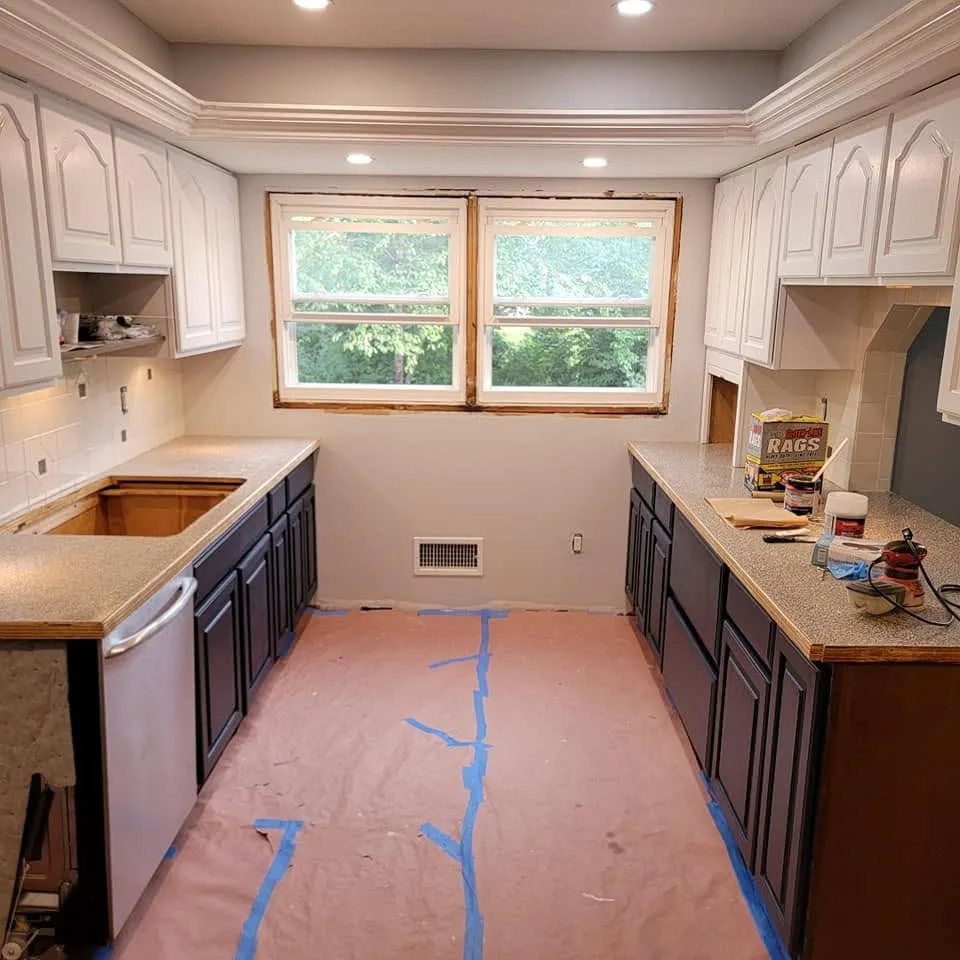
The floor is swept and vacuumed with extra attention to joints and drains, where shot rolls and hides. A missed pellet under a coating shows as a bump. Then repairs and joint work begin on a clean, evenly textured slab.
More of Danny’s floors
Other jobs from the file, not all of them this service. See the gallery







Questions about concrete shot blasting
Is shot blasting better than grinding?
Neither wins across the board. Blasting is faster on big open slabs and leaves a rougher texture, which some heavy coatings want. Grinding handles edges, high spots, small rooms and thin decorative systems better. Danny picks the method based on the floor’s size, its condition and what is going on top, and some jobs use both.
Does shot blasting remove paint and old epoxy?
It removes paint, sealers and thin coatings well. Thick epoxy, mastic and rubbery coatings tend to slow it down or gum it up, and those often come off more efficiently with grinding or scraping. Danny looks at what is on the floor and how thick it is before choosing how to take it off.
Is it messy?
Less than people picture. The shot is recycled inside the machine and a dust collector pulls the concrete dust away as it works. Some shot can escape at the edges, and it gets swept and vacuumed up afterward. It is still noisy, so businesses often schedule it outside working hours.
Can shot blasting be done in a working warehouse?
Yes, in sections. The area being blasted is closed off, and the work is often scheduled for nights or weekends because the machine is loud. Racks and inventory near the work zone may need to move. Danny plans the sections with the facility manager so operations keep running around them.
Is shot blasting used on home garage floors?
Rarely. A home garage is small, has walls on three sides and needs edge work anyway, so diamond grinding usually does the whole job faster and with more control. Shot blasting earns its place on large commercial slabs where long, straight runs are possible and the machine can cover ground.
Will blasting uncover cracks that were hidden?
Often. Opening the surface shows hairline cracks and weak spots that dirt or an old coating was hiding. Danny maps them after blasting, and they are filled and ground flush before the coating. It is better to find them at this stage than to see them telegraph through a finished floor.
More from the prep section
Grinding, shot blasting, crack and joint filling, leveling and moisture testing, done before any coating goes down.
- Old Epoxy RemovalTaking up peeling, bubbling or yellowed epoxy and finding out why it failed, or sanding and recoating it when the old floor is still bonded.
- Concrete Floor SandingLight sanding to scuff a sound epoxy floor before a recoat, smooth between coats and feather patches into the floor around them.
- Concrete Crack FillingChasing, filling and grinding slab cracks flush before a coating, with honest calls on which cracks are still moving.
- Concrete Joint FillingDeciding whether each saw cut and control joint gets filled and coated over or kept open, and doing either one cleanly.
- Concrete Spall RepairCutting back flaked and popped-out concrete to solid ground and rebuilding it flush, common near garage doors that see winter salt.
He drives out from Cranford about 60 miles in every direction for floors like this one. See every areaSee the galleryRead: Why Every Good Epoxy Floor Starts With a Diamond Grinder
Danz Handz
Danny Carrero, epoxy specialist
dhepoxy@gmail.com
Cranford, NJ. Mon to Sat, 8 to 6. Hablamos español.
Schedule a look at your floor
Send a few lines about the room and the look you want. Danny will call and set up a time to see it.