
Adding a cove base where the floor meets the wall
Peeling vinyl base with dirt packed behind it is common in rooms where the floor itself is still fine. Tearing out a good floor to fix that edge makes little sense. Danny can add a resin cove along the wall line, around columns and at curbs, tied into the floor that is already there.
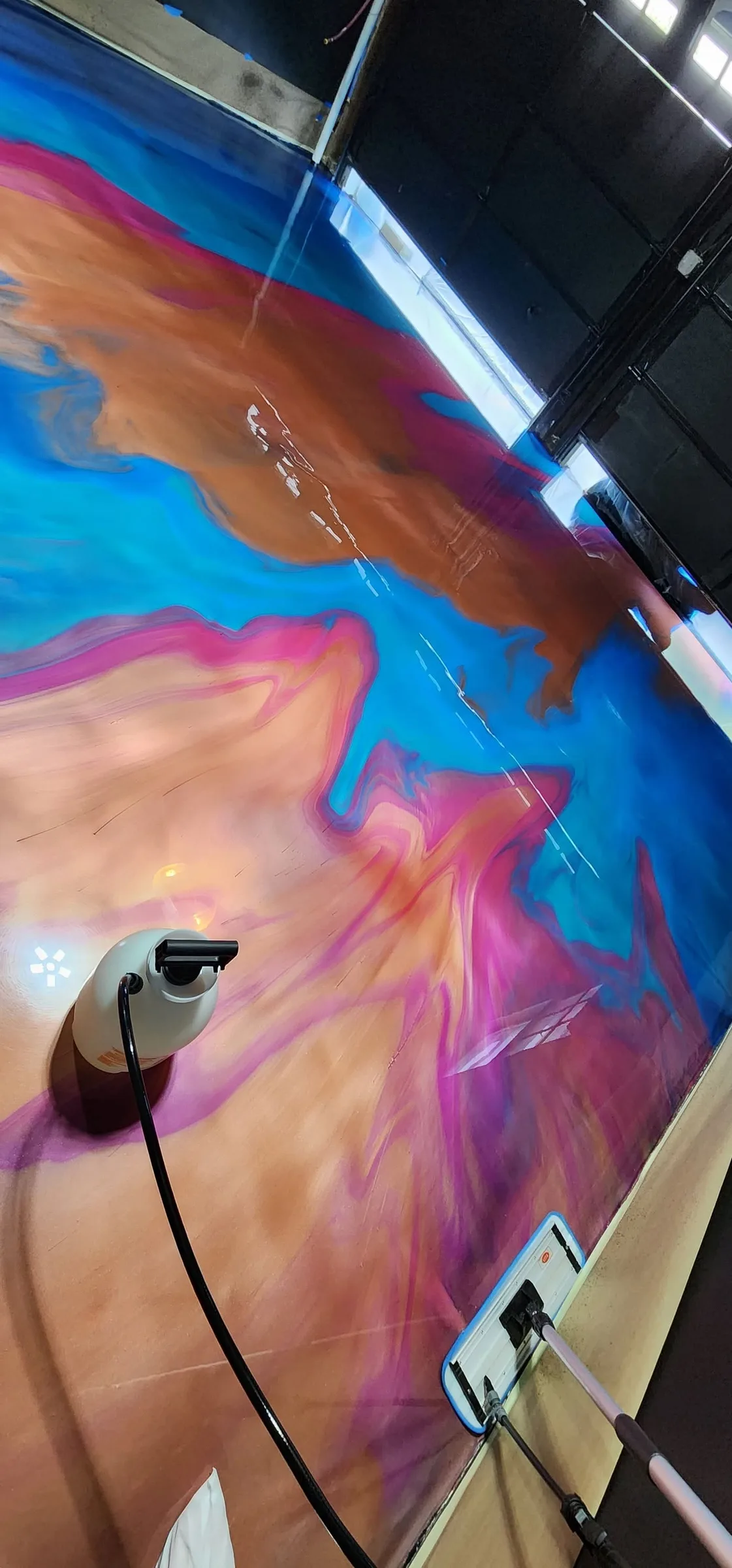

Floor-To-Wall Cove Installation, start to finish
A floor-to-wall cove is a curved resin base installed where the floor turns up the wall. On a new resin floor it is part of the pour, and on an existing coated floor it can be added along the walls, around columns, up the sides of curbs and around equipment pads. The cove is built up and shaped by hand, then sealed to tie into the floor. Danny checks what hits the wall line, whether carts, mops or spills, before he recommends a system, and the height follows the room’s use.
He notes every column, curb, door frame and pipe the cove has to wrap.
It fits rooms with solid walls and a floor that is in good enough shape to tie into, or rooms getting a new floor at the same time. Adding a cove against an old floor that is peeling or failing usually means the floor needs work too, since the cove can only bond as well as what it meets. Drywall bases in wet rooms need to be replaced or protected. Rooms where the wall base gets knocked by carts may need a curb or guard as well.
Danny walks the whole wall line of the room and checks the old base, the joint where it meets the floor and the condition of the floor’s edge. He notes every column, curb, door frame and pipe the cove has to wrap. The old base comes off, the floor edge is ground and repaired, and the wall is prepared where the cove will bond. The cove is shaped along each wall and around each detail, then finished into the floor. When the cove has cured, Danny walks the line again with the manager, and the room goes back to use.
Peeling vinyl base hides more dirt behind it than anyone wants to see.
How Danny does the job
Adding a cove to a floor that is already down is detail work along every wall, column and curb. The stages go from a test piece of old base to a sealed new edge.
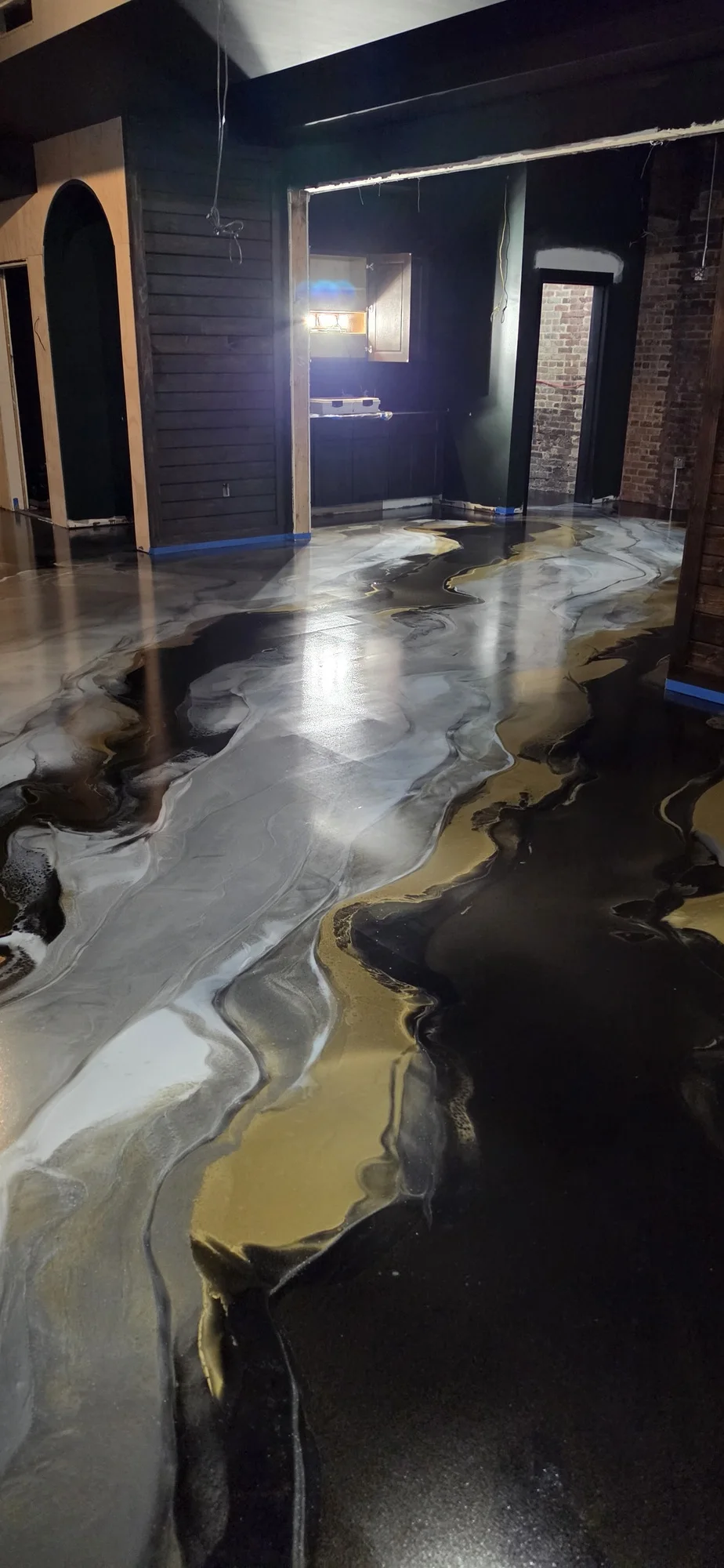

Pulling a test section of base
Danny pulls a short section of the old vinyl or rubber base to see what is behind it: the wall material, any mold or water damage, and how the floor edge looks. That piece tells him how much prep the wall line needs.

Grinding the floor’s outer edge
The edge of the existing floor along each wall is ground so the cove has a sound, roughened surface to bond to. Any lifting or peeling at that edge is cut back until the floor is firmly attached.

Preparing block and concrete walls
The base of each wall is cleaned and ground where the cove will bond, with paint and old adhesive removed. Drywall bases in wet areas are flagged so they can be replaced or protected before the cove goes on.
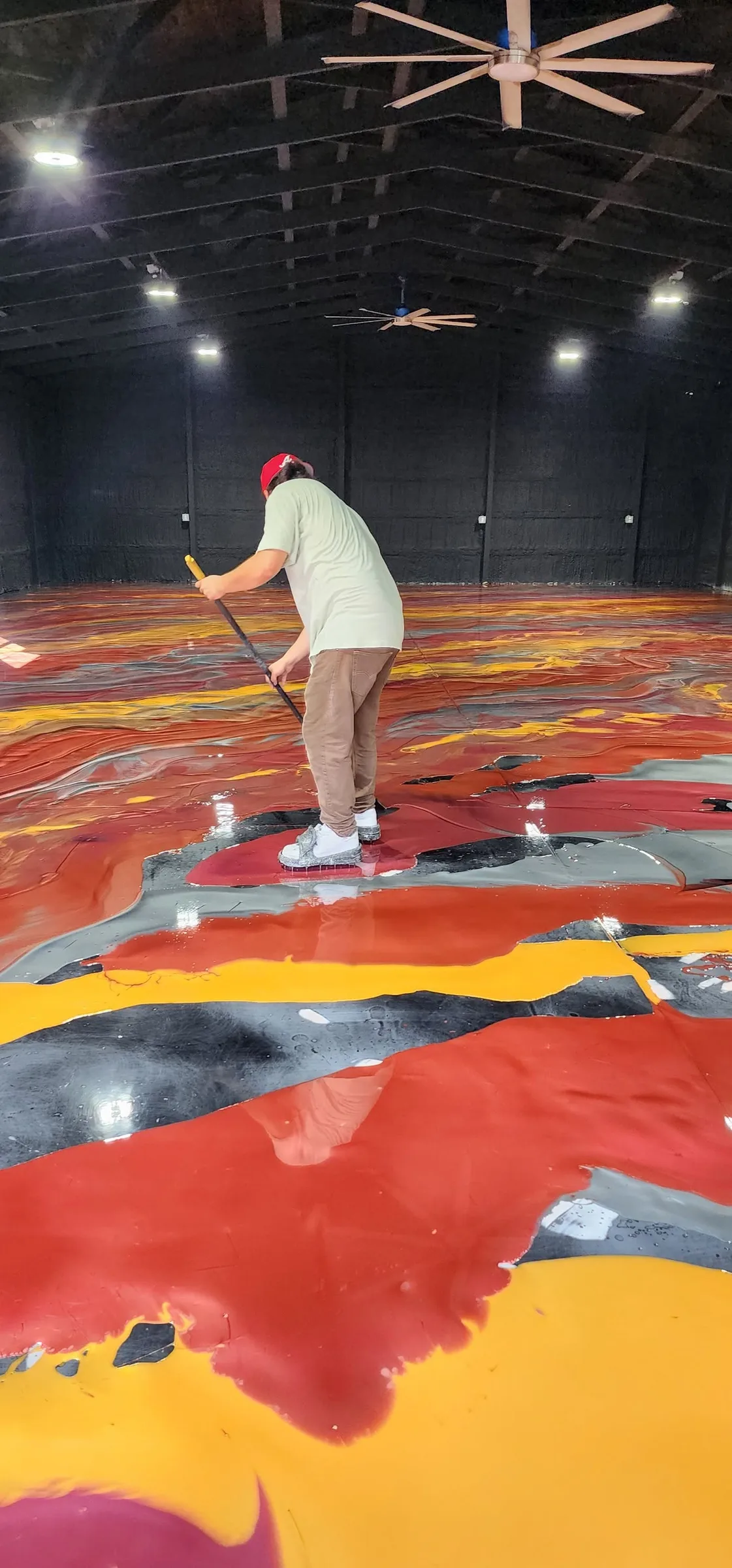
Troweling each run by hand
The cove material is built up and shaped along each wall, around columns, up curbs and around equipment pads. Every run is finished to a straight top line, and corners and door frames get their own hand work.
Topcoat to lock it in
A topcoat goes over the new cove and onto the edge of the existing floor, tying the two together. After the cure, Danny walks the wall line with the manager before carts and cleaning return to the room.
More of Danny’s floors
Other jobs from the file, not all of them this service. See the gallery








Questions about floor-to-wall cove installation
Can you add a cove without redoing the whole floor?
Often, if the existing floor is sound and bonded. The edge of the floor is ground and repaired so the cove ties in, and the cove is finished into it. If the floor is peeling, soft or failing near the walls, the cove would only bond to a weak surface, and Danny will recommend fixing the floor first.
Can you cove around columns and equipment pads?
Yes. Columns, curbs and equipment pads are where dirt and water often collect, and they can be coved the same way as a wall. Each one is shaped by hand, so a room with many columns takes longer. Danny marks every one during his walk and includes them in the plan so nothing is left as a square corner.
Why is our vinyl base peeling in the kitchen?
Vinyl base is glued to the wall, and mop water, heat and cleaners break down the adhesive over time, especially in a wet room. Once it peels, water and dirt get behind it. A resin cove bonds to the wall and floor as one piece, so there is no glued edge to give way. Danny looks at the walls behind the old base during his walk.
Will the new cove match our existing floor color?
Close, though rarely exact. An existing floor has aged and worn, so a new cove in the original color can look a shade different beside it. Some owners choose a contrasting cove on purpose so the difference looks planned. Danny brings samples and shows how each option looks against the floor you have.
Can a cove go up a painted block wall?
Yes, once the paint is removed at the base. Paint is a weak layer to bond to, so the bottom of the wall is ground back to bare block where the cove will sit. Above the cove, the wall can be repainted as normal. Danny checks the wall surface during his walk.
Can the cove be added one section of wall at a time?
Yes. A cove can be installed in runs, such as one wall or one room at a time, so the rest of the space stays in use. Each section has to stay clear while it cures. Danny plans the sections so each one ends at a corner or a door, where the joint between runs is easy to hide.
Other kitchens work
Commercial kitchens, bakeries, breweries and cold rooms, with coved bases and slip-resistant finishes.
- Urethane Cement Kitchen FlooringThick urethane cement floors for the hottest, wettest zones of a commercial kitchen, chosen for hot water, steam and grease.
- Sanitary Facility Floor ResurfacingResurfacing for failing floors in washdown and sanitation rooms: old coating ground off, the cause found and a new system poured.
- Commercial Restaurant Floor CoatingRestaurant floors planned front and back together: a decorative finish for the dining room and a working system for the kitchen.
- Restaurant Kitchen Resin FlooringBack-of-house resin floors that run under the cook line and up the wall, replacing tile that has cracked or gone black.
- Commercial Bakery Floor CoatingsBakery floors with enough texture for wet spots and a smooth enough surface to sweep flour, with cove bases to keep corners clean.
Every county Danny covers, and every town in them, has its own page. See every areaSee the gallery
Danz Handz
Danny Carrero, epoxy specialist
dhepoxy@gmail.com
Cranford, NJ. Mon to Sat, 8 to 6. Hablamos español.
Book a walkthrough
Tell Danny about the space. He calls you back, comes out, looks at the concrete and talks it through before anything gets decided.