
Poured epoxy that settles into a flat, glassy floor
Self-leveling epoxy is poured onto the slab and spread so it flows out into a smooth, even layer, thicker than a rolled coat and free of roller marks. For a solid-color basement, kitchen, office or showroom with a clean, glassy look, the prep matters even more, since a glassy surface shows every flaw left in the slab.
How Danny approaches self-leveling epoxy flooring
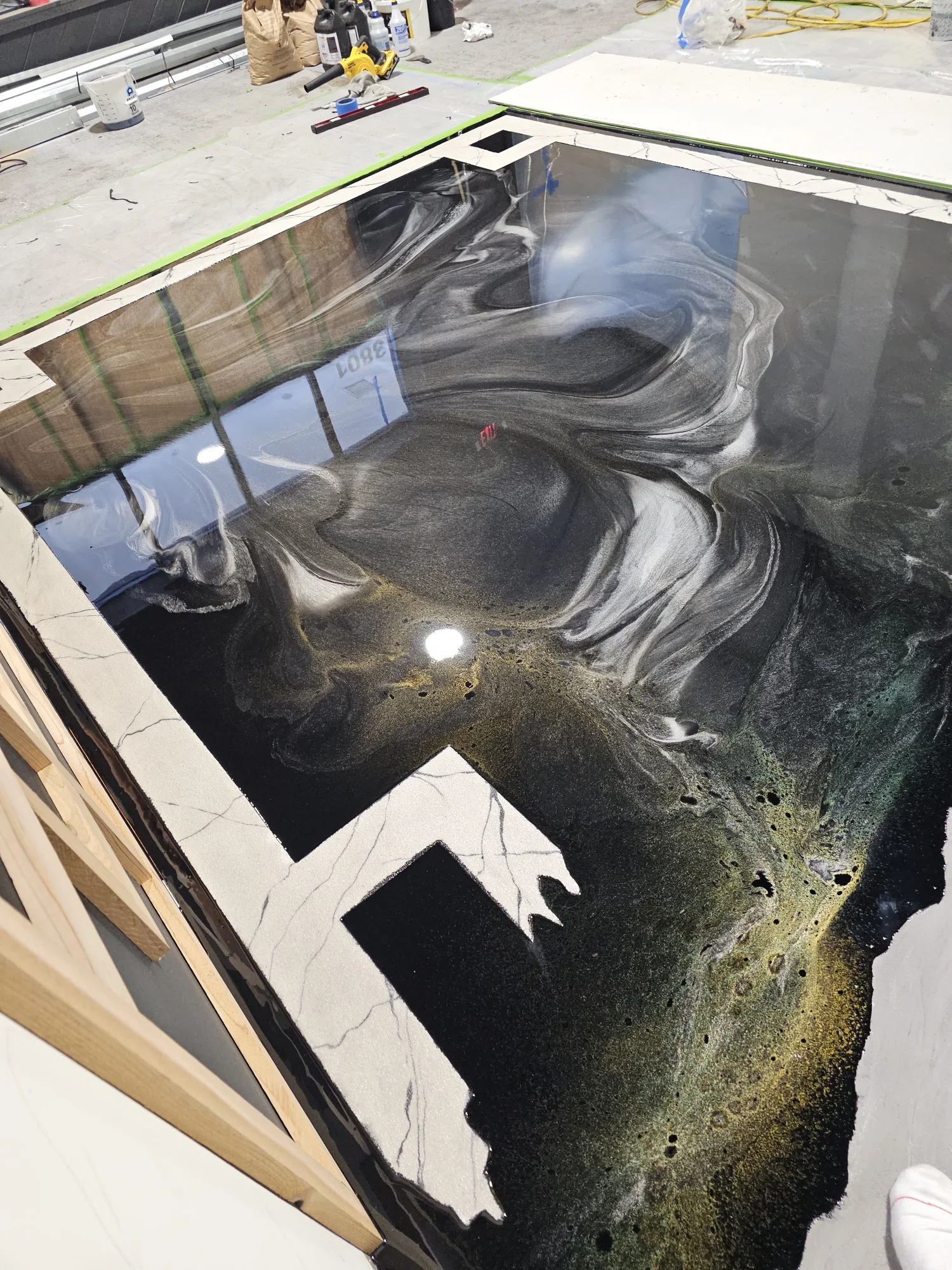
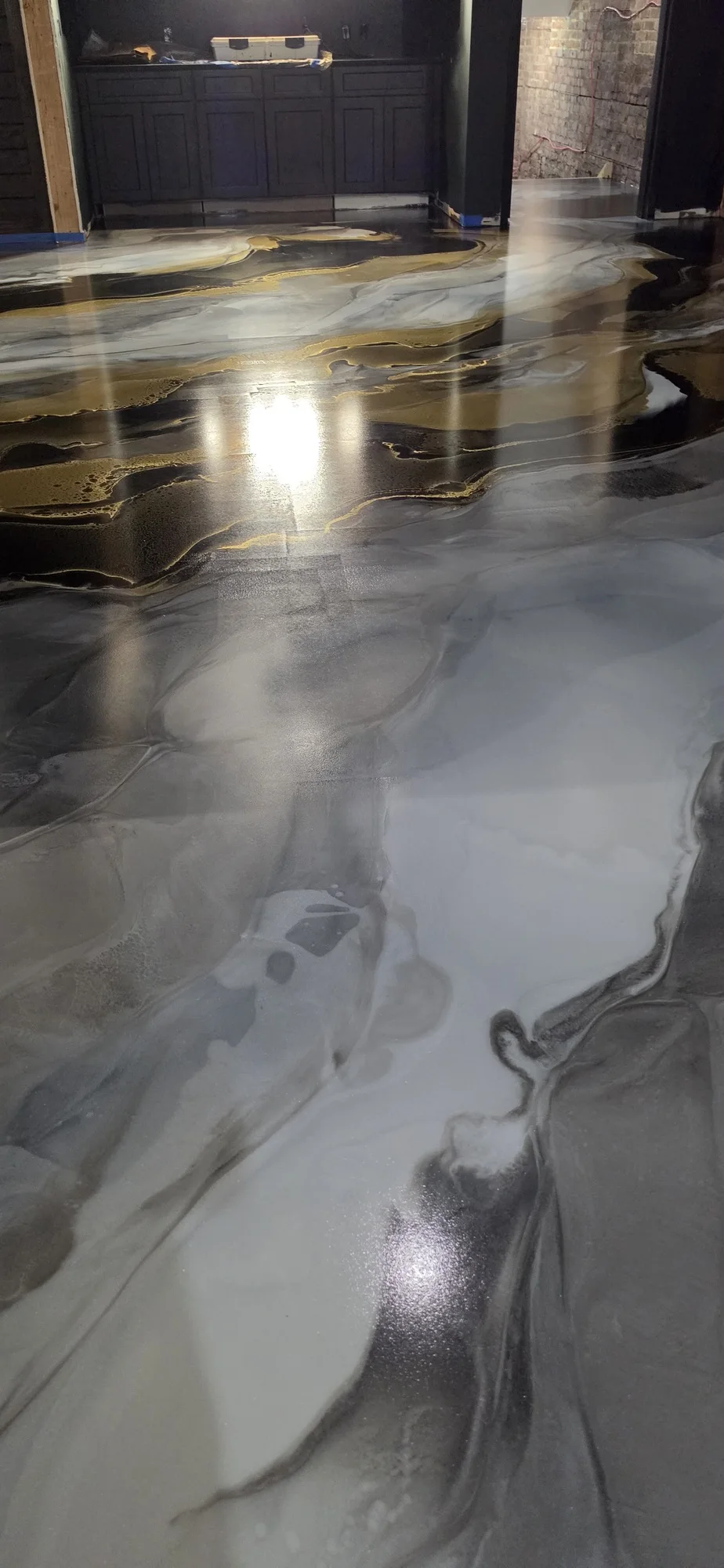
A rolled coating follows every bump in the slab. A self-leveling pour has a lower viscosity and goes on at a thicker build, so it flows out and closes over small texture, leaving a smoother surface. Danny pours it in ribbons, spreads it with a gauge rake or squeegee, and back-rolls it with a spiked roller to release trapped air. It is the same kind of base that metallic floors are poured from, here kept to one color. A clear or urethane topcoat can go over it for scratch resistance or a different sheen.
A straightedge goes across the slab on the first visit, because a smooth pour shows every dip.
Interior rooms with foot traffic where looks matter suit it: basements, kitchens, offices, studios and retail spaces. The name oversells it a little. It flows out small texture, but it does not correct dips, slopes or uneven slabs, and a low spot under it stays a low spot. Leveling compound handles that during repairs. The smooth, glossy surface shows dust, scratches and footprints, and it can be slick when wet. Danny looks at the room, how many people and chairs cross it and what gets spilled there before recommending this over a textured system.
A straightedge goes across the slab on the first visit, because a smooth pour shows every dip. Low spots get marked for leveling. The slab is diamond ground, cracks and pits are filled, and the floor is primed so air in the concrete does not bubble up through the pour. On pour day the room is closed, the material is mixed in batches and poured in ribbons, then spread to an even thickness and back-rolled while it is wet, working from a wet edge so no seams form. It cures with the room shut. The final walk checks it from the doorway with the lights on.
Self-leveling smooths the surface texture. Dips in the slab stay dips unless they are filled.
How the work runs
A self-leveling epoxy pour happens in one day, but it is won in the days before, when the slab is flattened, primed and kept free of dust.

Choosing the solid color
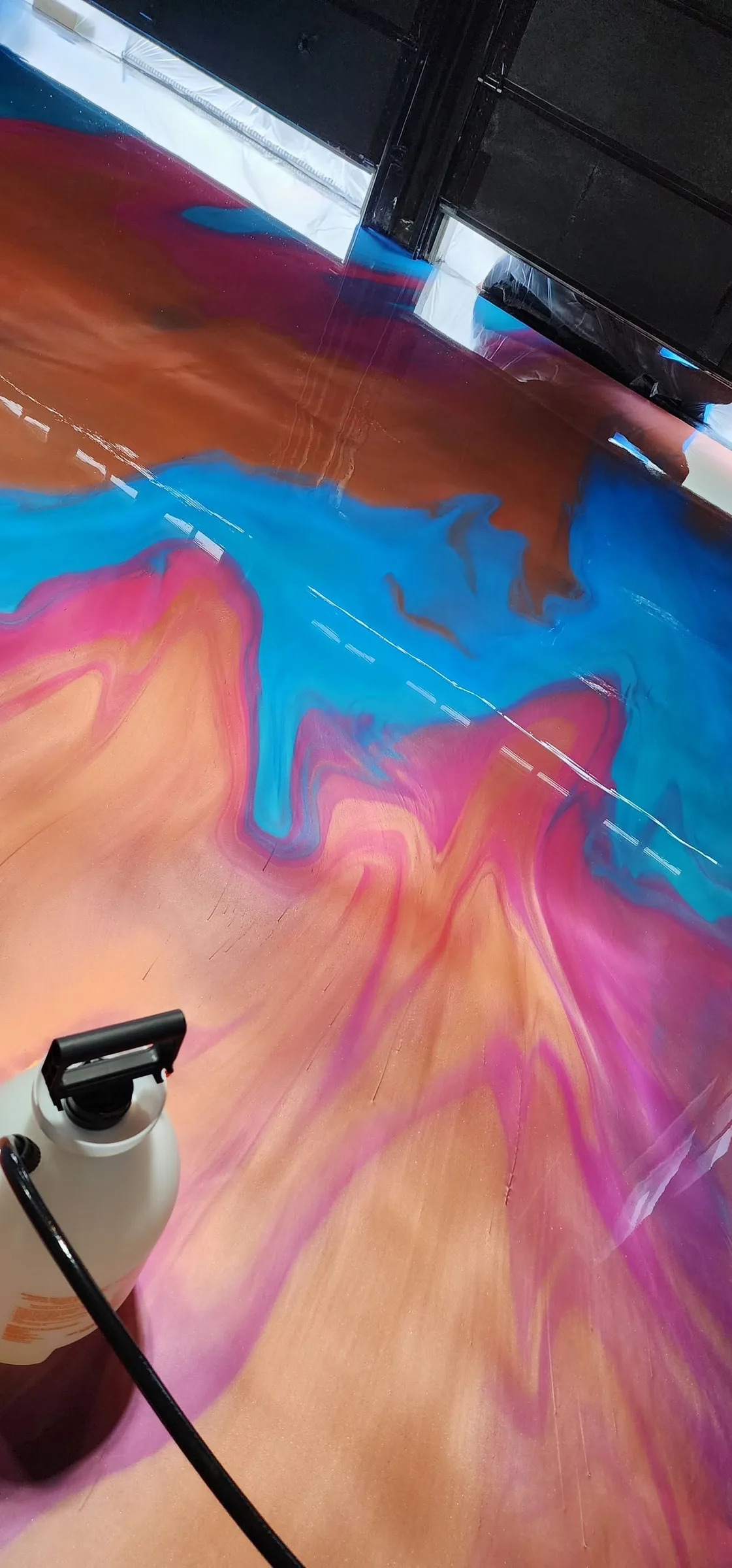
Danny brings color samples into the room and looks at them under its own light, since a single solid color covers the whole floor and shows its tone everywhere. Pale neutrals and deep shades each change how much dust and wear will show.

Flattening the marked dips
Low spots marked at the walk get leveling mortar after grinding and crack repair, then are ground flush. A pour flows out small texture, so anything bigger has to be corrected before the epoxy goes down.

Sealing the slab with primer
A primer coat closes the pores across the whole floor, repairs included. Danny checks for pinholes or thin spots in the primer, since any open pore can send a bubble up through the thick pour above it.

Ribbons, rake and spike roller
On pour day the epoxy is mixed in timed batches, poured in ribbons, spread to an even depth with a gauge rake and back-rolled with a spiked roller. Each batch meets the last while both are still fluid, leaving no seam.
Raking light inspection
After the cure, Danny looks across the floor with a light held low and again under the room’s own fixtures, checking for craters, dust specks and uneven sheen. Any flaw is noted with the owner before the topcoat or handoff.
More of Danny’s floors
Other jobs from the file, not all of them this service. See the gallery








Questions about self-leveling epoxy flooring
Will self-leveling epoxy fix my uneven basement floor?
It smooths small texture like trowel marks and the scratch from grinding, but it is not a leveling compound. It follows the overall shape of the slab, so dips, slopes and humps show through. Those get corrected during prep with leveling material or grinding, and then the self-leveling epoxy goes over a flat base.
Why does my floor need a primer before a self-leveling pour?
Concrete holds air in its pores. When a thick, slow-curing pour goes over bare concrete, that air rises into the wet epoxy and leaves bubbles and craters in the finish. A primer coat seals the pores first, so the pour lies over a closed surface and cures smooth from wall to wall.
Can it go on a garage floor?
It can, and some people want the clean solid look there. A glossy smooth floor in a working garage shows tire marks, scratches and grit sooner than flake, and it gets slick with snow and water. Many garage owners end up happier with flake or a textured top. Danny talks through both after seeing how the garage is used.
Can self-leveling epoxy cover old tile lines or grout joints?
Not directly. Tile and grout need to come up first, because the epoxy has to bond to concrete and the old joints would show through or crack the pour. Once the tile and its bed are removed, the slab is ground, patched and primed. Then the pour gives the room a continuous floor with no lines at all.
Will a solid self-leveling floor show my furniture marks?
Furniture dragged across it can leave scuffs, and heavy pieces resting on narrow legs can mark the surface over time. Felt pads, wider glides and lifting pieces when moving them help a lot. A satin or matte urethane top hides these marks better than high gloss. Danny talks through the top based on how the room is furnished.
Can a self-leveling floor go on stairs?
Not as a pour, since the material is made to flow flat and would run off the edges of a step. Stairs leading into a poured room can be coated with a thicker, non-flowing version of the same color so they match the floor. Danny plans the stair treatment and the nosing details along with the pour.
Next to this on the list
Polyaspartic, polyurea, urethane cement, self-leveling and fast-cure systems, picked to fit the room and the schedule.
- ESD Flooring SystemsConductive or static-dissipative floors chosen from the facility’s ESD standard, grounded with the electrician and installed to the product data.
- Decorative Quartz FlooringColored quartz blends, borders and bands for lobbies, restrooms and halls that want some design in a floor built for heavy cleaning.
- Urethane Cement FlooringUrethane cement floors that replace cracked quarry tile and failed epoxy in kitchens and plants, with no grout lines and an integral cove.
- Resin Floor Waterproofing SystemsA continuous resin membrane and coating turned up the walls, keeping water from washdowns, equipment and spills on the surface and headed to the drain.
- Polyaspartic Floor CoatingsA fast-setting, color-stable resin used as a tough clear topcoat or full system, chosen when sun and quick return to service matter.
Jobs run about 60 miles out from the Cranford shop, from the Jersey shore and the Poconos to Long Island and Fairfield County. See every areaSee the gallery
Danz Handz
Danny Carrero, epoxy specialist
dhepoxy@gmail.com
Cranford, NJ. Mon to Sat, 8 to 6. Hablamos español.
Book a walkthrough
A short note about the space is enough. Danny calls back and books a walkthrough.