
Coat the new garage before the boxes and cars move in
An empty new garage is the easiest one to coat. Nothing is stored in it, nothing has leaked on it yet, and the concrete is clean. The short window between the builder finishing and the moving truck showing up is the time to get the floor done.


How Danny approaches new-build garage floor coatings
A new-build garage floor is usually a flake or solid color epoxy system laid over fresh concrete. The slab gets diamond ground, any rough spots from the pour get repaired, and the coating goes down in coats with a topcoat over it. On a garage that has never seen a car, there are no oil stains to chase and no old sealer to strip, which keeps the prep straightforward. Flake is the common choice because it hides dirt and road salt well between cleanings.
It fits garages on houses that are finished or nearly finished, with the slab poured long enough ago to be ready.
It fits garages on houses that are finished or nearly finished, with the slab poured long enough ago to be ready. New concrete holds water as it cures, and coating it too early can cause trouble later. The builder or owner confirms the slab is ready, and moisture testing is arranged if there is any doubt. It does not fit a garage where drywall, paint and trim crews are still working. Their ladders, drips and boots will mark a fresh floor.
Danny walks the garage with the owner or builder and looks at the slab finish, the control joints and the transition at the door. New slabs often have a hard, smooth surface from troweling, so the grind is what gives the coating something to bond to. He grinds the whole floor including the edges, fills pinholes and repairs any spalls from the pour, then lays down the coating in coats. The garage stays closed through the cure, which is why timing around the move matters. At the final walk he covers cleaning and what to do in salt season.
The best day to coat a garage is before anything is parked in it.
How Danny does the job
On a new house, the garage floor has to fit around a closing date and a moving truck. Here is how the job lines up with both.


Pinning the closing calendar
Danny asks for the closing or move-in date and works backward from it, leaving room for prep, the coats and a full cure before anything rolls in. The builder confirms when the last trades will be finished working in the garage.

Checking the apron and door seal
The concrete at the overhead door is where rain and road salt will hit hardest, so he looks at how the slab meets the apron and the door’s bottom seal. He also checks that the floor pitches toward the door so meltwater runs out.

Opening up a trowel-hard slab
Garage slabs are often finished glassy and hard, which looks clean but leaves a coating little to grip. The diamond grind opens that surface everywhere, including the step up to the house door and the corners where shelving will stand.

Broadcasting a salt-season flake
The base coat goes down and flake is broadcast to full cover, in a blend picked to hide gray road salt and dried slush. A clear topcoat locks it in, and the edge at the house door step gets finished by hand.

Handing the garage over clean
Once it has cured, Danny walks the garage with the homeowner before the first car comes in. He points out the drain path at the door and leaves a short winter routine for rinsing off salt before it dries on the flake.
More of Danny’s floors
Other jobs from the file, not all of them this service. See the gallery


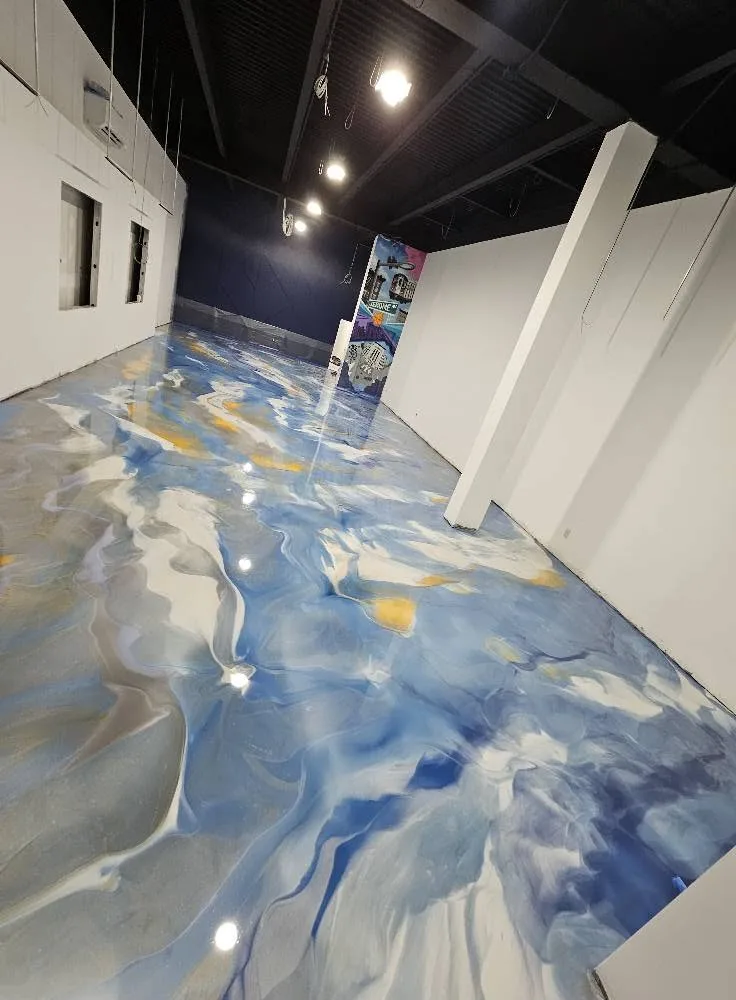





Questions about new-build garage floor coatings
How long after the slab is poured can it be coated?
There is no single number. New concrete gives off water as it cures, and the right timing depends on the mix, the weather and the coating system. The builder knows when the slab went in, and a moisture test settles the question when timing is close. Danny will not pour on a slab that is not ready.
Is it worth coating a new garage floor right away?
Coating now means no oil stains, no salt damage and no stored boxes to work around, and the prep is simpler on clean concrete. Waiting a few years usually means a dirtier slab and a garage that has to be emptied completely. If you plan to coat eventually, the move-in window is the easiest time to do it.
Can you work around my builder’s schedule?
Yes. Danny works out the timing with the builder or the homeowner so the garage is coated after the interior trades are done and before move-in. He needs the garage empty and the overhead door working for the days of the job. A call to (908) 577-7104 is the place to start.
Does the step into the house get coated too?
Usually, yes. The concrete step or landing at the house door takes as much traffic as any part of the floor, and coating it ties the whole garage together. Its edges get finished by hand. If the step is wood or a separate stoop, Danny talks through where the coating should stop.
Should the garage be coated before the shelving goes up?
Yes. Shelving, cabinets and wall racks are far easier to install on a finished floor than to coat around, and the flake then runs clean to every wall. Anything anchored to the floor afterward goes through the coating with its holes drilled cleanly. Plan the installers for after the cure.
Is flake the only option for a new garage?
Flake is the common pick because it hides salt and dirt well, though a solid color or even a metallic floor can go into a new garage. Solid colors show more grime between cleanings. Metallic suits a garage that holds a car collection better than one that takes daily winter driving.
Other construction work
New builds, renovations and tenant fit-outs, scheduled once the slab has cured and the other trades are out.
- Concrete Floor Coating after Slab CuringCoatings poured on new concrete once a moisture test shows the slab is ready, with the weak top layer ground off first.
- Floor Coating Installation after Concrete RepairsOne coating poured over a slab after concrete repairs, ground to a single texture so the patches and seams stop showing.
- New Construction Commercial Floor CoatingsCoated floors for new shops, offices and showrooms, scheduled in with the general contractor and finished before handover.
- Industrial Facility Flooring InstallationResin floors for production areas, docks and maintenance shops, installed in sections so the facility can keep working.
- Concrete Slab Coating for New BuildsMetallic or solid color coatings poured over new slabs inside a house, so the concrete itself becomes the finished floor.
Every county Danny covers, and every town in them, has its own page. See every areaSee the galleryRead: What Road Salt Does to a Garage Floor, and How a Coating Helps
Danz Handz
Danny Carrero, epoxy specialist
dhepoxy@gmail.com
Cranford, NJ. Mon to Sat, 8 to 6. Hablamos español.
Book a walkthrough
Tell Danny about the space. He calls you back, comes out, looks at the concrete and talks it through before anything gets decided.