
Kitchen floors chosen for the cleaners you actually use
Danny’s first request in a kitchen like this is a look at the chemical shelf. Degreaser, oven cleaner and sanitizer go down on the floor every night, and the spots where the old finish has etched or gone soft show which ones are doing the damage. The new system gets chosen with those labels and the product data in hand.

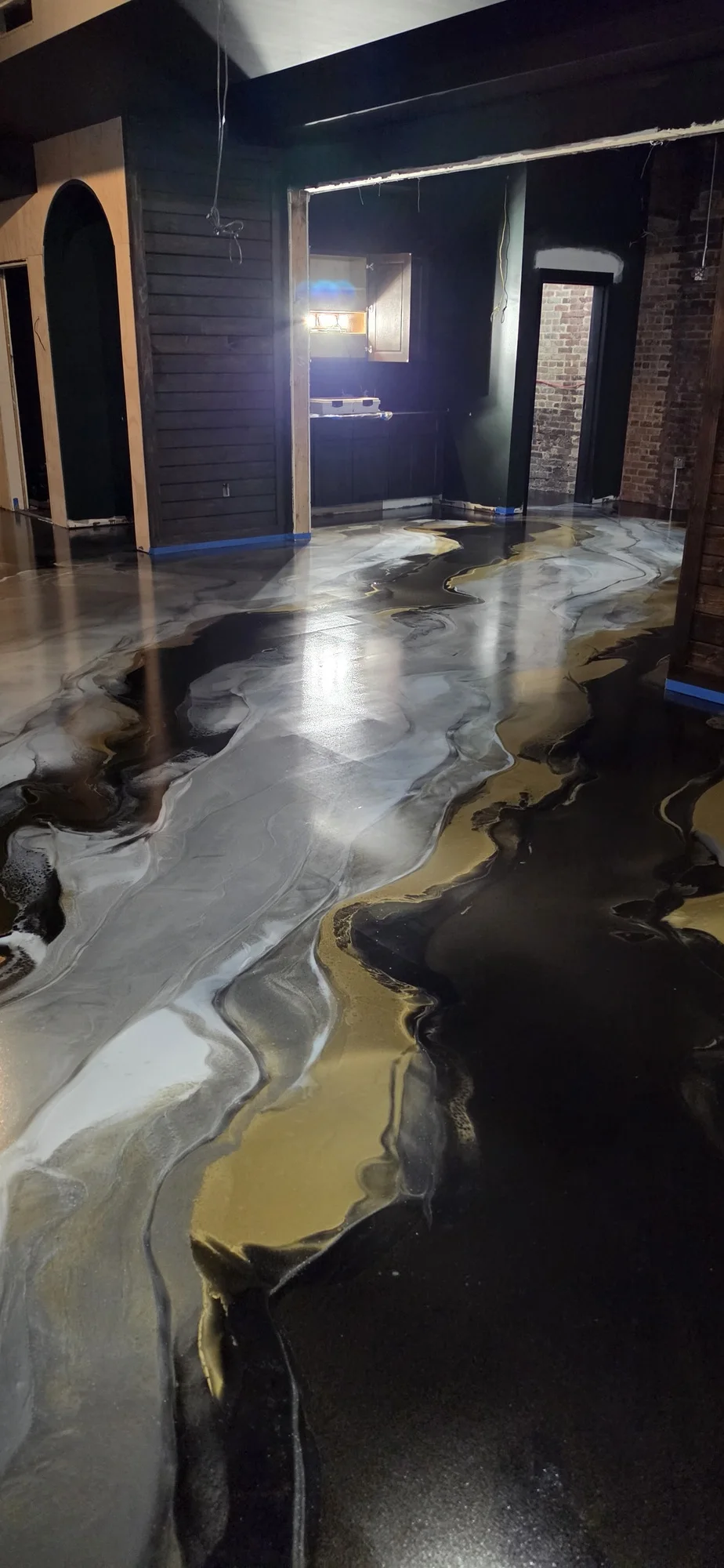
The short version of chemical-resistant kitchen flooring
Chemical-resistant kitchen flooring is a resin system picked for the specific chemicals a kitchen uses, poured over ground concrete with a cove base. The word resistant covers a wide range, and no floor shrugs off everything, so the starting point is your list: the safety data sheets for every cleaner and sanitizer, plus what spills near the fryers and the prep sinks. Danny compares that list to the product data for the systems he works with. He also watches how the kitchen moves, since traffic wears a floor alongside the chemicals.
Danny compares that list to the product data for the systems he works with.
It fits commercial kitchens on a slab where the chemical list is known and steady. Kitchens that switch cleaners often, or that use something unusual like a strong acid descaler on the floor, should share that before the system is chosen. Areas that also see heat, like the fryer bank, may need a different system from the prep area. A floor already damaged by chemicals needs the damaged layer ground away and repaired before the pour. Danny checks for that damage on his walk.
Before the walk, Danny asks for the kitchen’s chemical list and data sheets. On site, he looks at the spots where chemicals hit the floor hardest: under the fryer bank, at the chemical dispenser, by the mop sink and along the dish area. He checks for etched, soft or discolored concrete. The kitchen is closed for the work, the floor is diamond ground past the damage, and cracks and pits are repaired. The chosen system is poured with its cove. The manager and Danny walk the floor once it has cured, and then the equipment returns.
A kitchen floor’s real test is the cleaning bucket, every night, for years.
How the work runs
The cleaning shelf decides this floor. The stages start with the labels on every bottle and end with a walk along the dispenser wall.
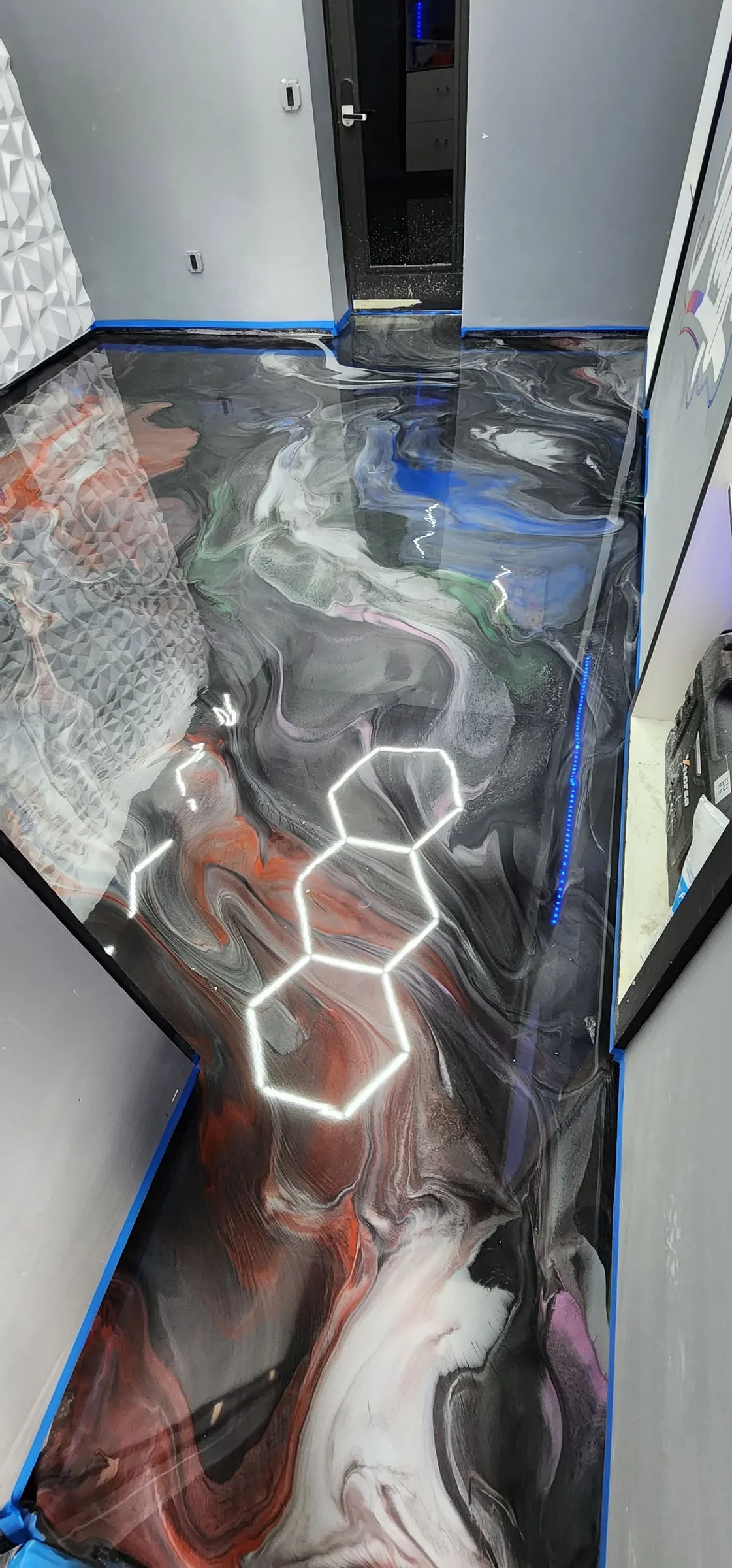

Photographing the chemical shelf
Before the walk, Danny asks the manager to photograph every product on the cleaning shelf and send the safety data sheets. He checks each one against the product data for the systems he is considering, so he arrives already knowing which products will matter most.

Finding the etched and soft spots
On site, Danny looks for concrete or old coating that is etched, softened or discolored. Those spots, usually under the dispenser, by the mop sink and around the fryers, show which products have been reaching the floor in strength.

Grinding past the damaged layer
Chemical damage often runs deeper than it looks, so the grinder goes down until clean, hard concrete shows. Soft areas are cut out and rebuilt, pits are filled, and the slab is cleaned of any residue that could stop the new system from bonding.

Heavier coat by the mop sink
The chosen system goes down across the kitchen with a cove at the walls. The areas under the dispenser, at the mop sink and in the chemical storage corner get a heavier build, since concentrate drips there before it is ever diluted.
Final look along the dispenser wall
After the cure, Danny walks the kitchen with the manager, ending at the dispenser and mop sink. He explains what normal wear looks like there and which signs mean a spill sat too long, then the equipment returns.
More of Danny’s floors
Other jobs from the file, not all of them this service. See the gallery








Questions about chemical-resistant kitchen flooring
What does chemical-resistant actually mean?
It means the system has published data showing how it holds up to specific chemicals. It does not mean resistant to everything, and any claim that broad is worth doubting. Danny matches the products your kitchen uses to the data for each system, then recommends one. If something on your list is a problem for every option, he tells you.
Why is our current floor etching near the dispenser?
Concentrated cleaner drips at the dispenser and sits there, often undiluted, and that wears through many coatings and bare concrete. During prep, the damaged area is ground and repaired, and the new system is picked with that exposure in mind. A drip tray or catch basin under the dispenser also helps keep concentrate off the floor.
Do we need to change our cleaners?
Usually not. The point is to choose a floor that works with what you already use. If one of your products is especially harsh and a gentler option would do the same job, Danny may mention it, and the decision stays yours. The system is chosen to the list you give him.
Does oven cleaner overspray near the range matter?
It can. Oven cleaners are often strongly caustic, and overspray lands on the floor in front of the range and the oven doors. That exposure goes on the list Danny checks against the product data. Wiping overspray up after cleaning, and not leaving it to sit, helps any floor last longer.
What about sanitizer buckets left on the floor?
Buckets of sanitizer set on the floor all day can leave rings or dull spots, especially if they slosh or drip down the side. A small shelf or a tray for buckets keeps the solution off the floor. The system is also chosen with that sanitizer on the list, so occasional drips are expected.
Do wall-mounted dispensers need to move for the work?
Usually not. Dispensers stay on the wall, and their lines are protected while the cove is shaped below them. A dispenser that drips is worth repairing before the new floor goes down, since it will keep dripping onto it. Danny checks each dispenser on his walk and notes any that leak.
Next to this on the list
Commercial kitchens, bakeries, breweries and cold rooms, with coved bases and slip-resistant finishes.
- Seamless Hygienic FlooringJointless poured floors with cove bases for food rooms, so mops and squeegees reach every corner and nothing settles in grout.
- Slip-Resistant Commercial Kitchen FlooringTextured resin floors for commercial kitchens, with grip set zone by zone so the wet and greasy spots get the most.
- Coved Resin FlooringFull resin floor systems that curve up the wall in one piece, taking away the corner where grease and water collect.
- Floor-To-Wall Cove InstallationResin cove bases added along walls, columns, curbs and equipment pads, tying an existing floor and wall into one cleanable edge.
- Drain-Area Floor Coating SystemsRepair and coating around floor drains and trench drains, with slopes corrected and the new floor tied tightly to each drain.
He drives out from Cranford about 60 miles in every direction for floors like this one. See every areaSee the gallery
Danz Handz
Danny Carrero, epoxy specialist
dhepoxy@gmail.com
Cranford, NJ. Mon to Sat, 8 to 6. Hablamos español.
Schedule a look at your floor
A short note about the space is enough. Danny calls back and books a walkthrough.