
Repairing chips knocked out of an epoxy floor
Chips come from impact. A dropped wrench, a dumbbell set down hard, the edge of a floor jack or a snow shovel at the garage door each knock out a small crater, and once water and grit get under its edges, a few chips turn into a dozen. Danny cleans each one back to sound coating before filling it.


How Danny approaches chipped epoxy floor repair
A chip is a spot where a piece of coating broke away and left bare concrete or base coat showing. Repairing it means grinding the chip and a small margin around it so the edges are sound and beveled, filling the low spot, and rebuilding the coating layers in that spot to the height of the floor around it. On a flake floor, fresh flake gets broadcast into the new color, which blends the patch into the pattern. The topcoat is then carried over the repair so it wears with the rest of the floor.
It fits floors with scattered chips where the rest of the coating is well bonded.
It fits floors with scattered chips where the rest of the coating is well bonded. If chips keep appearing in new places, or the coating flakes off around each one when pressed, the bond itself is the problem and patching will keep chasing it. Thin, single-coat garage kits often chip this way. Chips on a solid color can be matched closely, while a metallic floor shows a repair more, and Danny will say so before you decide anything.
Danny walks the floor and marks every chip, including the small ones people stop noticing. He presses on the edges of each one to see whether the coating around it is holding or lifting, and he notes where the chips cluster, since a group in front of a workbench or along the door says something about how the floor gets used. Each chip is ground back to sound coating, cleaned and filled. The color and flake go back in, the topcoat goes over the repaired spots, and after the cure Danny walks the floor again with you to check every repair against the floor around it.
If the coating lifts when you press the edge of a chip, the chip is the least of it.
Five stages, every time
Chip repair goes spot by spot, and the stages below follow each crater from the first press of a thumb on its edge to a patch that sits level with the floor.
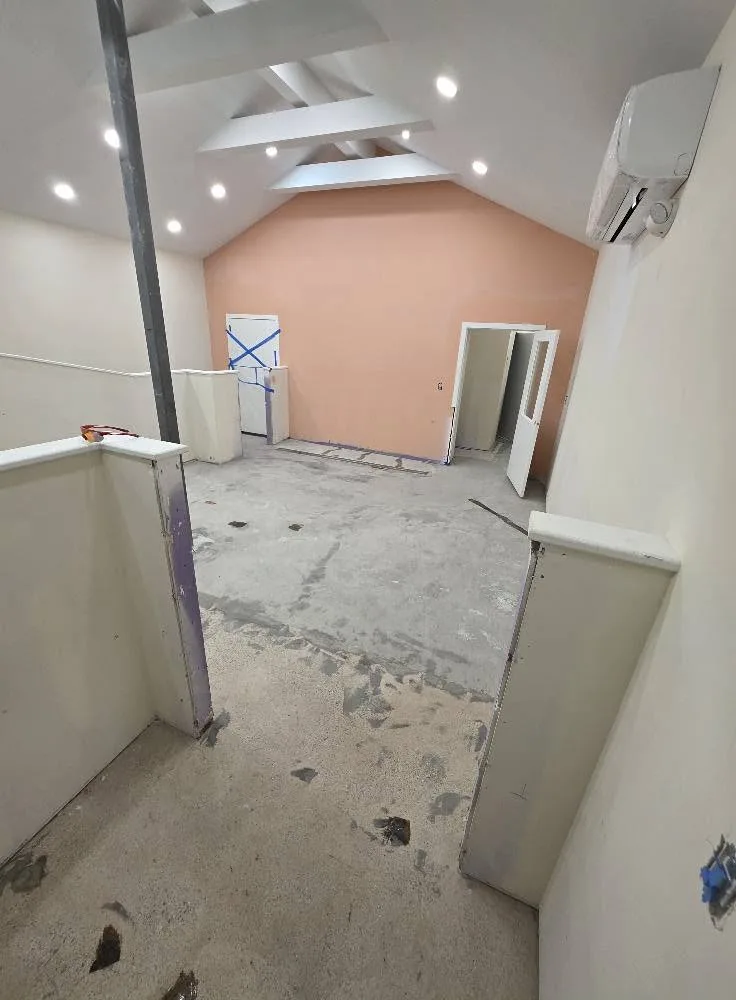

Counting and flagging every crater
Danny walks the floor with a roll of tape and flags each chip, even the pinhead ones under the workbench. Seeing the flags all at once shows whether the damage is a random scatter of impacts or a pattern that follows a cart route or the snow shovel’s path to the door.

Thumb pressure on each rim
At every flag he presses around the rim and works a thin blade under the edge. Coating that stays put means a contained chip. Coating that flexes or lifts means the bond is weak there, and that spot is cut back further before anything gets filled.

Beveling the edges back
Each chip is ground into a shallow bowl with sloped sides, reaching sound coating on every side and bare concrete at the bottom. A beveled edge gives the fill a wider surface to grip than a straight-walled hole, so it does not pop out under the next dropped tool.

Rebuilding layer by layer
On a flake floor, base color goes into each crater and fresh flake is broadcast into it while wet, then scraped and sanded once hard. On a solid color, matched color is built up in thin passes until the patch sits level with the floor around it.

Topcoat over the flags
The topcoat is carried a little past each repaired spot, or across the whole floor when the chips are many. After the cure, Danny goes back to each flagged location with the owner and looks at the repair from standing height before the tools and the car return.
More of Danny’s floors
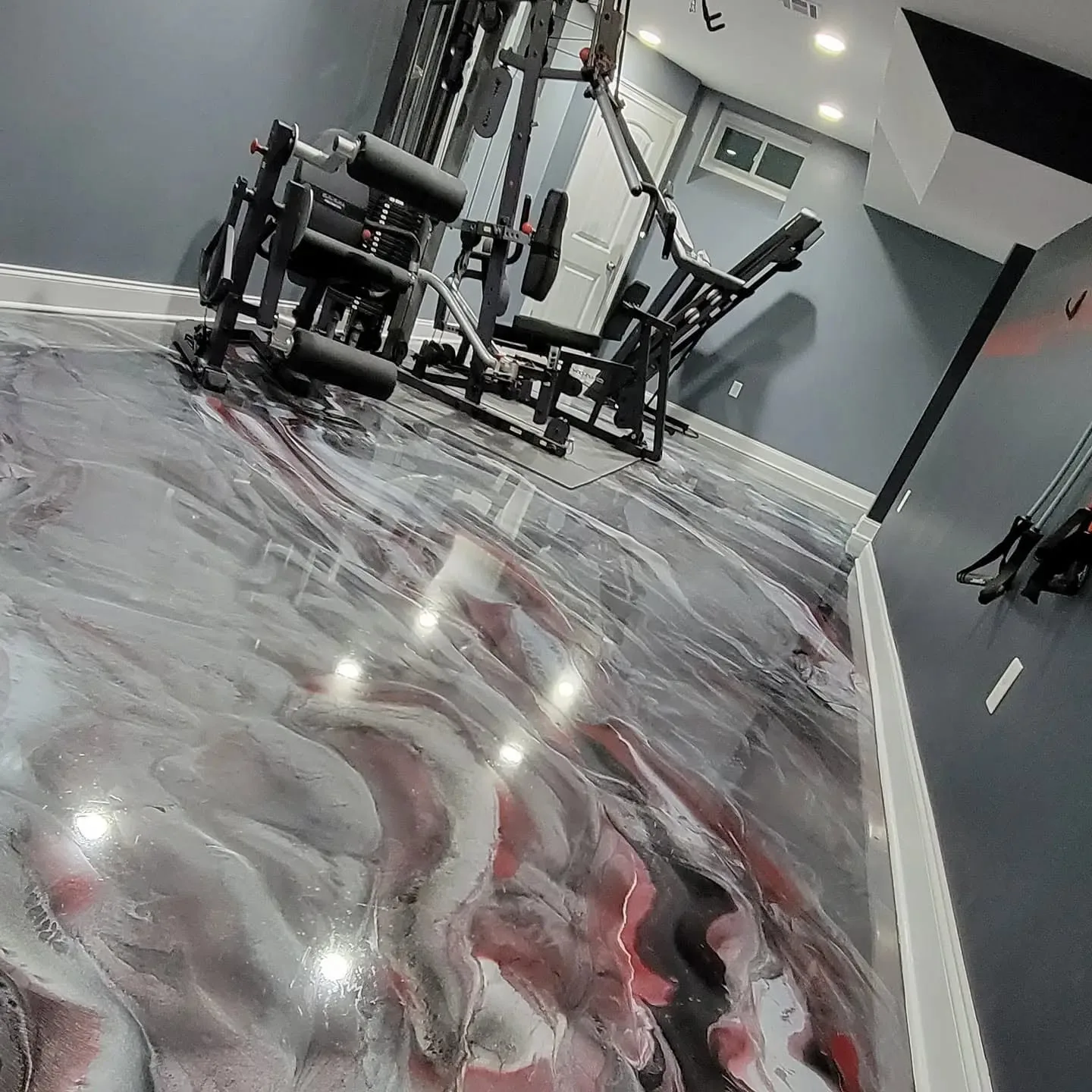
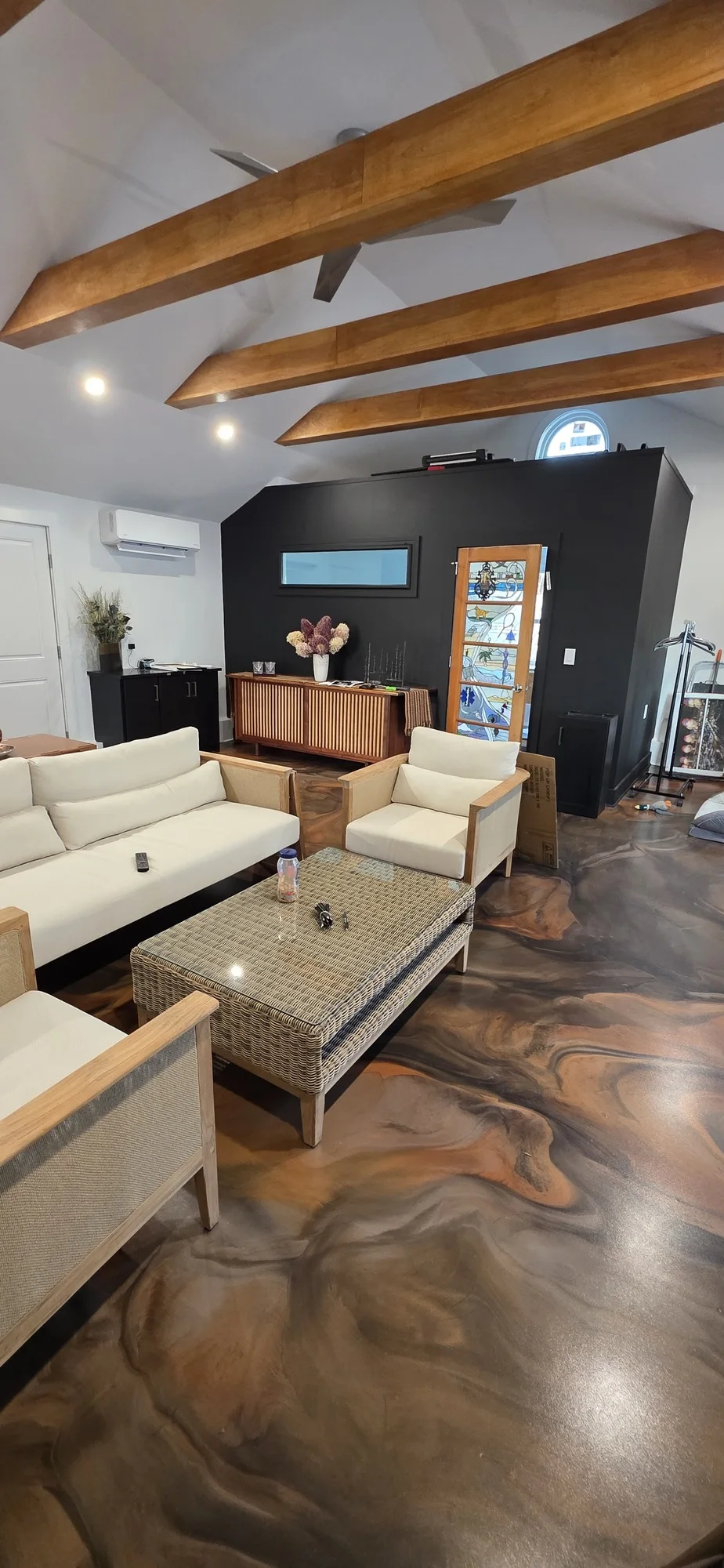
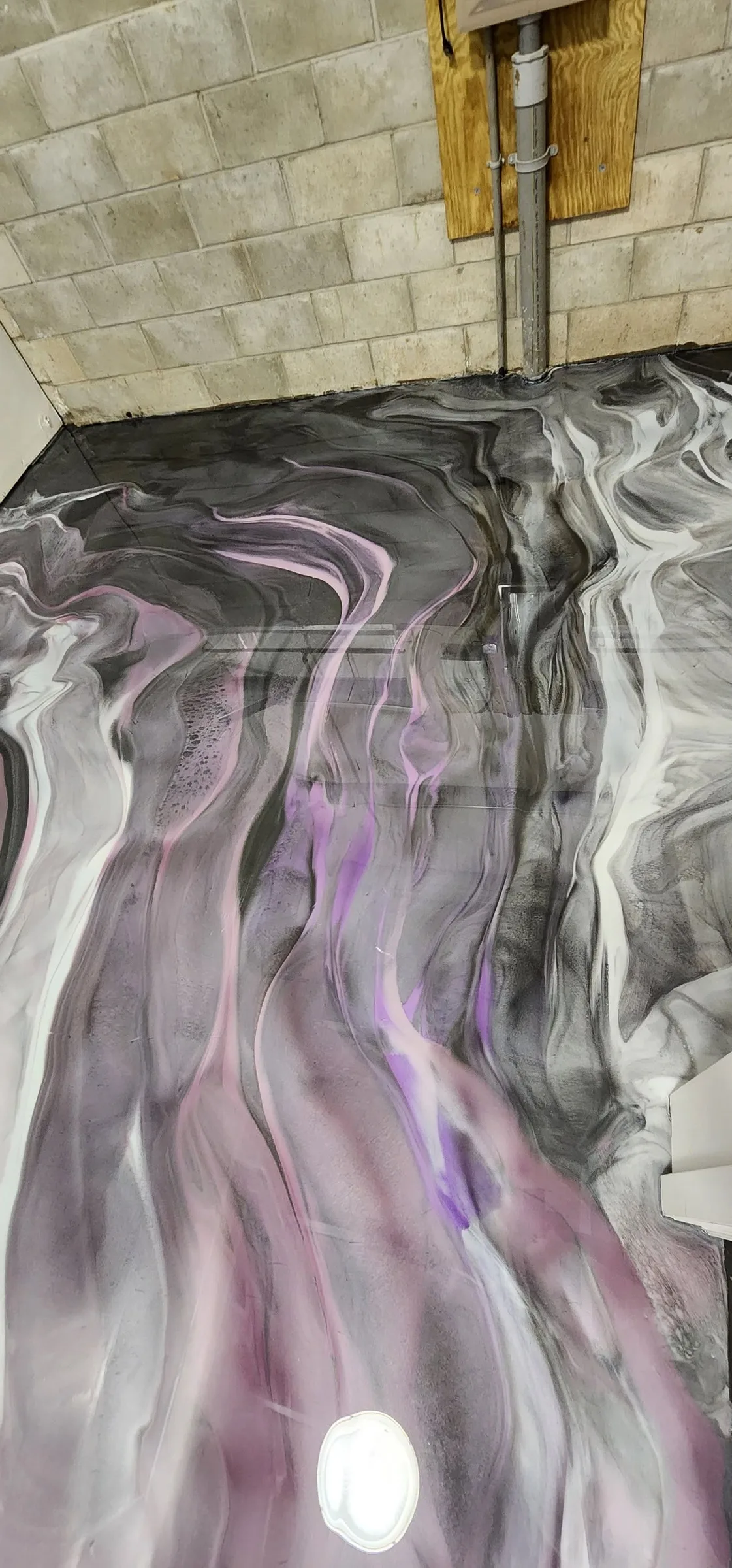
Other jobs from the file, not all of them this service. See the gallery





Questions about chipped epoxy floor repair
Why does my floor keep chipping in new places?
Usually because the coating was never fully bonded, often from thin product or a slab that was not ground before the coating went on. When that is the case, each impact pops another piece loose. Danny checks the edges of the chips during the walk, and if the bond is weak across the floor he will tell you plainly that repairs will not hold.
Will the repaired chips be visible?
On a flake floor, rarely from standing height, because new flake is broadcast into each patch. A solid color can be matched closely, though a very glossy dark floor may show a faint outline in low light. Metallic floors are the hardest to hide. Danny looks at your floor and gives you a straight answer before any grinding starts.
Can a handful of chips be fixed in one visit?
A small number of chips is a modest job, and Danny can often handle them together in one trip, with the garage or room closed through the cure. A floor with dozens of chips spread everywhere may be better served by a full recoat, and he will lay out both options so you can choose between them.
Does cold weather make an epoxy garage floor chip more easily?
Cold coatings are harder and less forgiving, so a dropped tool or a frozen chunk of ice falling off a wheel well can knock out a piece that would only dent the floor in summer. The concrete near the door also moves more with the temperature. Danny looks at where the chips cluster to see whether the door area needs extra attention.
Can I keep using the garage with a few open chips until the repair?
Yes, for a short while. Sweep the chips out so grit is not ground into the edges, and wipe up water or salt that collects in them. Avoid prying at loose edges. The longer a chip stays open in winter, the more likely its rim is to lift, so booking the repair before salt season helps.
Will a chip repair hold if a heavy rack goes back in the same spot?
A properly bonded patch carries the same load as the floor around it once it has fully cured. What causes trouble is the impact that made the chip in the first place. A rubber pad under rack feet, or a mat where weights get set down, spreads the load so the repair and the floor around it are not struck the same way again.
Related floors
Peeling, bubbling, chipped or faded coatings, patched or recoated, plus upkeep plans for floors that work hard.
- Scheduled Commercial Floor MaintenanceFloor maintenance visits set on the business calendar, with small fixes handled on the spot and bigger work booked for planned closures.
- Epoxy Floor Replacement and ReinstallationFailed epoxy floors ground off to bare concrete and replaced from the base up, with the chance to switch to flake or a high-end metallic.
- Epoxy Floor RepairRepair for chipped, peeling, cracked and worn epoxy floors, starting with why the floor failed before deciding to patch, recoat or redo.
- Bubbling Epoxy Floor RepairRepair for epoxy floors that cured full of bubbles, pinholes and craters, ground open, filled and recoated so the cause gets fixed too.
- Blistered Epoxy Coating RepairRepair for blisters that rise under older epoxy floors, starting with what is lifting the coating before choosing a patch or a redo.
Every county Danny covers, and every town in them, has its own page. See every areaSee the gallery
Danz Handz
Danny Carrero, epoxy specialist
dhepoxy@gmail.com
Cranford, NJ. Mon to Sat, 8 to 6. Hablamos español.
Tell Danny about the floor
Tell Danny what you are working with. He will call, then come look before anyone talks numbers.