
Floors for slabs that test high for moisture
After a moisture test comes back high, or after a basement floor has already blistered, the fix is usually a vapor mitigation layer: a moisture-tolerant primer that goes on the concrete before the rest of the system. It is meant to keep water vapor from pushing the coating off from below, and Danny picks the product to the test results and the product data.
What concrete vapor mitigation systems really involves
Most vapor mitigation systems are epoxy formulated to bond to damp concrete and slow the vapor moving through it. They go on thicker than a normal primer, over a ground and repaired slab, and the decorative or protective coats are built on top. Which product gets used, and how it is applied, comes from the moisture readings and the maker’s product data, since each one is rated for a different range of conditions. The finished floor looks like any other coated floor. The difference is the layer underneath it.
A mitigation layer adds material and time to the job, so it goes in when the test calls for it.
Basements, slab-on-grade rooms, older floors without a vapor barrier and commercial slabs that cannot wait for concrete to dry are the typical jobs. It is meant for vapor, the slow movement of moisture through concrete. It will not stop water running in through a crack, a cold joint or a foundation wall, and it will not fix a yard that drains toward the house. Those need their own repairs, sometimes by another trade. A mitigation layer adds material and time to the job, so it goes in when the test calls for it.
Danny works from the moisture test, so it comes first. He walks the space looking for active water, efflorescence and failed coatings, and asks where water shows up after storms. If mitigation is needed, the slab gets diamond ground to open it and cracks and joints are repaired, since the layer has to cover continuous, sound concrete to do its job. The mitigation coat goes on at the rate the product data calls for and is left to cure. Then the primer or base coat and the finish system go over it, and the final walk covers the floor edge to edge.
Vapor mitigation handles moisture moving through the slab. Flowing water needs a different fix.
From bare slab to finished floor
A mitigation layer turns a high moisture reading into a floor plan: tighter prep, a heavier first coat spread at a measured rate, then the finish system on top.

Starting from the readings
Danny reviews the test results with the owner and matches them to the moisture limits in the mitigation product’s data. He also notes where the readings ran highest, since those areas get the closest attention during prep and application.

Routing outside water away
Gutters that empty at the foundation, grading that tips toward the house and any active leak in a wall get sorted before the floor is scheduled. The mitigation coat is made for vapor, so liquid water has to be sent somewhere else.

Opening the slab fully
The concrete is diamond ground to a clean, open surface so the mitigation epoxy can soak in and grip. Cracks and joints are filled first, because a gap in the layer becomes a path where vapor finds its way up.

Measured application by section
The mitigation coat is spread at the coverage rate the product data sets, with the room divided into sections so the right amount lands everywhere. Danny checks the spread as he goes, since a thin area weakens the barrier.
Finish coats over a cured barrier
Once the mitigation layer has cured as directed, the base coats and decorative or protective finish go over it like any other floor. The final walk includes the areas that tested highest, so the owner knows where the barrier mattered most.
More of Danny’s floors
Other jobs from the file, not all of them this service. See the gallery








Questions about concrete vapor mitigation systems
Is a vapor mitigation system the same as waterproofing?
No. Mitigation slows water vapor moving up through the slab so it does not lift the coating. Waterproofing deals with liquid water getting in through walls, cracks and joints, and a basement with active leaks needs that fixed first. Danny looks for signs of both and is clear about which problem a floor coating can handle.
Can I skip mitigation and just use a regular primer?
If the test is within what the regular primer and coating allow, yes, and that is the simpler job. If it is above that, a regular primer is likely to blister or let go as vapor pushes against it. Danny goes by the reading and the product data, and he explains the risk plainly before you decide.
Will the floor look any different with a mitigation layer?
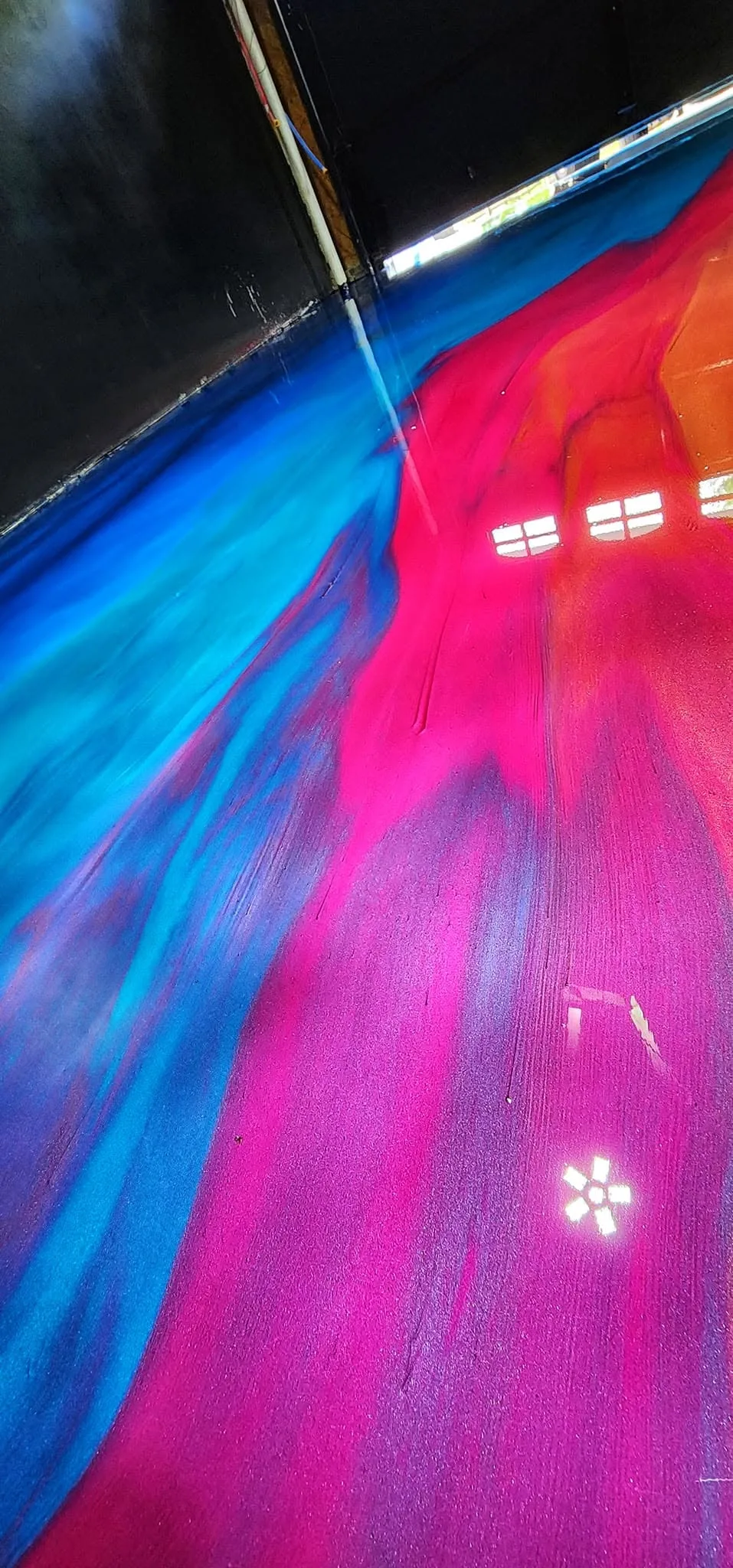
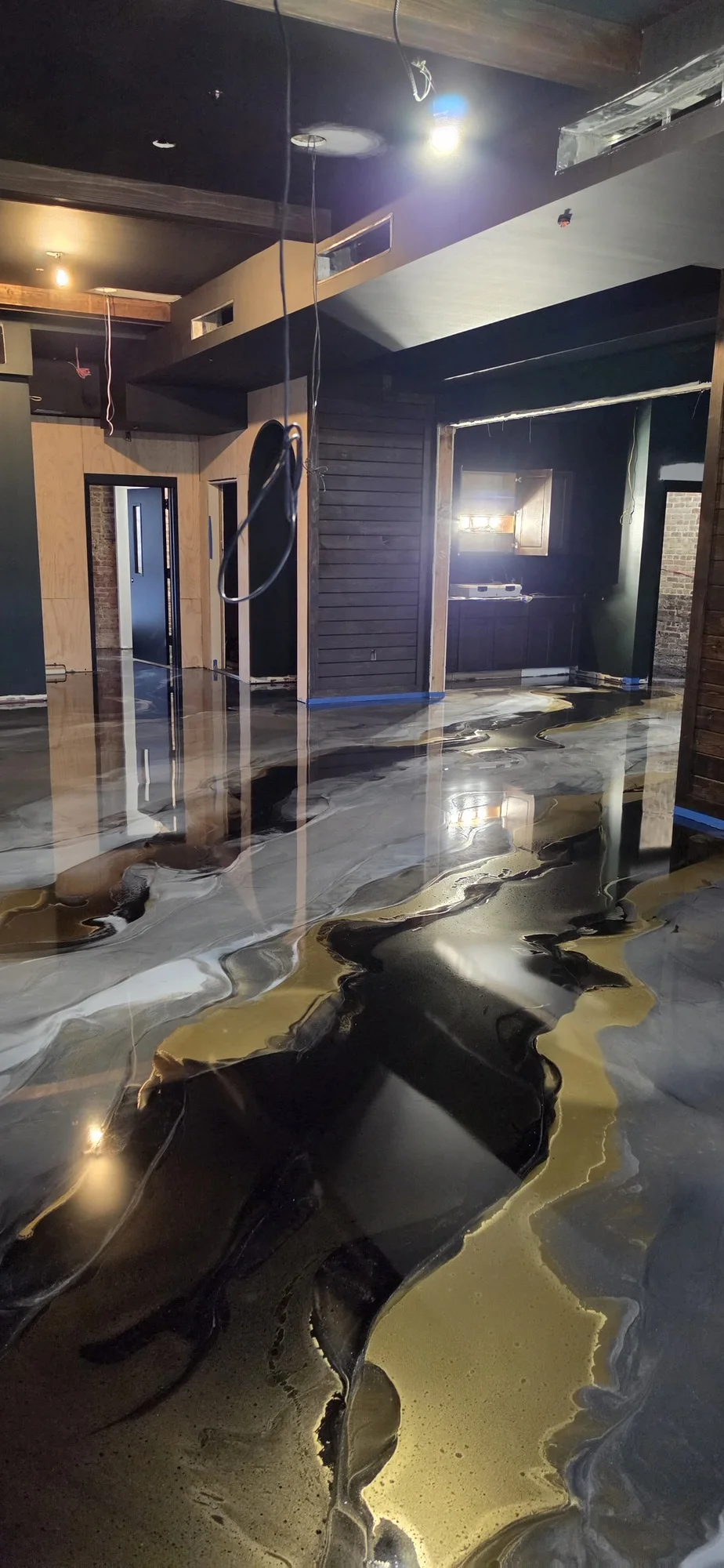
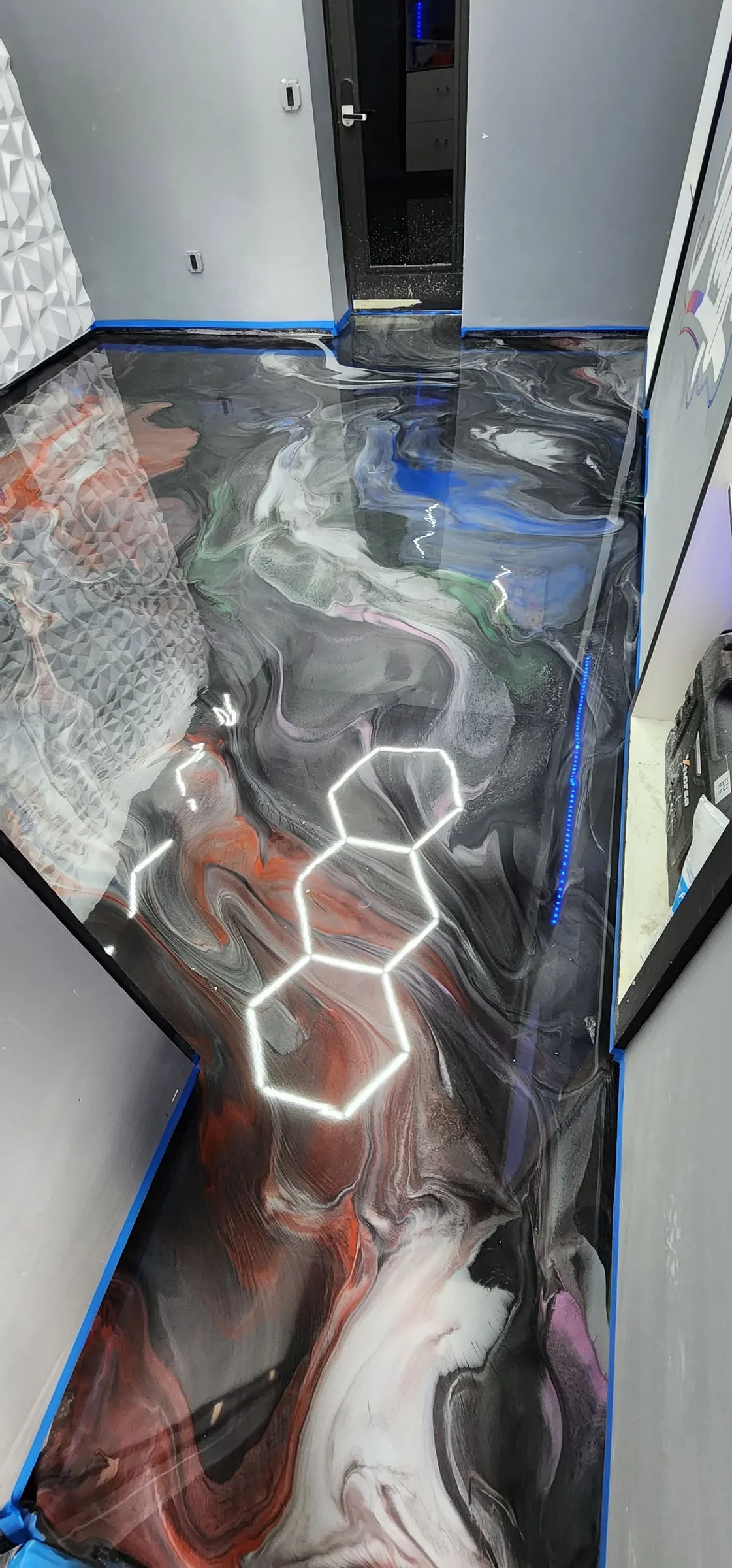
No. The mitigation coat sits underneath, and the floor on top can be metallic, flake, solid color or any other system Danny pours. The only visible difference is in the schedule, since the extra coat needs time to cure before the rest goes on. Once the floor is finished, nobody can tell it is there.
Is there a reading too high for mitigation?
Each product has a limit in its data, and a slab beyond it needs more than a coating. That can mean drainage work outside, waiting for a new slab to dry further, or a different flooring approach. Danny reads the result against the product data and says plainly when a floor falls outside what any coating he would use can handle.
Will mitigation help with a musty smell in the basement?
It can reduce dampness rising through the floor, which is one source of that smell. Musty odors also come from damp walls, poor airflow and stored items that hold moisture, and a floor coating does nothing for those. A dehumidifier and good ventilation still matter. Danny treats the floor as one part of keeping a basement dry.
Can the mitigation layer go under part of the floor only?
Sometimes, when testing shows one section of a large slab is wet and the rest is within range, such as an addition poured at a different time. The boundary is planned at a joint or a wall so the finish system runs continuously over both. Danny decides from the test spots, which is why they are spread across the whole area.
More from the prep section
Grinding, shot blasting, crack and joint filling, leveling and moisture testing, done before any coating goes down.
- Concrete Shot BlastingSteel-shot blasting to strip and texture large, open slabs before commercial coatings, with the edges finished by a hand grinder.
- Concrete ScarificationRotating steel cutters chip off thick coatings, overlays and raised edges when diamond grinding alone would take far too long.
- Concrete Coating RemovalStripping failed paint, sealers and old coatings back to sound concrete, with the method picked after testing how the old finish comes off.
- Old Epoxy RemovalTaking up peeling, bubbling or yellowed epoxy and finding out why it failed, or sanding and recoating it when the old floor is still bonded.
- Concrete Floor SandingLight sanding to scuff a sound epoxy floor before a recoat, smooth between coats and feather patches into the floor around them.
From Union County out to the Lehigh Valley, Long Island and Fairfield County, the work is all within about 60 miles of Cranford. See every areaSee the galleryRead: Basement Epoxy Floors and the Moisture Under the Slab
Danz Handz
Danny Carrero, epoxy specialist
dhepoxy@gmail.com
Cranford, NJ. Mon to Sat, 8 to 6. Hablamos español.
Book a walkthrough
Send a few lines about the room and the look you want. Danny will call and set up a time to see it.