
A new top layer for worn, rough concrete
Spot repairs stop making sense once a slab is scaled, pitted and patched from wall to wall. Resurfacing lays a thin new cement-based layer over the whole floor, giving it a fresh surface to coat or finish, and Danny only recommends it after confirming the concrete under the damage is still sound.

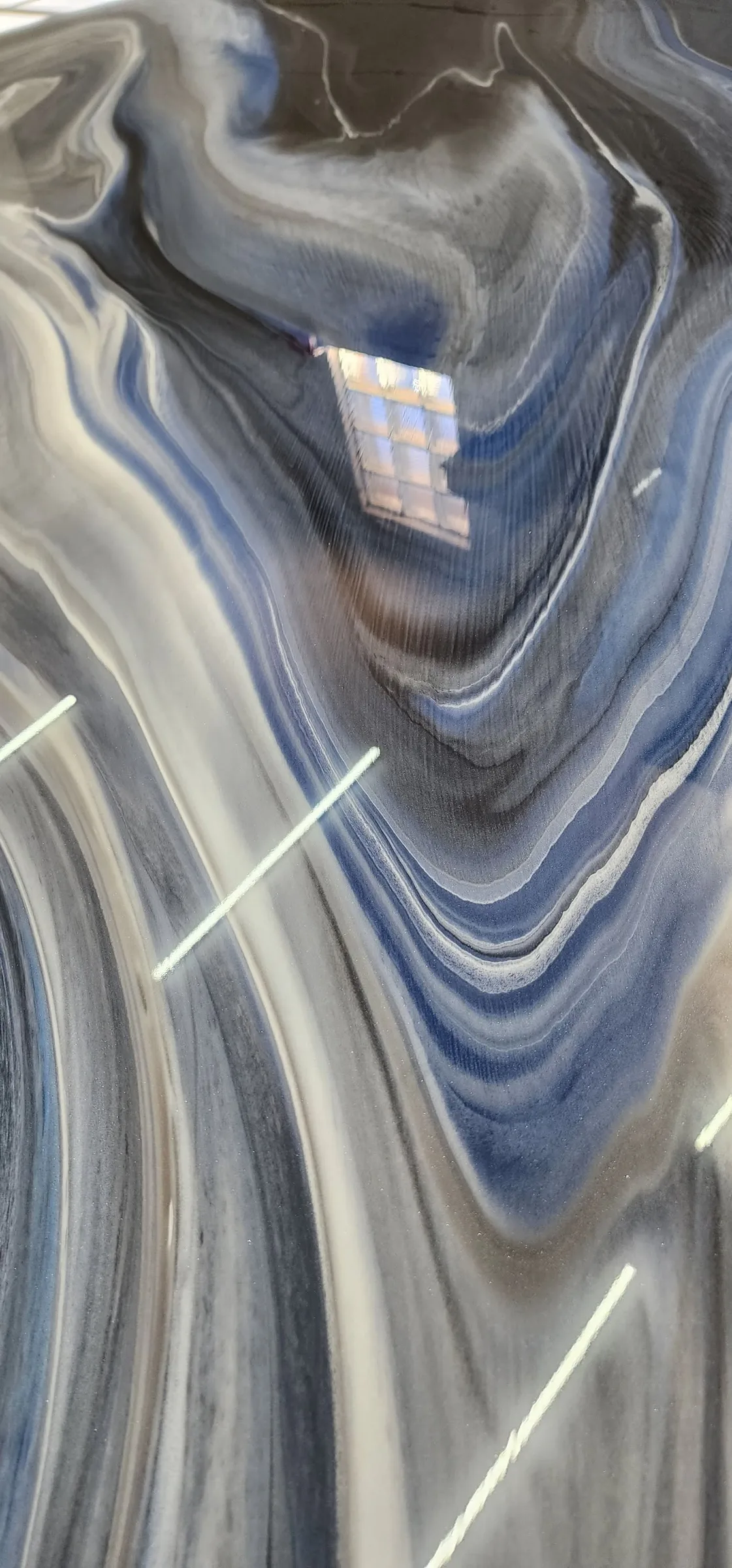
What concrete floor resurfacing really involves
A resurfacer is a polymer-modified cement overlay spread over the existing slab with squeegees and trowels. Before it goes on, the old surface is ground or scarified and cleaned so the overlay bonds. It fills pits, covers old patches and gives the floor one consistent surface where there used to be a quilt of damaged areas and repairs. Some resurfacers are meant to stay as the finished floor with a sealer, and others are a base for epoxy or another coating. Danny picks the one that fits what goes on top.
Some resurfacers are meant to stay as the finished floor with a sealer, and others are a base for epoxy or another coating.
Resurfacing fits slabs worn across most of the surface: scaled garage floors, pitted basements, floors with many old patches and slabs that look tired everywhere. It is not a structural fix and will not hold together a slab that is cracked through, heaving or sinking. Cracks that move can return through the overlay. It also raises the floor slightly, which matters at doors and thresholds. If damage is limited to a few spots, patching and coating is usually the simpler path.
During the walk-through Danny decides whether the floor needs resurfacing or whether patches will do, based on how widespread the damage is. If it is resurfacing, he plans the prep: grinding or scarifying to sound concrete, crack and joint work and a full clean. On the day, the resurfacer is mixed and spread across the floor and worked to an even surface, with joints kept or marked where needed. After it hardens, it gets lightly ground if the coating needs it, then vacuumed. The coating system or sealer follows once the overlay is ready.
When the damage covers the whole floor, the fix is a new surface over all of it.
How Danny does the job
Resurfacing adds a stage most coated floors never need, a new top layer bonded over the old slab, and the process is built around that bond.


Deciding patches or overlay
Danny maps the damage across the floor. When scaling, pits and old repairs would cover most of it, a full overlay gives a more even result and is simpler than a quilt of separate patches that would each need grinding and blending.

Roughening for the overlay
The old surface is ground or scarified down to sound concrete and cleaned well, giving the overlay an open, textured surface to grip. Loose and weak material comes off completely at this stage, edges and corners included.

Handling cracks and joints first
Cracks are filled and joints are cleaned out and marked, so they can be carried through the new layer. That keeps the overlay from cracking along old joint lines when the slab moves later on, season after season.

Spreading the new top layer
The polymer-modified overlay is mixed and spread with squeegees and trowels to an even surface, worked in sections so the edges blend together. Doorways and thresholds are watched closely for height as the work moves across the room.

Readying the overlay for its finish
After it hardens, the overlay is lightly ground if the coating calls for it, joints are recut or left open as planned, and the floor is vacuumed for the sealer or coating system that goes over it.
More of Danny’s floors
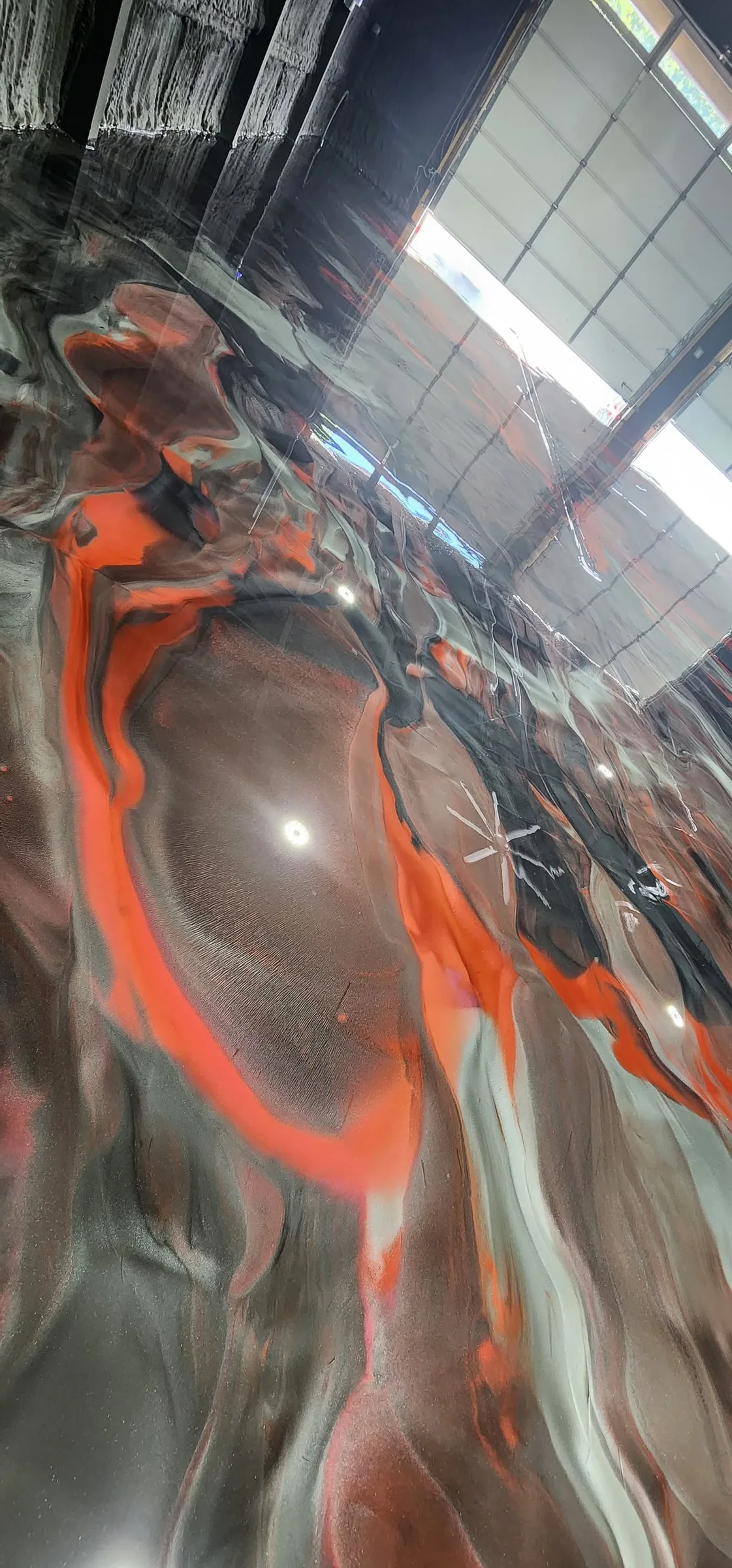
Other jobs from the file, not all of them this service. See the gallery







Questions about concrete floor resurfacing
Is resurfacing the same as replacing the slab?
No. Resurfacing adds a thin new layer bonded to the existing concrete. Replacing means breaking out the old slab and pouring a new one, which is a much larger job and a different trade. Resurfacing works when the slab underneath is solid and the problem is the surface. If the slab itself is failing, Danny will say so.
Can I leave the resurfaced floor as is?
Some resurfacers are made to be the finished floor with a sealer on top, and they look like fresh gray concrete. Others are meant only as a base for a coating. Danny asks how you want the floor to look and picks the resurfacer and finish for that. Since coatings are his main work, he can show what each option looks like finished.
Will resurfacing fix my cracks?
It covers them, and stable cracks that are filled first usually stay hidden. Cracks that are still moving can come back through the overlay. Danny fills cracks and handles joints during prep, and he tells you which ones he expects might reappear so nothing catches you off guard later on.
Does resurfacing change the color of my concrete?
The overlay gives the floor a fresh, even gray that hides the old patches and stains. On its own it reads like new concrete. Most of the time the color comes from the coating or sealer that goes over it, which is chosen separately once the overlay is down and ready.
Is resurfacing worth doing before an epoxy floor?
When the slab is scaled or pitted across most of its surface, often yes. A coating follows the shape of the slab, so a rough, patchy floor shows through. An overlay gives the coating one even surface to sit on. On a slab with only a few damaged spots, patching is usually enough.
Can resurfacing go over a painted floor?
No. The overlay has to bond to bare concrete, so paint, sealer and old coatings come off first. A resurfacer bonded to paint is only as secure as the paint underneath it. Danny grinds the old finish off and opens the slab before any overlay goes down on it.
Other prep work
Grinding, shot blasting, crack and joint filling, leveling and moisture testing, done before any coating goes down.
- Concrete GrindingGrinding the slick top layer off a slab so epoxy can bond, done with dust collection before nearly every floor Danny coats.
- Diamond Concrete GrindingGrinding with diamond tooling picked for how hard your slab is and what has to come off, the standard prep under Danny’s coatings.
- Concrete Floor Surface PreparationThe full sequence before the first coat, assessment, removal, grinding, repairs and cleaning, that decides whether a coating stays on the floor.
- Concrete Shot BlastingSteel-shot blasting to strip and texture large, open slabs before commercial coatings, with the edges finished by a hand grinder.
- Concrete ScarificationRotating steel cutters chip off thick coatings, overlays and raised edges when diamond grinding alone would take far too long.
Danny works out of Cranford, NJ and covers about 60 miles: North and Central Jersey, the city and Long Island, the Hudson Valley counties, Fairfield County and eastern Pennsylvania. See every areaSee the galleryRead: Why Every Good Epoxy Floor Starts With a Diamond Grinder
Danz Handz
Danny Carrero, epoxy specialist
dhepoxy@gmail.com
Cranford, NJ. Mon to Sat, 8 to 6. Hablamos español.
Tell Danny about the floor
Tell Danny about the space. He calls you back, comes out, looks at the concrete and talks it through before anything gets decided.