
Coated floors for tire shops and install bays
Tire shops are hard on concrete. Rolling jacks, tire machines, stacked inventory and black rubber all work the same slab every day, and the bay entrances take the worst of it. Old coatings tend to peel there first, so Danny’s walk starts at the strip where cars pull in.

The short version of tire shop epoxy flooring
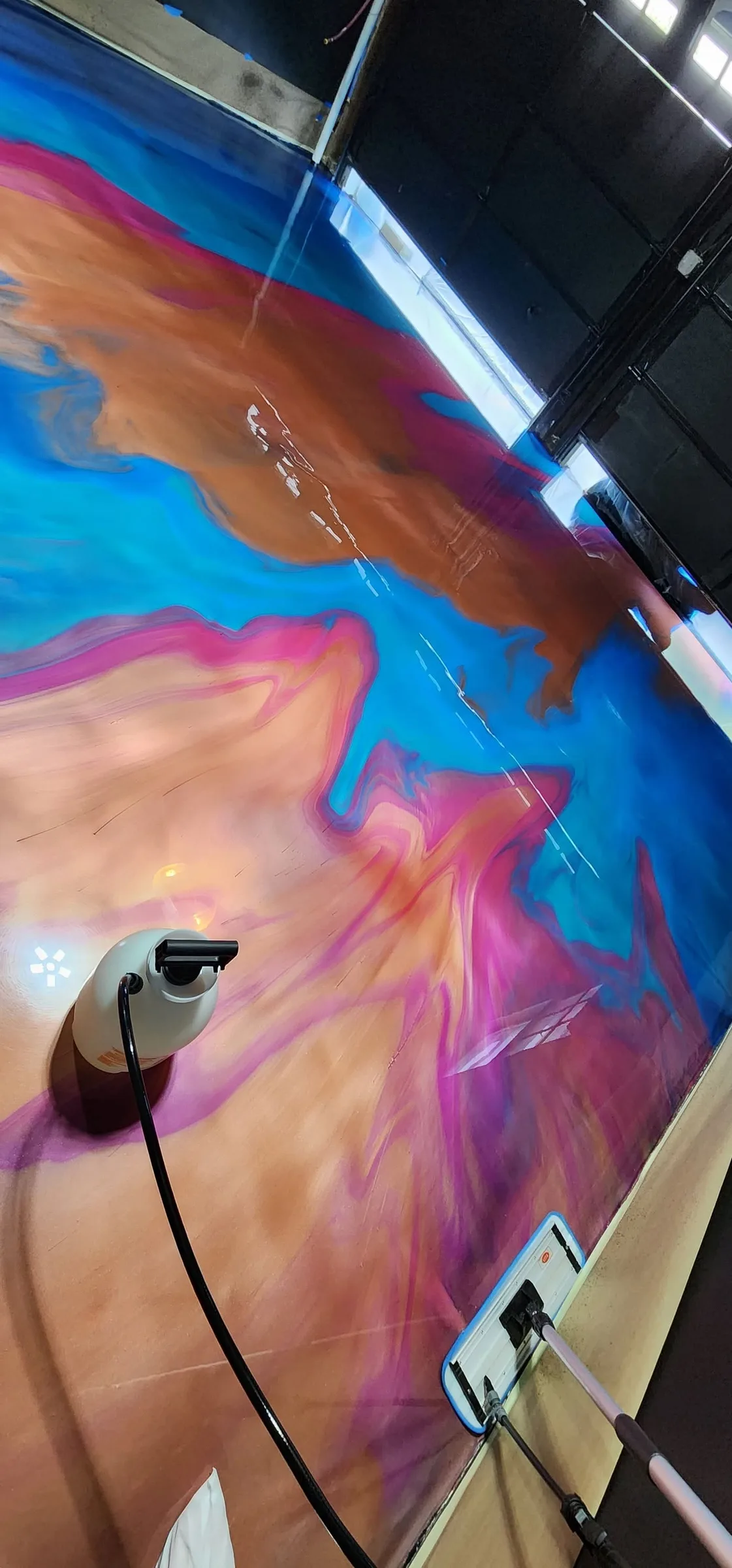
An epoxy floor for a tire shop is a resin coating bonded to ground concrete, built up in coats and finished with a topcoat picked for the work. It closes the pores of the slab, so rubber dust, brake dust and spilled tire sealant sit on top where a mop can reach them. Most of these floors end up as solid color or a flake broadcast. Flake hides scuffs and tire marks well. Solid color looks cleaner and makes a dropped valve core easier to spot. Both get the same prep underneath.
An epoxy floor for a tire shop is a resin coating bonded to ground concrete, built up in coats and finished with a topcoat picked for the work.
It fits the customer side of the shop, the install bays and the storage room where tires are stacked to the ceiling. It has limits. Hot tires can leave marks on almost any coating, and some marks clean off more easily than others depending on the topcoat. Tire machines and balancers bolted through the floor need to be pulled and reset around the work, and that is the shop’s call. A coating also will not fix a slab that is cracking or heaving underneath. Danny will say so on the walk.
Danny starts by walking the shop with the owner, looking at where cars pull in, where the jacks roll and where tires get stacked. He diamond grinds the slab to open it up and take off old sealers or worn coating. Cracks, pitted spots near the doors and old anchor holes get repaired and leveled so the finish lies flat. Then comes the pour, with the coats and the topcoat matched to how the bays get used. The shop stays closed to traffic through the cure. At the final walk, Danny goes over the floor with the owner and explains how to clean it so rubber marks come up.
A tire shop floor takes jacks, rubber and dropped tools every day of the week.
Five stages, every time
A tire shop floor is planned around the changer, the balancer and the racks of stock, so the work follows how a set of tires moves from the car to storage.

Following a set of tires through
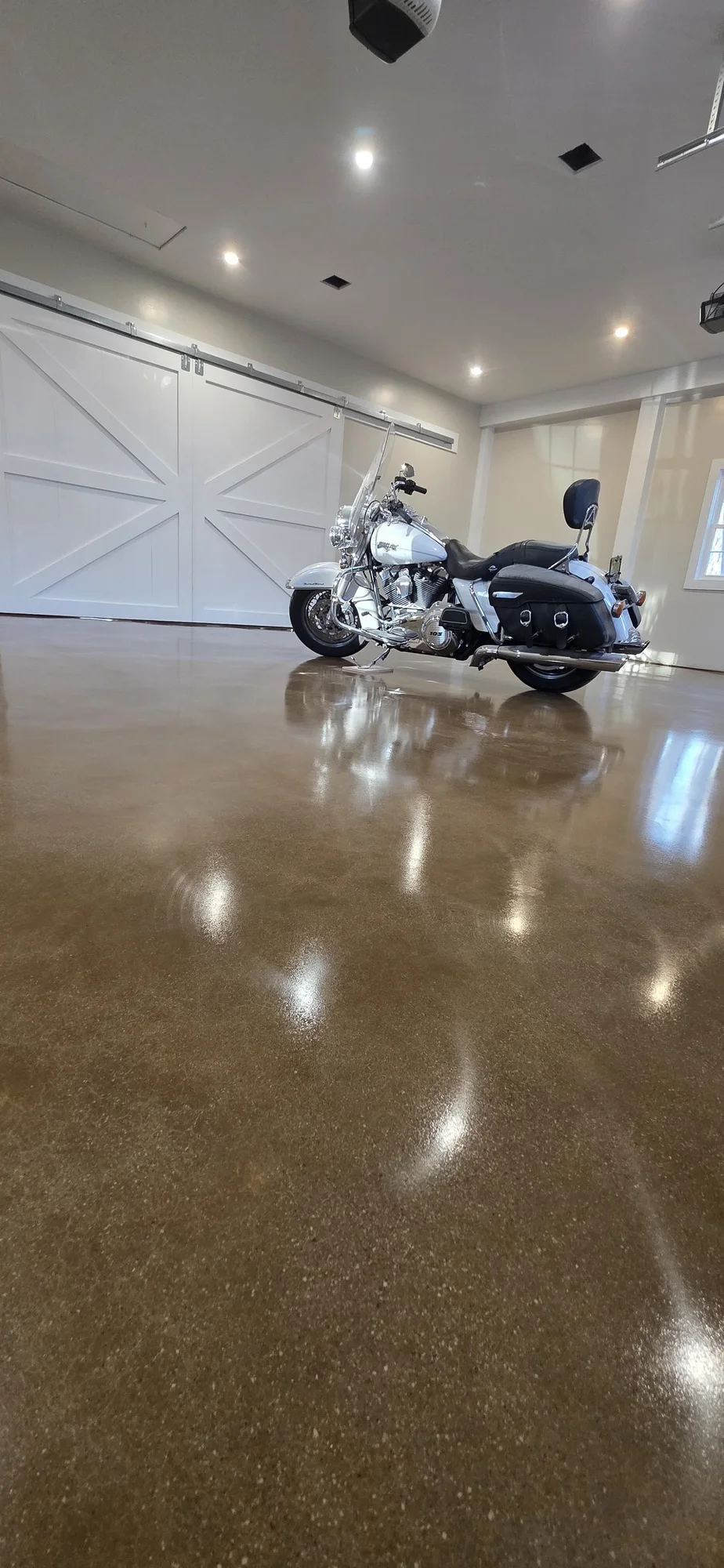
Danny traces the route a set of tires takes: off the car, across to the changer and balancer, then back on or into the racks. Along the way he notes where bead lubricant drips, where wheel weights fall and where rolled tires scuff the concrete.

Emptying the storage racks
Stock comes off the racks and moves to a trailer, another room or a corner that is not being coated, wherever the owner decides. Racks anchored to the slab are unbolted, and their anchor positions get marked so they can go back in the same line.

Degreasing the changer corner
Years of bead lubricant and tire sealant soak into the concrete around the changer. That corner gets scrubbed and degreased before the grinder touches it, then ground until clean concrete shows, and chips left by dropped rims and sockets are filled level.

Grip where the lube lands
The coating goes down across the bays, with grit broadcast into the topcoat around the changer and balancer, where lube and soapy water make the floor slick. The storage side stays smoother so tires roll and stack easily on it.
Rolling stock back onto the racks
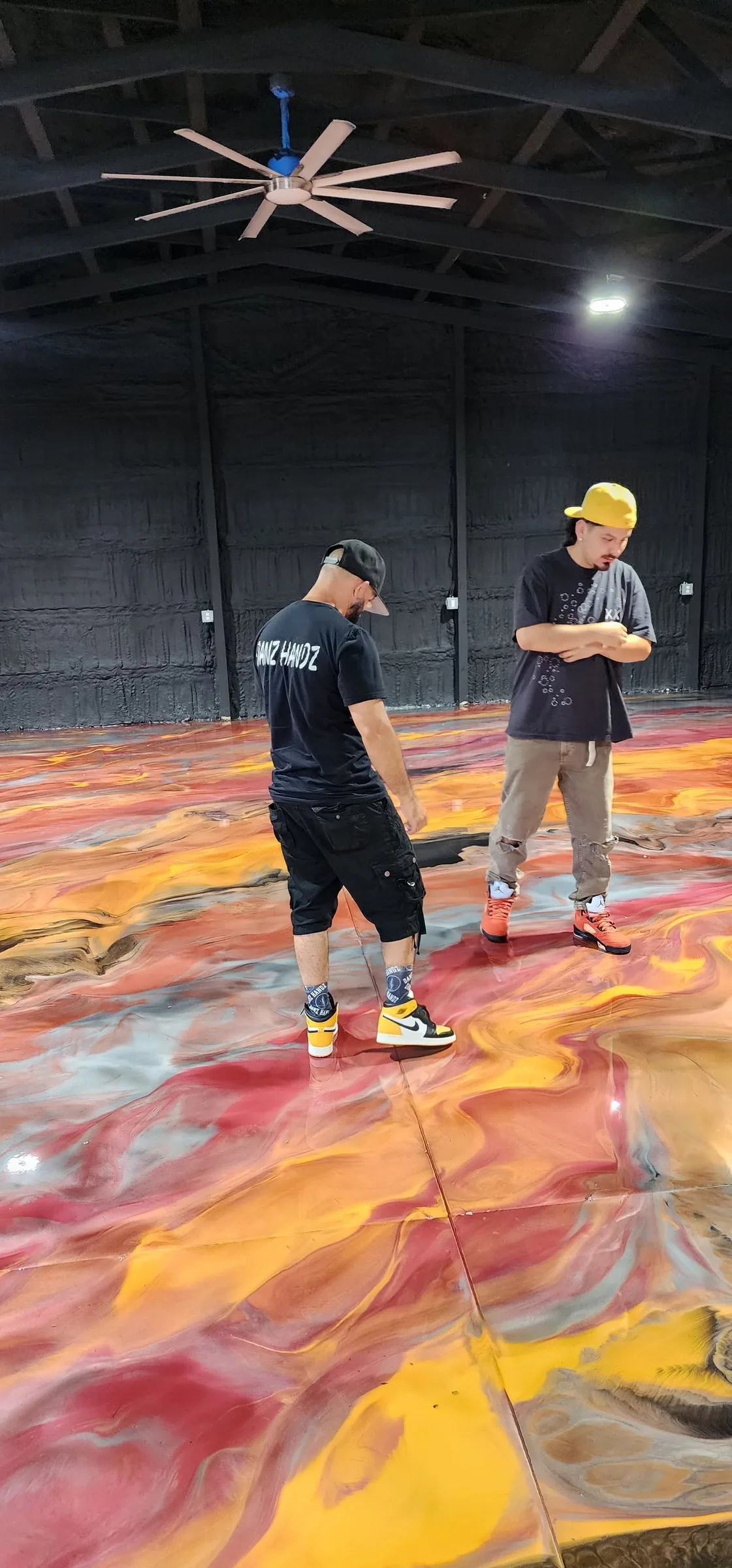
With the cure finished, racks are bolted back on their marks and the stock returns. Danny walks the bays with the owner, checks the edges around the changer base and points out which cleaner lifts lube residue without dulling the topcoat.
More of Danny’s floors
Other jobs from the file, not all of them this service. See the gallery








Questions about tire shop epoxy flooring
Will tire marks show on an epoxy floor?
Some will. Hot tires coming in off the road can leave marks on most coatings. The topcoat choice and the color both affect how much shows and how easily it comes up. A flake floor in a mid-tone hides more than a solid color does. Regular cleaning keeps marks from setting into the surface over time.
Can you coat around our tire machines?
It depends on the machine and how it is anchored. A cleaner job comes from pulling equipment so the floor under it gets ground and coated too. If a machine stays, Danny coats up to it and the edge gets finished neatly. Any disconnecting or reconnecting of air lines or power is handled by the shop’s own people.
Do you work with tire shops outside New Jersey?
Yes. Danny works about 60 miles out from Cranford, which covers North and Central Jersey, New York City and Long Island, the lower Hudson Valley, Fairfield County in Connecticut and eastern Pennsylvania. He walks the shop in person before any pour, so the first step is a call to (908) 577-7104.
Does tire bead lubricant affect the coating?
Most bead lube is soap based, and on a sealed floor it stays on the surface where a mop takes it up. The bigger issue is footing, because a wet film of lube is slick on any smooth floor. That is why the area around the changer usually gets texture in the topcoat.
Can the work be scheduled around the spring and fall rush?
That is usually the plan. Shops that swap seasonal tires get slammed when the weather turns, so the floor is best done in the quieter weeks between those rushes. Danny sets dates with the owner after the walk, and the bays can be split so a couple keep working while the rest are coated.
Is it worth coating the tire storage room too?
Often it is. Storage rooms collect black rubber dust that bare concrete holds onto, and stacked tires get dragged across the floor every time stock is pulled. A plain, light coating keeps the dust where a broom can reach it and makes the room easier to keep clean. Danny looks at the racks before suggesting a finish.
Related floors
Repair shops, detailing studios, dealership bays and showrooms, where oil, tires and lifts meet the floor every day.
- Car Wash Facility Floor CoatingsTextured floor coatings for car wash bays and stalls that live with water, soap and road salt and give crews footing.
- Motorcycle Workshop FlooringCoated floors for motorcycle shops and home bike garages, chosen for kickstand loads and oil drips, with flake or metallic looks.
- Fleet Maintenance Facility FlooringFleet maintenance floors coated in phases, bay by bay, so service keeps running while the shop gets a cleaner, brighter surface.
- Truck Maintenance Bay FlooringHeavy-duty coatings for truck maintenance bays, built for jack stands and dropped parts and for the salt and slush that come through the doors.
- Bus Depot Floor CoatingsZone-by-zone floor coatings for bus depots, from service bays to the wash line, planned around the hours buses are out on route.
Every county Danny covers, and every town in them, has its own page. See every areaSee the gallery
Danz Handz
Danny Carrero, epoxy specialist
dhepoxy@gmail.com
Cranford, NJ. Mon to Sat, 8 to 6. Hablamos español.
Book a walkthrough
Tell Danny what you are working with. He will call, then come look before anyone talks numbers.