
Fixing up an epoxy floor that has lost its shine
An epoxy floor that went down years ago can still hold tight to the concrete and look tired anyway, dull and scratched in the paths people walk. Whether it can be brought back without tearing everything out depends on what the old coating is doing underneath, and Danny finds that out by tapping and checking the edges.


How Danny approaches residential epoxy floor restoration
Restoration means working with the existing coating where it is still sound. Danny cleans the floor, checks the bond, then sands or screens the surface so a new coat can grip it. Deep scratches and small chips are filled and leveled, and a fresh topcoat goes over the whole floor. In some cases a new color coat or a broadcast goes down before the topcoat, which changes the look while keeping the original layers as the base. The old floor does part of the work.
If the original floor was a thin store-bought kit, it may not be worth saving, and Danny will tell you that plainly.
It only works when the old coating is still bonded to the concrete. Floors that peel or sound hollow when tapped have lost their grip, and a new layer on top would come off with them. Those floors need the old coating removed. Restoration also cannot change problems in the slab itself, such as moisture coming up from below. If the original floor was a thin store-bought kit, it may not be worth saving, and Danny will tell you that plainly.
Danny starts by finding out what the floor is made of and how well it is holding. He taps the surface and checks the edges for lifting, and on some floors he does a small test patch. Then the floor is degreased and abraded so the fresh coat bonds to the old one. Chips are filled and sanded flush. Depending on what you want, the next layers can be a straight clear coat that brings the sheen back or a full change of color and finish. He checks the floor with you once the last coat has cured.
A coating that still holds tight to the slab can usually be saved.
How the work runs
Restoring an older epoxy floor means working with the layers already there, so this job begins by proving the old coating still holds before anything new goes on top of it.


Tap the floor for hollow spots
Danny taps across the whole floor with a hard tool and listens. A solid sound means the old coating is still gripping the slab, and a hollow note marks a spot where it has let go. Lifting edges at the walls get checked by hand.

Test a small patch first
In a closet corner or under where a shelf will sit, he sands a small area, applies new material and checks how well it bonds once cured. That test tells him whether the whole floor can be restored or needs to come up.

Cut out what has failed
Any hollow or peeling spot found during the tapping is cut back to well-bonded coating, ground down to sound material and rebuilt flush with the floor around it. Chips and deep scratches are filled and sanded level so the new layers lie flat across them.

Screen the old finish for grip
The whole floor is degreased, then sanded or screened until the shiny old topcoat turns evenly dull and scratched. That roughness is what lets the new layers bond. Dust is vacuumed out of every corner before anything wet goes down.

Refresh or change the look
A clear coat brings back the sheen, or a new color layer, flake broadcast or metallic coat goes down first for a different look. Once the last coat cures, Danny walks the floor with the owner and compares it with the test patch.
More of Danny’s floors
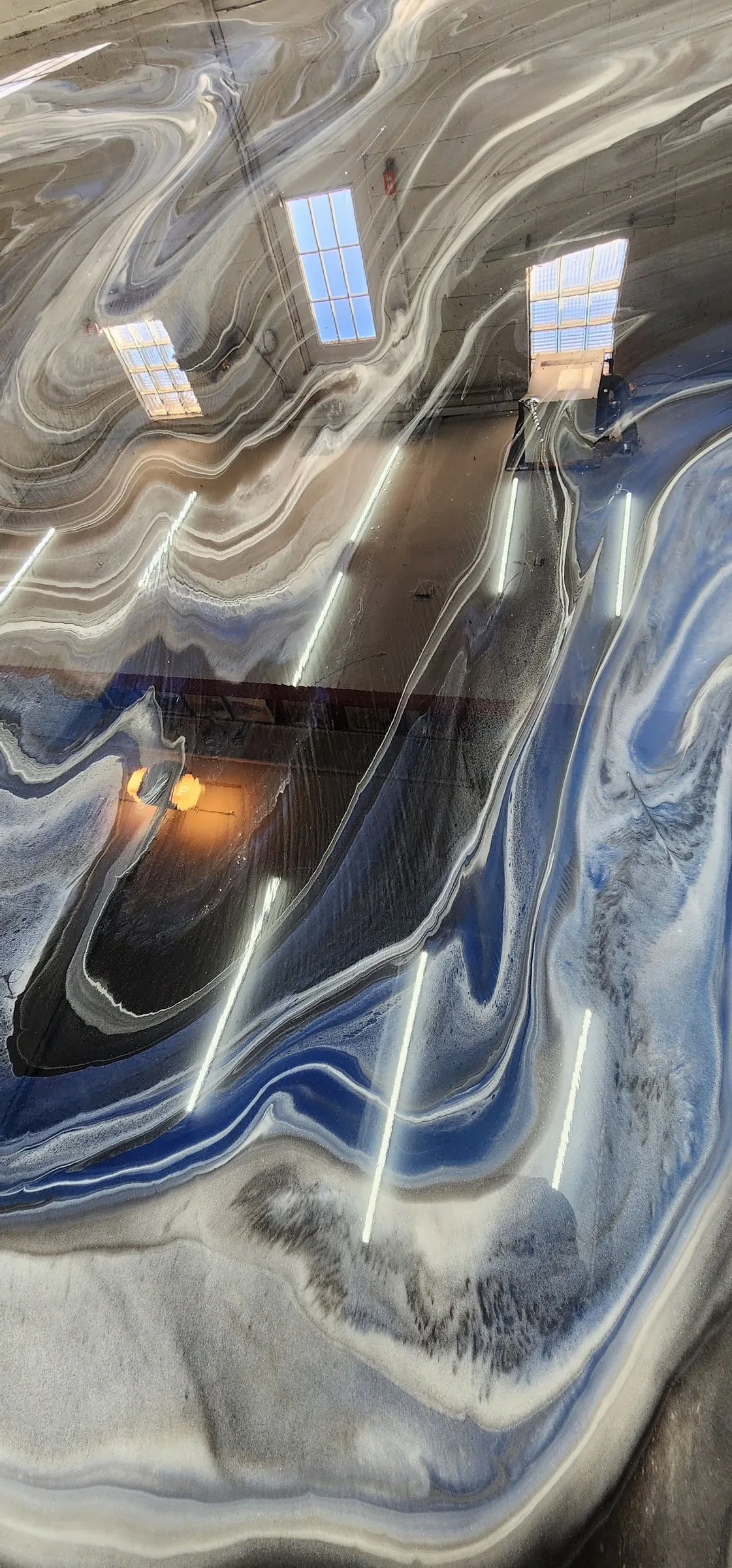
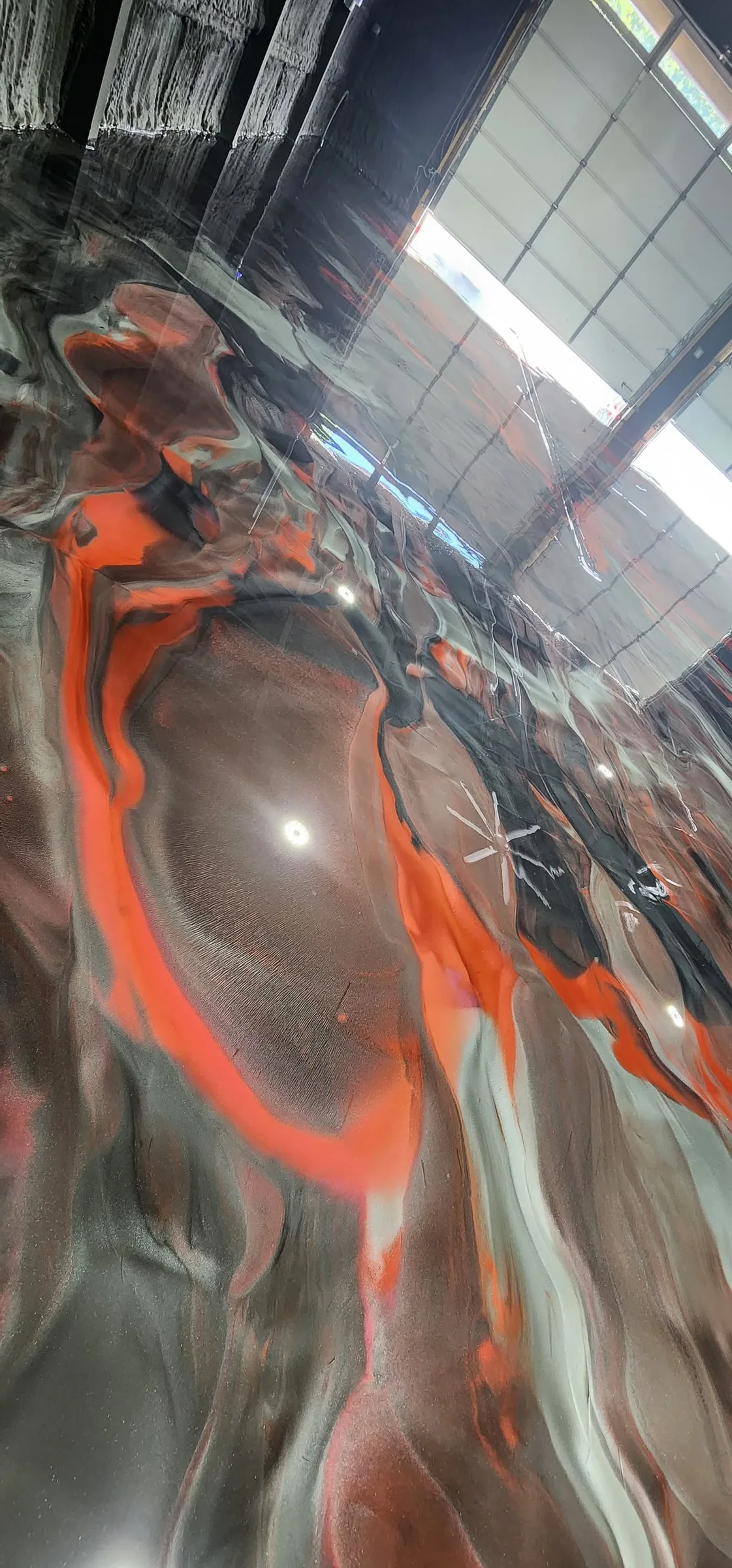
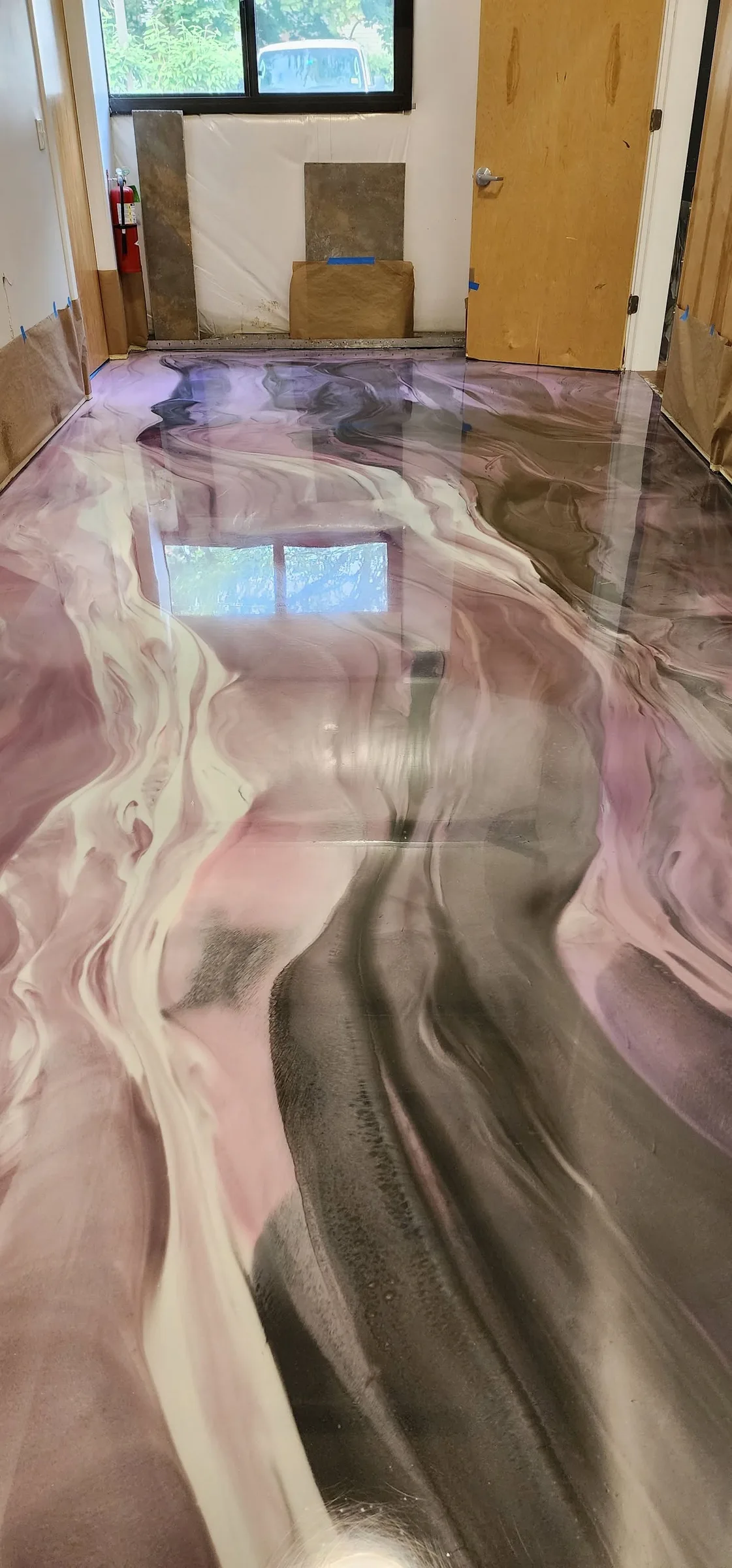
Other jobs from the file, not all of them this service. See the gallery





Questions about residential epoxy floor restoration
How do I know if my epoxy floor can be restored?
Tap it with a hard object and listen. A solid sound and no peeling edges are good signs. Hollow spots or flaking along the walls mean the bond has failed in places. Danny checks this in person and may run a small adhesion test in an out-of-the-way corner before recommending restoration over removal.
Can restoration change the color of my floor?
Yes. After the old surface is abraded, a new colored coat can go down, with or without flake or metallic effects, before the topcoat. The original layers stay as the foundation. A big change, such as going from a dark solid to a light metallic, may need more coats to hide what is underneath.
Is restoration faster than starting over?
Often, because grinding down to bare concrete is skipped and the existing layers do part of the work. The trade-off is that restoration only works on a floor that is still bonded. If the old coating has failed in too many places, starting over is the better call, and Danny will say so after he looks.
What if I do not know who installed my old floor?
That is common in a house that has changed owners. Danny judges the floor by testing it: tapping for hollow spots, checking the edges and bonding a small sample in an out-of-the-way corner. Knowing the original product helps, though the test patch tells him most of what he needs to decide between restoring the floor and removing it.
Will the restored floor look as good as a brand new one?
Close, though some signs of age can stay. Deep gouges are filled and leveled, and a fresh topcoat brings back the sheen across the whole floor. Stains that soaked into the old color layer, or fading from years of sun, may still show under a clear coat. A new color layer hides those, and Danny will tell you which route your floor needs.
Can a restored floor get more grip than it had before?
Yes. Restoration is a good time to add grip, since a new layer goes over the whole floor anyway. Fine grit can be mixed into the topcoat, or a light flake broadcast can go down before it. Older floors that were poured smooth and slick in a laundry room or an entry often benefit the most from the change.
Next to this on the list
Garages, basements, laundry rooms, mudrooms, home gyms and porches, each floor laid out for how the room gets used.
- Basement Epoxy FlooringBasement floors with personality, often a metallic under recessed lights, poured on a dry slab for bars, media rooms and playrooms.
- Basement Concrete Floor CoatingCoatings for working basement slabs, tested for moisture first, ground clean of efflorescence and sealed so the concrete stops dusting.
- Laundry Room Epoxy FlooringLaundry room floors coated to hold washer leaks and spills on the surface, with an optional cove up the wall to protect drywall.
- Mudroom Epoxy FlooringMudroom floors with a flake blend and textured topcoat that take wet boots, road salt and muddy paws, then wipe clean.
- Utility Room Epoxy FlooringUtility room floors coated around the furnace, boiler and water heater in a light color that shows a new drip right away.
He drives out from Cranford about 60 miles in every direction for floors like this one. See every areaSee the gallery
Danz Handz
Danny Carrero, epoxy specialist
dhepoxy@gmail.com
Cranford, NJ. Mon to Sat, 8 to 6. Hablamos español.
Start with a visit
A short note about the space is enough. Danny calls back and books a walkthrough.