
Why a good floor is built in layers
A coated floor is a system: a primer that bonds to the slab, a body or base coat that carries the color and thickness, and a topcoat that takes the wear. When a one-coat kit has failed, or two quotes list different numbers of coats, Danny walks through what each layer is doing on your floor.
What goes into epoxy primer and topcoat systems
Each layer has its own chemistry. The primer is thin so it can soak into ground concrete and seal the pores. The base or body coat is thicker and pigmented, and in a flake or quartz floor it holds the broadcast. The topcoat is chosen for the surface: a clear epoxy where the room is indoors and dry, a urethane or polyaspartic where sun, scratching or harder use is expected. A system is designed so each layer bonds to the one under it, which is why products are usually kept within one maker’s line.
The topcoat goes on last, after the base cures and any loose broadcast is scraped off.
A layered system fits nearly every floor Danny coats, from basements to commercial rooms. Its downside is time, since each coat has to cure enough before the next one goes on, so a full system takes longer than a single coat out of a box. Skipping a layer to save a day usually shows up later as bubbles, peeling or a worn-through top. Before picking the layers for a job, Danny looks at the space, how much traffic crosses it and what tends to land on the floor.
Danny plans the system from the top down. He starts with how the finished floor has to look and what it has to handle, then picks the topcoat, the base and the primer that work together, using Bulletproof Resins material. The slab is walked, diamond ground, repaired and vacuumed. Primer goes on and soaks in. The base coat follows once the primer is ready, with any broadcast or metallic work done in it. The topcoat goes on last, after the base cures and any loose broadcast is scraped off. The final walk looks at the edges, where layers tend to show. Danny pours with Bulletproof Resins material, mixed in small batches on the job so nothing sits in the bucket too long.
Every layer in a floor system has a job, and a skipped layer leaves that job undone.
How the work runs
Every floor goes through the same five stages. What changes is how much each one takes, and that gets settled at the walkthrough.

Walk the space
Danny comes out, looks at the slab, the cracks and the moisture, and asks how the room gets used.

Prep the concrete
Grinding opens up the top of the slab. It is the step that decides whether a coating holds.

Fix what is underneath
Anything that would telegraph through the coating gets filled, sanded and checked.

Lay it down
Material gets mixed fresh and worked across the floor while it is still workable.
Cure and the final walk
The floor gets left alone to cure, then the two of you look it over from corner to corner.
More of Danny’s floors
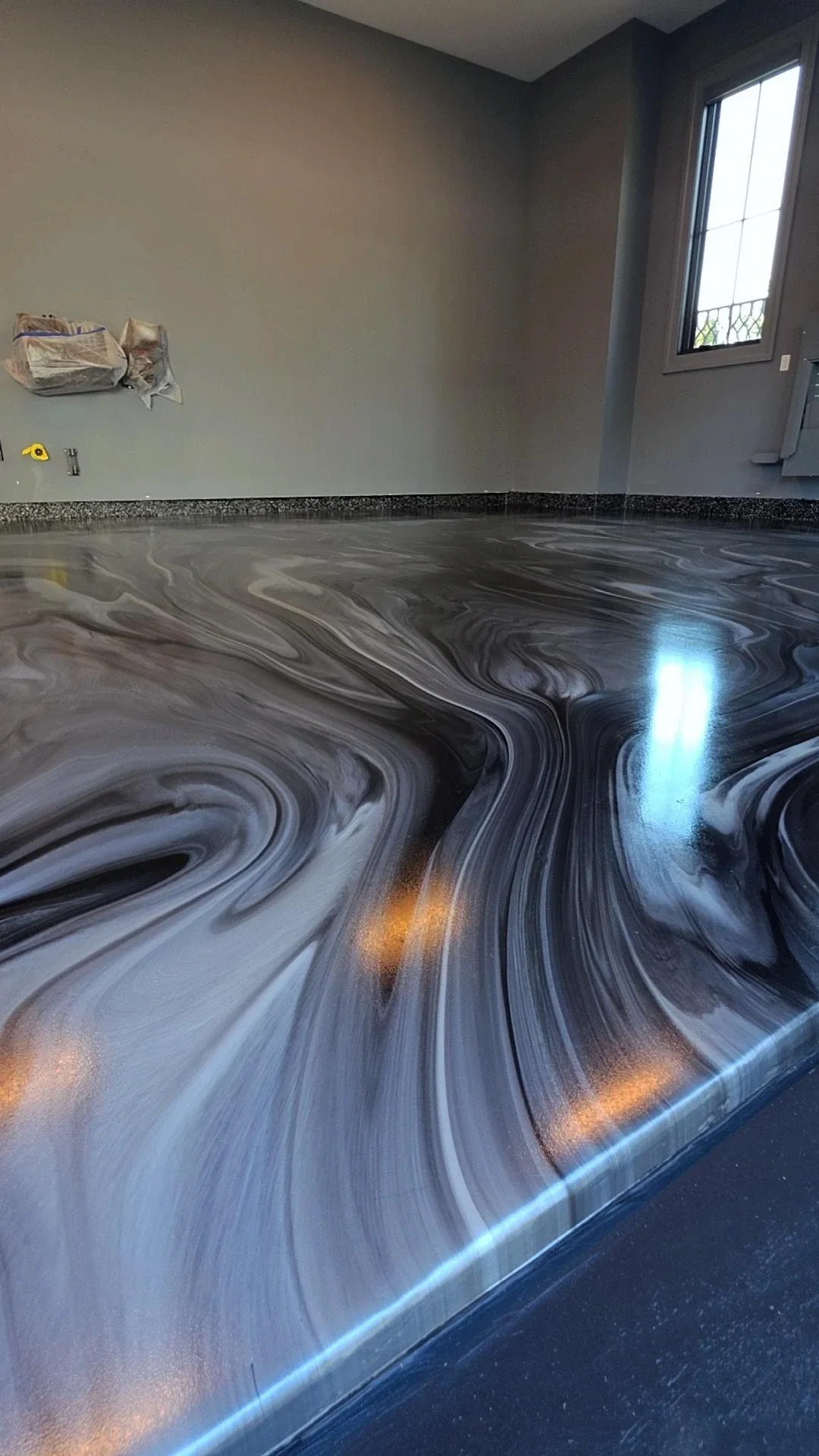
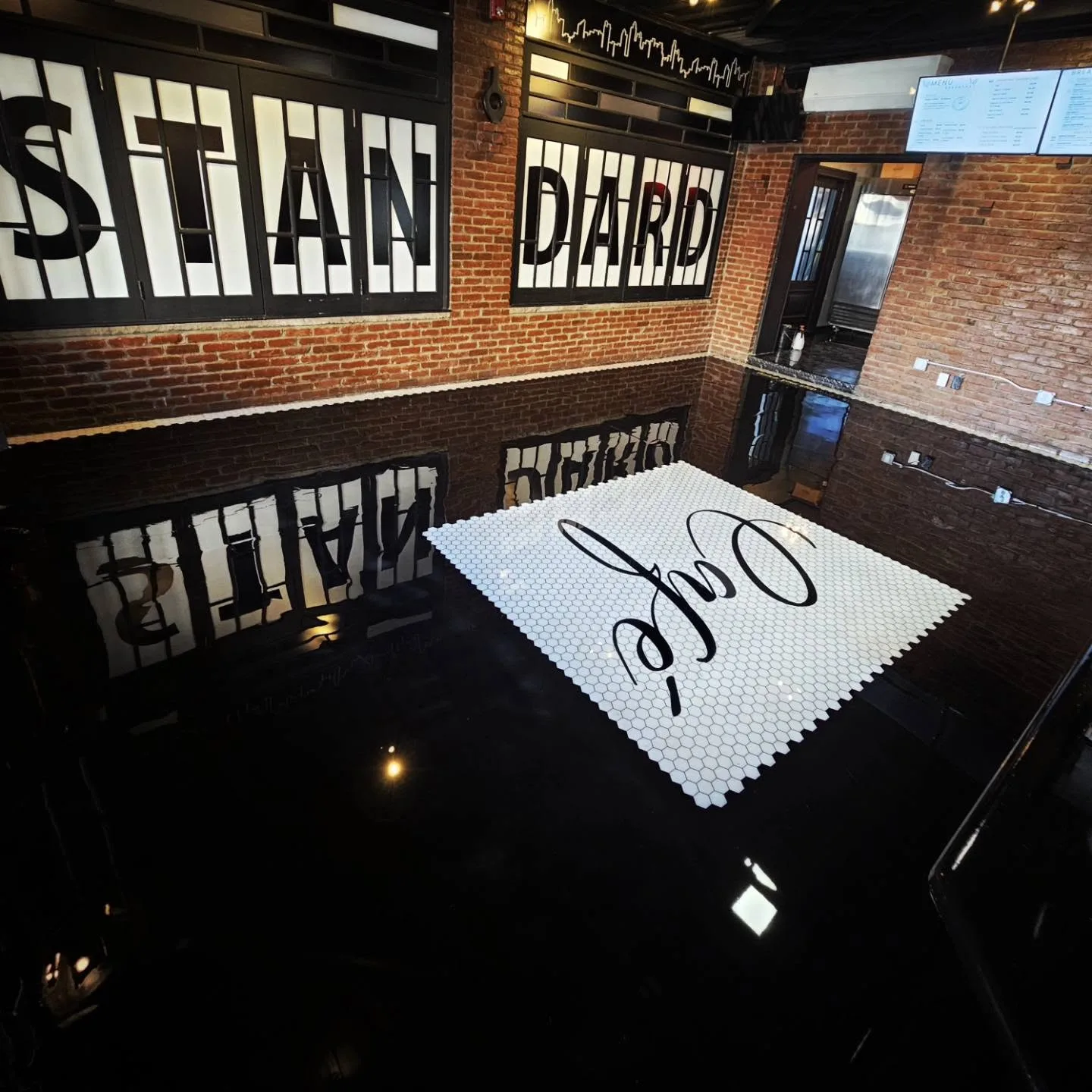
Other jobs from the file, not all of them this service. See the gallery





Questions about epoxy primer and topcoat systems
Why are some floors one coat and others three or four?
A one-coat floor is usually a kit or a thin paint-like epoxy, and it puts bonding, color and wear on a single layer. A system splits those jobs so each layer can do one well. The extra coats take more time and material, and they are the reason a system tends to last longer on a working floor.
Can a topcoat be added later to an old floor?
Often, if the old floor is still bonded. The surface gets cleaned and sanded so the new topcoat can grip, then the top goes on. If the old coating is peeling or soft anywhere, a new top will not hold it down, and that floor needs more work first. Danny checks the bond before recommending it.
Does the primer really matter if it is covered up?
Yes. The primer is the layer touching the concrete, so the bond of the whole floor runs through it. It also seals the pores that would otherwise push air into the base coat as bubbles. A floor without a proper primer can look fine on day one and be the first to fail.
Do you work on commercial spaces?
Yes. Salons, barbershops, showrooms, shops and offices, scheduled around your hours where the job allows it.
Do you come out and look before anything gets decided?
Yes. Danny walks the space, checks the concrete and talks through what you want before anything is ordered or scheduled. Call (908) 577-7104 or send the form and he will set a time.
Can I pick the color and the finish?
Yes. Danny brings samples and photos of past floors, and you settle on the color, the finish and how much movement or texture you want at the walkthrough.
Next to this on the list
Polyaspartic, polyurea, urethane cement, self-leveling and fast-cure systems, picked to fit the room and the schedule.
- Conductive Resin FlooringGrounded resin floor systems that carry static charge away in rooms where sparks are a hazard, installed to the facility’s written spec.
- Static-Dissipative FlooringFloor systems that drain static from people and carts at a controlled rate, protecting electronics, labs and equipment rooms, built to spec.
- ESD Flooring SystemsConductive or static-dissipative floors chosen from the facility’s ESD standard, grounded with the electrician and installed to the product data.
- Decorative Quartz FlooringColored quartz blends, borders and bands for lobbies, restrooms and halls that want some design in a floor built for heavy cleaning.
- Urethane Cement FlooringUrethane cement floors that replace cracked quarry tile and failed epoxy in kitchens and plants, with no grout lines and an integral cove.
Jobs run about 60 miles out from the Cranford shop, from the Jersey shore and the Poconos to Long Island and Fairfield County. See every areaSee the gallery
Danz Handz
Danny Carrero, epoxy specialist
dhepoxy@gmail.com
Cranford, NJ. Mon to Sat, 8 to 6. Hablamos español.
Tell Danny about the floor
A short note about the space is enough. Danny calls back and books a walkthrough.