
Smoothing pits and pinholes before a smooth finish
Pinholes and pockmarks often stay hidden until the slab is ground, then turn up across the whole floor. Under a smooth metallic or a high-gloss finish they would show plainly, so Danny fills them and grinds the repairs flush before the primer goes down.


How Danny approaches concrete pitting repair
Pitting is small holes and craters in the surface, from air bubbles in the original pour, worn-out aggregate, salt damage or a top layer that wore through. Grinding often opens more of them. On a smooth decorative floor, each pit can show as a dimple or let air out into the coating as a bubble. The repair is a skim coat of fine filler or epoxy mortar spread across the pitted area, worked into the holes and ground or sanded flat once it hardens.
On a smooth decorative floor, each pit can show as a dimple or let air out into the coating as a bubble.
Pitting repair matters most under smooth systems, like metallic, solid color, gloss and pearl floors, where the finish reflects every flaw. Under a full broadcast flake or quartz floor, minor pitting is usually covered by the base coat and chips without a separate skim. It is a surface fix and does not address deep spalls, cracks or crumbling concrete, which need their own repairs. A heavily pitted slab across a whole room may be better served by a full resurfacing layer.
After the first grind, Danny looks at the slab in low, raking light, which is the best way to see how widespread the pitting is. He decides whether to fill pits one area at a time or skim the whole floor. The filler goes on with a trowel or squeegee, pushed into the holes and scraped tight across the surface. When it hardens, he grinds or sands it flat and checks again in the same raking light. Any pits that are still open get a second pass. The floor is vacuumed before the primer or base coat goes down.
Pits that look minor on bare concrete become dimples under a glossy finish.
From bare slab to finished floor
Pitting repair is mostly about seeing the pits clearly, which takes a fresh grind and a light laid low across the slab.
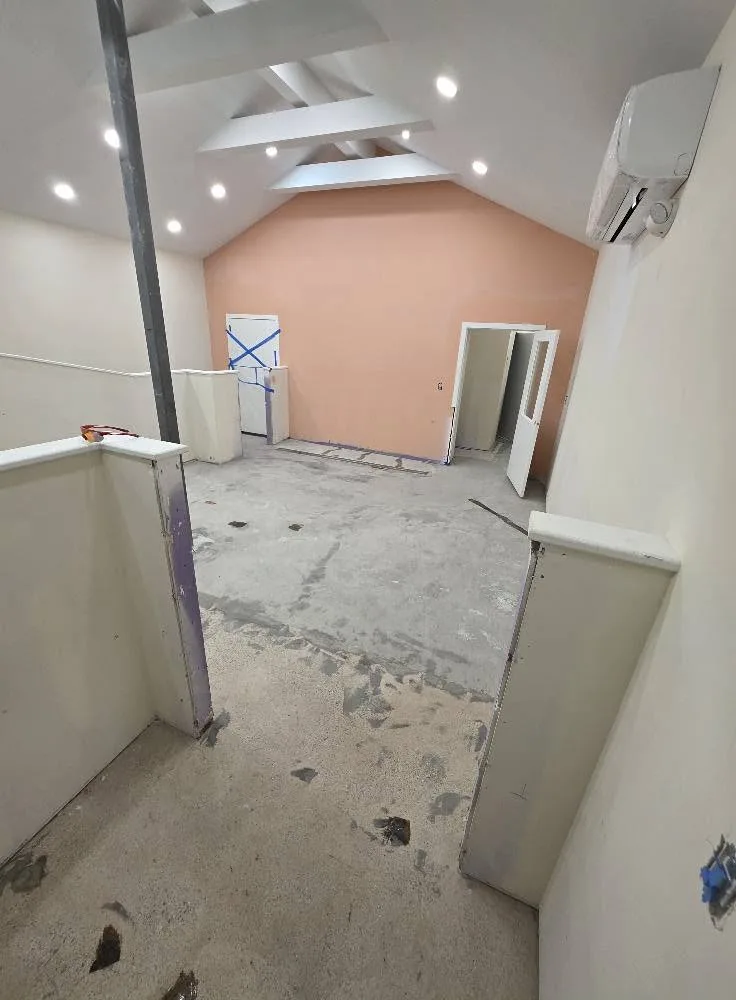

Raking light after the first grind
With the surface opened, Danny lays a light on the floor and looks across it. Pits and pinholes throw tiny shadows that overhead light hides, and he marks how far across the floor they spread before deciding on a repair.

Spot fill or full skim
Scattered pits get filled one area at a time. A floor pitted from wall to wall gets a skim coat over the whole surface. The finish planned for the floor weighs heavily in that decision, since smooth finishes show the most.

Pressing filler into the holes
Fine filler or epoxy mortar is spread with a trowel or squeegee and pressed down into the pits, then scraped tight so the material stays in the holes and off the sound surface around them as much as possible.

Sanding the skim flat
Once it hardens, the skim is ground or sanded flat. Danny checks again under the same low light and gives any pits that still show a second pass, so none are left open when the floor moves on to the primer.

Closing the pores before color
The floor is vacuumed and the primer goes on, sealing whatever pores remain so air does not rise into the finish and leave pinholes in a smooth metallic or gloss coat. The base system follows once the primer is ready.
More of Danny’s floors
Other jobs from the file, not all of them this service. See the gallery




Questions about concrete pitting repair
Why are there bubbles in my old epoxy floor?
Small bubbles and pinholes in a coating often come from air escaping out of pits and pores in the concrete as the epoxy cures. A primer coat or a skim coat closes those pores first so the air has nowhere to come from. On repairs, Danny checks whether the bubbles started in the slab or in how the coating was mixed.
Do I need pitting repair under a flake floor?
Usually only for deep or widespread pitting. A full broadcast flake floor has enough base coat and enough chips to hide small pits. Deep holes still get filled so the base does not sink into them. Smooth floors are a different story, and they almost always need the pits filled first.
Can pitting come back?
The filled pits stay filled. New pitting can appear on bare concrete that keeps getting salt or harsh cleaners, but once the floor is coated, the surface is sealed away from that wear. If the coating gets damaged later, the area under it can start to wear again, so repairs to the coating should not wait long.
Does pitting mean my concrete is weak?
Usually not. Most pitting comes from air pockets in the original pour or a top layer that wore thin, and the concrete below is sound. It becomes a concern when the surface crumbles under a scraper or the pits keep spreading, which Danny checks for while he is grinding the floor.
Will a skim coat raise the floor height?
Barely. A skim fills the pits and leaves a very thin layer on the surface, so doors, thresholds and appliances are not affected. Leveling a dip is a different job that adds more material, and Danny tells you if any part of the floor needs that as well.
Will the skim coat show under a metallic finish?
The skim can be a slightly different color from the slab, and pale or translucent metallics can show that change. Danny evens it out with a tinted primer or base coat, so the metallic pour goes over one consistent tone and the movement in the finish is what people see.
More from the prep section
Grinding, shot blasting, crack and joint filling, leveling and moisture testing, done before any coating goes down.
- Concrete Floor SandingLight sanding to scuff a sound epoxy floor before a recoat, smooth between coats and feather patches into the floor around them.
- Concrete Crack FillingChasing, filling and grinding slab cracks flush before a coating, with honest calls on which cracks are still moving.
- Concrete Joint FillingDeciding whether each saw cut and control joint gets filled and coated over or kept open, and doing either one cleanly.
- Concrete Spall RepairCutting back flaked and popped-out concrete to solid ground and rebuilding it flush, common near garage doors that see winter salt.
- Concrete Surface PatchingFilling anchor holes, gouges, trenches and old fixture spots and grinding them flush before the floor gets its coating.
He drives out from Cranford about 60 miles in every direction for floors like this one. See every areaSee the galleryRead: Why Every Good Epoxy Floor Starts With a Diamond Grinder
Danz Handz
Danny Carrero, epoxy specialist
dhepoxy@gmail.com
Cranford, NJ. Mon to Sat, 8 to 6. Hablamos español.
Start with a visit
Send a few lines about the room and the look you want. Danny will call and set up a time to see it.