
Epoxy floors for Delaware Water Gap homes and shops
More of the homes in Delaware Water Gap date from before 1940 than from any decade since. Floors that age usually need grinding, crack filling and leveling before the pour.
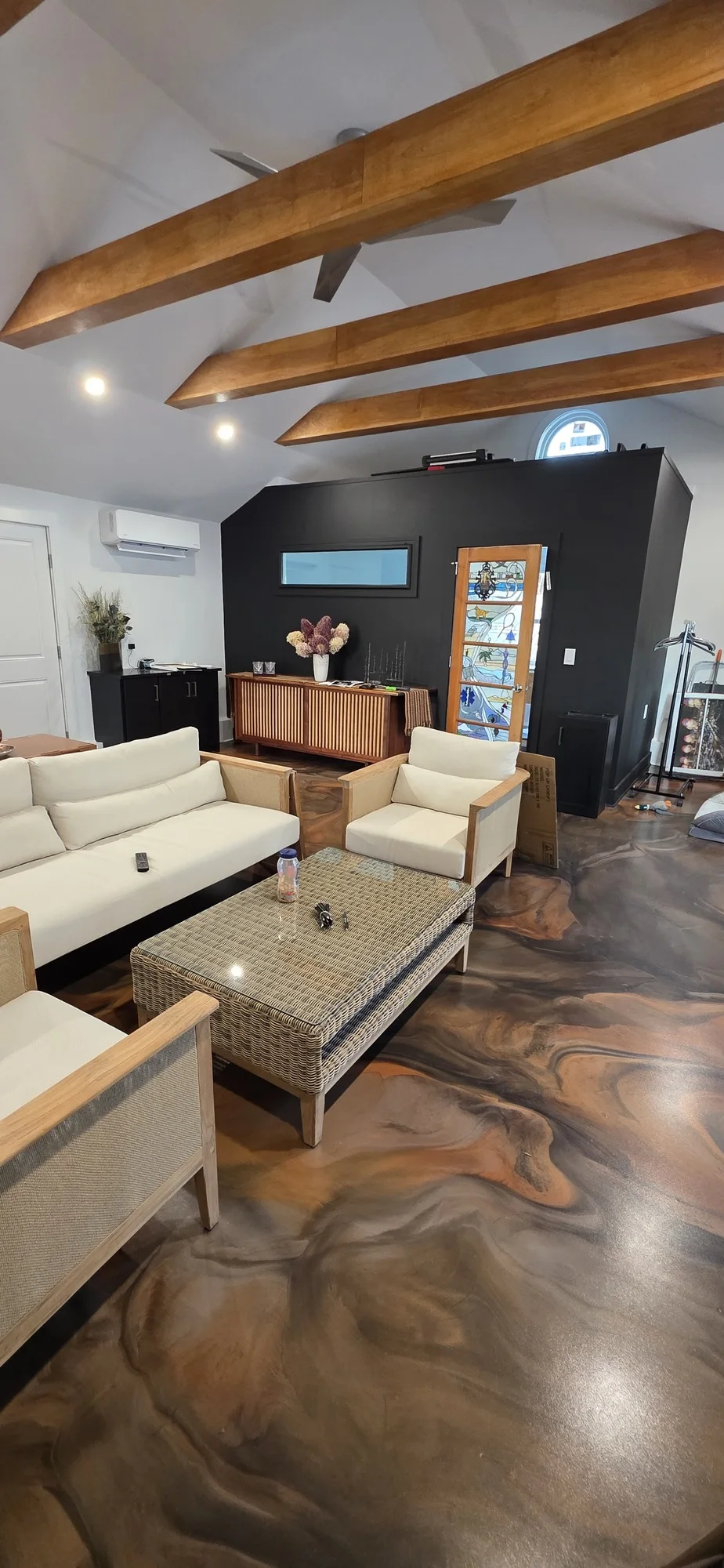
Delaware Water Gap’s prewar houses
Delaware Water Gap is a borough in Monroe County, Pennsylvania.
The Census counts about 336 homes in Delaware Water Gap, with a median build year of 1947.
Sources: US Census Bureau, American Community Survey 2024 5-year survey, for Delaware Water Gap, PA; FEMA National Flood Insurance Program claims, 1978 to 2026, for the Borough of Delaware Water Gap.
Next stops from Delaware Water Gap
- East Stroudsburg3.2 mi northwest
- Stroudsburg3.3 mi west
- Columbia3.6 mi southeast
- Portland3.7 mi southeast
- Hainesburg4.3 mi east
- Arlington Heights4.5 mi northwest
Every town in Monroe County is on the Monroe County page.
What Delaware Water Gap’s housing means for the floor
Slabs that old were rarely poured over anything that blocks ground moisture, so Danny tests before he chooses a primer.
FEMA’s flood insurance records hold 14 claims from the Borough of Delaware Water Gap between 1996 and 2006, 2 of them after Tropical Storm Ivan in 2004.
Postwar basements were often finished in the 1960s and 70s with asphalt tile, carpet or paint, and the floor underneath carries all of it. Old tile adhesive, carpet glue and peeling gray paint have to come off before epoxy can bond. Grinding does most of that work. What it uncovers is usually solid concrete with a few cracks and some old stains, which is a good starting point for a metallic floor or a flake floor in a busy basement.
Older floors in Delaware Water Gap
All 380 services- Concrete Crack FillingChasing, filling and grinding slab cracks flush before a coating, with honest calls on which cracks are still moving.
- Concrete Spall RepairCutting back flaked and popped-out concrete to solid ground and rebuilding it flush, common near garage doors that see winter salt.
- Basement Renovation Epoxy FlooringEpoxy floors poured on a dry basement slab as the finished surface, from metallic rec rooms to bright solid color laundry and storage areas.
- Garage Concrete Crack RepairGarage crack repair done before coating, with cracks opened, filled and ground flush, and a straight answer on which may show again.
- Residential Epoxy Floor RestorationRestoring older epoxy floors that still bond to the slab, with chip repair, a fresh topcoat and the option to change color.
- Custom Decorative Concrete FinishesOne of one finishes that mix metallic, flake, pearl and glitter for clients with an idea that does not fit a standard floor system.
Questions about Delaware Water Gap
How far is Delaware Water Gap from Danny’s shop?
About 48 miles northwest of Cranford. East Stroudsburg is the closest town to it on Danny’s list.
How old are the houses in Delaware Water Gap?
The Census puts the median build year in Delaware Water Gap at 1947. More of the homes date from before 1940 than from any decade since. For the floor, that usually means more prep: older slabs are softer, often patched and rarely flat, so Danny plans for grinding and crack filling.
Does Delaware Water Gap have a flood history?
FEMA’s records show 14 flood insurance claims from the Borough of Delaware Water Gap since 1996. Flooding does not rule out an epoxy floor. The slab gets ground clean, tested for moisture, and given a vapor-mitigation base if the reading calls for one.
Do you pour epoxy countertops too?
Yes. Epoxy countertops are part of what Danny does, and they get the same attention to color and movement as his metallic floors. The design is worked out first, with samples, so the finished top looks like what you pictured. Call to describe the counter and the room it is in, and he will set a time to see it.
What material does Danny use?
He partners with Bulletproof Resins for his material and picks the specific system for each floor after the walkthrough. A garage that sees salt and hot tires gets a different build from a basement or a showroom. He explains what he is putting down and why, so you know what is going on your floor before the pour starts.
How do I take care of an epoxy floor once it is done?
Sweep or dust mop often, since grit is what dulls a topcoat over time. Wash with warm water and a mild cleaner and skip anything harsh or acidic. Wipe up oil and spills when they happen. In the garage, a squeegee pushes winter slush out the door before it dries into a salt film. Danny goes over care at the final walk-through.
What happens at the walkthrough?
Danny walks the slab with you and looks for cracks, old coatings, oil stains, damp spots and anything else that will change the prep. Then he asks how the room gets used and what look you have in mind, and he shows samples in that room’s light. You come away knowing which system he recommends and why.
Should the garage and the basement get the same floor?
Usually not. A garage takes hot tires, salt, oil and grit, so a flake floor with texture tends to suit it. A basement is more of a room, where a metallic or a solid color can carry the look. Basements also bring moisture into the picture, so Danny checks that slab separately and recommends what fits each space.
Why does Danny need to see the floor first?
Because the slab decides the job. Two garages of the same size can need very different prep, depending on cracks, old coatings, moisture and how level the concrete is. Seeing it lets Danny recommend the right system and plan the work honestly. It also gives you a chance to look at samples in the actual room before you decide anything.
Danz Handz
Danny Carrero, epoxy specialist
dhepoxy@gmail.com
Cranford, NJ. Mon to Sat, 8 to 6. Hablamos español.
Schedule a look at your floor
Tell Danny about the floor. He calls back and comes out from Cranford, 48 miles northwest, to look at it.