
Brewhouse and taproom floors for craft breweries
The brewhouse and the taproom ask very different things of a floor. In the brewhouse it is hot liquid, caustic cleaner and dropped kegs, and the concrete around the trench drain erodes first. Out front, a metallic or color pour gives guests something to notice from their bar stools.


Commercial Brewery Flooring, start to finish
Brewery flooring usually means two systems. In the brewhouse and cellar, a heavy resin system goes down over ground concrete, with texture for wet boots, coves at the walls and careful work where the floor meets the trench drains. In the taproom, the floor can be decorative, a metallic or a flake pour that fits the brewery’s look and still mops clean after a busy night. Danny sees how the brewhouse is worked and what spills there before he recommends a system, and the product data decides what goes near the kettles.
Danny sees how the brewhouse is worked and what spills there before he recommends a system, and the product data decides what goes near the kettles.
It fits production breweries and brewpubs on a slab. The brewhouse floor is the demanding part, because hot water and cleaning chemicals hit it constantly and wet floors are a fact of brewing. Tanks that are already set and plumbed are often worked around, and the coating finishes against their legs. A brewery with poor slope to the trench drains will see water sit, so slope repair may be part of the job. Taprooms are simpler and mostly a question of look and furniture.
Danny walks the brewery with the head brewer on a brew day if possible, to see where the hot side drains, where the cleaning cycles dump and where kegs and pallets move. He checks the trench drains, the slope toward them and the condition of the slab around tank legs. Work in the brewhouse is booked between brews, often with tanks left in place. The floor is diamond ground, slopes and drain edges are repaired, and the system is poured. The taproom can follow on its own schedule. Each area gets a final walk with the owner once it has cured.
A brewhouse floor is wet more often than it is dry.
From bare slab to finished floor
Brewery floors are scheduled around brew days and the tanks that never move. The steps below run from the hot side to the taproom, each one fitted between batches.
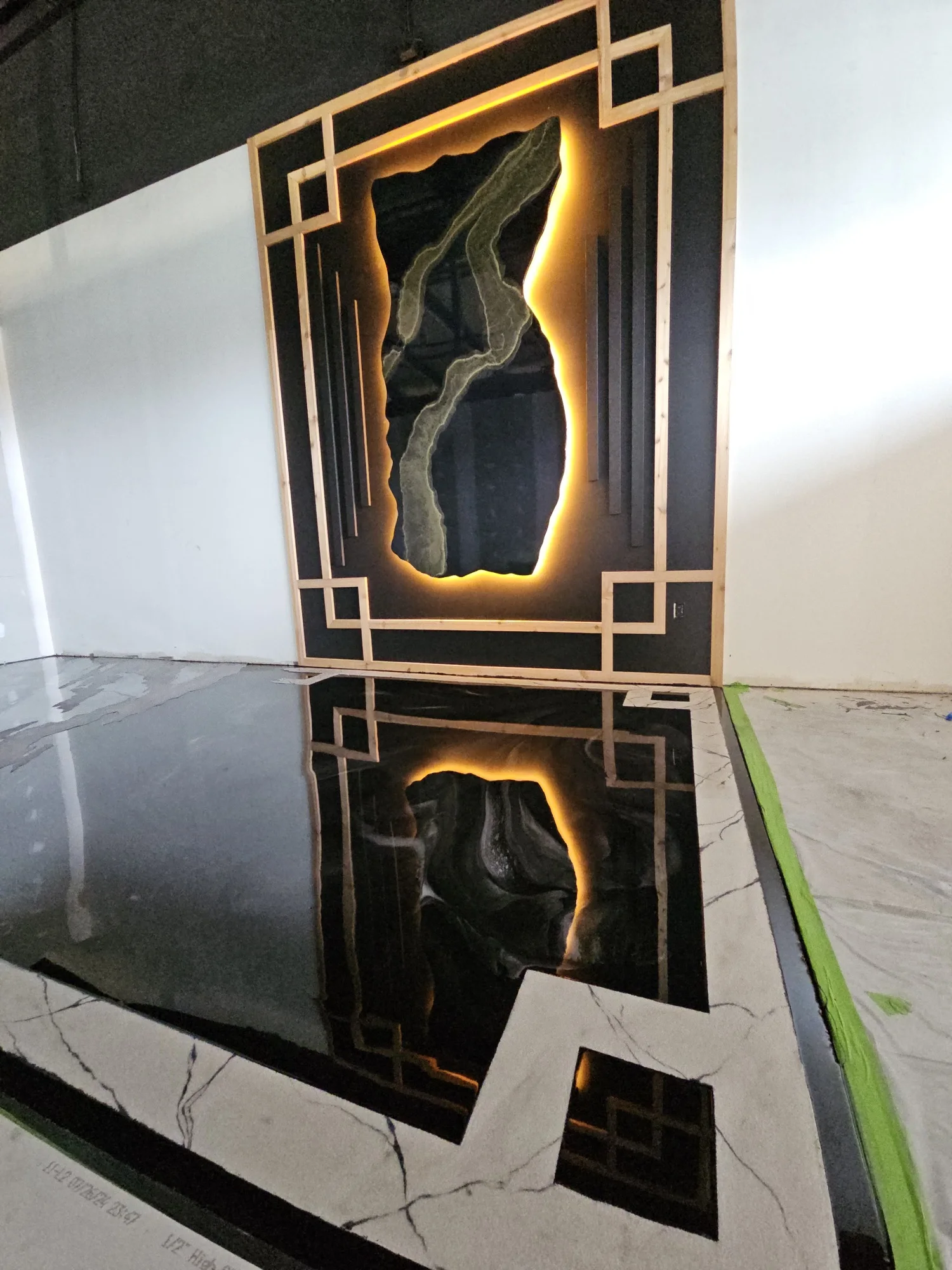

Tracing the hot side to the trench
Danny follows the path of hot water, wort and cleaning cycles from the kettles to the trench drain. Where those liquids hit and run shows which part of the brewhouse needs the heaviest system and where the slope to the trench has failed.

Grinding between tank legs
Fermenters stay put, so the floor between their legs is prepped with smaller hand grinders. The concrete around each leg’s foot is checked for cracks and damage from cleaners, and anything loose is cut back to sound material before repair.

Rebuilding trench drain edges
The concrete lip along a trench drain usually breaks up first in a brewhouse. It is cut back and rebuilt, the frame is checked for movement, and the slope leading to it is reset so liquid runs off the floor and into the trench.
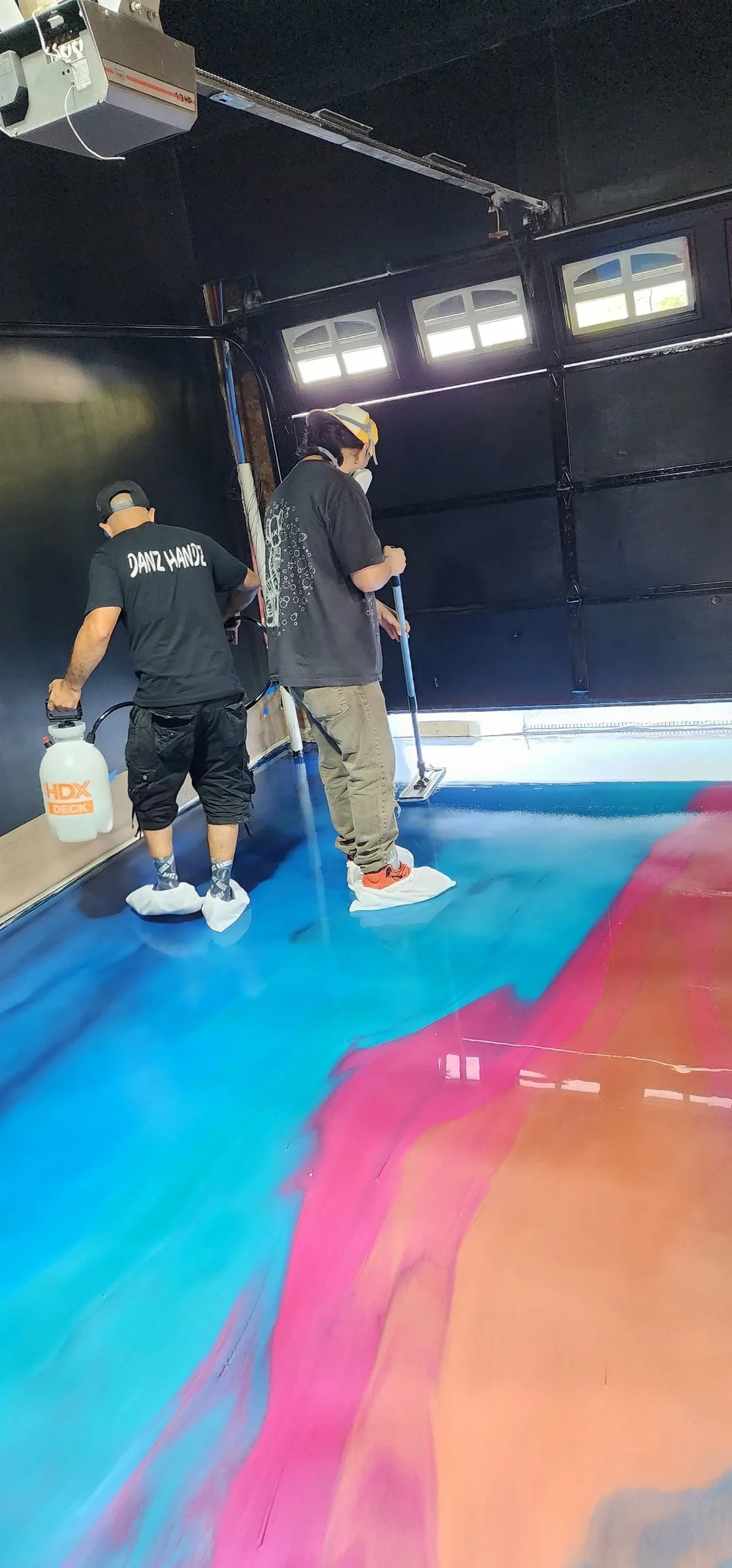
Heavier build on the brewhouse floor
The brewhouse gets a heavy textured system, with Bulletproof Resins material selected against the brewery’s cleaning chemicals and the heat coming off the hot side. Coves go up the walls and around tank pads, and the cellar can take a slightly lighter build.
Taproom on its own schedule
The taproom is ground and poured on separate days, often when the bar is closed, so it does not compete with production. Danny walks both areas with the owner once they cure, and the brewers start the next batch on the new floor.
More of Danny’s floors
Other jobs from the file, not all of them this service. See the gallery





Questions about commercial brewery flooring
Can you coat around tanks that are already installed?
Usually. Fermenters and brite tanks that are set and plumbed stay in place, and the floor is finished tight against their legs. That leaves small areas to keep clean around each leg, which is normal in a working brewery. If tanks are being moved or added during an expansion, that is the best time to coat underneath. Danny looks at the layout during his walk.
Does the floor handle hot wort and caustic?
Systems for brewhouse floors are chosen with hot liquids and cleaning chemicals in mind, and every product has published limits. Danny asks what goes on the floor, how hot it runs and how often, and matches that to the product data before recommending a system. If the hottest spill zone needs a heavier system than the rest of the floor, he says so.
Can the taproom floor be metallic?
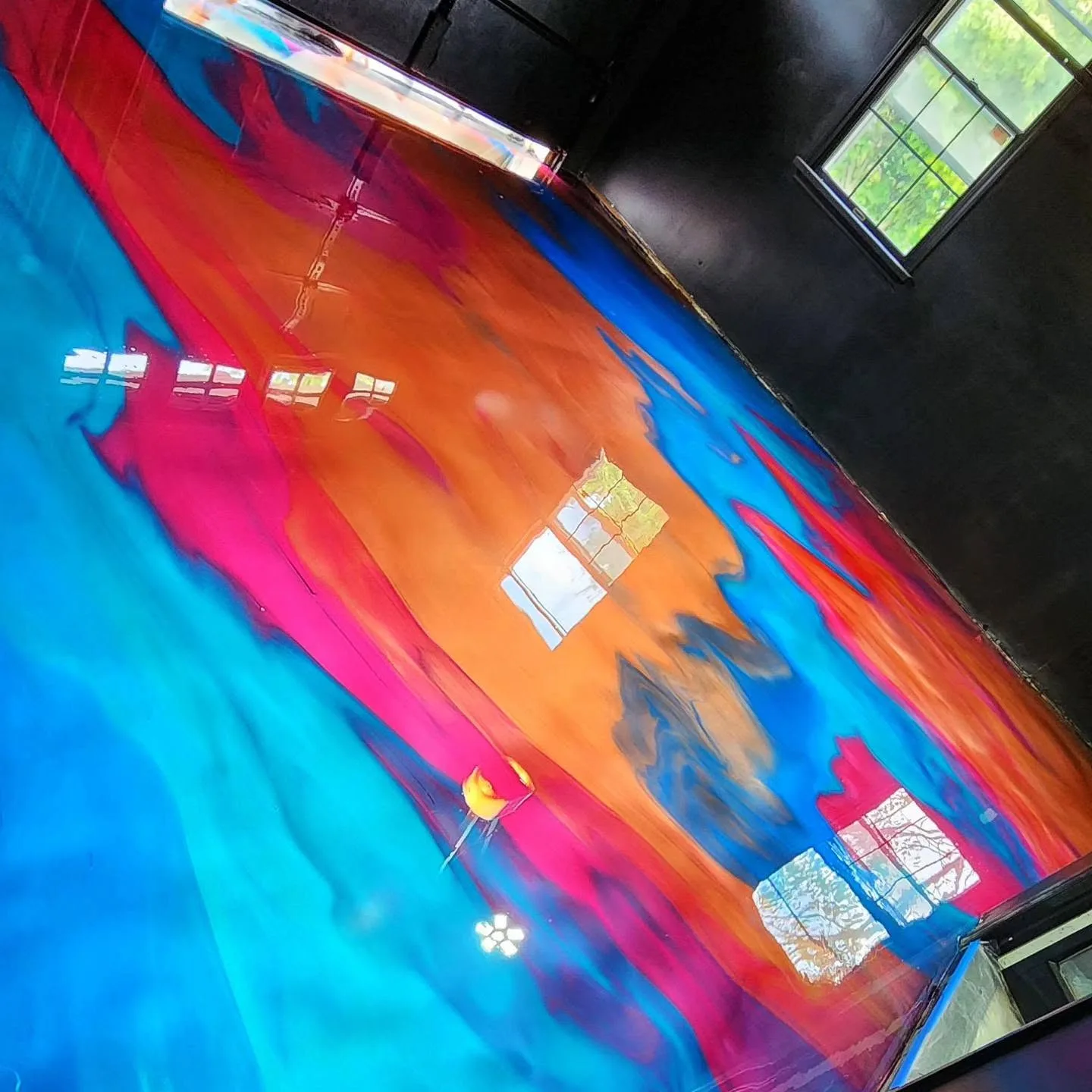
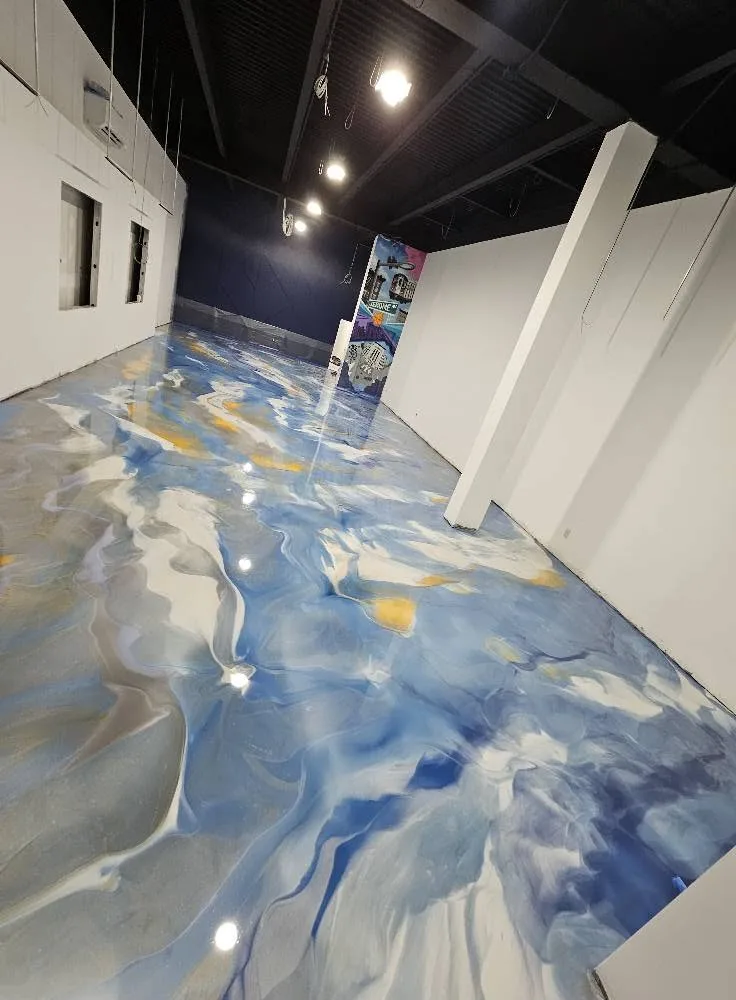
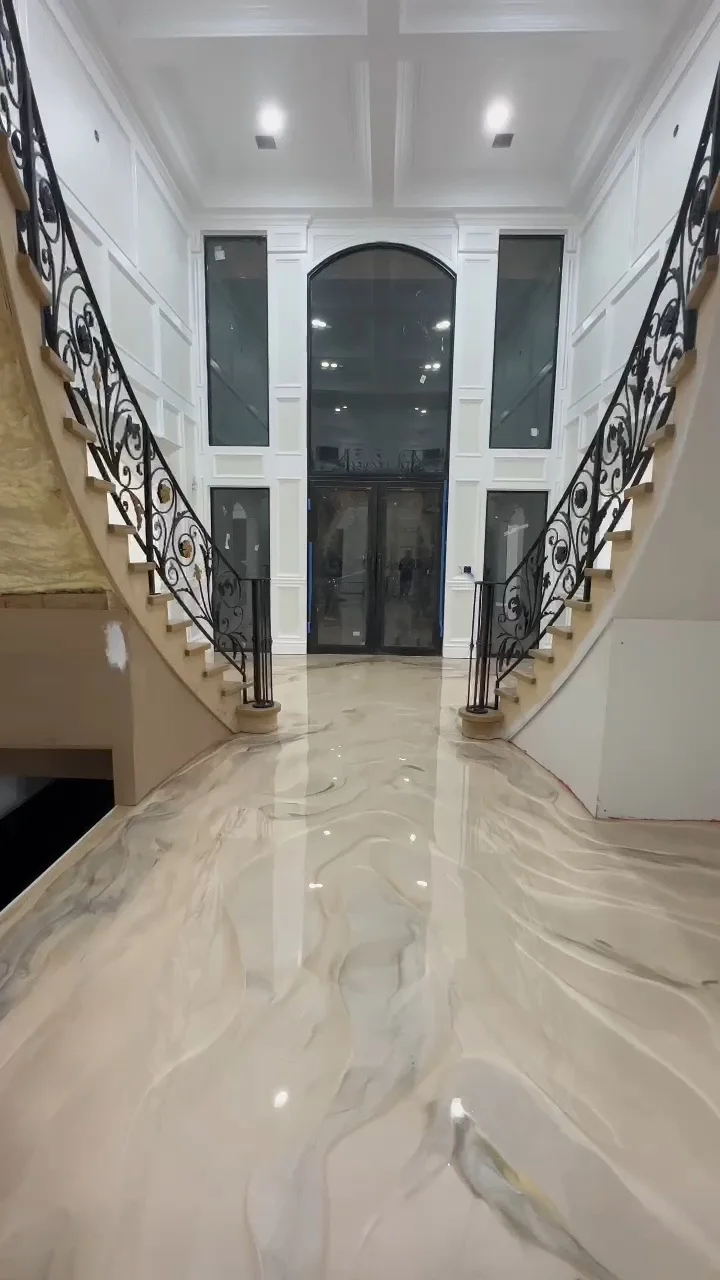
Yes. A taproom is a good place for a metallic or flake floor, since guests see it and the space takes ordinary foot traffic, spilled beer and bar stools sliding. Metallic floors are what Danny is known for. The topcoat is chosen for that traffic, and felt pads on stools keep the gloss looking newer for longer.
Where does spent grain cause trouble on a floor?
Spent grain comes out of the mash tun wet and slightly acidic, and it often gets shoveled or dropped near the tun door. Left sitting, it sours and works into any open crack. A textured, sealed floor around the tun cleans up with a hose and squeegee, and Danny plans extra care in that area.
Do dropped kegs crack the floor?
A full keg landing on its rim is a hard hit for any floor. The keg handling and filling areas usually get the heaviest system in the brewery, and rubber mats where kegs are flipped or dropped help as well. Danny looks at where kegs are moved and stacked before deciding how heavy the floor there needs to be.
What about the floor under the canning line?
A canning line drips beer, sugary residue and lubricant from its conveyors, and it is often hard to move. The floor can be finished around its legs, or under it if the line can be shifted during the work. Danny checks the line’s footprint and how it is cleaned, then plans that area with the rest of the packaging space.
More from the kitchens section
Commercial kitchens, bakeries, breweries and cold rooms, with coved bases and slip-resistant finishes.
- Refrigerated Warehouse Floor CoatingsCoatings for refrigerated warehouse docks, staging lanes and cold rooms, phased door by door so trucks keep loading.
- Chemical-Resistant Kitchen FlooringKitchen floors picked against your actual cleaner and sanitizer list, with the system matched to its product data before anything is poured.
- Seamless Hygienic FlooringJointless poured floors with cove bases for food rooms, so mops and squeegees reach every corner and nothing settles in grout.
- Slip-Resistant Commercial Kitchen FlooringTextured resin floors for commercial kitchens, with grip set zone by zone so the wet and greasy spots get the most.
- Coved Resin FlooringFull resin floor systems that curve up the wall in one piece, taking away the corner where grease and water collect.
From Union County out to the Lehigh Valley, Long Island and Fairfield County, the work is all within about 60 miles of Cranford. See every areaSee the gallery
Danz Handz
Danny Carrero, epoxy specialist
dhepoxy@gmail.com
Cranford, NJ. Mon to Sat, 8 to 6. Hablamos español.
Tell Danny about the floor
Send a few lines about the room and the look you want. Danny will call and set up a time to see it.