
A poured floor that gives a small shop its own look
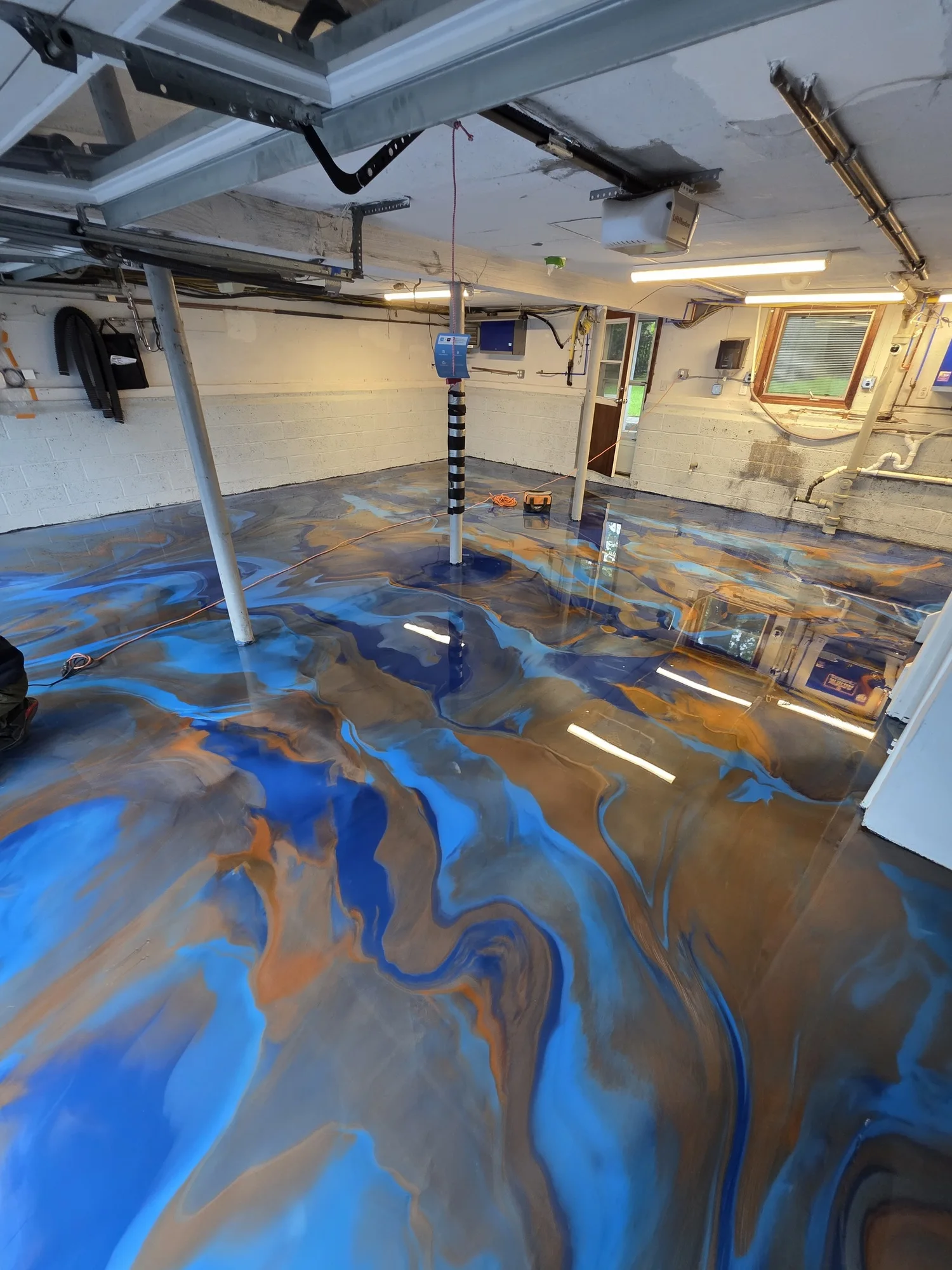
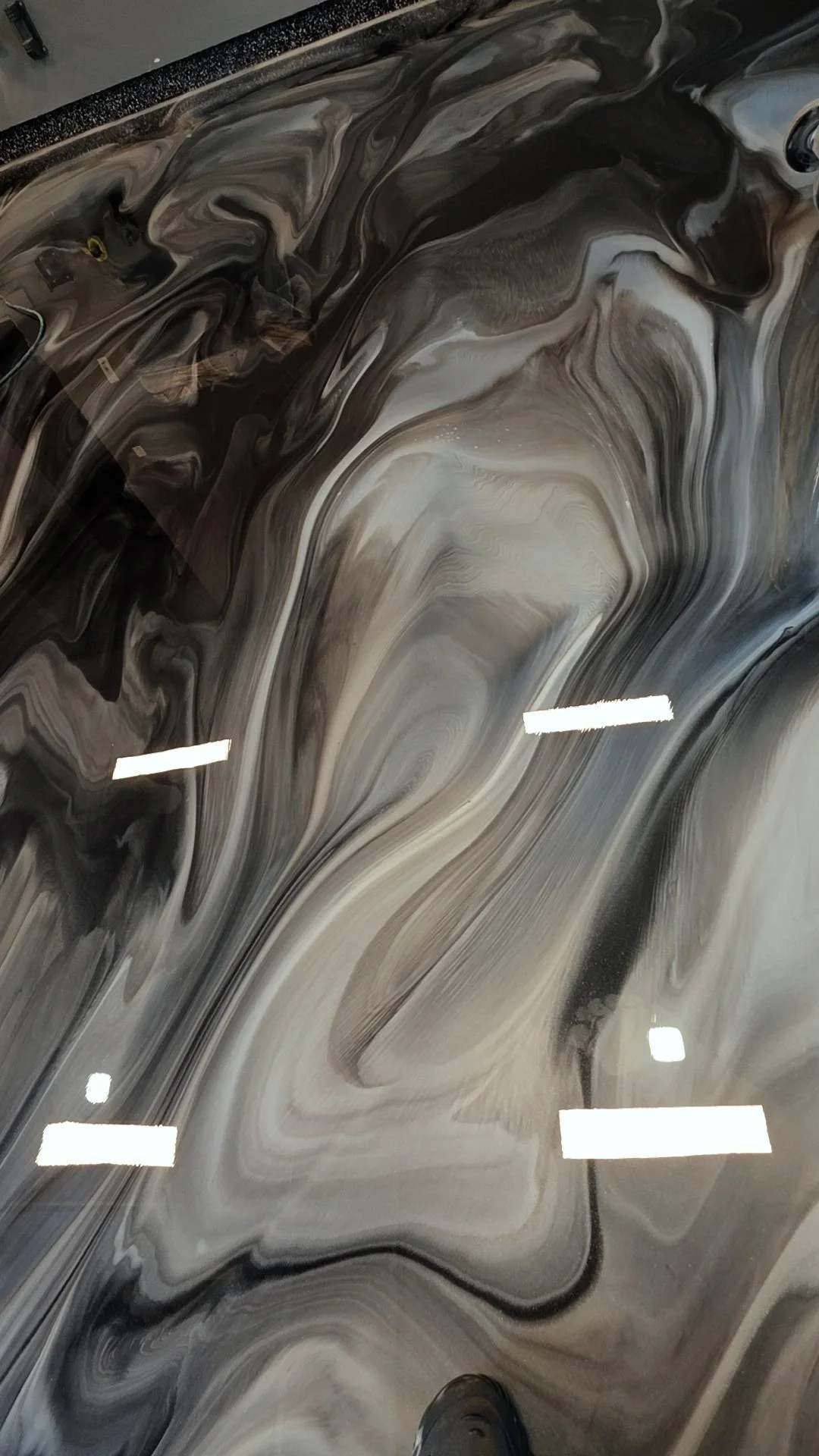
The owner usually walks in with a picture in their head, and Danny’s job is to get that picture out and onto the slab. In a boutique that often means a metallic or Glitter ELEMENTZ pour worked by hand in the shop’s colors, one of one, so nobody else on the street has the same floor.


What goes into boutique floor coatings
A boutique floor is a decorative resin pour over ground concrete, worked by hand so the color and movement are particular to that room. Danny’s one of one approach shows best in a small shop, where every customer sees the floor up close. The floor can run metallic tones that pick up the brand colors, carry his own Glitter ELEMENTZ line for a sparkle that catches light near the window, or stay a clean solid that frames the merchandise. The choice depends on the room, its foot traffic and what might get spilled, and Danny sees all of it before recommending one.
Racks and displays come in after the cure, once Danny and the owner have walked the finished floor.
It suits shops on a concrete slab, often in a newly leased space where the old flooring is coming out anyway. A boutique over an old wood floor, which is common in older downtown buildings, usually needs a different base or a different finish, because wood moves and a hard coating can crack with it. Strong glitter and high-gloss metallic both show dust, so they work best in shops that can dust mop at closing. Some landlords have rules about floor finishes, which are worth checking before the design.
The first conversation is about the shop’s identity: the brand colors, the fixtures, the mood the owner wants at the door. Danny listens for the picture in the owner’s head, then asks for room to do the work. He walks the space, checks the slab once the old flooring is lifted, and plans where the color shifts will fall against the fixtures and the counter. The floor is diamond ground and repaired, and the pour is worked by hand in the empty room. Racks and displays come in after the cure, once Danny and the owner have walked the finished floor.
In a small shop, the floor is the one surface every customer sees.
What happens on the job
Most boutique floors start with a conversation about the shop’s identity and end with racks rolled into a room that has its own one of one floor.


Hearing the shop’s story
Danny asks about the brand, the clothing or goods, the fixtures and the feeling the owner wants at the door. He looks at the logo, the bags and any photos the owner likes, then works out which of those ideas a poured floor can carry and which belong elsewhere.

Testing glitter on a sample board
If the owner wants sparkle, Danny mixes his Glitter ELEMENTZ into a sample in the shop’s tones. Holding a light dusting next to a heavy mix under the shop’s own lights settles how much sparkle the floor should carry and where it should gather.

Lifting the last tenant’s floor
A newly leased shop usually comes with someone else’s carpet, laminate or vinyl and the glue under it. All of that comes up, the slab is diamond ground, and cracks and old patches are repaired, since a metallic pour shows every flaw left beneath it.
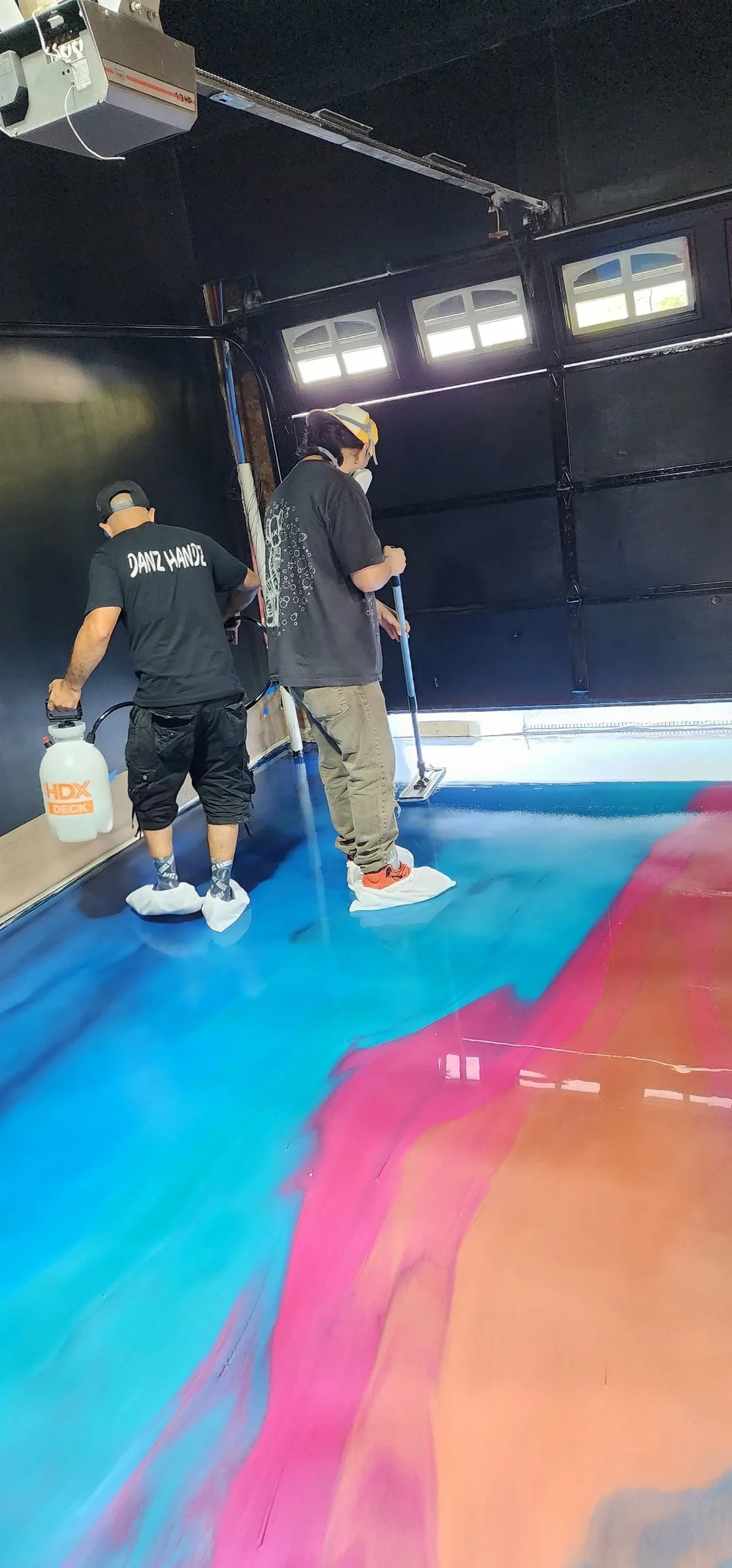
Working the pour by hand
The color goes down and is worked by hand in the empty room, with the movement placed to suit the window, the counter and the fitting area. Glitter is set where it was agreed, and a clear topcoat seals it all in under a smooth surface.

Racks in after the walk
After the cure, Danny and the owner walk the floor before any fixtures come in, looking at it from the door and from the counter. Racks and display tables then go in on felt pads, and Danny explains how the gloss is best kept between seasons.
More of Danny’s floors
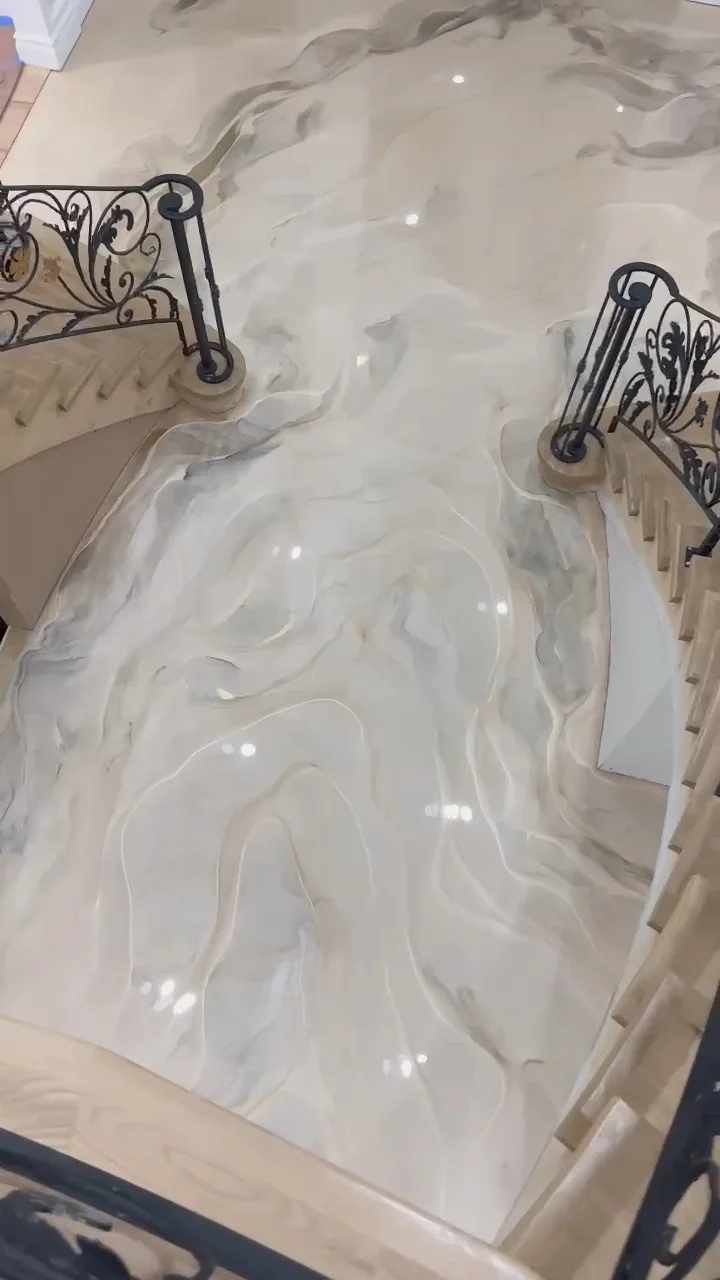
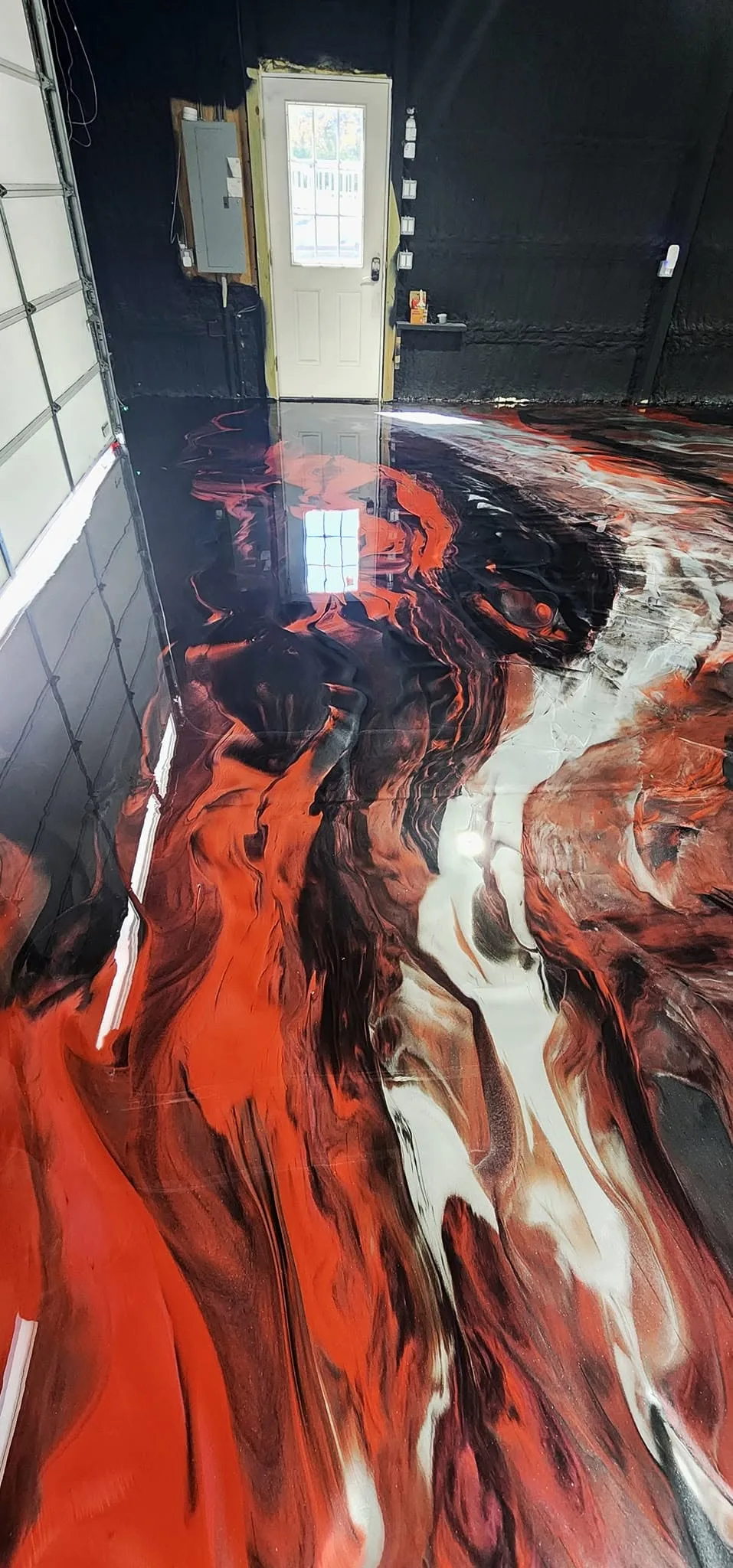
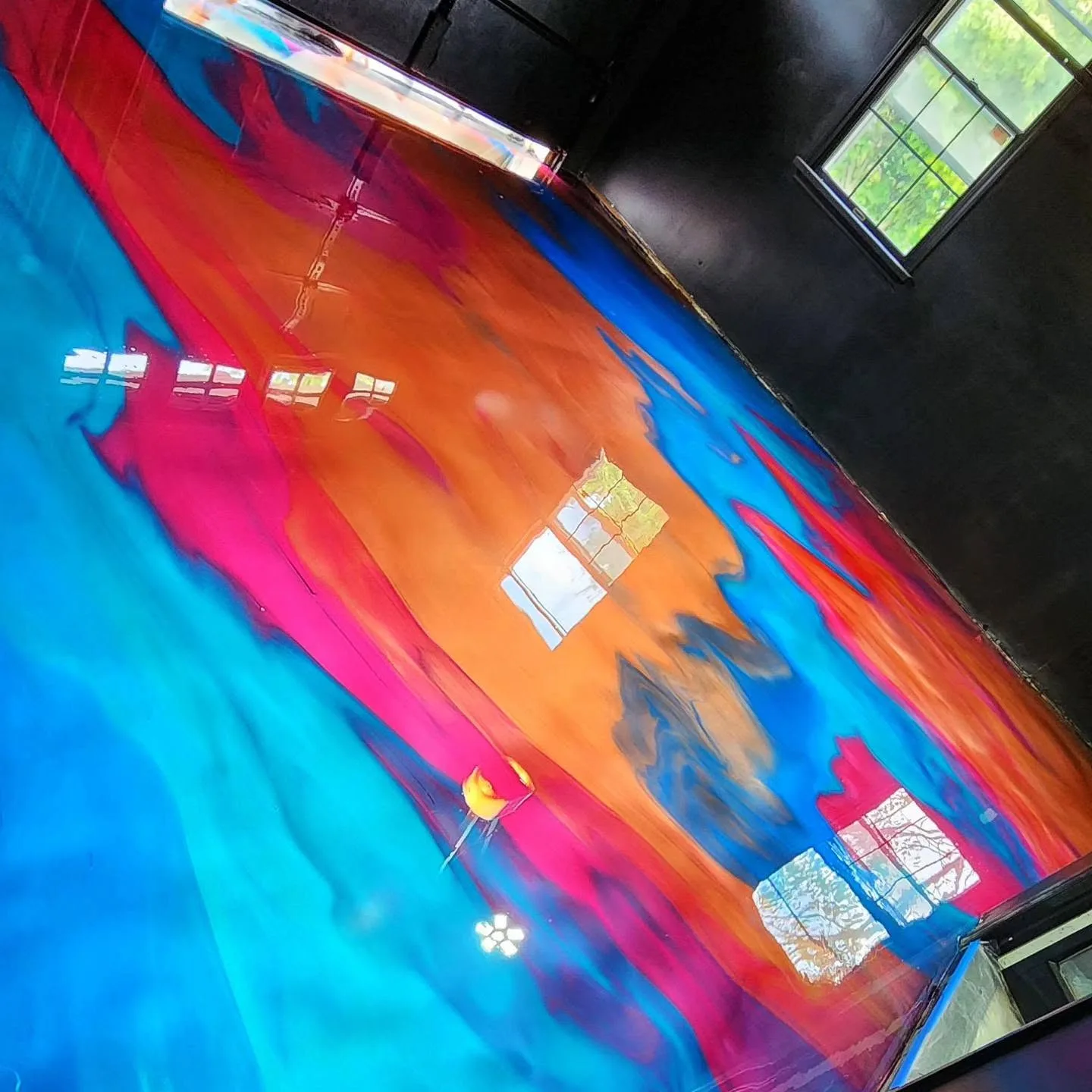
Other jobs from the file, not all of them this service. See the gallery



Questions about boutique floor coatings
Can you add glitter to the floor?
Yes. Danny sells his own glitter line, Glitter ELEMENTZ, an ultra-reflective polyester glitter made for epoxy and resin. It can be mixed through a metallic pour for an all-over sparkle or concentrated in a band or a section near the entrance. He can show how different amounts read on a sample before the shop commits.
Will my floor look like the photos I send?
It will follow the colors and the feel of what you send, though no metallic pour is a copy of another. The resin moves as it is worked, and each room’s light changes how it reads. Danny talks through what can be steered, like color and where the movement runs, and what is part of the floor’s own character.
How long will the shop need to stay closed?
That depends on the size of the room and what the slab needs, and Danny sets the schedule after his walk. Since a boutique is small, the job is often planned around opening day or a slow stretch between seasons. The room has to be empty from the start of grinding through the end of the cure.
What happens to the floor when the lease ends?
A poured floor is bonded to the slab, so it stays with the space. Some landlords welcome that, and others write rules about finishes into the lease, so it is worth asking before the design is final. If the next tenant wants something else, the floor can be ground off or covered, which is their decision and the landlord’s.
Can the fitting rooms get the same floor?
Yes. Fitting rooms are small, so they can carry the main pour straight through or take a calmer solid that feels quieter. Some owners prefer a rug in each room for bare feet, which can sit on the coated floor. Danny plans the edges at each fitting room doorway so the floor reads as one shop.
Does glitter make the floor rough underfoot?
No. Glitter ELEMENTZ sits inside the resin and is sealed under a clear topcoat, so the surface is smooth to the touch. Where the shop wants more grip, such as near the door on rainy days, a light texture can be added to the topcoat in that spot without changing how the glitter reads.
Also in industries
Auto, aviation, food, labs, schools, fitness, retail, parking and storage, matched to what actually hits the floor.
- Gym Epoxy FlooringCoated concrete for training gyms, with the slab sealed against chalk and sweat and rubber kept where the weights drop.
- Fitness Center Floor CoatingsFloors for fitness clubs, phased room by room so members keep a path, with different finishes for lobbies and locker rooms.
- Retail Showroom FlooringDecorative and metallic floors for showrooms, planned around the lighting and the layout so the floor sets off what is on display.
- Parking Garage CoatingsCoatings for the lanes, ramps and stalls of enclosed parking garages, phased level by level so residents and tenants can keep parking.
- Concrete Parking Deck ProtectionProtective coatings for exposed parking decks, applied over sound concrete to keep salt and water out, phased so the deck stays in use.
Jobs run about 60 miles out from the Cranford shop, from the Jersey shore and the Poconos to Long Island and Fairfield County. See every areaSee the galleryRead: Epoxy Floors for Salons and Barbershops
Danz Handz
Danny Carrero, epoxy specialist
dhepoxy@gmail.com
Cranford, NJ. Mon to Sat, 8 to 6. Hablamos español.
Tell Danny about the floor
Start with the room and the idea. Danny follows up by phone and comes to see the slab.