
Showroom floors that set off what you sell
Customers photograph what they like in a showroom, and the floor ends up in every one of those pictures. Danny brings sample boards to hold up against the actual cabinets or fixtures, because a color that looks right on its own can fight the product once it is under it.
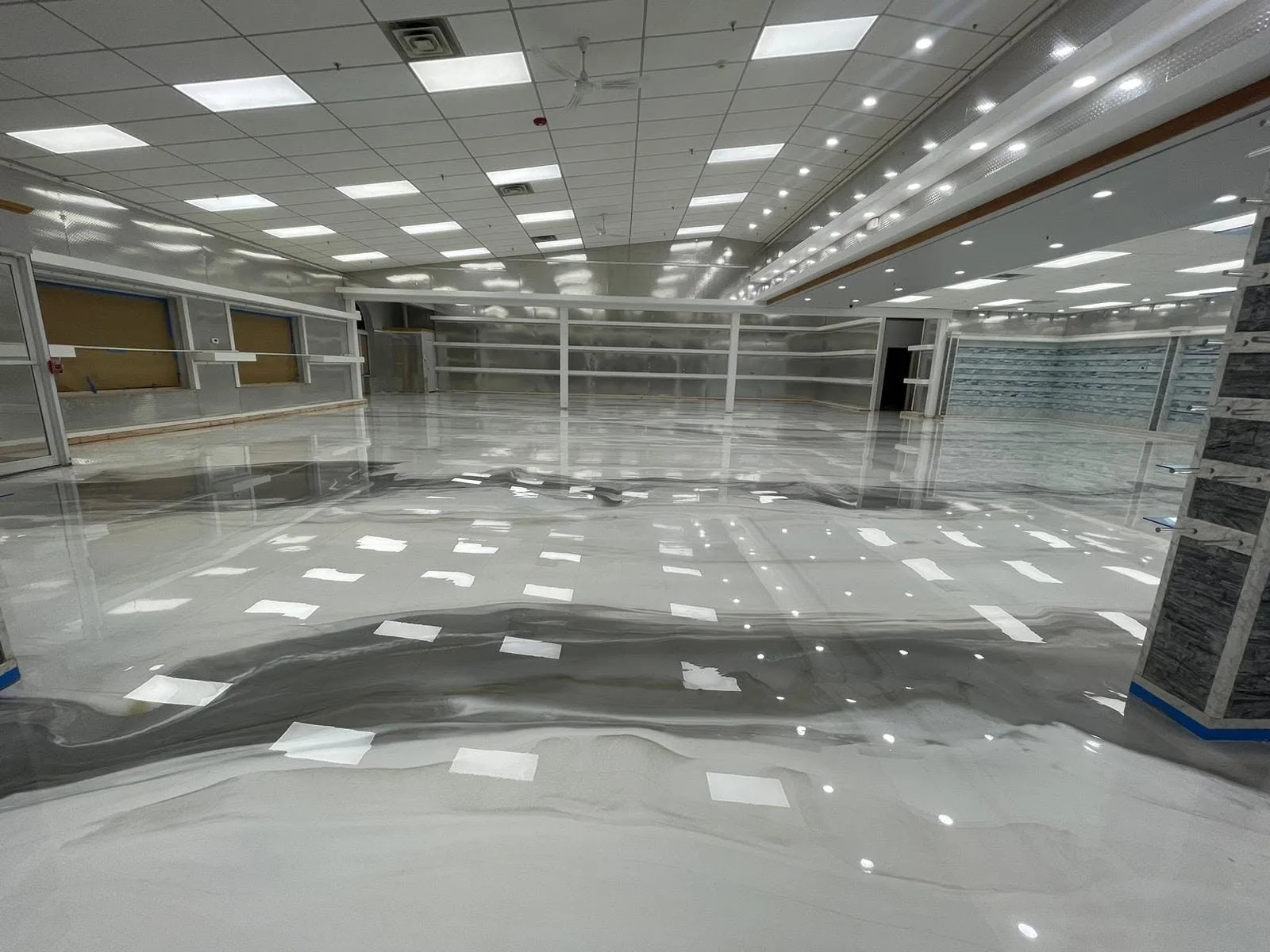

Retail Showroom Flooring, start to finish
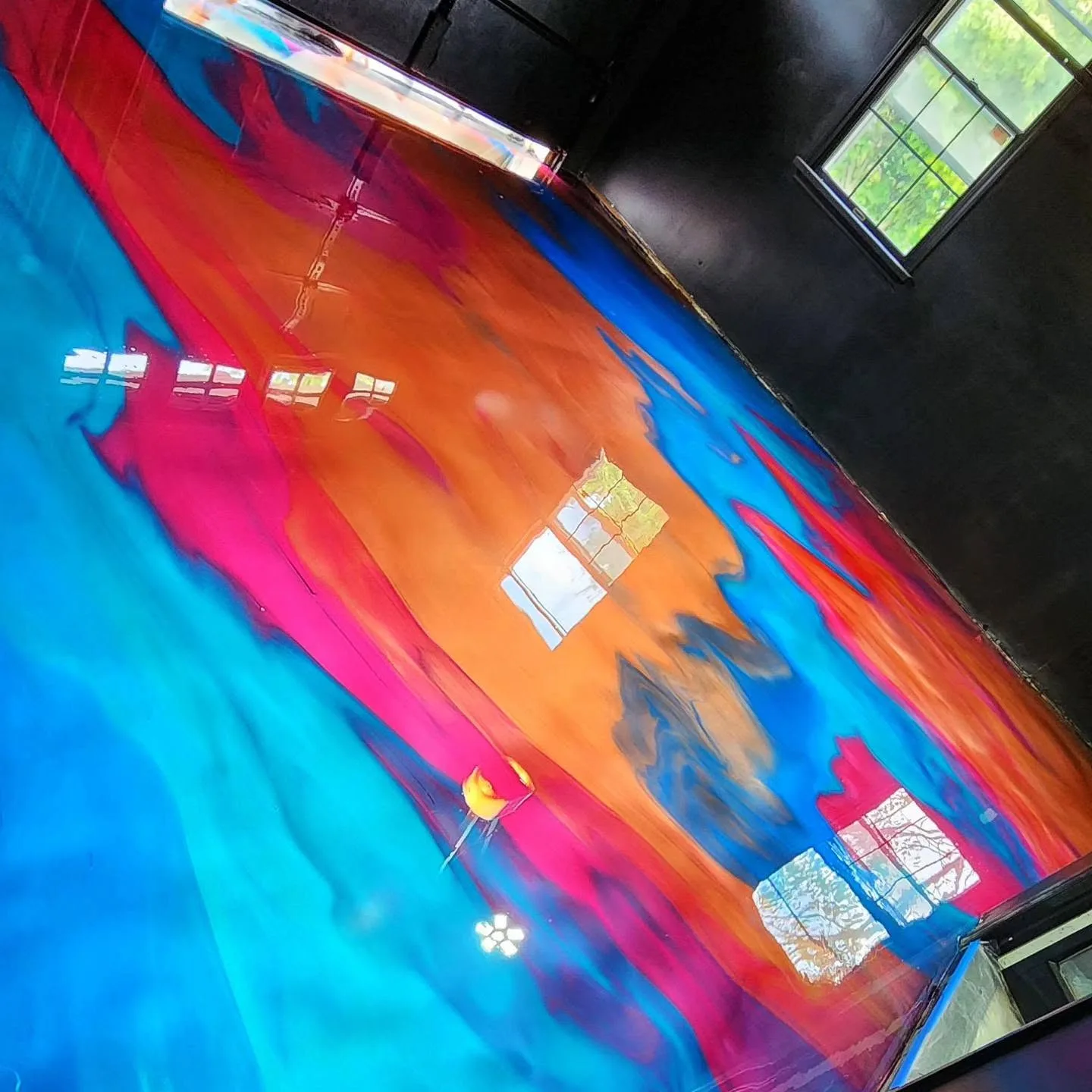
A showroom floor is a decorative resin system poured over ground concrete. It can be a quiet solid that lets the product carry the room, or a metallic pour with movement and depth, the work Danny is known for. Metallic floors catch light from fixtures and windows, so the same floor reads differently at the front door than it does in the back. Before recommending a system, Danny looks at foot traffic, deliveries and what gets set down on the floor, since a delivery lane and a display island wear differently.
Danny starts by asking what the showroom sells and how the owner wants customers to feel when they walk in.
It fits showrooms on a slab where products sit still and customers walk: furniture galleries, kitchen and bath displays, lighting stores, flooring and tile showrooms. It is a harder fit where heavy pallets get dragged daily, which wears a decorative topcoat. A showroom with a back stockroom often uses a decorative floor up front and a plain solid in the back. Glossy metallic shows scuffs and dust more than a matte solid does, so busy floors need regular dust mopping.
Danny starts by asking what the showroom sells and how the owner wants customers to feel when they walk in. He walks the floor, looks at the lighting, notes where the product sits and where carts and deliveries cross, and checks the slab for cracks and old adhesive. He tries to get into the owner’s head about the look and then asks to be left to do the work. The slab is diamond ground and repaired, and the pour is planned so color and movement line up with the room’s layout. Once it cures, he walks the floor with the owner under the store’s own lights.
Every product in a showroom is photographed standing on the floor.
What happens on the job
Light and the customer’s path from the door to the register shape this floor. The steps run from studying both to the first day the store is back open.


Studying the light at the entrance
Daylight through the storefront glass hits the first part of the floor very differently from the fixtures deeper in the store. Danny looks at the room at different times of day and notes where glare, shadow and spotlights will fall on a metallic or a glossy solid.

Walking the customer’s route
From the door, Danny follows the path most shoppers take, past the featured displays to the counter. Those paths decide where the floor’s movement and any accent color should lead, and they show where a heavier topcoat is worth having under steady foot traffic.

Setting the receiving lane apart
The route from the back door to the stockroom gets carts, hand trucks and the occasional dragged box. It is laid out separately, often in a plain solid with a harder-wearing topcoat, and the line where it meets the decorative floor is placed somewhere customers rarely look.

Directing the metallic movement
After the slab is ground and repaired, the metallic pour is worked by hand so its movement runs with the room. Lines can sweep from the entrance toward the main display or circle a central fixture, so the floor quietly points shoppers where the owner wants them.

Seeing it at store hours
Once the floor cures, Danny walks it with the owner with the store lights on, the way customers will see it. Displays go back on felt pads, and staff get a short care routine for dust mopping before opening and damp mopping after close.
More of Danny’s floors
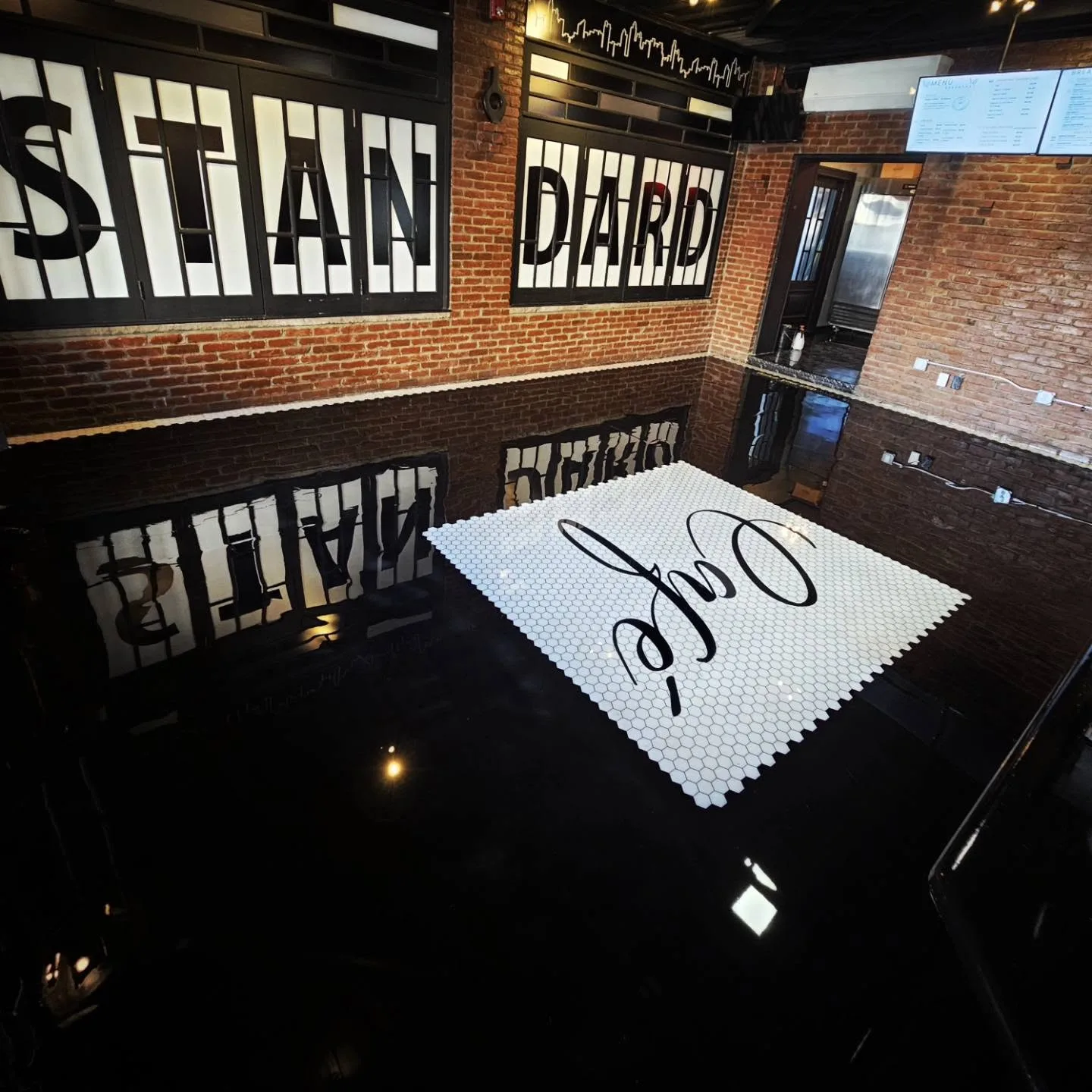
Other jobs from the file, not all of them this service. See the gallery






Questions about retail showroom flooring
How do you get the look right before pouring?
Danny talks through the look with the owner, looks at the brand colors and the products, and can show samples or photos of past metallic work. The goal is to understand the vision without boxing the pour in too tightly, since metallic resin moves as it is worked. He tells you what can be controlled and what is part of the character.
Will the floor hold up to rolling carts and displays?
A decorative topcoat handles foot traffic and occasional furniture moves well with felt pads. Daily heavy carts and dragged pallets wear any glossy finish faster, so the delivery path often gets a plainer, harder-wearing treatment. Danny looks at how goods move through the store during his walk and plans the finishes around that.
Can the showroom stay open during the work?
Usually not in the area being poured, since the floor has to be empty and closed through the cure. Large showrooms can sometimes be done in sections, with displays shifted from one side to the other. Smaller stores tend to close for the job. Danny sets the timing after he sees the space and the amount of product to move.
Can the floor lead customers toward featured displays?
It can help. A metallic pour can be steered so its movement runs toward a focal display, and a change in color or sheen can frame an area without a rug or a sign. Danny plans this from the store’s layout, so it works best when the fixtures are expected to stay put for a while.
What happens at the street door in winter?
Salt, sand and slush come in on every pair of shoes, and they act like sandpaper on a glossy finish. A walk-off mat inside the door catches most of it, and the first few steps of floor can take a slightly textured topcoat. Regular sweeping near the entrance keeps grit from spreading through the rest of the store.
Will the outlines of old fixtures show through?
Old anchor holes, glue lines and shadows where fixtures stood are ground and filled during prep, so they should not show in a solid. A metallic can sometimes reveal a slight difference in the slab beneath, which is why the repairs are ground flush before the pour. Danny points out any spot he thinks could show.
Also in industries
Auto, aviation, food, labs, schools, fitness, retail, parking and storage, matched to what actually hits the floor.
- Food Processing Floor CoatingsResin floors for food production rooms that get washed down every shift, with cove bases, textured footing and water running to the drains.
- Hygienic Resin FlooringContinuous resin floors with coved wall edges and no grout lines, built so cleaning crews can actually get the corners clean.
- Restaurant Kitchen Floor CoatingsTextured, coved resin floors for restaurant lines, dish areas and coolers, scheduled around the days the kitchen can close.
- Hotel Service-Area FlooringResin floors for hotel laundry, housekeeping, loading and staff corridors, done in phases while the hotel keeps running.
- Healthcare Facility FlooringResin floors for corridors, utility rooms and service areas in healthcare buildings, phased so the building stays open during the work.
He drives out from Cranford about 60 miles in every direction for floors like this one. See every areaSee the gallery
Danz Handz
Danny Carrero, epoxy specialist
dhepoxy@gmail.com
Cranford, NJ. Mon to Sat, 8 to 6. Hablamos español.
Tell Danny about the floor
Start with the room and the idea. Danny follows up by phone and comes to see the slab.