
Plant floors coated around the production schedule
On a plant job the production calendar sets the floor plan. Danny wants the shutdown dates and the slow weeks before he talks about systems, because the cracked, worn areas under the lines can only be ground and poured while those lines sit still. Whatever cannot fit in one shutdown gets split into the next.
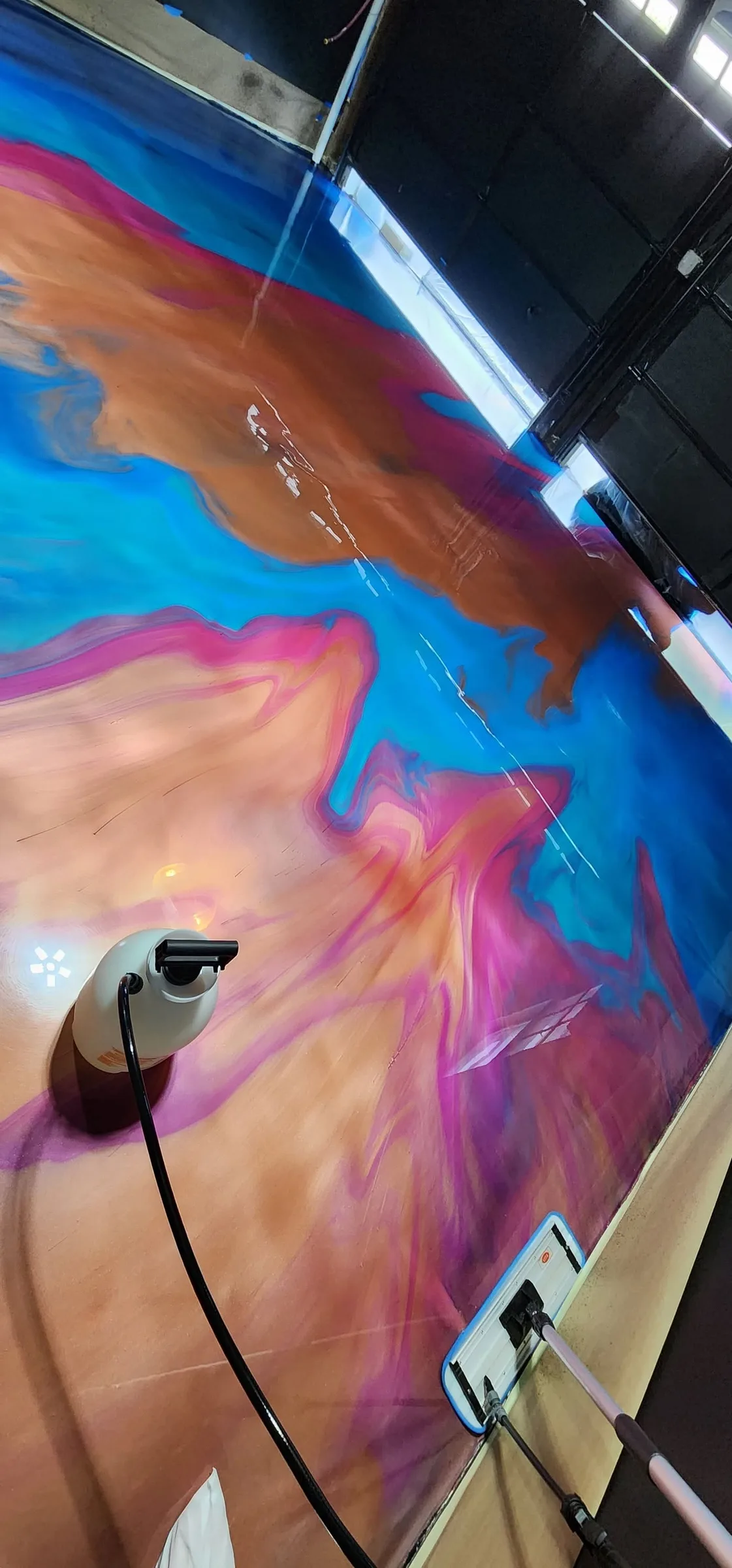
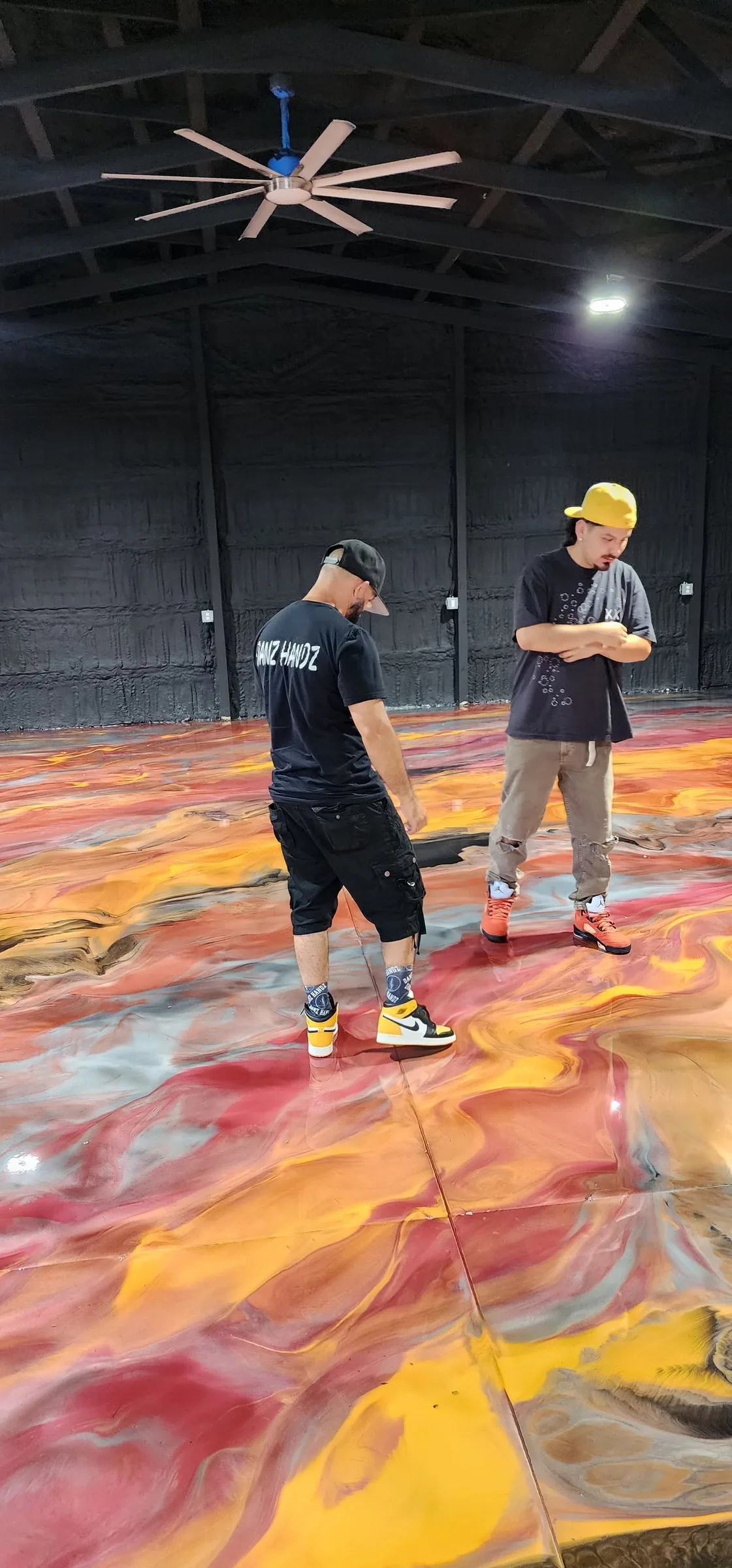
Manufacturing Plant Floor Coatings, start to finish
Plant floor coatings are resin systems bonded to the slab under and around production equipment, in aisles, and in support areas like shipping and maintenance. Every plant is different, and one line may drip cutting fluid while another drops steel parts. Danny reviews each area, the equipment traffic and whatever the process puts on the floor before recommending a system, and the choice is held to those requirements and the product data. Aisles can carry a different color than work cells so people can read the floor.
Moisture coming up through the slab, oil-soaked concrete and failed joints are common in plants and need to be addressed before a coating will bond.
Coating under equipment is the hardest part. Machines that are anchored and cannot move get coated around, and the area under them stays as it is. Hot processes, heavy impact zones and areas exposed to strong chemicals may need a heavier or different system than the rest of the plant, and some areas may be better left alone. Moisture coming up through the slab, oil-soaked concrete and failed joints are common in plants and need to be addressed before a coating will bond.
Line by line is how a plant gets reviewed. Danny goes through it with the maintenance supervisor, noting equipment that moves and equipment that does not, what leaks, and where forklifts run alongside people on foot. He looks hard at oil-soaked concrete and joints. From there he lays out a phased plan tied to the production schedule. Each area is diamond ground to clean concrete, cracks and joints are repaired, and the coating is poured and cured before production returns. The final walk with maintenance confirms each area before the line starts back up.
On a plant floor, the production schedule decides when the coating happens.
How Danny does the job
Plant floor work is tied to the production calendar. These stages follow one shutdown window from the planning meeting to the morning the line starts back up.
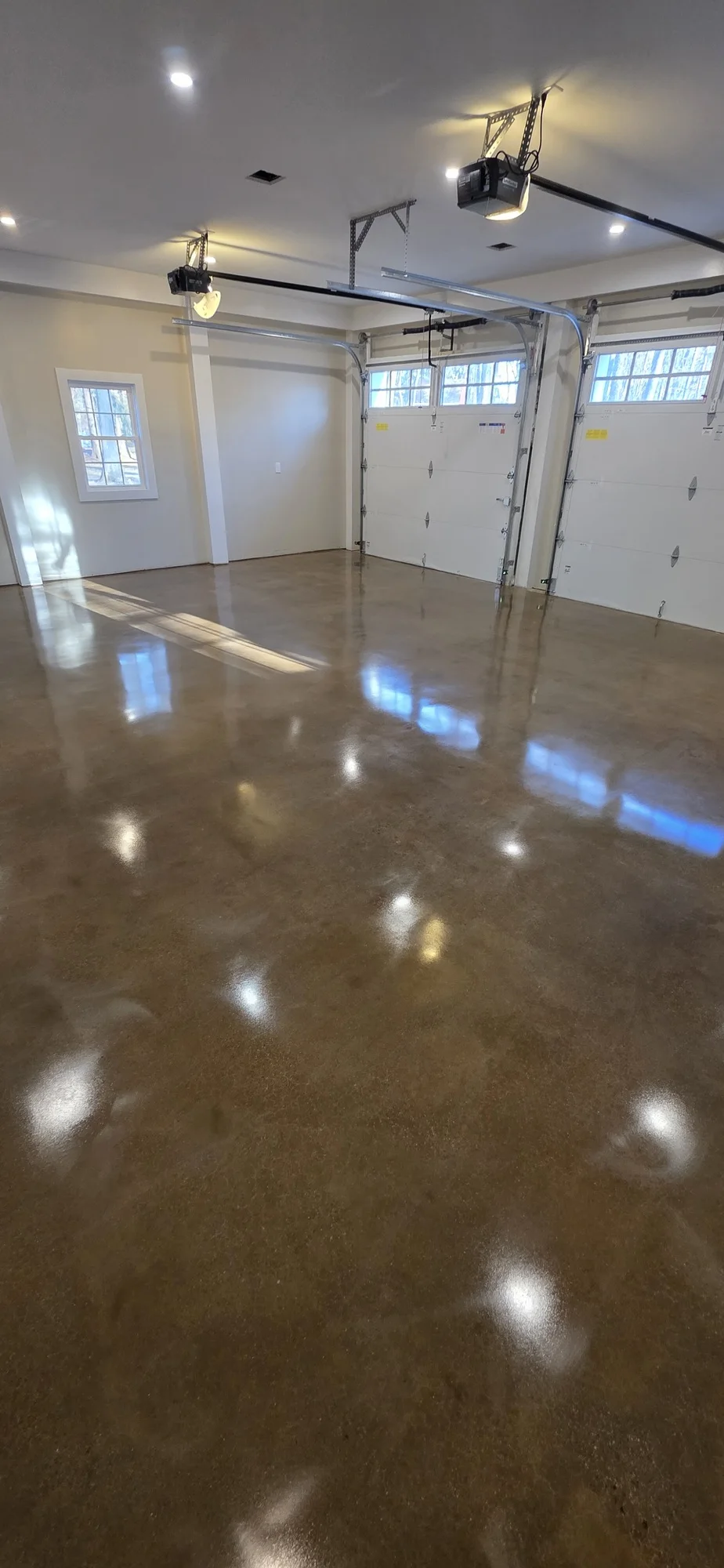

Getting the shutdown calendar
Danny asks for planned shutdowns, holiday breaks and slow weeks for the coming months. The floor is divided into pieces that each fit one of those windows, starting with the areas where worn or cracked concrete is causing the most trouble.

Sorting equipment with maintenance
The maintenance lead and Danny go down the equipment list together. Movable machines, carts and tables get marked to come out; anchored presses and lines get marked for a clean edge at their bases. Utility drops and trenches are noted too.

Degreasing and grinding the work cells
Work cells around machines are usually the oiliest part of the plant. Coolant and oil are cleaned out of the surface, the concrete is ground until it takes a bond, and spalled pads and joints are rebuilt.

Pouring cells and walkways in contrast
Work cells and aisles are coated in contrasting colors so people can see where the walking routes are. The system for each is checked against the process fluids and the product data, with texture added where operators stand on wet or oily floor.

Restarting the line on a cured floor
Machines return and the line restarts only after the floor has cured. Danny walks the area with maintenance before restart, checking the edges at each machine base and any spot where equipment was dragged back into place.
More of Danny’s floors
Other jobs from the file, not all of them this service. See the gallery

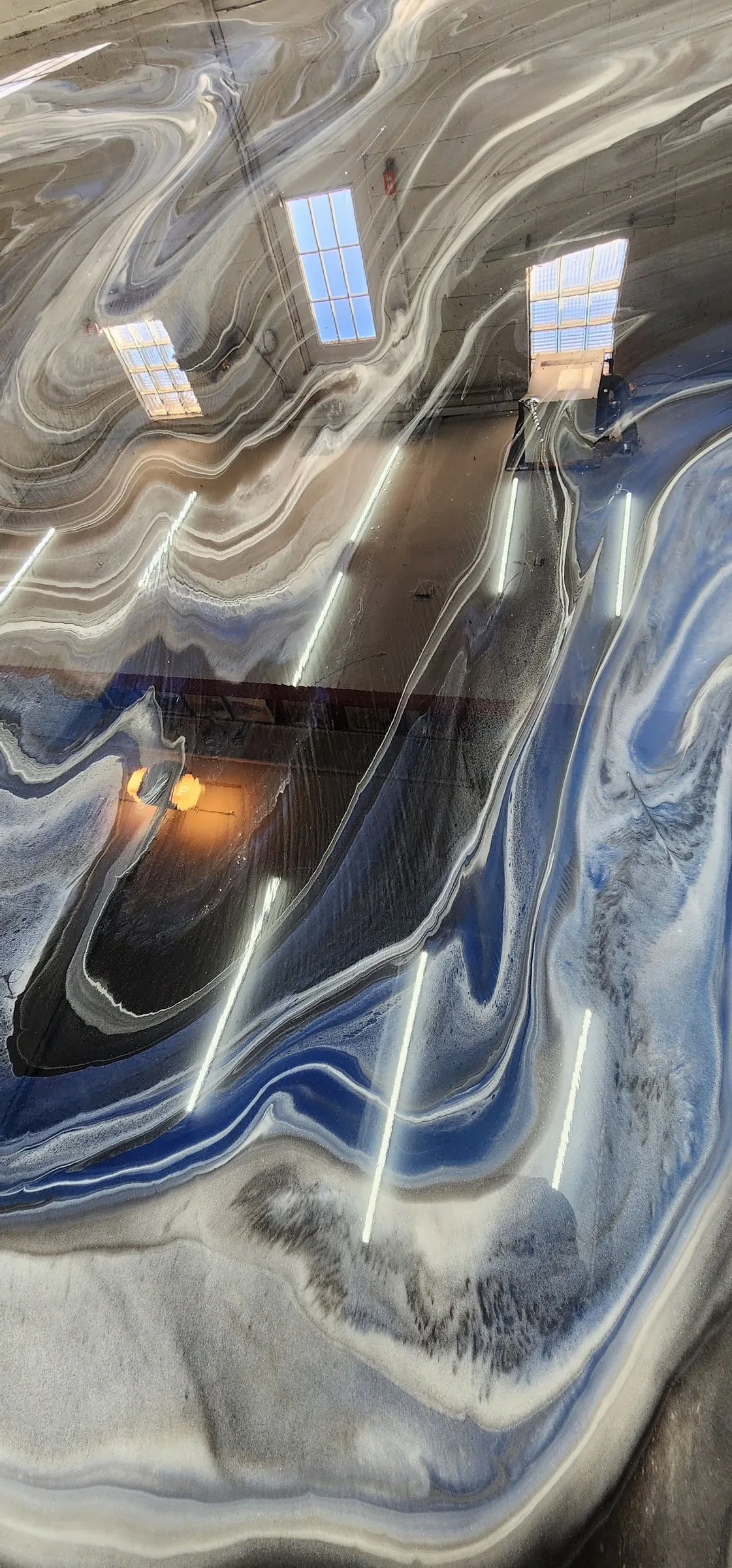






Questions about manufacturing plant floor coatings
Can you coat under our machines?
Machines that can be moved come out, the floor gets coated, and they go back. Machines anchored in place get coated around with a clean edge at the base. Danny goes through the equipment list with your maintenance team and marks what moves and what stays before setting the schedule.
Our floor is soaked with oil. Can it be coated?
Often, with work. Oil-soaked concrete has to be ground and cleaned until the coating can bond, and heavily soaked areas may need repair or replacement of the top layer. Danny looks at the worst spots on his first walk and tells you honestly what it will take before anything gets scheduled.
Can you work during a shutdown?
Shutdowns are the best window for plant floor work, since the lines are down and the floor can close in sections. Danny plans the work to fit the downtime you have, starting with the areas that matter most. If the window is short, the job can be split across more than one shutdown.
Do coolant spills from the machines affect the coating?
Coolant and cutting oil soak into bare concrete and can work under a coating if the edges are left open. Danny asks which fluids each machine uses and looks at how they leak. The system and topcoat are chosen from the product data for those fluids, and edges around machines are sealed tight.
Can we keep a small area running during a shutdown?
Yes. If one line or the shipping area has to keep working, it can be left out of that window and done in a later one. The barriers and dust control are planned so the running area is separated. Danny works out which areas stay live with the plant manager before the shutdown starts.
Can machines be re-anchored after the floor is coated?
They can. Anchor holes are drilled through the cured coating, and the edges are sealed so liquid does not get underneath. Marking the anchor positions before the pour lets those spots be planned. If a machine is moving to a new spot, Danny fills the old holes flush before coating.
Other industrial work
Warehouses, plants, loading docks and machine shops, with safety striping and aisle marking when the space needs it.
- Maintenance Bay FlooringResin floors for in-house maintenance shops where a facility repairs its own forklifts and equipment, built light so drips and parts show.
- Industrial Workshop Floor CoatingsResin floors for shared workshops where assembly, fabrication and woodworking happen in one room, sealed against dust and easy to sweep.
- Industrial Concrete Joint RepairRebuilt joint edges and fresh filler for slabs where forklift wheels have broken down the joints, so traffic rolls across without a jolt.
- Manufacturing Floor RestorationOld plant floors ground back to sound concrete, repaired and recoated in phases, so production keeps running while the floor is restored.
- Industrial Floor Moisture MitigationSlab moisture testing and vapor-control coats laid under the floor system, so rising moisture does not push a new coating off the concrete.
Every county Danny covers, and every town in them, has its own page. See every areaSee the gallery
Danz Handz
Danny Carrero, epoxy specialist
dhepoxy@gmail.com
Cranford, NJ. Mon to Sat, 8 to 6. Hablamos español.
Tell Danny about the floor
Tell Danny about the space. He calls you back, comes out, looks at the concrete and talks it through before anything gets decided.