
Getting a slab ready before any coating goes down
Everything that happens to a slab before the first coat of epoxy counts as surface preparation: assessment, removal, grinding, repairs and cleaning. Many coating failures trace back to it, so Danny treats prep as the main job, with the color and finish coming last.

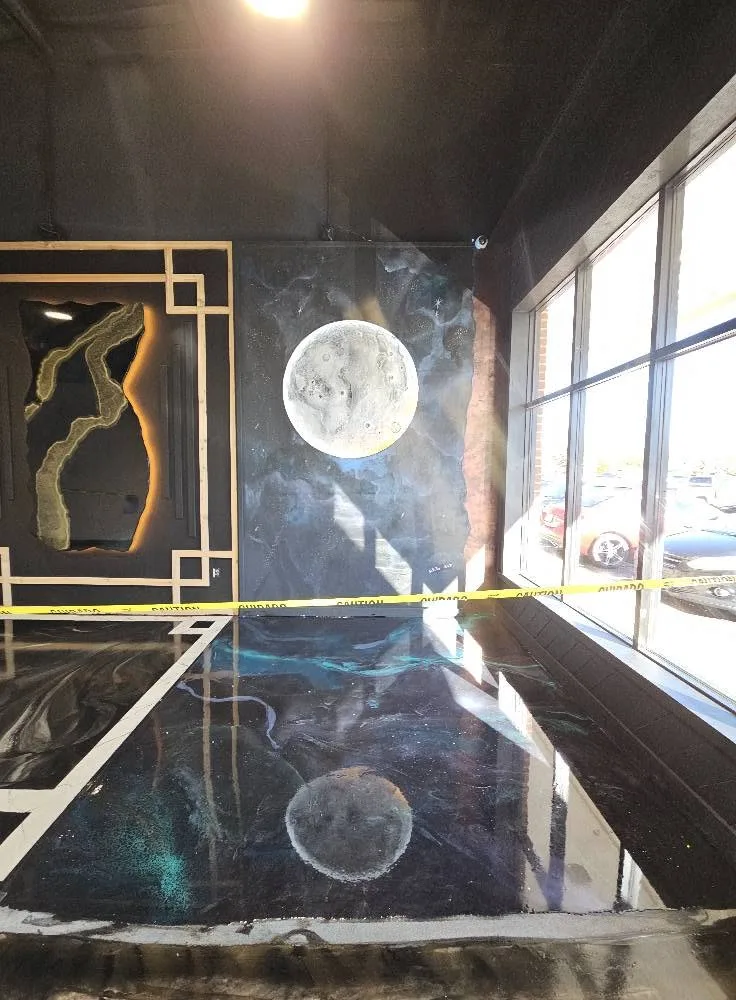
Concrete Floor Surface Preparation, from Danny’s side of the job
Prep is a sequence. Danny walks the slab and assesses it, looking for coatings, sealers, oil, cracks, spalls, uneven spots and signs of moisture. Old coatings come off. The surface gets diamond ground to open it up. Cracks, joints, spalls and pits get filled and leveled, and the repairs get ground flush. The floor is vacuumed and cleaned so nothing sits between the concrete and the first coat. Depending on the system, a primer then goes down. Each step sets up the one after it.
When the slab is ready, he looks it over again before the first coat.
Every coated floor needs this, from a basement to a commercial kitchen. What changes is how much work each step takes. A new slab might need only grinding and cleaning. An old garage might need coating removal, oil treatment, crack repair and leveling. Prep cannot fix a slab that is structurally failing or one with a serious moisture problem coming up from below. Those get identified on the walk-through, so nobody puts a coating on a slab it will not stay on.
Danny’s walk-through is where the prep plan gets written. He checks how the slab reacts in a small test area, maps cracks and low spots, and notes oil stains and old coatings. Then the order is set: removal, grinding, repairs, leveling where needed, then a full vacuum and clean. He works in that order on the day, grinding the open floor and edges, filling and feathering repairs, grinding them flush and vacuuming everything. When the slab is ready, he looks it over again before the first coat. If something new shows up, he deals with it then.
The color is the last decision. The prep decides whether it stays on the floor.
From bare slab to finished floor
Surface preparation is the whole run of work between an empty room and the first coat, and its stages always come in the same order.
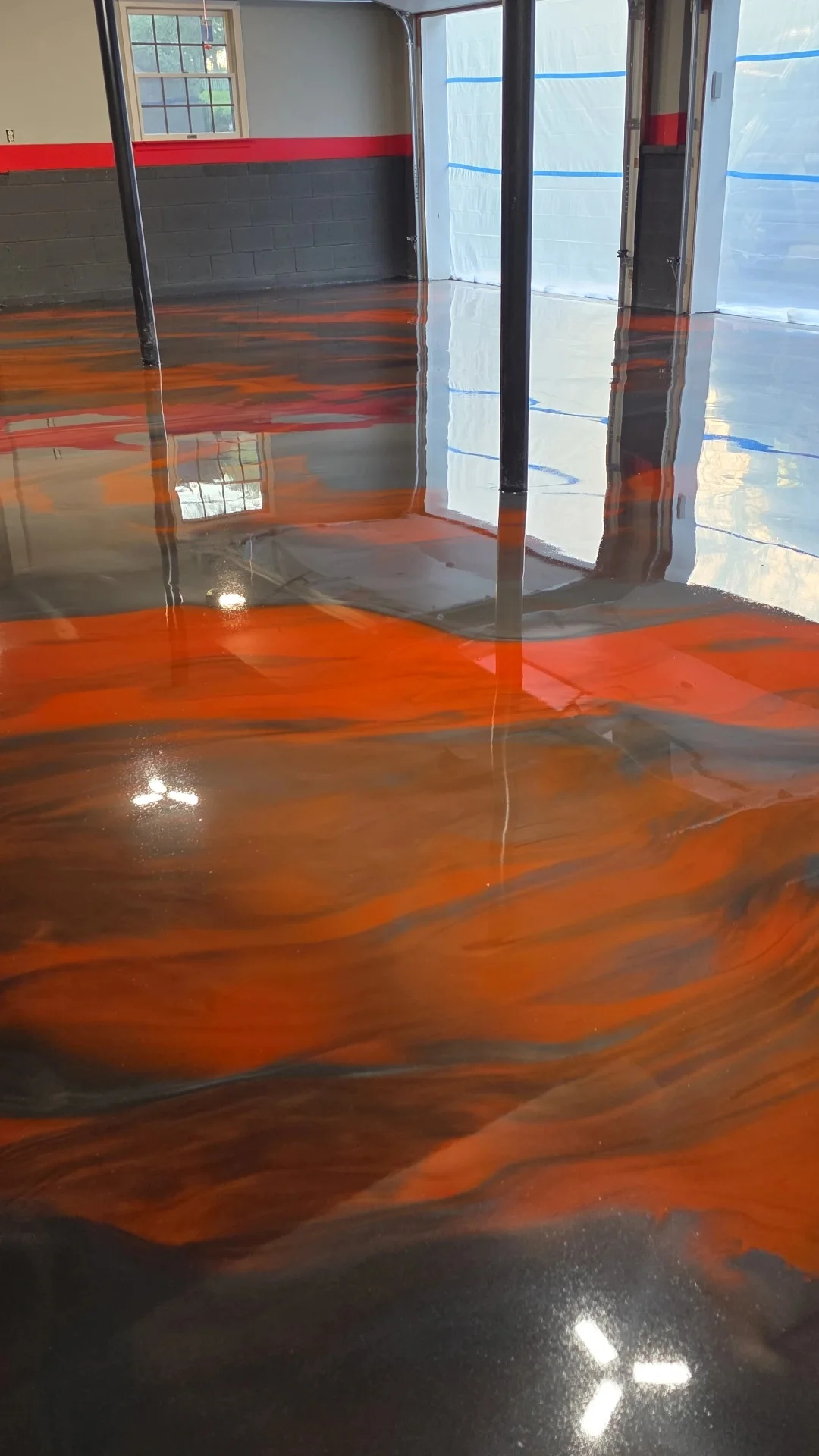

Writing the prep plan on site
At the walk-through Danny maps what the slab needs: coatings to remove, cracks and low spots to fix, oil stains to treat, signs of moisture to test. The plan lists each task in the order it will happen on the job.

Stripping back to concrete
Anything sitting on the surface comes off first, whether paint, sealer, glue or old epoxy, so every later step is working on bare slab. Removal sometimes uncovers more damage than anyone could see, and the plan is updated to match what turns up.

Opening the bare surface
The bare slab is diamond ground to the texture the chosen coating needs, edges and corners included, so the first coat has open concrete to grip across the entire floor. The dust vacuum runs the whole time the grinder does.

Repairs ground flush
Cracks, joints, spalls and pits are filled, and low spots are leveled where the floor needs it. Every repair is ground flat with the concrete around it and then checked by hand for edges that would show through the coating later.
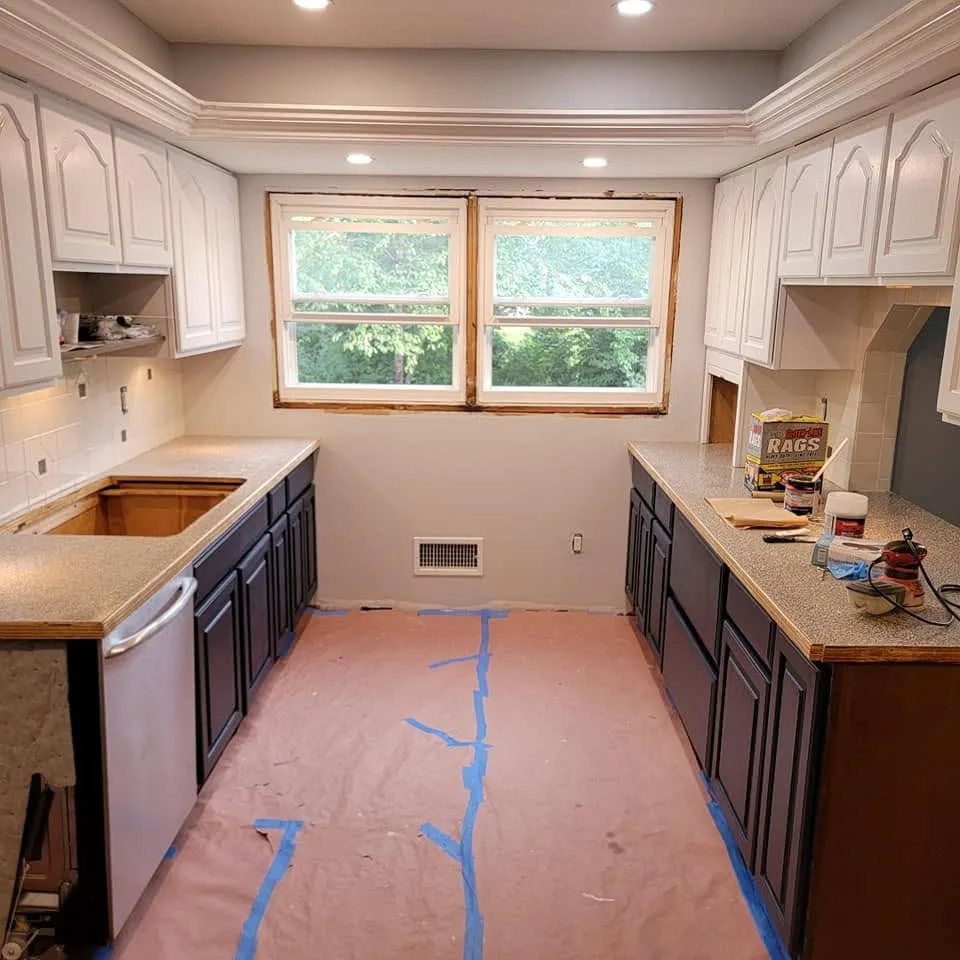
Last look at bare concrete
The floor is vacuumed and cleaned of dust and residue. Before the primer, Danny walks the bare floor one more time with a light held low, looking for shiny spots, missed edges and fills that need another pass.
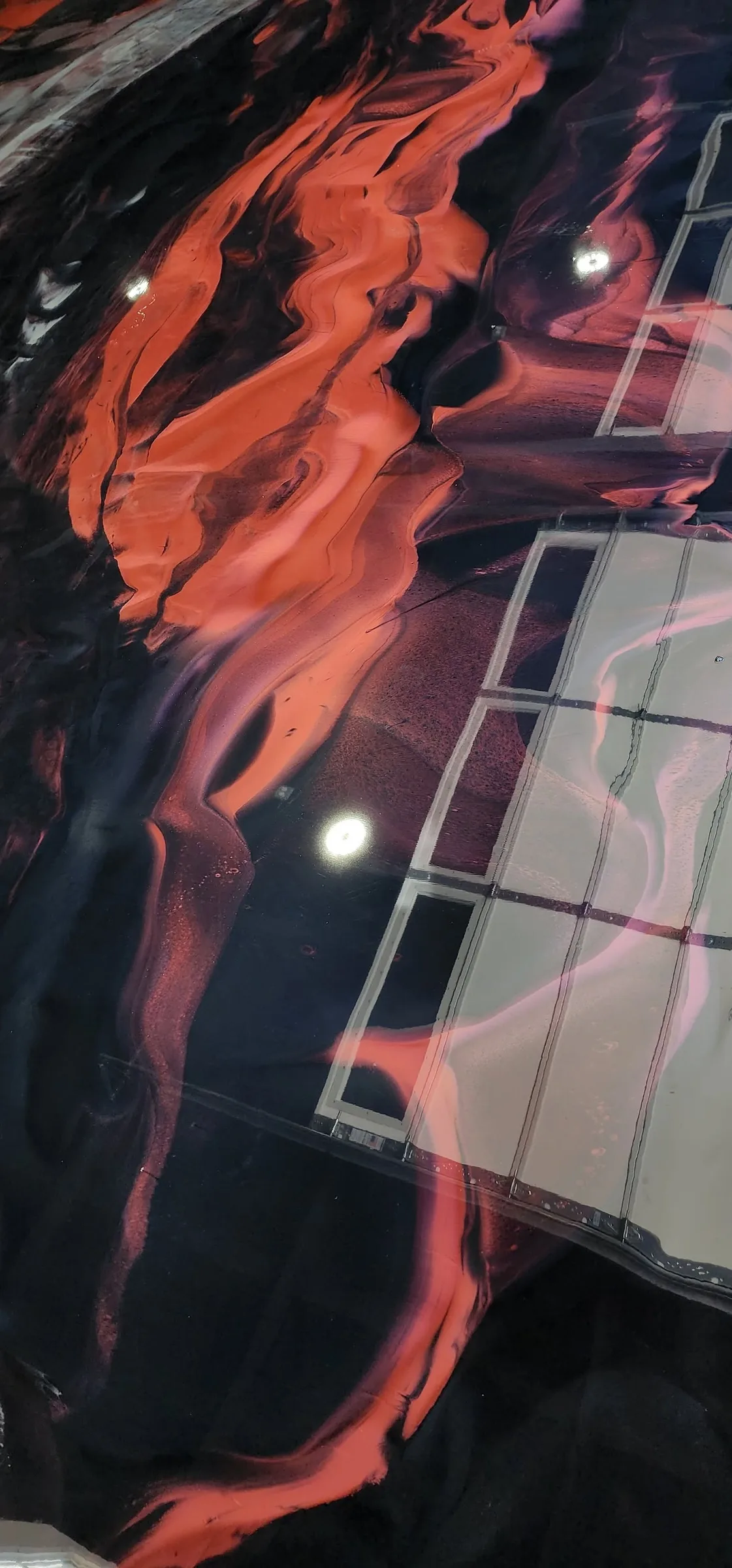
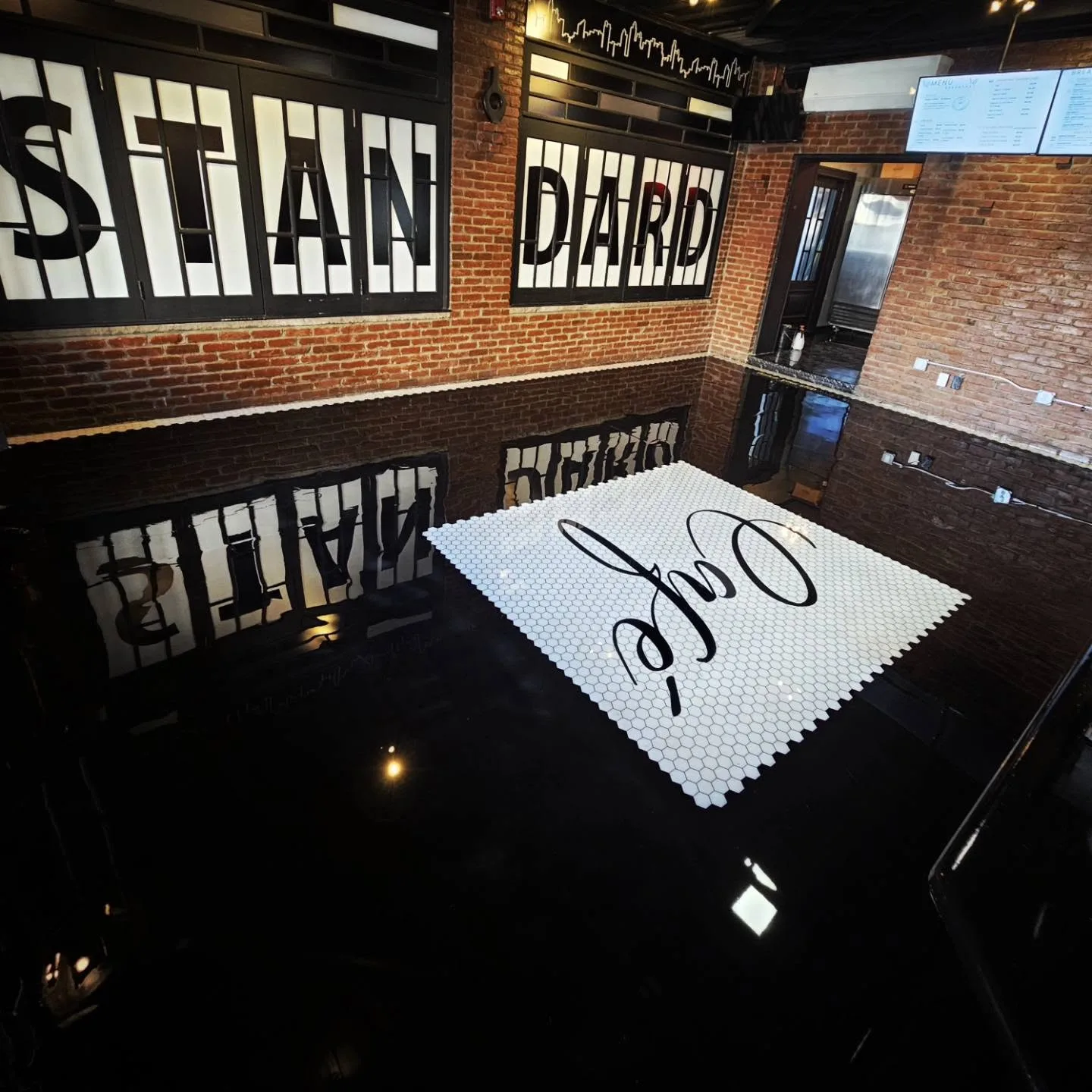
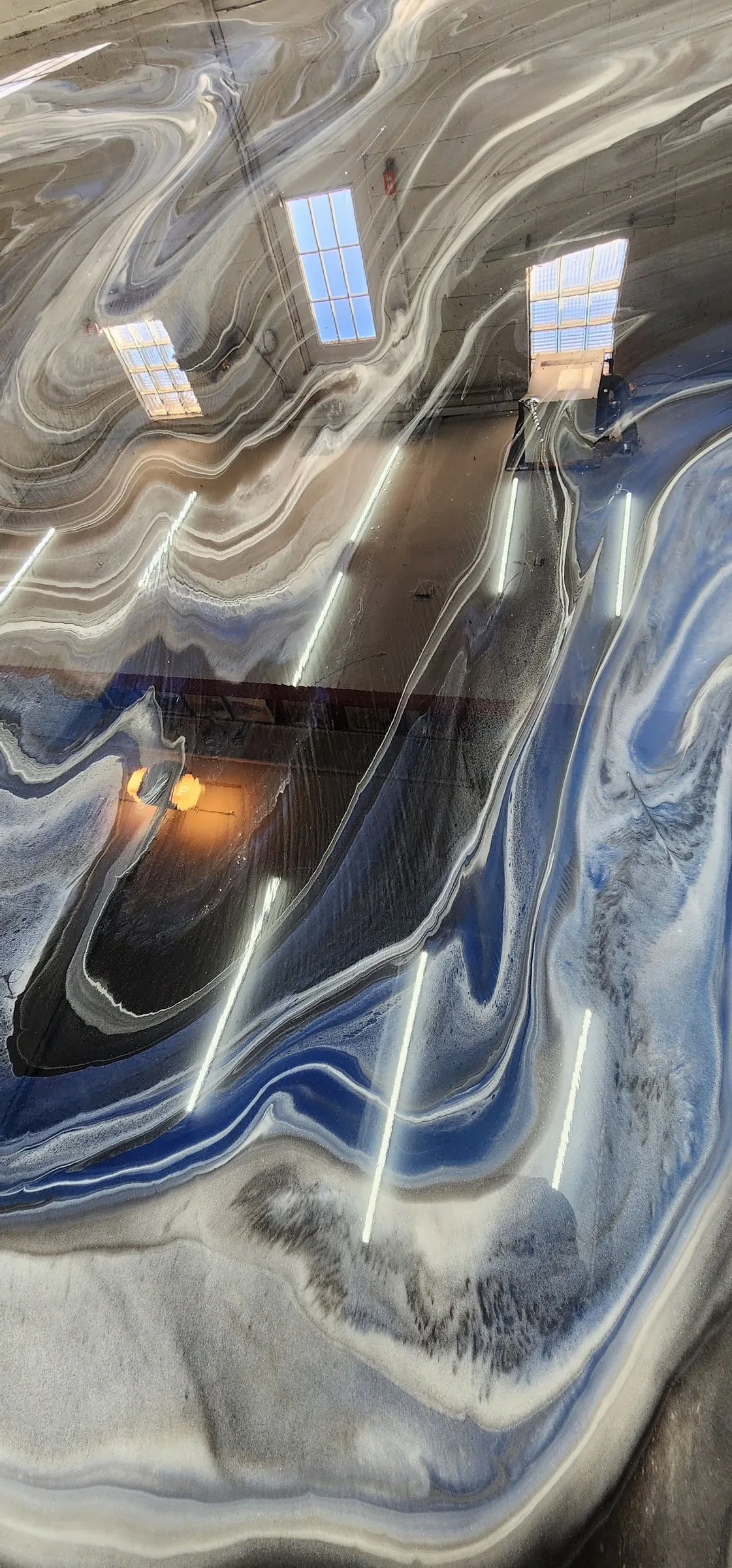
More of Danny’s floors
Other jobs from the file, not all of them this service. See the gallery




Questions about concrete floor surface preparation
Why does prep take so much of the job?
Because a coating can only hold as well as the surface it sits on. Paint, oil, dust and the smooth top layer of concrete all get between the slab and the epoxy. Cracks and pits show through the finish. Taking care of all of it is slower than rolling on color, and it is what makes the color stay put.
Can I prep the floor myself to save time?
Danny prefers to do the prep, because he sees things during grinding that change the plan, like a soft area or an old repair that has come loose. You can help by clearing the room and telling him what you know about the slab. Pre-cleaning oil stains with a degreaser is also useful before he arrives.
Does a brand new slab need prep?
Yes. New concrete has a smooth, dense top layer and sometimes a curing compound sprayed on by the finisher, and both keep epoxy from bonding well. It still gets ground and vacuumed. New slabs also need time to dry out before coating, and Danny checks moisture before scheduling the pour.
What happens if prep turns up moisture?
The floor gets tested before the system is chosen. If the readings are high, a moisture-tolerant primer or vapor mitigation layer goes under the coating, picked from the product data. If water is actually running in through a crack or wall, that has to be fixed first, sometimes by another trade, before any coating goes down.
Is prep different in a basement than in a garage?
The steps are the same, though the problems differ. Garages usually bring oil, road salt and spalling near the door. Basements bring paint, glue from old carpet or tile and a higher chance of moisture. Danny plans the prep around what that particular room has been through over the years.
Can someone else prep the floor and you coat it?
Danny prefers to handle both, since the coating’s bond depends on how the slab was prepared and he sees things during grinding that change the plan. If another contractor has already prepped a floor, he looks it over closely before agreeing to coat it, and may regrind areas that are not ready.
More from the prep section
Grinding, shot blasting, crack and joint filling, leveling and moisture testing, done before any coating goes down.
- Concrete Floor ResurfacingA thin cement-based overlay over worn, scaled or heavily patched concrete, giving the floor one sound surface for a coating or sealer.
- Uneven Concrete Floor CorrectionGrinding down raised slab edges and building up low sides so steps, lips and trip edges disappear under a smooth coated floor.
- Concrete Surface RestorationA full repair plan for neglected, damaged concrete, putting removal, grinding and repairs in the right order so the slab ends up sound.
- Oil-Contaminated Concrete PreparationDegreasing and grinding oil- and grease-soaked shop and kitchen floors, with honest calls on which areas will come clean enough to coat.
- Concrete Adhesive RemovalScraping and grinding carpet glue, tile mastic and thinset off concrete so a new floor bonds to the slab, with a check on older mastic first.
From Union County out to the Lehigh Valley, Long Island and Fairfield County, the work is all within about 60 miles of Cranford. See every areaSee the galleryRead: Why Every Good Epoxy Floor Starts With a Diamond Grinder
Danz Handz
Danny Carrero, epoxy specialist
dhepoxy@gmail.com
Cranford, NJ. Mon to Sat, 8 to 6. Hablamos español.
Start with a visit
Send a few lines about the room and the look you want. Danny will call and set up a time to see it.